From evacuation flights to a major transport organisation
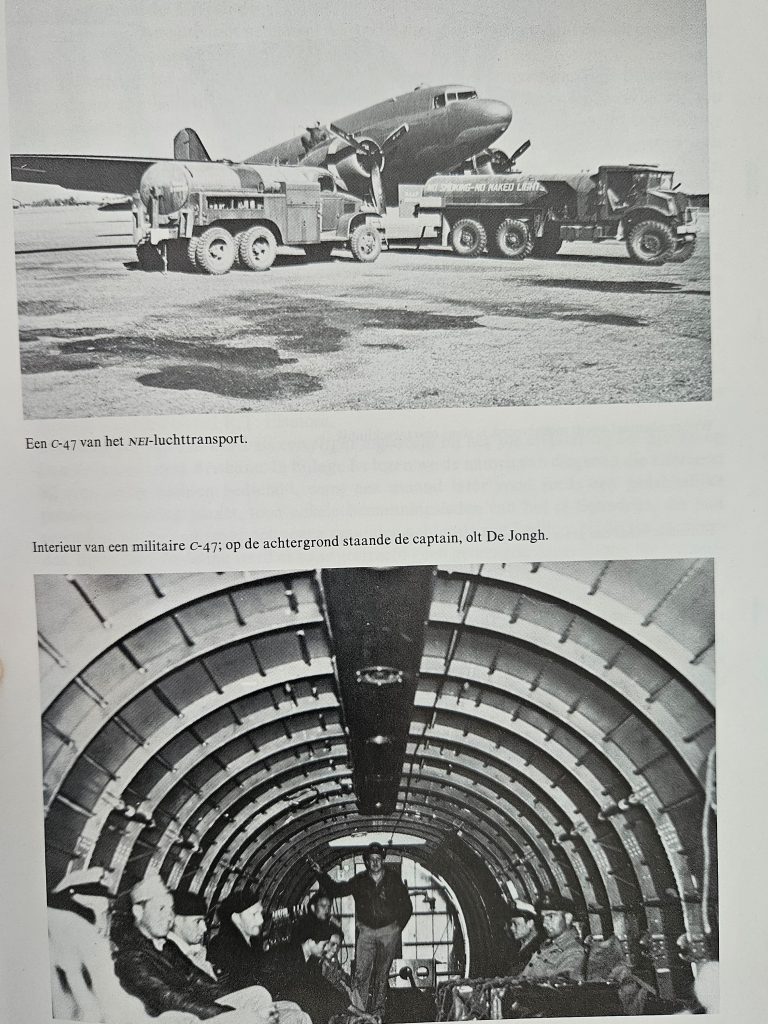
Following the Japanese invasion of the Netherlands East Indies, Australia became the principal base for rebuilding Dutch military aviation in the Southwest Pacific. An essential part of this effort was the creation of an air transport organisation capable of moving personnel, equipment, official communications and urgently needed supplies across the enormous distances between Australia, New Guinea and the Netherlands East Indies.
Experienced pilots, wireless operators and flight engineers from the civil airlines KNILM and KLM formed the nucleus of the first Dutch transport unit. Working initially with the United States Army Air Forces, they operated dangerous services between Brisbane and New Guinea.
These early operations developed into the Netherlands East Indies Transport Sections at Brisbane and Melbourne, Nos. 1 and 2 Netherlands East Indies Transport Squadrons, and ultimately No. 19 (Netherlands East Indies) Squadron RAAF.
Archerfield Airport in Brisbane remained the principal Australian centre of these operations.
The Depot Aircraft Division at Archerfield
In February 1942, while the campaign in the Netherlands East Indies was still underway, ML-KNIL personnel were sent to Australia to receive American aircraft intended for the defence of Java.
The largest group travelled from Bandung in four Lockheed Lodestars. It comprised 43 personnel, including Captain Boot, 18 pilots, seven telegraphists and 14 mechanics. Three of the Lodestars reached Archerfield on 14 and 15 February 1942.
During the flight from Cloncurry to Brisbane, the aircraft carrying Captain Boot developed serious problems with both engines and made an emergency landing at Chinchilla. Boot and four members of the crew continued to Archerfield by police car. After repairs, the aircraft also reached Archerfield.
The Dutch personnel formed part of the Depot Vliegtuigafdeling, or Depot Aircraft Division. Their original assignment was to receive aircraft—including new B-25 Mitchell bombers—and prepare them for delivery to Java.
The rapid Japanese advance made that plan impossible. A further ML-KNIL detachment led by Major Roos consequently travelled from Java to Australia to help establish a more permanent Dutch military aviation organisation.
The Depot Aircraft Division was not itself the subsequent transport service, but its arrival established an early Dutch technical and operational presence at Archerfield.
Evacuated KNILM personnel
Several KNILM aircraft and crews escaped to Australia during the final weeks of the Netherlands East Indies campaign. They participated in evacuation and charter flights before KNILM’s wartime Australian operations ended and most of its available aircraft passed into American service.
Many former KNILM and KLM pilots, wireless operators and flight engineers were left in Australia without their former civilian employment. Their extensive experience of tropical aviation made them particularly valuable to the Allied air transport organisation.
In late December 1942, 21 Netherlands East Indies flying personnel were selected for a new transport flight attached to the United States Fifth Air Force.
Transport Afdeeling Brisbane
The Transport Afdeeling Brisbane, commonly known in English as the NEI Transport Section Brisbane or NEI-TSB, became operational at Archerfield on 16 January 1943.
It was attached initially as a separate Dutch flight to the USAAF’s 39th Troop Carrier Squadron, part of the 317th Troop Carrier Group. From September 1943, the Dutch personnel operated with the 21st Troop Carrier Squadron of the 374th Troop Carrier Group.
The Dutch crews principally flew American Douglas C-47 transport aircraft rather than aircraft belonging to their own unit. Their knowledge of tropical weather and long-distance flying proved particularly useful to American crews newly arrived in the theatre.
Major G.A. de Stoppelaar served as the Dutch unit’s administrative commander and liaison officer with the Fifth Air Force. Captain H.A. Berts was his deputy, while Captain Gerson van Messel became flight superintendent and operational leader.
The first regular route connected Brisbane, Townsville and Port Moresby. Aircraft carried troops, equipment and supplies north and frequently returned with wounded Australian and American servicemen.
During the fighting around Wau in January and February 1943, four Dutch crews helped fly troops and supplies from Port Moresby into the small and dangerously sloping Wau airfield. Fighting was taking place close to the landing ground, and the surrounding mountains and difficult weather made these missions particularly hazardous.
MacArthur’s night courier service
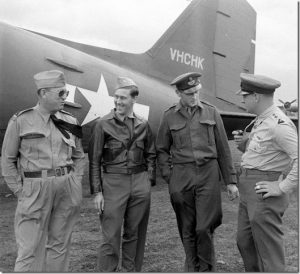
From February 1943, the Dutch crews were assigned a daily night courier service between General Douglas MacArthur’s headquarters in Brisbane and Port Moresby.
The courier carried operational orders from Brisbane to commanders in New Guinea and returned with reports from the field. The schedule generally required departure from Archerfield at approximately 8.30 p.m., departure from Townsville at around 1 a.m. and arrival at Port Moresby between 5 and 6 a.m.
The aircraft departed Port Moresby again at approximately 7 a.m. and returned through Townsville to Archerfield, arriving at about 5 p.m.
Because of the tropical weather, limited navigation facilities and exhausting schedule, the American transport command requested volunteers. The entire Dutch transport group reportedly agreed to undertake the assignment.
The Dutch crews operated this exclusive courier service for approximately eighteen months without a serious incident.
Wider transport operations
The Brisbane crews also supported American bomber units stationed in northern Australia and flew to an expanding range of destinations as the Allied advance continued through New Guinea.
Their routes eventually included Lae, Salamaua, Finschhafen and other recently captured airfields. They also transported Netherlands East Indies personnel and supplies to:
- No. 18 (Netherlands East Indies) Squadron at McDonald and Batchelor in the Northern Territory;
- No. 120 (Netherlands East Indies) Squadron at Merauke and later Biak;
- KNIL units and Dutch administrative detachments;
- the Netherlands Indies Civil Administration;
- the Netherlands Forces Intelligence Service; and
- the Netherlands East Indies Government-in-Exile.
Merauke became an important intermediate stop between Australia and northern New Guinea.
Personnel of Transport Section Brisbane, September 1943
The following nominal roll was recorded on 29 September 1943 under Headquarters Fifth Air Force Special Order No. 272. Names and ranks have been retained because they provide an important record of the Dutch and Netherlands East Indies personnel who operated the service.
Command and administration
- Major G.A. de Stoppelaar—administrative commander;
- Captain H.A. Berts—acting commander; and
- Captain G. van Messel—head of flying operations.
Pilots
- First Lieutenant F. van Breemen;
- First Lieutenant E.W. Dunlop;
- First Lieutenant P.A. Deenink;
- First Lieutenant A.G. Ekels;
- First Lieutenant A. Reyers;
- Adjutant Officer M.S. Rab; and
- L.C. Reyns.
Telegraphists and aviation wireless operators
- Adjutant Officer J.W. Hoogland;
- Adjutant Officer D.K.R. Sweitser;
- Sergeant W.J. van Aarem;
- Sergeant W.C. Bosson; and
- Sergeant J.W. Swart.
Flight engineers and airborne mechanics
- Sergeant A.C. Brand;
- Sergeant J. Gijzemijter;
- Sergeant A.F. van Rassel;
- Sergeant H. Schultz;
- Sergeant J. Elleman;
- Sergeant C. Kop;
- Sergeant J.A.J. Meier; and
- Sergeant J. de Reus.
Flight engineers frequently occupied the second pilot’s position and several received additional training as second pilots.
The Melbourne transport organisation
A separate transport organisation developed from the transport section of the NEI Aircraft and Personnel Pool at Fairbairn in Canberra. It began forming during late 1943 and initially supported No. 18 Squadron with Lockheed C-60A Lodestars and a Douglas C-47A Dakota.
The unit became the NEI Transport Section Melbourne, based at Laverton, on 1 February 1944. Unlike the Brisbane section, which initially flew American aircraft within the USAAF organisation, the Melbourne section operated Netherlands East Indies aircraft.
It transported personnel and equipment to Nos. 18 and 120 Squadrons and supported KNIL, NICA and NEFIS detachments in New Guinea. In April 1944, its crews participated in the movement of No. 120 Squadron’s personnel and equipment to Merauke.
Formation of Nos. 1 and 2 NEI Transport Squadrons
On 1 September 1944, the two transport organisations were reorganised:
- the Melbourne Transport Section became No. 1 Netherlands East Indies Transport Squadron; and
- the Brisbane Transport Division became No. 2 Netherlands East Indies Transport Squadron.
Major Wittert van Hoogland had commanded the Brisbane organisation but was hospitalised in the United States during June 1944. Major J. Verwijs assumed command on 21 August 1944.
No. 2 NEITS ceased operating as part of the American transport organisation and began working up as an independent Dutch unit. It officially became operational on 4 October 1944.
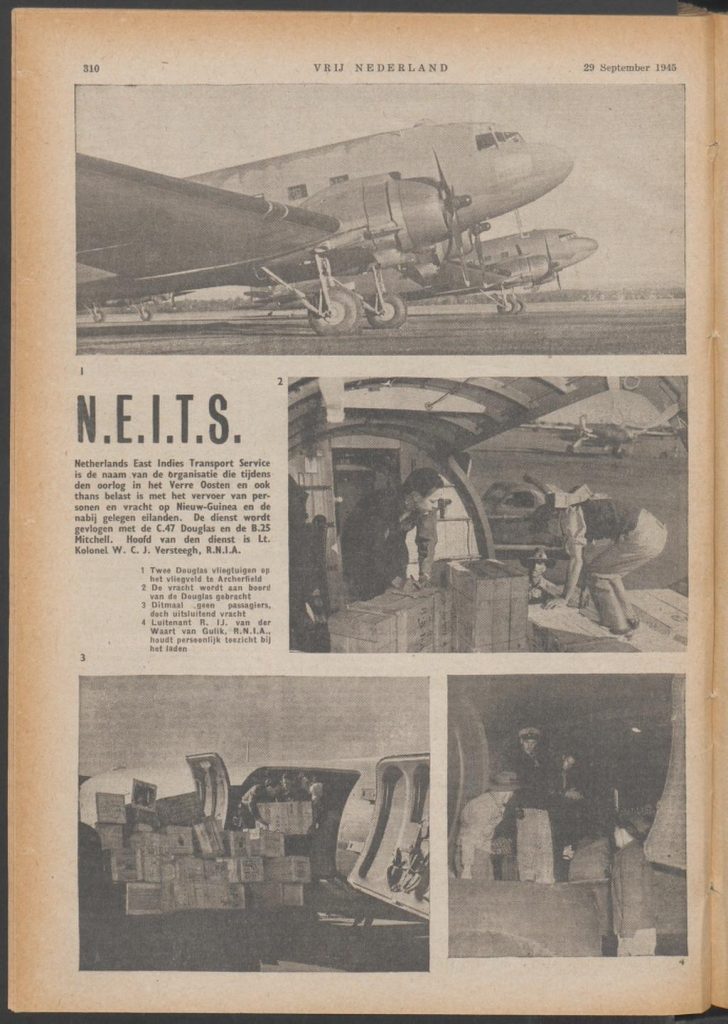
No. 1 NEITS transferred from Melbourne to Archerfield on 1 October 1944, completing its move during the following week. Approximately 100 Australian civilian technicians were recruited in Brisbane to help maintain the expanding transport fleet.
Maintaining two separate squadrons proved impractical because of shortages of trained personnel, mechanics and spare parts. On 7 November 1944, No. 2 NEITS was merged into No. 1 NEITS. The administrative transfer of its personnel was completed on 15 November, when No. 2 Squadron was formally dissolved.
The resulting No. 1 NEITS was a large and unusual organisation combining Dutch and Netherlands East Indies military personnel, former civilian airline employees, RAAF personnel and Australian civilian technicians.
Personnel of the combined squadron, November 1944
The following personnel were recorded in a nominal roll dated 7 November 1944.
Command and specialist appointments
- Major Engineer J. Verwijs—commanding officer;
- Captain G. van Messel—head of flying operations;
- Ensign D.K.R. Sweitser—assistant head of administration;
- Sergeant Major J. Gijzemijter—chief mechanic;
- First Lieutenant O. van Embden—navigation;
- First Lieutenant E.J. Visser—transport matters;
- Mr Brennan—transport matters; and
- Miss N. Sinclair—typist.
First pilots qualified as C-47A captains
- Captain A.G. Ekels;
- Captain A. Reyers;
- Captain Th.G. van der Schroeff;
- First Lieutenant E.W. Dunlop;
- First Lieutenant J.A. Deknatel;
- First Lieutenant E.J.C. Kiewiet de Jong;
- First Lieutenant H.F. Schenk;
- First Lieutenant J.L.M. Theunissen;
- First Lieutenant R.L.M. Swane; and
- First Lieutenant P. de Vos.
Second pilots
- First Lieutenant W. Buwalda;
- First Lieutenant W.A. Muurling;
- First Lieutenant J. Tuyt;
- Sergeant Major A.F. van Rassel;
- Sergeant Major H. Schulz;
- Sergeant Major W.L. de Bruin;
- Sergeant Major S.D.A. van Campen; and
- Sergeant Major B.H. Klaassens.
Telegraphists and aviation wireless operators
- Sergeant L.F. van den Berg;
- Sergeant H. van Beuge;
- Sergeant W.C. Bosson;
- Sergeant H.J.H.M. Corbiere;
- Sergeant J. Erkelens, Royal Netherlands Navy Air Service;
- Sergeant K.W.F. Groothof;
- Sergeant J.P. Loembang Tobing; and
- Sergeant R.J. Ismael.
Mechanics and flight engineers
- Sergeant Major A. Bruins;
- Sergeant Major E. de Graaff;
- Sergeant Major G. Elleman;
- Sergeant Major C. Kop;
- Sergeant Major J.A.J. Meyer;
- Sergeant Major A.C.J. Rens; and
- Sergeant Major J.W. Swart.
The presence of J.P. Loembang Tobing and R.J. Ismael is an important reminder that Indonesian personnel also served within the Dutch military aviation organisation.
Aircraft and maintenance
Immediately after the November 1944 merger, the enlarged No. 1 NEITS possessed aircraft of several types. Its operational fleet included:
- Douglas C-47 Dakota transport aircraft;
- Lockheed C-60A Lodestars;
- North American TB-25 Mitchells converted or employed for transport duties; and
- Lockheed Model 12A light transport and communications aircraft.
The authorised or paper strength and the number of serviceable aircraft varied continually. In January 1945, the combined squadron had 19 transport and communications aircraft: seven C-47s, three C-60As, five TB-25s and four Lockheed 12As.
Historical accounts also refer to a 24-aircraft establishment following the merger. This represented the enlarged organisation rather than a guarantee that 24 aircraft were simultaneously serviceable.
Major inspections and repairs were undertaken at several Australian locations. Australian National Airways performed work at Mascot and Essendon, while engines were overhauled at Wagga Wagga. Maintenance delays and shortages of spare parts remained continuing problems.
Supporting the Allied advance
From October 1944, regular services operated from Brisbane through Darwin to Merauke, Hollandia, Wakde, Noemfoor, Biak and Morotai. The squadron also maintained services between Brisbane and Melbourne for Dutch government and military officials.
The transport aircraft carried supplies and personnel for NICA, NEFIS, KNIL units and the operational squadrons. They also transported government officials, including Lieutenant Governor-General Dr Hubertus van Mook and Lieutenant General L.H. van Oyen.
During the Borneo campaign in 1945, No. 1 NEITS carried personnel and supplies to the captured airfields at Tarakan and Balikpapan. NICA personnel were flown into Balikpapan, and the route from Brisbane through New Guinea and Morotai was extended there after No. 18 Squadron transferred to Balikpapan.
No. 19 (Netherlands East Indies) Squadron RAAF
Because No. 1 NEITS performed both Allied operational assignments and national duties for the Netherlands East Indies government, its status within the Allied command structure created difficulties. The unit did not receive the same priority for equipment and spare parts as a recognised first-line Allied transport squadron.
The Dutch therefore sought its formal recognition within the RAAF organisation. This took effect on 15 August 1945, coincidentally the day Japan accepted the Allied surrender terms.
No. 1 NEITS became No. 19 (Netherlands East Indies) Squadron RAAF.
At the time of its formation, No. 19 Squadron was equipped with approximately:
- 13 Douglas C-47A and C-47B Dakotas;
- eight TB-25C and TB-25D Mitchells adapted for freight operations; and
- three Lockheed Model 12As.
Five Netherlands East Indies Lockheed C-60A Lodestars were also in the wider aircraft strength but were then on loan to the RAAF.
The Manila flight
No. 19 Squadron played a small but significant role in preparations for the formal Japanese surrender.
On 21 August 1945, Captain Gerson van Messel flew Lieutenant General L.H. van Oyen, acting commander of the KNIL, from Archerfield to Manila in a Douglas C-47. Van Oyen represented the Netherlands East Indies Government-in-Exile in the surrender preparations before continuing towards Tokyo aboard an American aircraft.
Relief and repatriation
Japan’s surrender created an immense humanitarian transport requirement. Hundreds of thousands of Allied prisoners of war and civilian internees across the Netherlands East Indies required food, medicine and evacuation.
In September 1945, No. 19 Squadron began relief operations associated with the Recovery of Allied Prisoners of War and Internees organisation, or RAPWI.
Dutch C-47s transported medical teams, nurses, food, equipment and other supplies from Australia towards Java and other parts of the archipelago. Return flights evacuated former prisoners and civilian internees.
On 13 September 1945, Dutch pilot Captain H.J.A.C. Arens flew TB-25 N5-129 from Singapore to Kemajoran airfield at Batavia carrying two British intelligence officers. This was reportedly the first Allied aircraft to land in Java after Japan’s surrender.
The squadron also helped restore government communications and carried NICA officials and technical personnel into areas returned to Allied control.
Rapid postwar expansion
The postwar workload required an enormous expansion of the transport fleet. Forty additional Dakotas were acquired: 39 from American surplus stocks in the United States and the Philippines and one DC-3D obtained from Douglas. Several surplus C-54 aircraft were also leased.
Not all aircraft were available simultaneously. Some were cannibalised to provide spare parts, while others were undergoing repair, conversion or transfer.
In February 1946, transport aircraft associated with No. 18 Squadron and aircraft from the Royal Netherlands Navy Air Service were transferred to the expanding transport organisation. No. 19 Squadron became closely connected with the Netherlands Indies Government Air Transport organisation.
The squadron progressively transferred aircraft, personnel and operations to Kemajoran Airport at Batavia. However, Archerfield remained an important training, maintenance and administrative base during the transition.
Between 1 January and 1 November 1946, the organisation reportedly flew approximately 43,000 hours and carried 110,000 passengers and 6.5 million kilograms of freight and mail.
The Indonesian struggle for independence
The transport organisation’s postwar operations took place amid the Indonesian struggle for independence. Australian trade unions imposed maritime bans on Dutch shipping associated with attempts to restore colonial authority, increasing reliance upon air transport.
Tensions between Australia and the Netherlands intensified after the first major Dutch military offensive against the Indonesian Republic in July 1947. These political developments formed the difficult background to the final phase of Dutch military aviation operations from Australia.
Departure from Archerfield
Most of No. 19 Squadron’s operational organisation had moved to the Netherlands East Indies by 1946, but maintenance, training and support activities continued at Archerfield into 1947.
The squadron was formally farewelled from Archerfield in 1947. A remarkable photograph shows Dutch personnel and family members standing on top of a Dakota while airport staff gathered below.
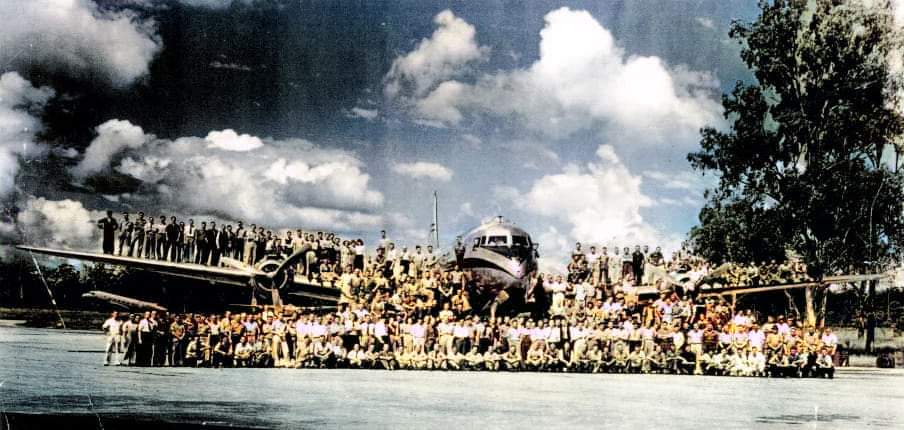
The last Dutch military aircraft departed Archerfield in September 1947, ending more than five years of Netherlands East Indies military aviation activity at the Brisbane airfield.
Historical significance
The Netherlands East Indies transport services maintained the connections upon which the Dutch military, intelligence and civil administration in exile depended.
Their aircraft and crews:
- carried MacArthur’s operational courier between Brisbane and New Guinea;
- supported Nos. 18 and 120 Squadrons;
- supplied KNIL, NICA and NEFIS personnel;
- connected the Netherlands East Indies Government-in-Exile with its dispersed organisations;
- supported the Allied advance into New Guinea and Borneo;
- delivered relief supplies after Japan’s surrender; and
- evacuated prisoners of war and civilian internees.
The service was a genuinely multinational undertaking. Dutch, Indonesian, Australian and American personnel—together with former civil airline employees and Australian civilian technicians—worked within an organisation that evolved continually in response to wartime necessity.
Related DACC articles
- DACC Air Force Research Portal
- The Dutch at Archerfield Airport, Brisbane
- Archerfield Memories—including the Netherlands East Indies Transport Service
- Joop Gijzemijter at the Netherlands East Indies Transport Service
- No. 120 (Netherlands East Indies) Squadron RAAF
- No. 18 (Netherlands East Indies) Squadron RAAF
- Merauke during World War II
Sources and further reading
- Gerben Tornij, Netherlands East Indies Air Transport Units of the ML-KNIL, 16 January 1943–1 November 1946, third revision, November 2025.
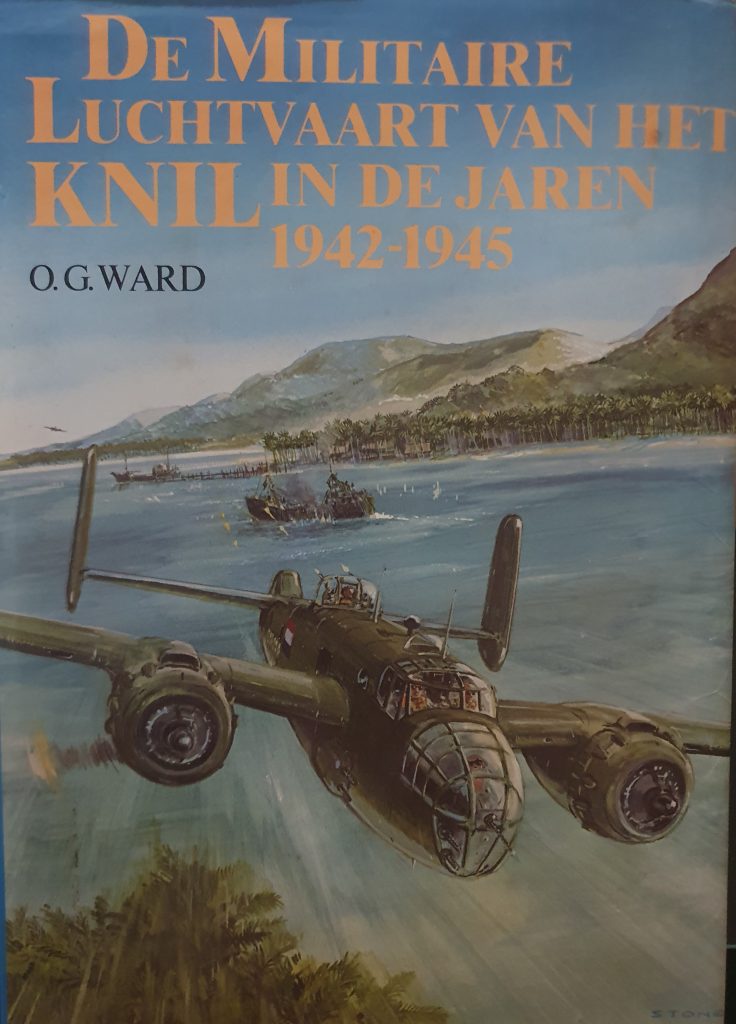
- O.G. Ward, De Militaire Luchtvaart van het KNIL in de jaren 1942–1945, National Library of Australia catalogue record.
- Archerfield Airport—history.