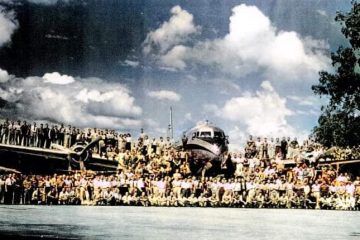
During October and November 1942, aircrews of No. 18 (Netherlands East Indies) Squadron RAAF undertook an intensive period of bombing and air-gunnery training at Nowra in New South Wales.
The training formed part of the squadron’s preparation for its transfer from Canberra to the Northern Territory, where it would begin operations against Japanese targets in the Netherlands East Indies.
Preparing the squadron for combat
No. 18 Squadron had been formed at Canberra on 4 April 1942. It brought together Dutch and Netherlands East Indies personnel with Australian aircrew, ground staff and administrative support.
By September 1942, the squadron had received eighteen replacement North American B-25 Mitchell bombers. The crews now needed to complete their operational training before moving to their northern war base at McDonald Airfield.
The program included navigation, formation flying, bombing, air-to-air firing and training in the operation of the B-25’s upper and lower gun turrets.
On 5 October, the squadron’s commanding officer, Major B.J. Fiedeldij, and its senior RAAF administrative officer, Squadron Leader Dawson, flew to Nowra to inspect the facilities and arrange an air-to-air firing course.
A road party left Canberra for Nowra on 12 October to prepare for the arrival of the aircraft and crews.
B-25 Mitchells arrive at Nowra
On 17 October, the first flight of three B-25 Mitchells arrived at Nowra for bombing and gunnery practice. Two flights from the squadron subsequently trained there in succession between 18 October and 15 November.
The exercises included practice bombing, firing the B-25’s machine guns and air-to-air firing against towed targets. The crews had already practised “splash and shadow shooting” over the sea near Moruya before progressing to live firing at Nowra.
The training involved both Netherlands East Indies and RAAF wireless operator–air gunners. Crew members needed to be able to operate more than one position in an emergency.
The B-25’s upper and lower turrets each carried two .50-calibre machine guns. The lower turret was particularly difficult to operate. Its gunner knelt over a sight connected to a mirror system, an arrangement that could cause air sickness and proved unsuitable for some crew members during extended use.
Problems with the gun turrets
The initial air-gunnery results at Nowra were poor, partly because of mechanical problems with the B-25 gun turrets. The turrets could tremble during firing—particularly during longer bursts—making it difficult for gunners to keep the target in their sights.
The squadron also tested a fixed forward-firing .50-calibre machine gun and locally manufactured ammunition containers and feed systems at Nowra.
The new Mitchells had arrived without all their intended armament installed. The machine guns had been supplied separately and needed to be fitted by the squadron. By the second half of November, the sixteen aircraft requiring flexible guns had received them, while all eighteen Mitchells had been equipped with fixed forward-firing guns.
Bombing practice
Bombardier training was complicated by the type of bombsight supplied with the replacement B-25s.
The crews had previously trained with the advanced Norden bombsight, but these instruments were no longer available after the squadron’s original Mitchells were transferred to the United States Army Air Forces.
The replacement aircraft carried the Estoppey D-8 bombsight. Most of the Dutch observers and bombardiers were unfamiliar with this equipment, and its capabilities were limited. It was unsuitable for accurate bombing from altitudes above approximately 1,200 metres and could not be used effectively at night without illumination from flares.
The absence of Norden sights also meant that the aircraft could not use the associated automatic flight-control equipment. The squadron sought Sperry Mark IX bombsights as replacements, but the first did not arrive until July 1943.
A shortage of 160-pound practice bombs further interrupted the training program. Only about ten remained in early October, forcing practice bombing to be suspended until additional supplies became available.
Weather delays
Heavy rain created further difficulties throughout October and November. Nowra airfield became unserviceable between 20 and 26 October and again between 30 October and 4 November.
Low cloud frequently prevented high-altitude bombing exercises, while the soft ground made B-25 operations difficult. On one occasion, B-25D N5-143 became bogged in the muddy airfield terrain.
These interruptions meant that not all the gunners, pilots, observers and bombardiers completed their intended training before the squadron began moving north. Some training consequently had to continue after No. 18 Squadron reached McDonald Airfield.
From Nowra to the operational area
The training at Nowra was an important intermediate stage between the squadron’s formation at Canberra and its deployment to northern Australia.
The first elements of No. 18 Squadron began moving north in December 1942. Its B-25 Mitchells progressively reached McDonald Airfield between late December 1942 and January 1943.
From McDonald, the squadron began flying reconnaissance and bombing operations against Japanese positions and shipping in the occupied Netherlands East Indies.
Although bad weather, equipment shortages and mechanical problems restricted the results achieved at Nowra, the training gave the squadron’s Dutch, Netherlands East Indies and Australian personnel essential experience with the aircraft and weapons they would soon use in combat.
A later Dutch connection with Nowra
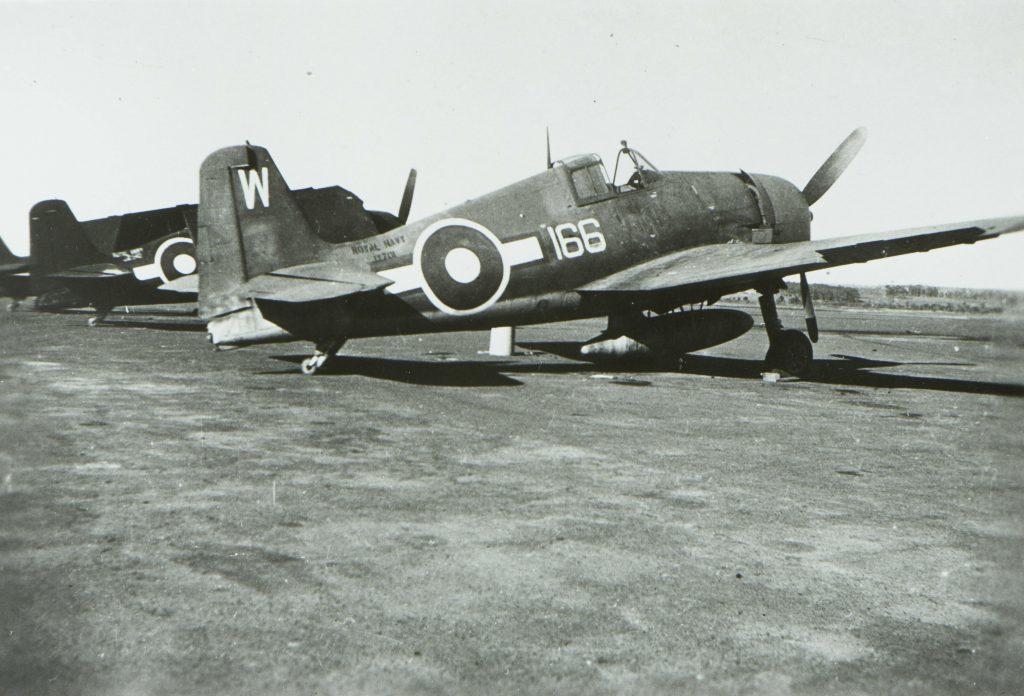
Nowra also had a later connection with Dutch military aviation. In 1945, Royal Navy Grumman F6F-3 Hellcats associated with the escort carrier HMS Speaker were stationed at Royal Australian Naval Air Station Nowra. Aircraft 166 was assigned to Dutch naval aviator Sub-Lieutenant H. Moekardanoe.
This activity was separate from No. 18 Squadron’s B-25 training at Nowra in 1942, but it demonstrates that Dutch airmen continued to use the base during the final year of the Pacific War.
Related DACC articles
- DACC Air Force Research Portal
- No. 18 (Netherlands East Indies) Squadron RAAF
- No. 18 Squadron moves to McDonald Airfield
- The Dutch at Batchelor Airport
- B-25 bombers ordered by the Dutch but transferred to the USAAF
Sources and further reading
Australian War Memorial, No. 18 (NEI) Squadron RAAF.
P.C. Boer, No. 18 (N.E.I.) Squadron RAAF, 1942–1943.