Between the Netherlands and Australia
The end of Dutch colonial rule in Indonesia led to the large-scale displacement of people connected to the former Netherlands East Indies (NEI). Between 1945 and the early 1960s, around 300,000 individuals left the archipelago. The majority settled in the Netherlands, while a smaller but historically significant group—estimated at 10,000 to 12,000—eventually migrated to Australia.
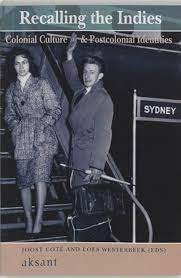
As explored in Recalling the Indies: Colonial Culture and Postcolonial Identities, this movement was not simply a relocation of people, but part of a broader transformation in which a colonial society was reshaped into dispersed postcolonial communities.
From colony to displacement
The departure from the Indies followed a sequence of disruptive events: the Japanese occupation, the collapse of Dutch colonial authority, and the Indonesian war of independence.
Indonesia remained a homeland, but for many Dutch nationals and Indo-Europeans it no longer offered a secure and predictable future. The end of colonial structures, shifting political realities, and changing social hierarchies made it increasingly difficult for these groups to maintain their position and way of life.
Migration in this context was not a conventional economic choice. It was shaped by the loss of a familiar environment and the need to relocate within a rapidly changing geopolitical landscape.
The Netherlands as primary destination
The Netherlands received the largest number of migrants from the former colony. For most, it represented the formal centre of citizenship and administration.
However, arrival in the Netherlands required adjustment to a society that differed markedly from life in the Indies. Migrants brought with them cultural practices shaped in Southeast Asia, multilingual backgrounds, and social norms influenced by a hybrid colonial environment.
A further complication was the limited recognition of their wartime experiences. Many Dutch and Indo-European people from the Indies had endured internment, forced labour, and severe deprivation during the Japanese occupation. Yet, upon arrival, these experiences did not always receive the attention or sympathy that might have been expected.
The Netherlands itself had only just emerged from the German occupation during World War II and was focused on its own recovery. Public awareness of events in Southeast Asia was limited, and returning migrants were often expected to adapt quickly. This contributed to a sense among many that their experiences were insufficiently acknowledged.
Within this environment, a distinct Indo-European identity developed—one shaped by both colonial experience and postwar displacement.
Australia as a secondary destination
Australia became an alternative destination for a smaller group of migrants from the NEI, often following an initial period in the Netherlands. This created a pattern of secondary migration that distinguished this group from Dutch migrants arriving directly from Europe.
Entry into Australia was shaped by the White Australia Policy, which applied racial criteria alongside nationality. While migrants from the Netherlands were generally accepted, those from the NEI—particularly Indo-Europeans—were subject to additional scrutiny.
In practice:
- Applicants were assessed on perceived European ancestry and appearance
- Informal criteria emerged, including the expectation that migrants be predominantly of European descent, sometimes described as being “51% white”
- Supporting evidence could include documentation of lineage and even family photographs
Entry increased gradually from the late 1950s onward, as Australia began to apply more flexible interpretations of these policies, particularly in relation to people of mixed European and Asian descent. Nevertheless, the selection process shaped the composition of the community that eventually settled in Australia.
Settlement and identity in Australia
Once in Australia, migrants from the NEI became part of a broader Dutch migrant community, but their background remained distinct.
Their identity reflected a combination of Dutch and Indonesian cultural elements, shaped by life in the colonial Indies rather than in Europe. Cultural expression often continued within the private sphere, including food traditions, family life, and informal community networks.
At the same time, the assimilation framework of the period limited public recognition of these differences. Integration into the workforce and wider society was prioritised, and specific Indo-European identities were often not widely acknowledged.
Australia in the postcolonial continuum
Including Australia in this narrative extends the perspective offered in Recalling the Indies. While the book focuses largely on memory and identity in relation to the Netherlands, the Australian experience highlights additional dimensions.
It shows how migration policy influenced the formation of postcolonial communities, how selective entry shaped demographic outcomes, and how identity developed within a different national framework.
It also connects with wartime history. Australia, and Brisbane in particular, played a role as a base for the NEI government-in-exile and associated personnel. This creates a broader historical arc linking colonial society in the Indies, wartime relocation, and postwar migration.
Conclusion
Migration from the former Netherlands East Indies to the Netherlands and Australia reflects a complex transition from a colonial society to dispersed postcolonial communities.
The Netherlands absorbed the majority, but Australia provides a distinct and complementary case. Here, migration was shaped by national immigration policy and resulted in a smaller, more selectively formed community.
For the Dutch Australian Cultural Centre, this dual perspective strengthens the broader narrative of shared heritage. It connects the histories of the Netherlands, Indonesia, and Australia, and highlights how global events reshaped communities across multiple continents.
Paul Budde (April 2026)