Paul Budde is an Australian telecommunications pioneer, public historian and heritage advocate. Throughout more than five decades of professional and community activity he has worked to strengthen the relationship between the Netherlands, his country of birth, and Australia, his adopted home. Initially this was through telecommunications, digital innovation and international trade, and more recently through historical research, heritage preservation and international collaboration. His work reflects a lifelong commitment to connecting people, organisations and ideas while making knowledge accessible to the wider community.
Early life
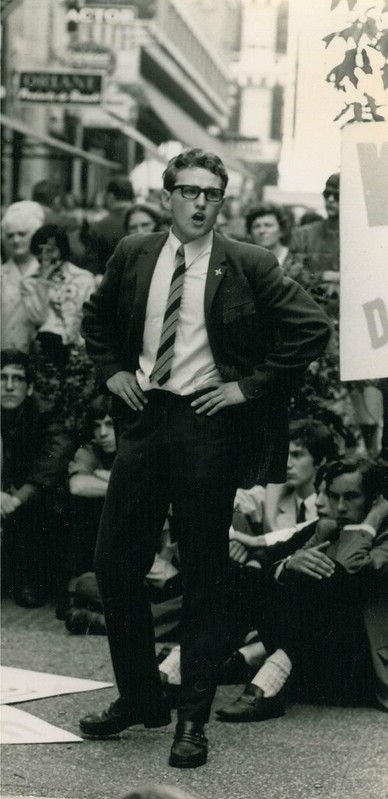
Paul was born in Vught, the Netherlands, on 8 September 1950. His parents, Herman Budde and Annie Velthuis, were both born in Ootmarsum. Their experiences during the Second World War would later inspire Paul’s lifelong interest in history and much of his historical research. (See also: The War of my Parents.
In 1953 the family moved to Oss, where Paul grew up with his sister Monique and brother Rob.
After completing his education and military service, Paul worked for Rank Xerox in Amsterdam. In 1978 he established his own company, Copy Team, a service bureau specialising in advanced copying, word processing and videotex technology—one of the forerunners of today’s internet.
Paul married Louise van Daal in 1972. Together they have three children: Merlijn, Erwin and Ravian. In 1983 the family emigrated to Australia, initially settling in Sydney before later moving to Bucketty in the Hunter Valley. Since 2019 Paul and Louise have lived in Brisbane.
Telecommunications and digital transformation
Following his arrival in Australia, Paul expanded his business into the emerging telecommunications and online information industries. He assisted Telecom Australia, later Telstra, in introducing the national Viatel online service and his company developed what is regarded as the world’s first national telebanking service for the Commonwealth Bank of Australia.
Recognising the transformational potential of digital communications long before the internet became mainstream, Paul established BuddeComm as an international telecommunications research and consultancy company. Over the following decades it developed into one of the world’s leading independent research organisations covering broadband, telecommunications, digital infrastructure and emerging technologies.
Long before broadband became mainstream public policy, Paul argued that digital infrastructure should be regarded as essential national infrastructure, comparable with transport, energy and water. Many of the ideas he promoted during the 1990s and early 2000s later became central to national broadband strategies adopted around the world.
During the BuddeComm years Paul advised governments, regulators, international organisations and industry throughout Australia, the United States, the United Kingdom, Ireland, the Netherlands, New Zealand and Qatar on telecommunications policy, broadband infrastructure, digital transformation, smart cities and smart energy.
His expertise led to invitations as keynote speaker at major international conferences throughout North America, Europe, Asia and Australasia, including Washington, Dallas, Amsterdam, Milan, Tokyo, Beijing, Kuala Lumpur, Chennai, Sydney, Melbourne, Auckland and Wellington, where he helped shape discussions on broadband policy, digital infrastructure and smart city development.
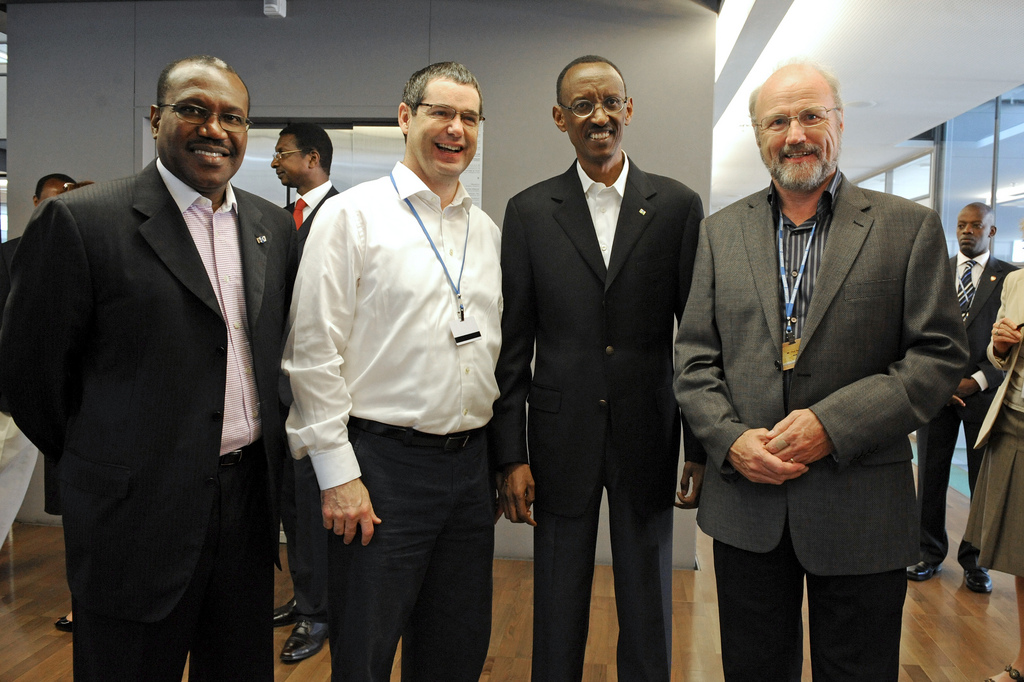
Paul served as strategic adviser to Australian Minister for Broadband, Communications and the Digital Economy Senator Stephen Conroy during the development of Australia’s National Broadband Network. He also discussed broadband policy with senior officials in the United States, including advisers to President Barack Obama, together with ministers and government leaders in the Netherlands, Britain, Ireland, New Zealand and several Asian countries.
Together with ITU Secretary-General Dr Hamadoun Touré, Paul was the co-founder of the UN Broadband Commission for Digital Development. He was also the lead author of one of the Commission’s first reports presented to United Nations Secretary-General Ban Ki-moon in 2010, helping establish the Commission as an influential international forum promoting broadband as a driver of economic and social development.
He became one of the earliest international advocates of broadband as essential national infrastructure, arguing that digital networks should be regarded alongside transport, energy and water infrastructure.
In recognition of his contribution to Australia’s telecommunications industry Paul received the Charles Todd Medal in 2017. That same year BuddeComm was acquired by the French company Ubiquick, which continues to operate under the BuddeComm name. Paul subsequently established Paul Budde Consultancy through which he continues selected consultancy and writing activities.
Building Dutch-Australian connections
Throughout both his professional and community life Paul has remained committed to strengthening the relationship between the Netherlands and Australia.
During his telecommunications career he helped facilitate commercial, technological and governmental links between the two countries. He was closely involved in organising four major trade missions—three from the Netherlands to Australia and one Australian mission to the Netherlands—bringing together government leaders, industry, researchers and innovators to promote bilateral cooperation.
These initiatives involved interactions with successive Dutch Prime Ministers and Australian ministers and reflected the growing importance of cooperation between the two countries in telecommunications, innovation and digital technologies.
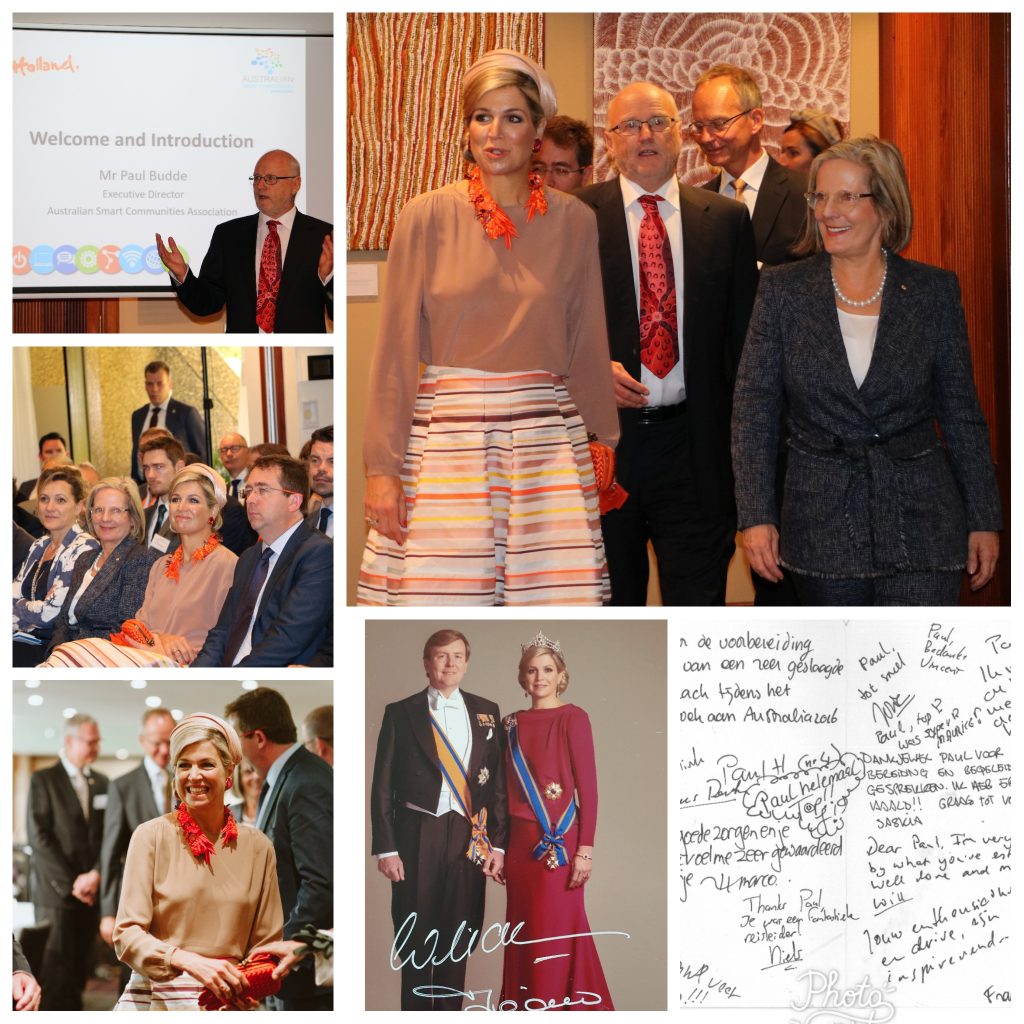
One of the highlights was the 2006 Dutch trade mission to Australia, led by the then Crown Prince Willem-Alexander and Princess Máxima, during which Paul participated in a breakfast meeting with the royal couple. Ten years later, during the 2016 Dutch economic mission led by King Willem-Alexander and Queen Máxima, Queen Máxima was Paul’s special guest at the Netherlands -Australia Smart Cities Conference in Sydney.
In recent years this commitment has increasingly shifted towards heritage and historical collaboration, helping establish long-term partnerships between organisations in Australia, the Netherlands, Indonesia, the United Kingdom and the United States.
History and heritage
Alongside his telecommunications career, Paul maintained a lifelong passion for history. While living in Oss he served as local historian, publishing numerous historical articles and several books. He was also instrumental in re-establishing the role of the Jan Cunen Museum as a local cultural institution and in establishing the municipality’s Heritage Commission.
After moving to Australia he founded the Convict Trail Project, dedicated to conserving and promoting the 220-kilometre Great North Road between Sydney and the Hunter Valley, constructed by convict labour between 1826 and 1836. In recognition of this work he received the NSW Government Heritage Volunteers Award in 2002.
In 1988 Paul spent two weeks living with an Aboriginal community in Central Australia. The experience profoundly influenced his understanding of the importance of cultural heritage, oral history and storytelling. It reinforced his belief that history is not only preserved in archives and museums, but also in the memories, traditions and lived experiences of communities. Many years later this philosophy would shape his work with the Dutch Australian Cultural Centre and the Camp Columbia Heritage Association, where community stories, interviews and personal histories have become central elements of their research and public engagement. (See also: Traveling in the dreamtime Paul’s stay with Pitjantjatjara people in 1988)
Over time his historical interests increasingly focused on the shared history of Australia, the Netherlands and the former Netherlands East Indies during the Second World War, together with Dutch migration to Australia. His research combines archival investigation with storytelling, making historical knowledge accessible to both researchers and the broader community.
Dutch Australian Cultural Centre
Paul was involved with the establishment of the Dutch Australian Cultural Centre (DACC) in 1984. He rejoined the organisation in 2017 and was elected Chairman in 2018.
Under his leadership the DACC has undergone a major transformation into Australia’s leading digital archive of Dutch-Australian heritage. The organisation has substantially expanded its collections, digitised thousands of historical photographs and documents, strengthened its governance and developed partnerships with archives, museums, universities and heritage organisations in Australia, the Netherlands and Indonesia.
Paul has personally researched and written more than 1,500 articles, making him one of Australia’s most prolific authors on Dutch-Australian history.Covering Dutch migration, military and political history, biographies, maritime history, the Netherlands East Indies in Australia, and many other aspects of the shared Dutch-Australian story. His work has helped make the DACC website one of the most comprehensive freely accessible resources on Dutch-Australian history.
Camp Columbia Heritage Association
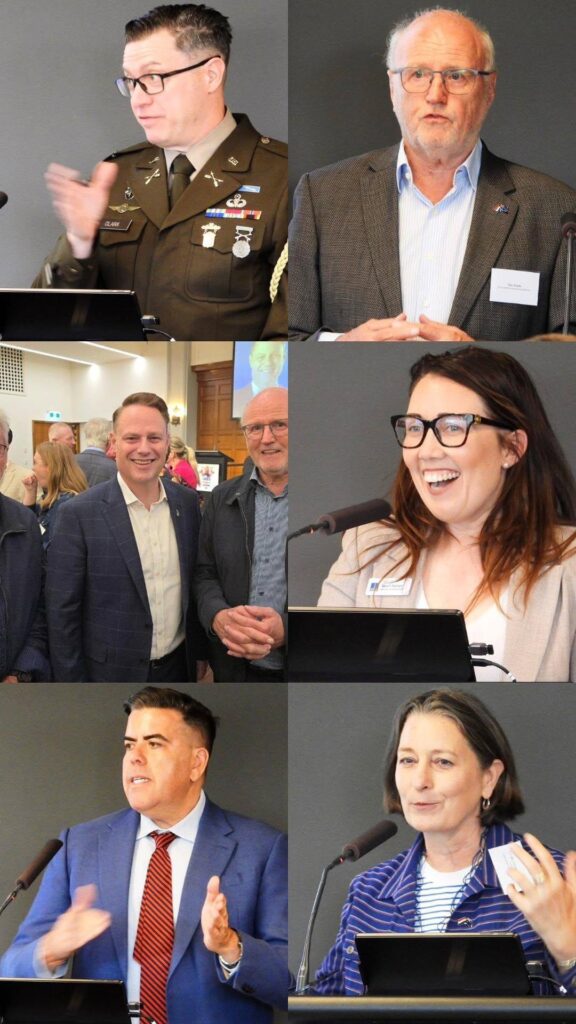
Since 2022 Paul has served as Chairman of the Camp Columbia Heritage Association Inc.
Working with Australian and international partners, he has helped establish collaborative programmes involving the University of Queensland, the National Trust of Australia (Queensland), centred on Wolston House, the Cultural Heritage Agency of the Netherlands (RCE), Bronbeek, the National Archives of Australia, the National Archives of the Netherlands, the Dutch Embassy in Canberra and a growing number of heritage organisations in Australia, the Netherlands, Indonesia, the United Kingdom and the United States.
He has played a leading role in developing the concept of Brisbane as the Allied Capital of Australia during the Second World War. This work culminated in the international symposium Brisbane – Allied Capital of Australia during World War II, sponsored by the Dutch Government, with a civic reception hosted by the Lord Mayor of Brisbane. The symposium brought together researchers, heritage professionals and community organisations from Australia, the Netherlands, Indonesia, the United Kingdom and the United States, laying the foundation for an expanding programme of international collaboration. The symposium brought together researchers, heritage professionals and community organisations from Australia, the Netherlands, Indonesia and the United States, laying the foundation for an expanding programme of international collaboration in research, archaeology, exhibitions and education.
The symposium has become the foundation for an expanding programme of international collaboration involving historical research, archaeology, exhibitions, education and public presentations. These initiatives are creating new opportunities to tell the shared wartime history of Australia, the Netherlands, Indonesia, the United Kingdom and the United States through collaborative research and public engagement.
Publications and public engagement
Throughout both his professional and historical careers Paul has remained committed to making complex subjects accessible to a broad audience. He continues to write on telecommunications, digital policy, artificial intelligence, international affairs and history, and is a regular columnist for Independent Australia.
Legacy
Throughout more than fifty years of professional and community activity Paul has sought to connect people, institutions and ideas.
Whether helping shape broadband policy, strengthening Dutch-Australian trade and innovation, conserving Australia’s convict heritage, or documenting the shared wartime history of Australia, the Netherlands and Indonesia, his work has consistently focused on building bridges between countries, communities and generations.
Throughout his career Paul has believed that knowledge only achieves its full value when it is shared. Whether through telecommunications policy, digital innovation or historical storytelling, his work has consistently focused on making information accessible, connecting communities and preserving shared heritage for future generations.