From Friesland to Tasmania
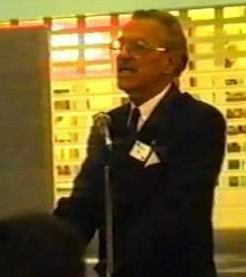
Roelf Vos (1921–1992) was a Dutch-Australian entrepreneur who established one of Tasmania’s most successful supermarket chains. His business activities helped transform food retailing in northern Tasmania and subsequently expanded into property development, tourism and construction.
Vos was born on 4 October 1921 at Bergum (now Burgum), Friesland, the Netherlands. His father operated a barge transporting goods along Dutch waterways and later established a delivery business.
Roelf left school at fourteen and gained experience in the family business and a drapery shop.
During the Second World War, he became involved in the Dutch Resistance and was forced into hiding to avoid arrest by the German occupying authorities.
After the war, he established a successful drapery business at Oude Pekela in Groningen. In 1946, he married Harmina Catharina (Miep) Nieboer.
Despite their relative prosperity, the couple became concerned about the possibility of another European conflict and decided to emigrate.
A difficult beginning in Australia
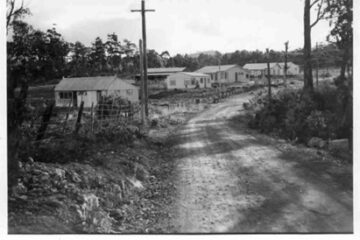
Roelf and Miep Vos arrived in Sydney with their three children on 21 February 1951. After spending time at the Bathurst migrant camp, they moved to Ulverstone in Tasmania the following month.
Their decision to settle in Tasmania was encouraged by another Dutch migrant, Engel Sypkes, who subsequently established the Purity supermarket chain in southern Tasmania.
Like many post-war migrants, the family initially faced financial hardship and language difficulties.
Roelf worked as a builder’s labourer during the day and at a cannery in the evenings. Both he and Miep spoke little English, and they experienced homesickness during their early years in Australia.
Nevertheless, the presence of an established Dutch community and support from local Tasmanians helped them adjust to their new circumstances.
From gift shops to supermarkets
In 1953, Vos moved to Deloraine, where he established a gift shop. His brother Harry managed the shop while Roelf worked as a travelling salesman.
A second shop followed at George Town in 1956.
Vos soon recognised that food retailing offered better prospects than giftware. In 1957, he sold the shops and moved his family to Launceston.
There he rented a milk bar and converted it into a self-service grocery store, introducing a form of retailing that was still relatively unfamiliar in northern Tasmania.
The new approach allowed customers to select goods directly from shelves rather than relying on traditional counter service.
Vos combined competitive prices with innovative advertising. One memorable promotion involved painting footprints on Launceston footpaths to direct customers towards his shop.
The business became known as Roelf Vos Supermarkets, popularly referred to as Vossie’s.
The growth of a Tasmanian supermarket chain
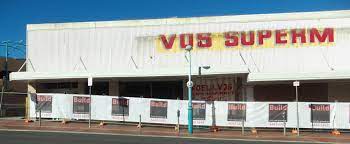
The business expanded rapidly during the 1960s and 1970s.
By the time it was sold, the Roelf Vos chain comprised thirteen supermarkets across northern Tasmania and employed approximately 500 people.
Vos also helped establish Statewide Independent Wholesalers, a cooperative purchasing organisation that enabled independent retailers to negotiate more competitive prices.
His business success reflected an ability to identify changing consumer habits, introduce new retailing methods and develop strong relationships with staff and customers.
In southern Tasmania, Engel Sypkes developed the Purity supermarket chain. The two Dutch migrant entrepreneurs became important figures in the modernisation of Tasmania’s grocery industry.
Read the DACC article on the entrepreneurial Sypkes family.
Sale to Woolworths in 1982
In 1982, Vos sold his supermarket operations to Woolworths.
At the time, the chain reportedly had an annual turnover of approximately $40 million.
Although ownership changed, Woolworths continued trading under the Roelf Vos name for approximately twenty years.
The name remained familiar to generations of Tasmanian shoppers, reflecting the company’s prominent place in the state’s retail history.
Vos retained property interests and turned his attention increasingly towards new development projects.
Grindelwald – A Swiss village in Tasmania
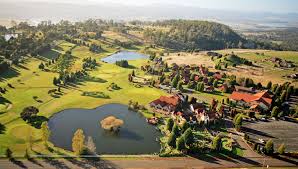
One of Vos’s most distinctive projects was the development of Grindelwald, a Swiss-style village and resort in the Tamar Valley north of Launceston.
Inspired by family holidays in Switzerland, Roelf and Miep wanted to create a residential and tourist development incorporating Swiss-style architecture, accommodation, shops and recreational facilities.
Development began in 1983, with Roelf’s eldest son Michael becoming closely involved. His second son, Harry, joined the enterprise in 1989.
Grindelwald became a recognised Tasmanian tourist destination and demonstrated Vos’s willingness to pursue ambitious projects beyond supermarket retailing.
The Vos family and Laver Construction
The Vos family’s business interests continued to develop after Roelf’s death in 1992.
Under the leadership of his sons, particularly Michael and Harry, the family increasingly concentrated on property development, construction and joinery.
In 1997, the Vos family acquired Laver Pty Ltd, an established Tasmanian construction company.
Laver had connections with the Dutch migrant community at Kingston. Dirk Verdouw, who arrived in Tasmania as a teenager, recalled working for 24 years in the construction company operated by his brothers.
Laver was also involved in the commercial development of Kingston, including a shopping centre adjoining the Channel Court development associated with Dutch migrant businessman Reg Doedens.
The acquisition therefore created a further connection between Dutch-Australian business families in northern and southern Tasmania.
The company subsequently developed under the name Vos Construction and Joinery.
In 2008, the Vos Group expanded its construction activities through the acquisition of Matthews Constructions in north-western Tasmania.
These developments extended the family’s business interests well beyond the original supermarket chain.
Community involvement and philanthropy
Roelf Vos was also known for his commitment to community organisations and charitable activities.
He supported Rotary, the Clifford Craig Medical Research Trust, the Queen Victoria Museum and Art Gallery in Launceston, and Launceston Christian School.
In 1987, the family business established the Vos Foundation to formalise its philanthropic activities.
His Christian faith remained an important part of his life. He served as an elder of the Reformed Church in Launceston and maintained close connections with his family and community.
Roelf Vos died at his home in Grindelwald on 2 December 1992, aged 71.
He was survived by Miep and their six children.
A Dutch-Australian business legacy
Roelf Vos’s life illustrates the contribution of post-war Dutch migrants to Tasmania’s economic and social development.
Arriving with limited English and facing difficult financial circumstances, he built a retail business that became a household name throughout northern Tasmania.
His introduction of self-service shopping, competitive pricing and innovative marketing contributed to significant changes in the state’s grocery industry.
The later development of Grindelwald and the Vos family’s expansion into construction demonstrate how the enterprise continued to evolve across generations.
The family’s acquisition of Laver Construction also connects the Vos story with the Dutch migrant building enterprises associated with Little Groningen at Kingston.
Together, these developments form an important part of Tasmania’s Dutch-Australian business heritage.
Sources and further reading
- Roelf Vos (1921–1992) – Australian Dictionary of Biography, by J. Richards, Australian National University.
- Roelf Vos – Companion to Tasmanian History, by Michael Vos, University of Tasmania.
- Vos Construction and Joinery – Company history, documenting the development of the family business and acquisition of Laver in 1997.
- The entrepreneurial Sypkes family in Tasmania, Dutch Australian Cultural Centre.
- Reg Doedens – A life of faith, resilience and community, Dutch Australian Cultural Centre.
Related research
This article is included in the Dutch Australian Cultural Centre’s Research Portal – Little Groningen: Dutch migration, faith and community in Kingston, Tasmania.
The portal brings together historical research, personal and family stories, business histories and archival material documenting Dutch migration and community development in Kingston and across Tasmania.