The Zeewijk was a new ship of the Zeeland Chamber of the VOC, her maiden voyage was from Vlissingen (Netherlands) to Batavia departing in November 1726 with 208 seamen and soldiers aboard, as well as a cargo of general building supplies and 315,836 guilders in 10 chests. Jan Steyns from Middelburg was the skipper.
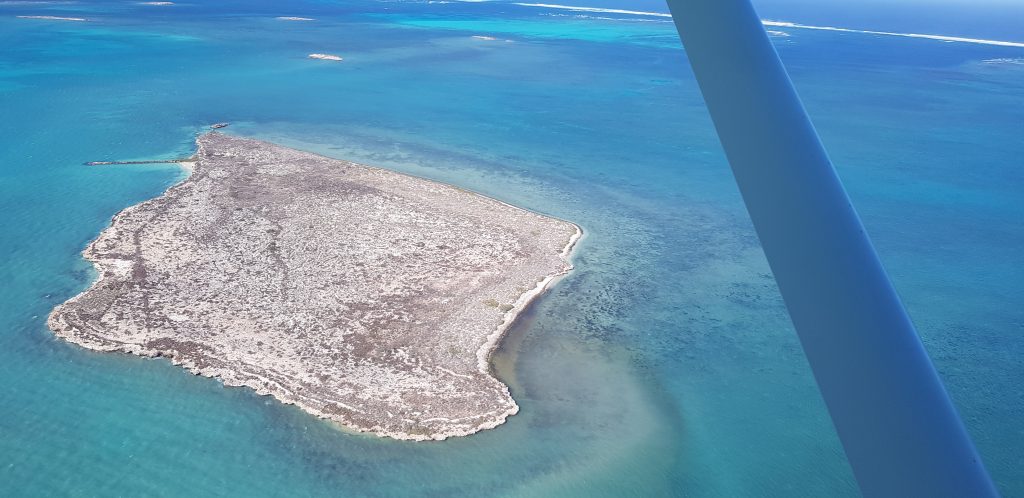
In darkness at 7:30 p.m. on 9 June 1727 the ship crashed heavily into Half Moon Reef on the western edge of the Pelsaert Group of the Houtman Abrolhos island group. Survivors reached what would be later known as Gun Island. Much of the cargo was rescued as well.
In October the crew started to construct a vessel to carry them to Batavia; the Sloepie. Utilising materials from the wreck (including two swivel mounted cannon to protect the treasure from pirates) and local mangrove timber she became a 20 m (66 ft) long by 6 m (20 ft) wide sloop, resembling a North Sea fishing vessel. Launched on 28 February 1728, the Sloepie was the first ever European ship built in Australia. On 26 March, 88 men set off on the one-month journey to Batavia. Six died on the way, leaving 82 of the initial 208 to arrive in Batavia on 30 April 1728.
In 1840 HMS Beagle found relics at the camp site, including a VOC cannon and two coins dated 1707 and 1720 which helped to confirm that the site belonged to the Zeewijk. They named the Zeewyk Channel after the wreck. Much more artefacts were found of the following century.
The Zeewijk was a new ship of the Zeeland Chamber of the VOC, her maiden voyage was from Vlissingen (Netherlands) to Batavia departing in November 1726 with 208 seamen and soldiers aboard, as well as a cargo of general building supplies and 315,836 guilders in 10 chests. Jan Steyns from Middelburg was the skipper.
In darkness at 7:30 p.m. on 9 June 1727 the ship crashed heavily into Half Moon Reef on the western edge of the Pelsaert Group of the Houtman Abrolhos island group. Survivors reached what would be later known as Gun Island. Much of the cargo was rescued as well.
In October the crew started to construct a vessel to carry them to Batavia; the Sloepie. Utilising materials from the wreck (including two swivel mounted cannon to protect the treasure from pirates) and local mangrove timber she became a 20 m (66 ft) long by 6 m (20 ft) wide sloop, resembling a North Sea fishing vessel. Launched on 28 February 1728, the Sloepie was the first ever European ship built in Australia. On 26 March, 88 men set off on the one-month journey to Batavia. Six died on the way, leaving 82 of the initial 208 to arrive in Batavia on 30 April 1728.
In 1840 HMS Beagle found relics at the camp site, including a VOC cannon and two coins dated 1707 and 1720 which helped to confirm that the site belonged to the Zeewijk. They named the Zeewyk Channel after the wreck. Much more artefacts were found of the following century.