Introduction
The Snowy Mountains Hydro-Electric Scheme occupies a central place in Australia’s postwar history. Conceived as a nation-building project, it reshaped Australia’s energy and water systems while simultaneously transforming the country’s demographic profile. Between the late 1940s and the 1970s, the Scheme attracted tens of thousands of workers, the majority of whom were migrants from Europe.
Among them were Dutch migrants who arrived in Australia during the large postwar migration wave of the 1950s. Although never organised as a distinct national contingent, Dutch workers formed a visible and active part of the Snowy workforce and the communities that developed around it. Their involvement illustrates how Dutch migration combined labour, social life and long-term settlement in Australia.
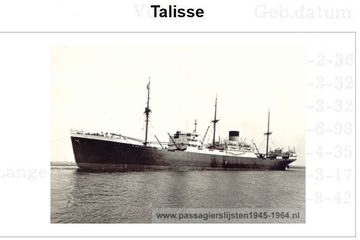
Postwar Dutch migration to Australia
After the Second World War, the Netherlands faced severe housing shortages, economic disruption and population pressure. Australia, pursuing rapid industrial development, actively recruited European migrants through assisted passage schemes. Dutch migrants were well represented in this movement and were often regarded as skilled, adaptable and well suited to industrial and construction work.
For many newly arrived Dutch migrants, large infrastructure projects offered immediate employment. The Snowy Mountains Scheme, with its scale, labour demands and relative proximity to major settlement centres, became one of the key destinations for migrant workers during the 1950s.
Dutch workers on the Snowy Mountains Scheme
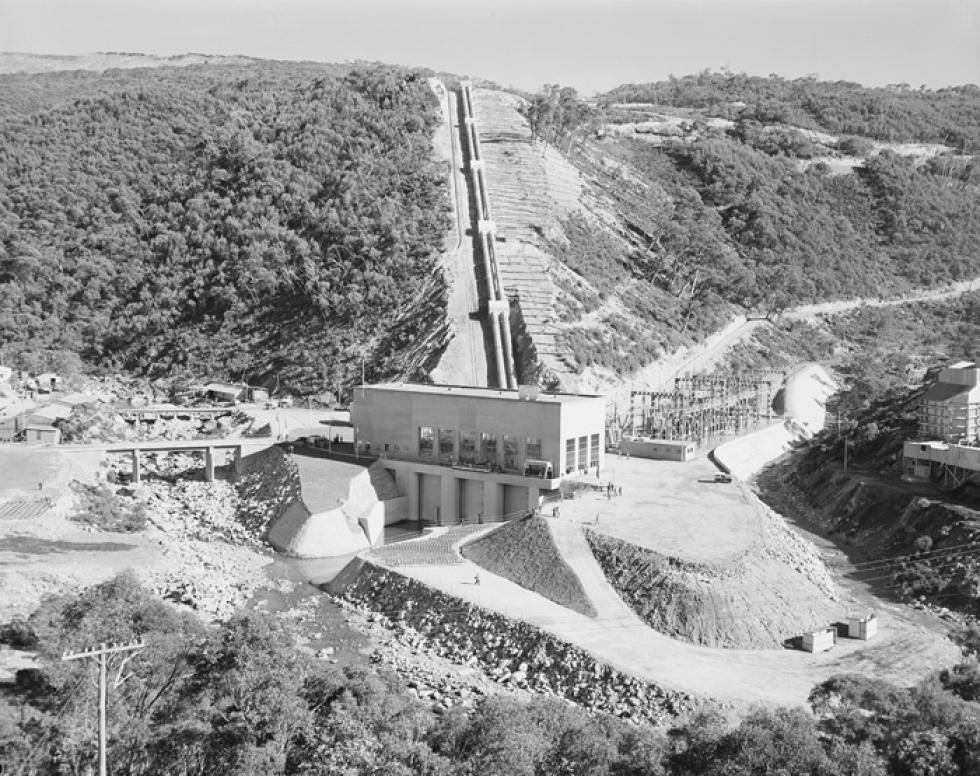
Dutch migrants worked on the Snowy Mountains Scheme in a wide range of roles. These included construction labour, mechanical and electrical trades, transport, tunnelling support, and camp-based services. Employment was often physically demanding and took place in remote alpine conditions, with long working hours and limited amenities.
Individual biographies provide insight into this experience. Gerard van Wezel, migrated to Australia in the early 1950s and worked on the Snowy Mountains Scheme. Like many migrants, his work life and personal life became closely intertwined at the Snowy, where social contact was largely shaped by the workplace and associated camps.
Dutch workers were dispersed across multiple sites rather than concentrated in a single location. This reflected both the organisation of the Scheme and the generally pragmatic approach of Dutch migrants, who tended to integrate quickly into mixed work teams rather than forming separate national groups.
Football, leisure and community life
While work dominated daily life, leisure activities were essential to maintaining morale and social cohesion. Football (soccer) played a particularly important role for European migrants, including the Dutch. Informal kickabouts, organised teams and competition against nearby towns or camps provided structure, familiarity and a sense of normality in an otherwise transient environment.
Dutch-named clubs such as Hollandia in the Snowy Mountains region emerged from this context. These clubs were not only sporting organisations but also social anchors, bringing together workers from different camps and backgrounds. Match days became social events where friendships were formed, information was exchanged and cultural ties were reinforced.
Such activities helped migrants cope with isolation and uncertainty, especially for those whose families were still overseas or newly arrived. Community life at the Snowy was therefore inseparable from recreation and sport.
Housing, construction and Dutch entrepreneurship
The Snowy Mountains Scheme also stimulated innovation in construction and housing, particularly in remote and alpine environments. This intersected with the emergence of Dutch-Australian entrepreneurship in the postwar building industry.
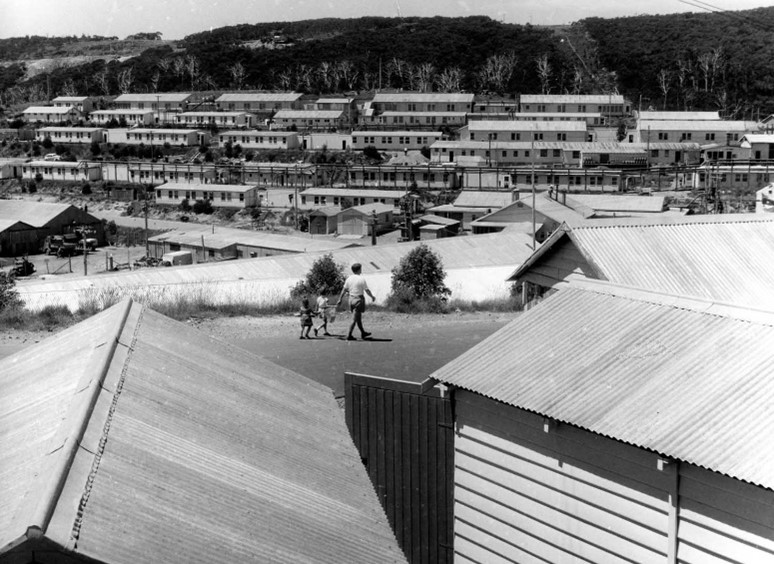
Dick Dusseldorp, later a prominent figure in Australian construction and property development, was part of a broader cohort of Dutch migrants whose experience in large-scale projects contributed to new approaches in building and prefabrication. Dutch-linked firms were involved in developing and supplying accommodation solutions suited to the harsh Snowy conditions, including prefabricated housing used in worker settlements.
These developments extended the Dutch contribution beyond direct labour, embedding Dutch technical and organisational expertise into the infrastructure that sustained the workforce.
From Snowy employment to long-term settlement
For many Dutch migrants, employment on the Snowy Mountains Scheme was temporary but transformative. Once construction phases ended or contracts expired, workers often moved on to urban centres such as Canberra, Sydney and Melbourne.
The social networks formed at the Snowy frequently carried over into later life. Former co-workers remained connected through friendship, sport, churches and community organisations. In this way, the Snowy acted as a social crossroads that shaped patterns of Dutch settlement well beyond the mountains themselves.
Significance for Dutch-Australian history
Dutch participation in the Snowy Mountains Scheme highlights several defining characteristics of Dutch migration to Australia: a strong work ethic, practical integration into mixed environments, and a tendency to build community through everyday activities rather than formal institutions alone.
Although Dutch migrants were never the most visible group on the Snowy, their contribution forms part of the broader migrant effort that made the Scheme possible. Through labour, entrepreneurship and community building, Dutch migrants helped shape one of Australia’s most iconic national projects while laying the foundations for long-term settlement and contribution to Australian society.
For the Dutch Australian Cultural Centre, the Snowy Mountains Scheme provides an important lens through which individual migrant stories, community life and national history intersect.