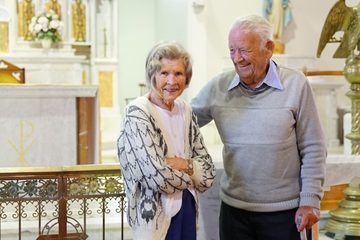
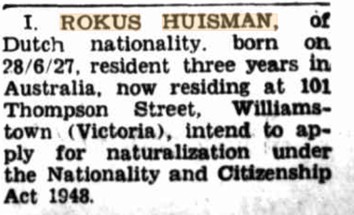
From the Netherlands to Tasmania

The Sypkes family made a significant contribution to Tasmania’s post-war economic development, particularly through the introduction of self-service supermarkets, discount retailing, property development and investment in technology businesses.
The family’s Australian story began with Engel Sypkes (1921–2015), who migrated from the Netherlands to Tasmania in 1951 with his wife Annie (née Vos) and their children.
Engel had grown up in a family involved in the drapery trade. His early business experience in the Netherlands provided a foundation for his subsequent activities in Australia.
The family initially settled in north-western Tasmania, where Engel worked in several occupations before establishing a general store at Stanley and later a book and gift shop at Smithton.
Their migration was closely connected with that of another Dutch family, Roelf and Miep Vos, who also arrived in Tasmania in 1951. The two men knew each other from the Netherlands and subsequently became prominent figures in Tasmania’s supermarket industry.
The establishment of Purity supermarkets
During the 1950s, Engel Sypkes travelled to the United States to investigate developments in retailing.
Together with fellow businessman Arthur Ambrose, he studied American self-service supermarkets and modern merchandising methods. Their investigations included training with the National Cash Register company in Dayton, Ohio.
Sypkes subsequently returned to America with Roelf Vos to investigate further developments in retailing.
In November 1958, Engel opened the first Purity supermarket in Hobart.
The business introduced customers to a different form of grocery shopping. Rather than ordering goods through a shop assistant and maintaining a household account, customers selected their own purchases, paid at the checkout and took advantage of competitive cash prices.
The Purity name reflected Engel’s interest in cleanliness, freshness and modern retail presentation.
Advertising became another important part of the company’s success. Promotions, radio campaigns and supplier arrangements helped establish Purity as a major competitor in southern Tasmania.
The business also adopted computer-based stock control and product identification systems, with David Ambrose playing an important role in introducing these technologies.
Purity expanded into a chain of supermarkets across southern Tasmania. When the business was sold to Woolworths in 1981, it comprised sixteen stores.
Meanwhile, Roelf Vos developed a comparable supermarket chain in northern Tasmania.
Read the DACC article on Vossie’s Supermarkets in Tasmania.
The next generation – Chickenfeed
Engel’s sons Rudie and Peter Sypkes continued the family’s involvement in retailing.
In 1990, the brothers established Chickenfeed Bargain Stores, beginning with a shop in a Glenorchy shopping centre owned by the family.
The discount variety-store concept proved successful, offering household goods, clothing, toys and other merchandise at competitive prices.
Chickenfeed expanded throughout Tasmania, becoming one of the state’s best-known retail brands.
By the time the Sypkes family sold the business to Millers Retail in 2001, the chain had approximately 25 stores and more than 500 employees.
The business continued under subsequent owners but experienced financial difficulties. Its final stores closed in 2013.
Rudie Sypkes (1950–2008) also developed interests in financial services, property development and other investments. His business achievements and community contributions were recognised in Tasmania and nationally.
Peter Sypkes and technology investment
Peter Sypkes continued his involvement in business and investment following the sale of Chickenfeed.
The Sypkes family became an early investor in Aconex, an Australian technology company founded by Leigh Jasper and Rob Phillpot.
Aconex developed software for managing information and collaboration across major construction and engineering projects.
The company was listed on the Australian Securities Exchange in 2014 and acquired by Oracle in 2018.
The Sypkes family’s investment was reported to be worth approximately $12.8 million as part of the acquisition.
Peter also served as Honorary Consul of the Netherlands in Tasmania and maintained connections with the Dutch-Australian community.
Andrew Sypkes and Shiploads
The family’s involvement in discount retailing continued through another generation.
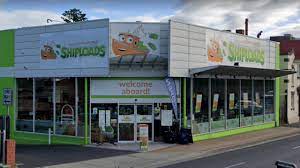
Andrew Sypkes, Rudie’s son, became involved in Shiploads, a Tasmanian discount retail business established in 2010.
The enterprise included people who had previously worked with Chickenfeed, as well as members of the Sypkes family.
Shiploads continued the tradition of discount variety retailing that had become closely associated with the family.
Andrew also became involved in technology investment, including businesses developing software for the construction industry.
Engel Sypkes’s recollections – Interview with Kees Wierenga, 2015
On 23 January 2015, historian Kees Wierenga interviewed Engel and Marie Sypkes at their home in Sandy Bay.
The interview provides a valuable first-hand account of Engel’s migration, early business activities and contribution to the transformation of Tasmania’s grocery industry.
Among the subjects discussed were his relationship with Roelf Vos, his investigations into American supermarket methods, the establishment of Purity, advertising innovations and the introduction of computer-based retail systems.
Particularly interesting are Engel’s recollections of customers encountering self-service shopping for the first time, and his explanation of the thinking behind the Purity name.
The interview also documents how two Dutch migrant entrepreneurs helped transform food retailing in Tasmania during the 1950s and subsequent decades.
Editor’s note: The interview notes below are preserved as recorded by Kees Wierenga in January 2015. They represent Engel Sypkes’s personal recollections and have not been rewritten to reflect later historical research.
Interview with Engel Sypkes
Location: 526 Sandy Bay Road, Sandy Bay (his home)
Date & Time: Friday 23 January 2015 @ 3.30 pm
Present: Engel & Marie Sypkes, Kees Wierenga
Background notes regarding the contribution by Engel to the transformation of the Grocery industry in Tasmania from corner shop to self-serve and computer-based knowledge systems, 1950s to 1980s.
- Roelf Vos and Engel Sypkes were both in successful drapers in different towns in the Netherlands.
- Roelf met Engel six weeks before emigrating in 1952 “to start a new life, following the bad effects of World War Two.”
- Roelf’s wife has the same surname as Engel’s (1st) wife, but they are not related.
- Engel arrived in Ulverstone, then moved to Stanley, then to Smithton, then to Hobart (dates are in NAA records).
- He listed his occupation with the Dept. of Immigration as “upholsterer” for two reasons:
- Because he could not find the English word for carpet layer (work he had done in Holland).
- Because emigrants with trade skills were valued more highly by the Australian government.
- For good measure, he also listed his occupation as draper.
- He listed his occupation with the Dept. of Immigration as “upholsterer” for two reasons:
- When he lived in Smithton, he noted that edible offal from a local abattoir was dumped in a branch of the Duck River.
- He also noted that eels thrived in this river (harvesting them was an idea that never got legs but he gave it a thought).
- Liver for human consumption was rated so poorly, it could be had from the local butcher f.o.c.
- Engel was interested in exploiting that offal because it included glands which had high medicinal value in Europe.
- Engel made preliminary arrangements to send offal to Europe.
- He also made arrangements to travel to overseas customers to finalise details and make deals.
- Arthur Ambrose was a fellow draper. He had several clothing stores on the N West coast.
- Arthur suggested the trip overseas should include the USA to investigate reports of new, greenfield shopping centres, which were later surrounded by suburbia.
- Engel and Roelf were warm to the idea because, although the first five years, first as travelling salesmen and then as small shop operators, were rewarding, it did not fulfil their business inclinations.
- Roelf did not make the first trip with Engel and Arthur. Initially, he did not think that he needed training but later changed his mind and went with Engel on Engel’s second trip to catch up with further developments in retailing.
- Engel and Arthur witnessed self-service in American shops, and the American way of retailing food in the self-service way came to occupy their minds.
- The two men did a course in Dayton, Ohio, with NCR (National Cash Register) where they learned about shopping ratios, such as car parking spaces per square metre of shop floor, shopping trolleys per square metre, etc.
- Engel eventually made three trips to the USA, including one (the 2nd) with Roelf Vos. Key to each trip was the slogan “3Ms”:
- Monkey see, monkey do (=learn from others).
- Modern merchandising methods.
- Aka make more money.
- On return from his first trip overseas, Engel could not get an export permit for (mostly pig) offal to Europe – he was considered an outsider to the industry, an intruder, and possibly a meddler.
- Failing his export dream, Engel purchased an established grocery store in Sandy Bay.
- Roelf stayed in Launceston, purchased a store there, and gave the store his own name. The stores were closed and modified to be self-serve stores.
- Self-serve was a new concept in 1957 – included cash-only transactions.
- Engel declined phone and account orders from well-heeled customers, which annoyed them.
- “On opening day a telephone call was received and I (Engel) can remember the conversation up till today clearly. It went like this –
‘This is Mrs So and so (a prominent Sandy Bay resident) and I read your advertisement in the paper. Your prices are so much lower than what I pay my grocer that I would like to place an order with you right now and I would also like to open a permanent account.’” - The reply: “‘Thank you, Madam, but we cannot do that. We have started a new way of doing business. The principle is that if you want those products and those low prices, you have to come to the store and get them. You select them from the shelf, take them to the cash register, and pay cash. We will then carry the purchased goods to your car.’”
- The reply was: “‘No thank you.’” Her phone was slammed down.
- The PURITY name is derived from the Dutch word Zuiverheid.
- Zuiverheid is both an adjective and the name of a business in the Netherlands.
- The business called Zuiverheid was in the milk processing industry (de zuivel industrie).
- Engel had seen the factory and was impressed by the all-white uniforms of the staff. Purity staff were given all-white uniforms to promote the idea of freshness and cleanliness, but this proved impractical for the retail industry.
- Advertising – the key to success:
- Promotions:
- Customers traded 2/- pieces minted in a nominated year for 1lb of butter. Engel ensured financial viability by surveying mint year distribution.
- Supplier Agreements:
- Purchase agreements with suppliers reduced advertising costs.
- Radio Campaigns:
- A slogan-based campaign and jingles (one inspired by Mark Cook Cars) engaged the public.
- Promotions:
- Computers:
- David Ambrose led computing initiatives, pioneering the use of PLUs in Australia.
- Early adoption of computing boosted stock turnover and profitability, setting industry benchmarks.
- Eventually, Purity, with its 13 stores, provided approximately 24% of total grocery consumption in southern Tasmania, while Roelf Vos achieved similar results in the north.
A Dutch-Australian business legacy
The history of the Sypkes family illustrates the contribution of Dutch migrants to Tasmania’s economic and social development.
Engel Sypkes helped introduce modern supermarket retailing in southern Tasmania, while his contemporary Roelf Vos developed a comparable business in the north.
Their achievements reflected the entrepreneurial opportunities available to migrants who brought commercial experience, determination and new ideas to Australia.
The next generations extended these activities into discount retailing, property development, financial services and technology investment.
The family’s history also provides an important connection between Dutch migration, business development and the wider Tasmanian community.
Sources and further reading
- The Sypkes family – Companion to Tasmanian History, University of Tasmania.
- Kees Wierenga, interview with Engel and Marie Sypkes, 23 January 2015, preserved in the DACC collection.
- Dutch settlers in Ulverstone, Tasmania, including biographical information about Engel and Annie Sypkes.
- Tasmania’s Chickenfeed discount chain remembered, ABC News, 2023.
- Australian Senate tribute to Rudie Sypkes, 11 March 2008.
- Oracle announces acquisition of Aconex, December 2017.
- Vossie’s Supermarkets in Tasmania, Dutch Australian Cultural Centre.
Related research
This article is included in the DACC’s Research Portal – Little Groningen: Dutch migration, faith and community in Kingston, Tasmania.
The portal brings together research on Dutch migration, families, businesses and community institutions in Kingston and