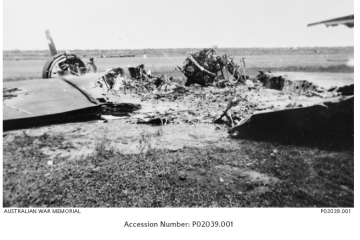
On 26 February 1947, a Douglas C-47 Dakota operated by No. 19 Netherlands East Indies Transport Squadron left Archerfield Airport on a routine test flight. Only 23 minutes later, the aircraft crashed into the sea near Point Lookout on North Stradbroke Island.
All six men aboard—the three Dutch aircrew and three Australian civilian aircraft-maintenance workers—were killed. Although parts of the aircraft were subsequently located, its fuselage and the remains of those aboard have never been recovered.
The accident was one of the final tragedies associated with the Netherlands East Indies military aviation presence at Archerfield.
The aircraft and its identification
The aircraft belonged to No. 19 Netherlands East Indies Transport Squadron and was being tested following maintenance at Archerfield.
The existing DACC article identified it as DT-966, with the radio call sign VH-RET. However, Dutch aircraft registers and casualty records identify the Dakota lost on 26 February 1947 as DT-965, with the call sign VH-RES.
The Dutch casualty record for Hotze Bekema also associates him with DT-965, as do several specialist histories of ML-KNIL aircraft. Conversely, some later Australian accounts identify the wreck as DT-966 or VH-RET.
Pending confirmation from an original No. 19 Squadron aircraft log, maintenance record or official accident file, the aircraft is described in this article as DT-965, while the alternative identification is retained as an unresolved archival discrepancy.
The final flight
The Dakota departed Archerfield at approximately 2.22 p.m. on 26 February 1947. It was conducting a test flight rather than a scheduled transport service.
At approximately 2.40 p.m., witnesses on North Stradbroke Island saw the aircraft approaching the coast with smoke and flames visible. Contemporary reports differ over whether part of a wing or the tail separated before the aircraft plunged into the sea approximately one mile northwest of Point Lookout.
The aircraft sank almost immediately. An extensive oil patch was visible, but rough seas and heavy rain initially prevented boats from reaching the crash site.
No radio communication was received from the aircraft after its departure from Archerfield. Contemporary newspapers stated that the cause of the accident was unknown. Although eyewitnesses reported fire and smoke, this does not by itself establish what caused the fire or the structural failure.
The six men aboard
Dutch aircrew
- Eerste-Luitenant Hendrik Cornelis August “Hannes” Smits van Burgst—pilot and observer. He was born at Teteringen in the Netherlands on 15 January 1907. He was married to an Australian woman and was living at Clayfield in Brisbane.
- Sergeant-majoor Hotze Bekema—flight engineer. Bekema was born on 2 June 1920. He lived with his family at Sandgate. His wife, Fay, and their two young children survived him.
- Sergeant Eduard Isaac Rookmaker—radio operator. Contemporary Australian newspapers sometimes incorrectly printed his surname as “Bookmaker”. He was living at Toowong.
The pilot’s name should not be confused with Peter Dunn, whose identification tag is preserved by the Darwin Aviation Museum. Although the two men shared the initials H.C.A., the pilot of the Dakota was H.C.A. Smits van Burgst.
Australian civilian maintenance workers
- Victor Mole, of Annerley;
- Norman Dow, of Hamilton; and
- Christy James Bachadouris, of West End.
All three were civilian aircraft-maintenance workers employed by the Netherlands East Indies authorities at Archerfield.
Newspaper reports produced several incorrect versions of Bachadouris’s surname, including Bachadours, Achadour and Rachadours. Australian military records and the memorial plaque confirm his full name as Christy James Bachadouris. He had also served in the Australian Army during the Second World War.
Search and recovery operations
A police launch left Brisbane on the evening of the accident but had to shelter until conditions improved. Aircraft searching the area reported an extensive oil patch and scattered debris.
During March 1947, wreckage washed ashore near South Point on Moreton Island. Major F. van Breeman, commanding officer of No. 19 Squadron, identified it as belonging to the missing Dakota.
Police and boat crews also recovered an engine inspection plate using grappling equipment. A diver subsequently located substantial aircraft components in approximately 74 feet of water. These reportedly included the undercarriage, port wing and engine and part of the starboard wing, some of which were partly buried in sand.
The depth was initially reported as approximately 60 feet, explaining the differing depths found in contemporary newspaper accounts.
The main fuselage and the bodies of the six men were not located.
Later discoveries

Sections believed to be from the aircraft were located by divers in 2003. Further parts were reportedly found by scuba divers in 2015, demonstrating that wreckage remained dispersed across the seabed.
These discoveries should not be described as the first recovery of the aircraft. Contemporary newspapers demonstrate that wreckage had already been found, inspected and partly recovered during March 1947.
The precise location of the fuselage remains unknown.
NEI Dakota Memorial Park
In February 2017, the seventieth anniversary of the accident was marked by the dedication of NEI Dakota Memorial Park at Adder Rock, Point Lookout, on North Stradbroke Island.
The park occupies what had previously been an unnamed road reserve. Its naming followed efforts by members of the community, descendants of the victims and Flight Sergeant David Bell of the RAAF Base Amberley Scuba Club.
Family members, representatives of the RAAF, Redland City Council, the Quandamooka Yoolooburrabee Aboriginal Corporation, the Dutch Club of Brisbane, Redlands RSL and members of the local community attended the dedication and unveiling of the memorial plaque.
The memorial records the names of:
Dutch aircrew—Royal Netherlands East Indies Army Air Force
- Eerste-Luitenant Hannes Smits van Burgst;
- Sergeant-majoor H. Bekema; and
- Sergeant E.L. Rookmaker.
Australian passengers
- Victor Mole;
- Norman Dow; and
- Christy James Bachadouris.

The memorial records the names of:
Historical significance
The accident occurred as the Netherlands East Indies military transport organisation was withdrawing from Archerfield and transferring its principal operations to the Netherlands East Indies.
Dutch, Indonesian, Australian and former civilian-airline personnel had worked at Archerfield since 1942. Australian civilian technicians played an important role in maintaining the Dutch aircraft, and the presence of Mole, Dow and Bachadouris aboard the test flight reflects this close operational cooperation.
The loss of the Dakota and its six occupants therefore forms part of the wider history of No. 19 Squadron, Archerfield Airport and Dutch–Australian aviation cooperation during and immediately after the Second World War.
Contemporary newspaper reports
The following reports come from the collection of Peter Dunn. They preserve contemporary accounts of the accident, the search and the discovery of wreckage. Names and other details in the earliest reports were sometimes incorrect and should be checked against the memorial and later research.
- Braidwood Dispatch and Mining Journal—six killed during the test flight, 28 February 1947
- Barrier Miner—early report of the crash and eyewitness accounts, 27 February 1947
- Daily Telegraph—names of the Dutch and Australian victims, 27 February 1947
- Daily Mercury—departure time, location and eyewitness reports, 27 February 1947
- Advocate—early account of the loss, 27 February 1947
- Courier-Mail—plans for divers to inspect the wreckage, 12 March 1947
- Tweed Daily—wreckage washed ashore and identified by Major F. van Breeman, 11 March 1947
- Newcastle Morning Herald—aircraft components located in 74 feet of water, 19 March 1947
Related DACC articles
- DACC Air Force Research Portal
- Netherlands East Indies military air transport services in Australia, 1942–1947
- The Dutch at Archerfield Airport, Brisbane
- Archerfield Memories—including the Netherlands East Indies Transport Service
Sources and further reading
- Redlands Coast Today—“70 year-old air tragedy remembered”
- Redlands Coast Today—“Straddie park naming honours past plane tragedy”
- Dutch national list of military casualties—H.C.A. Smits van Burgst
- IPMS Nederland—ML-KNIL Douglas C-47 and DC-3 aircraft register
- Australian Government—Underwater Cultural Heritage Act 2018