Following the collapse of the Netherlands East Indies (NEI) in early 1942, Dutch military and intelligence operations had to be rapidly reorganised from exile. Australia became central to this effort. One of the most critical elements in rebuilding Dutch operational capability was the establishment of a secure wireless communications network linking Dutch forces, intelligence parties, and Allied headquarters across the Southwest Pacific.
Two locations became particularly important in this network: Batchelor in the Northern Territory and Craigieburn near Melbourne. Together, they formed part of the communications backbone that supported Dutch and Allied operations throughout the war.
Re-establishing Dutch communications after the fall of the NEI
After the Battle of the Java Sea and the Japanese occupation of the NEI, surviving elements of the Royal Netherlands Navy and associated intelligence personnel evacuated via Ceylon and Australia. The loss of territory made long-range, secure radio communication essential. Dutch forces now depended on Australia not only as a base for military reorganisation, but also as a platform for maintaining contact with personnel operating across a vast and hostile region.
A decision was taken to establish a dedicated Royal Netherlands Navy wireless telegraphy station in northern Australia, closer to the former NEI and within range of Dutch and Allied field parties.
The Batchelor wireless telegraphy station
In 1942, the Royal Netherlands Navy established a wireless telegraphy station at Batchelor, near Batchelor Airfield in the Northern Territory. The location was selected for its geographic advantages, including radio propagation conditions and proximity to operational theatres to the north.
The Batchelor station’s primary function was communications. It maintained secure radio contact with Dutch forces, liaison officers, and intelligence parties operating in or near enemy-held territory. Messages transmitted through Batchelor were relayed to Dutch intelligence headquarters in Australia and, where necessary, to Allied commands.
Importantly, Batchelor was not a radio interception station and did not monitor or decode Japanese radio traffic. Its role was to transmit and receive communications, not to collect signals intelligence. Intelligence gathering and analysis occurred elsewhere within the Allied intelligence system, while Batchelor ensured that reports, instructions, and operational messages could move reliably across long distances.
At its peak, the Batchelor station handled communications with up to twenty Dutch, Australian, and American intelligence parties. This made it a vital node in the Allied intelligence and operations network, even though it did not itself generate intelligence.
Connection with NEFIS
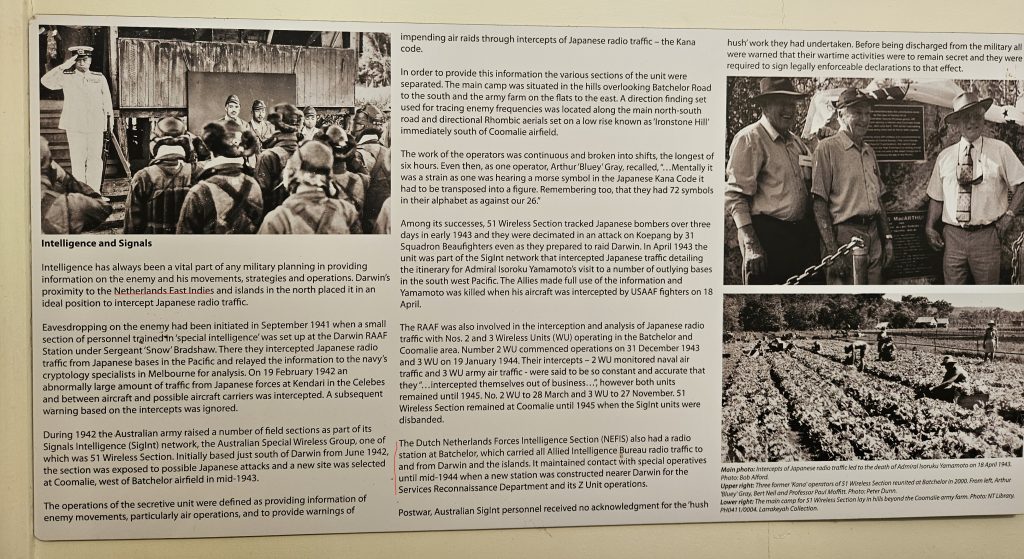
The station at Batchelor formed an integral part of the communications framework supporting NEFIS, the Netherlands Forces Intelligence Service. NEFIS was established in Australia after the fall of the NEI to coordinate Dutch intelligence activities in exile and to work closely with Allied intelligence organisations.
Initially, NEFIS headquarters operated from Melbourne. Communications from Batchelor were routed south to Melbourne for processing, coordination, and onward distribution. In June 1944, NEFIS headquarters relocated to Camp Columbia at Wacol, near Brisbane, reflecting the growing importance of Queensland as an Allied command and intelligence centre. From that point, Batchelor communications were increasingly directed toward Brisbane.
Batchelor thus functioned as a forward communications gateway linking remote intelligence and operational parties to the analytical and command structures of NEFIS and its Allied partners.
The Craigieburn transmitter station
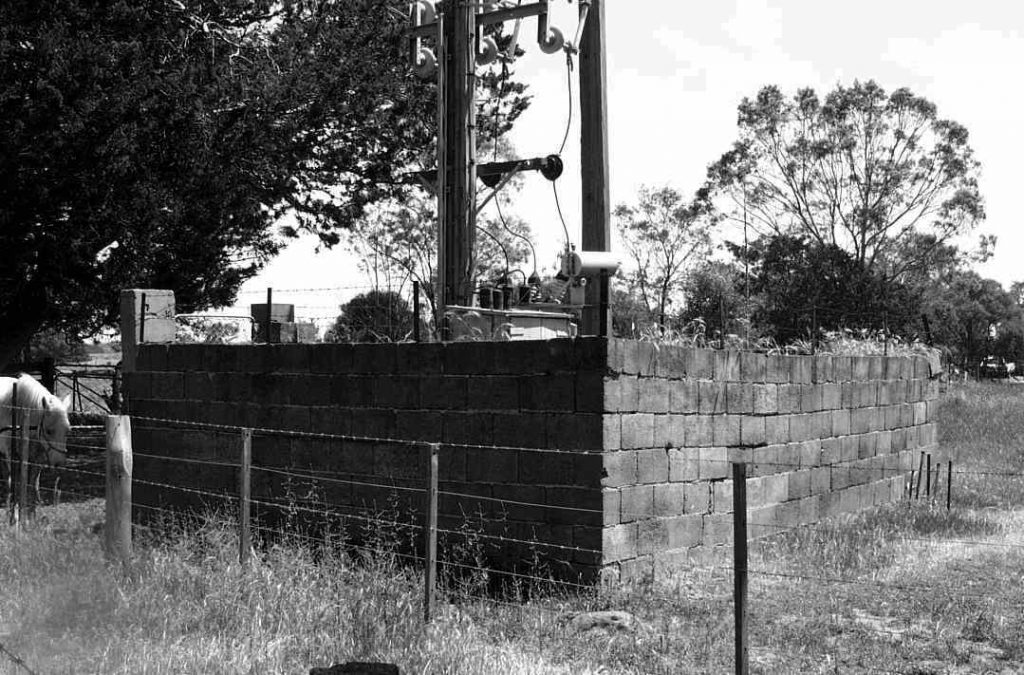
Later in 1942, a second major Dutch-associated wireless facility was established near Craigieburn, close to Yuroke on the northern outskirts of Melbourne. This station was constructed by the Australian Postmaster-General’s Department and operated in close cooperation with Dutch authorities.
The Craigieburn station functioned primarily as a high-power transmitter site. It was remotely operated via teleprinter links from Dutch offices in South Yarra, Melbourne. This arrangement provided both redundancy and flexibility within the Dutch communications system, ensuring continuity if northern facilities were disrupted and strengthening links between Dutch intelligence, Australian authorities, and Allied headquarters.
Craigieburn complemented Batchelor rather than duplicating its role. While Batchelor served as a forward communications hub connected to operational areas, Craigieburn provided depth, reliability, and integration with southern command and administrative centres.
Integration into the Allied communications system
The Dutch wireless network in Australia did not operate in isolation. It was embedded within the broader Allied communications and intelligence environment of the Southwest Pacific Area. Dutch communications supported cooperation with Australian and American forces and contributed to the coordination of intelligence, logistics, and operational planning.
The effectiveness of this system lay not in interception, but in connectivity. By ensuring that intelligence collected by field parties could be transmitted securely and promptly to NEFIS and Allied commands, the Dutch wireless stations played a crucial enabling role in the Allied war effort.
After the war
Following the end of the war, the Royal Netherlands Navy wireless telegraphy station at Batchelor was decommissioned. The site was eventually transferred to Australian authorities and today forms part of the Batchelor Airfield heritage precinct, which commemorates the area’s role in Allied operations during the Pacific War.
The Craigieburn facility was likewise dismantled after the war, leaving little visible trace of its former role. Nevertheless, both sites were critical components of a wartime communications network that allowed Dutch forces, operating far from their homeland and former colony, to remain operationally effective and fully integrated with Allied command structures.
Significance
The Batchelor and Craigieburn wireless stations illustrate the often-overlooked infrastructure of war. They were not front-line installations, nor were they centres of dramatic intelligence breakthroughs. Their importance lay in reliability, reach, and trust. By keeping Dutch forces connected to each other and to their Allies, these stations helped transform early wartime dislocation into a coordinated intelligence and operational system centred on Australia.
Together with the establishment of NEFIS and its later move to Camp Columbia in Brisbane, the Dutch wireless network represents a key chapter in the history of Dutch–Australian wartime cooperation in the Pacific.
Paul Budde – February 2026
See also: