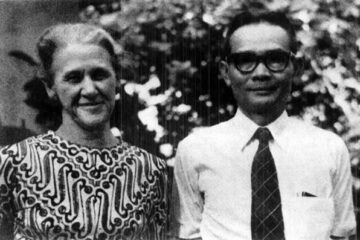
Merle Calvin Ricklefs

Merle Ricklefs (1943–2019) was one of the leading Western historians of Indonesia. Born in the United States, he built his academic career in Australia, where he held senior positions at Australian National University and Monash University.
From this Australian base, Ricklefs developed an international reputation as a specialist in Javanese history. His work focused not on colonial administration itself, but on the internal dynamics of Indonesian society—particularly the cultural, political and religious structures that shaped life in Java over centuries.
His research and publications
Ricklefs is widely regarded as an authority on Javanese court history, especially the courts of Yogyakarta and Surakarta, which played a central role during the period of the Netherlands East Indies.
Among his best-known publications are:
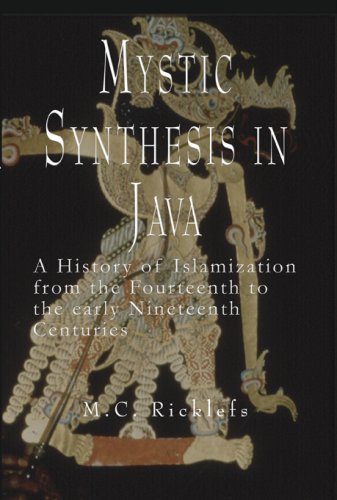
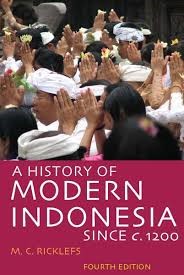
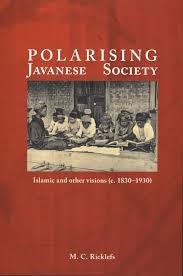
These works trace the long-term development of Javanese society, with particular attention to the interaction between political power, religion and social change. A key theme in his research is the gradual Islamisation of Java and the way this process interacted with older belief systems and court traditions.
Rather than presenting Indonesian history through a colonial lens, Ricklefs examined how Javanese society functioned on its own terms. This approach has been influential in shifting historical interpretation away from purely administrative or European perspectives.
Relevance to the Netherlands East Indies
For those interested in the history of the Netherlands East Indies, Ricklefs’ work provides essential context.
Dutch colonial rule in Java did not operate in a vacuum. It relied heavily on existing local structures, particularly the authority of Javanese rulers and the complex hierarchies of the courts. These systems were not merely political institutions; they were deeply embedded in religious beliefs, cultural traditions and concepts of legitimacy.
Ricklefs demonstrated that:
- Javanese rulers derived authority not only from political power, but also from spiritual and cultural roles
- Court life was shaped by a synthesis of Islamic, Hindu-Buddhist and local traditions
- Social and religious change in Java was gradual and layered, rather than abrupt
This helps explain why Dutch governance was often indirect and why misunderstandings could arise between colonial authorities and local elites. It also sheds light on the resilience of Javanese institutions throughout the colonial period.
Recognition and use in the Netherlands
Ricklefs’ work is widely recognised within international scholarship, including in the Netherlands. Institutions such as Leiden University and the Royal Netherlands Institute of Southeast Asian and Caribbean Studies (KITLV)—both leading centres for Indonesian and colonial studies—regularly reference his publications in research and teaching.
For Dutch historians, Ricklefs offers an important complementary perspective. While Dutch scholarship has traditionally been grounded in colonial archives and administrative records, his work provides a deeper understanding of Indonesian society itself. As an Australian-based historian, he also brings a degree of analytical distance from the colonial past.
An Australian perspective on a shared history
Ricklefs’ career highlights the role of Australia in the study of Indonesia and the former Netherlands East Indies. His work forms part of a broader international effort to understand the region’s history from multiple perspectives.
While Ricklefs was not directly involved in Dutch–Australian historical events, his scholarship helps illuminate the cultural and social world in which that history unfolded.
Conclusion
The history of the Netherlands East Indies cannot be fully understood without insight into the societies that existed within it. Through his detailed studies of Javanese courts, religion and social change, Merle Ricklefs has provided that insight.
His work continues to be used internationally, including in the Netherlands, and remains an important reference point for anyone seeking to understand the deeper context of Dutch–Indonesian history.
Paul Budde, March 2026