Indonesian political prisoners and colonial repression
The story of Indonesian nationalist Mohamad Bondan reflects a largely overlooked chapter in the shared wartime history of Indonesia, the Netherlands and Australia. His experiences illustrate how the upheavals of the Second World War brought anti-colonial activists into direct contact with Allied wartime structures in Australia.
Bondan belonged to a generation of Indonesians who became politically active at a young age in opposition to Dutch colonial rule. Like many nationalist and left-wing activists, he was arrested by the colonial authorities and imprisoned in the remote detention camp at Tanah Merah on the Digul River in Dutch New Guinea. The camp, established after the communist uprisings of 1926–27, was intended to isolate those considered politically dangerous.
With the Japanese advance into the Netherlands East Indies in 1942, Dutch authorities feared that these political prisoners might be freed and mobilised in support of independence. As a result, several hundred detainees were evacuated to Australia. Initially treated as prisoners of war, they were later released following pressure from Australian trade unions and civil rights organisations. This relocation unexpectedly placed Indonesian nationalist politics within the Australian wartime environment.
Research into the evacuation of these so-called “Digulists” shows how their presence in Australia contributed to growing awareness of colonial issues and strengthened political organisation among Indonesian exiles .
Indonesian nationalism in wartime Australia
After their release, many Indonesian exiles sought employment within Dutch wartime administrative structures operating from Australia or found work in industries facing labour shortages. At the same time, they quietly built networks promoting independence. Their cause increasingly resonated with sections of Australian society, particularly within the trade union movement.
These connections helped foster public debate about the future of the Netherlands East Indies. By the end of the war, Australian unions, churches and political organisations had become more aware of Indonesian aspirations for self-government. This environment contributed to major developments such as the boycott of Dutch shipping known as the Black Armada, an international industrial action that delayed Dutch efforts to re-establish colonial control .
Within this politically charged setting, Mohamad Bondan became active in nationalist circles. His wartime experiences and ideological commitment positioned him among those working to communicate developments in Indonesia and to mobilise sympathy for the independence movement.
Propaganda networks and political tensions
During the war the Netherlands East Indies Government Information Service (NIGIS) operated from Melbourne as the main information and propaganda agency of the Dutch government-in-exile. While intended to support Allied objectives and Dutch administrative interests, the presence of Indonesian staff and political activists created opportunities for nationalist ideas to circulate.
For Indonesian exiles, such roles provided access to communication channels that could be used to share news about political developments in the archipelago. These activities were closely monitored by Dutch authorities, who remained concerned about the spread of pro-independence sentiment among Indonesian personnel and sympathetic Australians.
As tensions intensified towards the end of the war, Dutch officials increasingly sought to control nationalist activism within their dispersed wartime structures across Australia.
Brisbane as a political and administrative centre
Brisbane played a particularly important role in this context. Camp Columbia at Wacol served as the headquarters of the Netherlands East Indies Government-in-exile, making the city a focal point for administrative coordination, intelligence gathering and political oversight.
At the same time, Indonesian exile networks were becoming more active in Brisbane. Nationalist committees and independence supporters interacted with trade unions, journalists and community groups. These developments – such as the Black Armada -demonstrate that wartime Brisbane was not only a military staging area for Allied operations but also a significant arena in the political struggle over Indonesia’s future.
Bondan was among those whose wartime path brought him to Brisbane. His presence there reflects the broader reality that Indonesian activists, Dutch officials and Australian supporters were all engaged in debates and activities that would influence the post-war regional order.
A cross-cultural wartime relationship
Amid these political developments, Bondan’s personal life also took a decisive turn. In Brisbane in 1946 he married Australian activist Molly Warner, who had become involved in campaigns supporting Indonesian independence. Her engagement with the nationalist cause reflected a wider movement among Australians who viewed decolonisation as an essential component of the emerging post-war world.
Their marriage symbolised the deepening people-to-people connections that developed during the war. For many Indonesians in exile, relationships with Australians provided practical assistance and emotional support. For Australians like Molly Warner, involvement in the independence movement represented a commitment to international solidarity and social change.
From wartime exile to the Indonesian republic
In 1947 the couple travelled to Yogyakarta, then the political centre of the newly proclaimed Republic of Indonesia. There they became part of the revolutionary environment in which the foundations of the modern Indonesian state were being established.
Bondan continued his involvement in nationalist activities, while Molly began a long career in Indonesia that included working within the Ministry of Foreign Affairs. She later assisted in preparing English-language speeches for President Sukarno and contributed to organising the landmark Asia–Africa Conference in Bandung in 1955.
Her books In Love With a Nation and Spanning a Revolution provide valuable eyewitness accounts of Indonesia’s struggle for independence and remain important historical sources on the period.
Shared heritage and historical significance
The story of Mohamad and Molly Bondan highlights how wartime displacement, political activism and personal relationships combined to shape the transition from colonial rule to independence in Southeast Asia. Their experiences illustrate the interconnected nature of Indonesian, Dutch and Australian wartime histories.
For the Dutch Australian Cultural Centre, this narrative underscores the importance of recognising the Netherlands East Indies government-in-exile and Indonesian nationalist presence in Australia as part of a shared heritage. It also demonstrates how the events that unfolded in cities such as Melbourne and Brisbane contributed to wider processes of decolonisation and regional transformation.
By examining individual life stories like that of Mohamad Bondan, we gain a richer understanding of the complex human dimensions behind geopolitical change. These connections continue to inform contemporary relations between Australia, Indonesia and the Netherlands and remain an important field of historical research and public interpretation.
Suggested sources for further reading
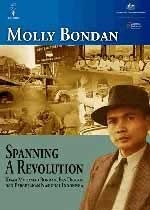
- Molly Bondan, Spanning a Revolution! The Story of Mohamad Bondan and the Indonesian Nationalist Movement (Jakarta: Pustaka Sinar Harapan, 1992)
- Molly Bondan, In love with a nation: Molly Bondan and Indonesia, her own story in her own words, edited by Joan Hardjono and Charles Warner (Picton, 1995)
- Jan Lingard, Refugees and Rebels: Indonesian Exiles in Wartime Australia (North Melbourne: Australian Scholarly Publishing, 2008)
- Heather Goodall, “Tracing Southern Cosmopolitanisms: The Intersecting Networks of Islam, Trade Unions, Gender & Communism, 1945-1965”, Cosmopolitan Civil Societies Journal vol.3 no.3 (2011), 108-139.
- Adrian Vickers, “Solidarity for the Indonesian Revolution”, Labour History: A Journal of Labour and Social History no.126 (2024), 163-186.
- Media release (2008) by the Australian Embassy in Indonesia about the Indonesian translations of Molly Bondan’s books
- Molly Bondan’s profile on the 70 Years Indonesia Australia website
- Obituary Molly Bondan via Obituaries Australia
- Obituary Molly Bondan by George McT. Kahin in Indonesia no.50 (October 1990), 158-161.
- Media release (2018) by the Australian Embassy in Indonesia in which the Bondans are mentioned