Northam became one of Western Australia’s most important centres for the reception and accommodation of migrants in the years following the Second World War. However, what is often referred to simply as the “Northam Migrant Camp” actually involved two separate Commonwealth immigration facilities in the town.
The principal facility was officially known as the Department of Immigration Reception and Training Centre, Northam. It occupied the former Northam Army Camp on the Great Eastern Highway, which was hastily refurbished after the war to accommodate the large numbers of migrants arriving under Australia’s expanding post-war immigration program.
A second and separate facility was established at the former 118th military hospital in Hutt Street, Northam. This became the Department of Immigration Holden Accommodation Centre. Although both facilities formed part of the Commonwealth’s migrant accommodation system at Northam, they should not be confused as a single camp.
The former RAAF base at Cunderdin, approximately 55 kilometres east of Northam, was also adapted as a migrant reception and accommodation centre and formed part of the wider network established in Western Australia to receive and temporarily house post-war migrants.
Establishing the Northam Reception and Training Centre
Northam was well suited to its new role because the former military camp provided substantial existing accommodation and because the town’s position on the railway network made it possible to disperse migrants to employment and other destinations throughout Western Australia.
Despite the relative youth of the wartime camp, many of its buildings required considerable repair before they could accommodate migrant families. Fifty migrants who were initially housed at Swanbourne Barracks were brought to Northam to assist with the refurbishment. Their work included preparing accommodation and constructing or improving essential facilities such as dining rooms, a canteen, post office and hospital facilities.
The first major group of post-war migrants arrived at Fremantle on 24 August 1949. They included Displaced Persons and sponsored migrants, principally from Western and Southern Europe. The following day they travelled by three trains to Northam Railway Station and completed the journey to the Reception and Training Centre by bus.
By 1950, approximately 4,000 people were being accommodated at Northam, requiring additional accommodation blocks to be constructed.
Although its official title was the Northam Reception and Training Centre, residents generally knew it more simply as Northam Camp or Top Camp.
Life under a military-style regime
In its early years, the Reception and Training Centre retained many characteristics of the military camp it had replaced. Accommodation was organised into lines and blocks, with block leaders and supervisors. Reveille, inspections and curfews were part of everyday life, and many of the staff responsible for administering the centre had military backgrounds.
This regimentation could be particularly confronting for migrant families who had arrived in Australia expecting to begin a new civilian life. For refugees and Displaced Persons who had recently experienced war, occupation and years in camps elsewhere, living once again in barrack-style accommodation could carry an additional emotional burden.
Over time, however, the military character of the centre diminished as civilian employees and migrants themselves increasingly took over administrative and operational roles.
The camp director was responsible for overall administration and reported to the Department of Immigration in Canberra. Other staff managed catering, stores, medical services, sanitation and the allocation of accommodation. New arrivals received basic provisions and were assigned to particular blocks, where supervisors helped maintain the organisation of daily life.
The Holden Accommodation Centre
Separate from the former army camp was the Holden Accommodation Centre in Hutt Street, established in the former 118th military hospital.
Its history is significant because it demonstrates that “Northam” was not a single migrant camp but part of a more complex accommodation system. Migrants could pass through different facilities depending on when they arrived, their family circumstances, employment arrangements and the availability of accommodation.
For former residents and their descendants, distinguishing between the Reception and Training Centre on the Great Eastern Highway and the Holden Accommodation Centre in Hutt Street is therefore important when reconstructing individual migration stories.
Together with Cunderdin and other Commonwealth migrant facilities in Western Australia, the Northam centres played a major role in the first stage of settlement for thousands of post-war migrants, including many Dutch families beginning new lives in Australia.
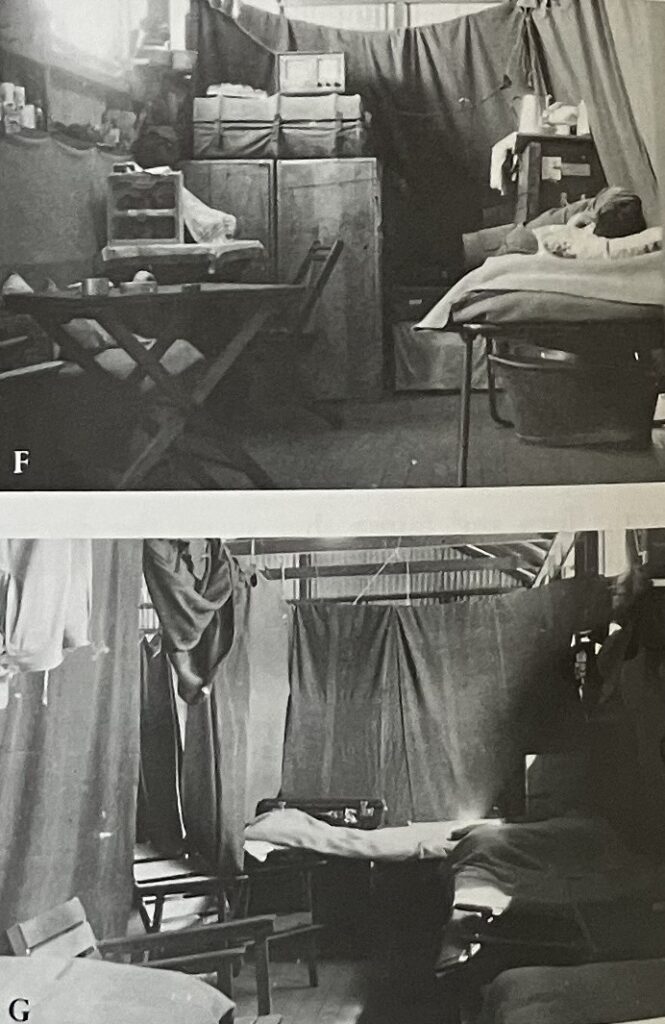
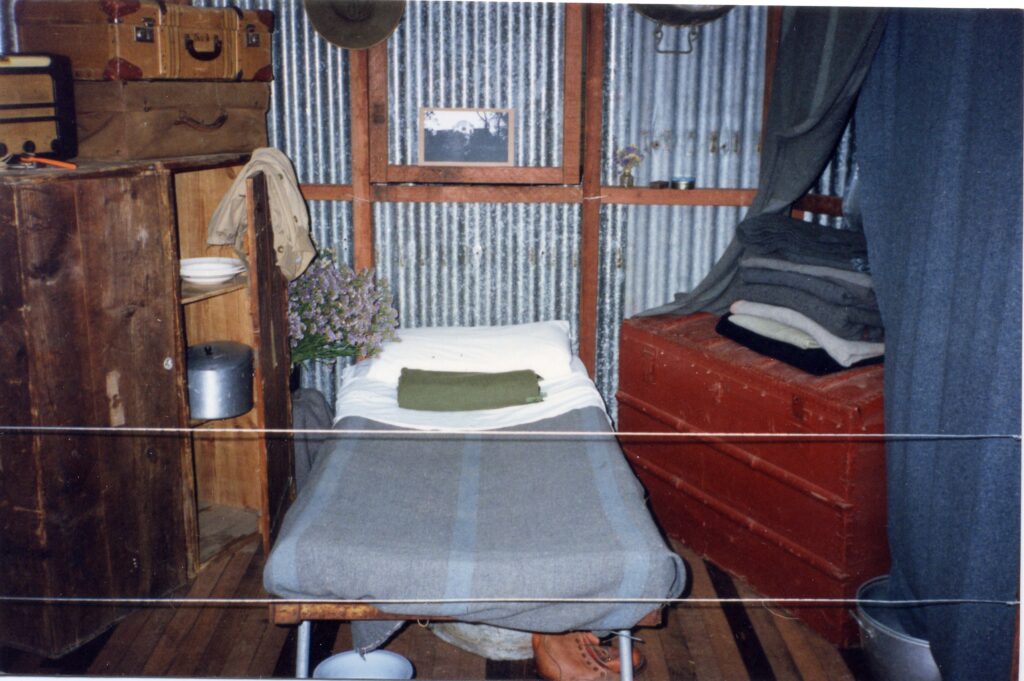
Above a diorama the diorama Nonja Peters created in the permanent exhibition at the Visitor Centre in Northam – “A Sense of Place, Post-war Migration to Northam” exhibition.
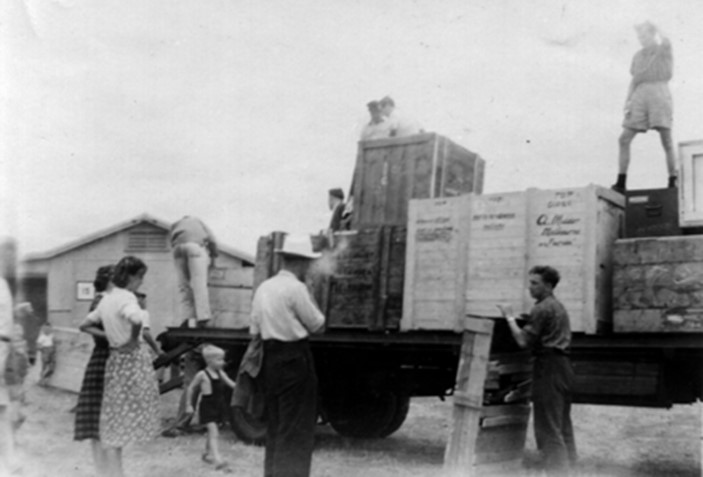
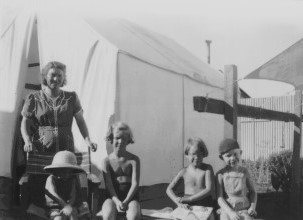
The photos below are also from Nonja’s archive. The three boys are from the Jansen family who stayed at the Camp. The photo in the middle is from the Welie family.
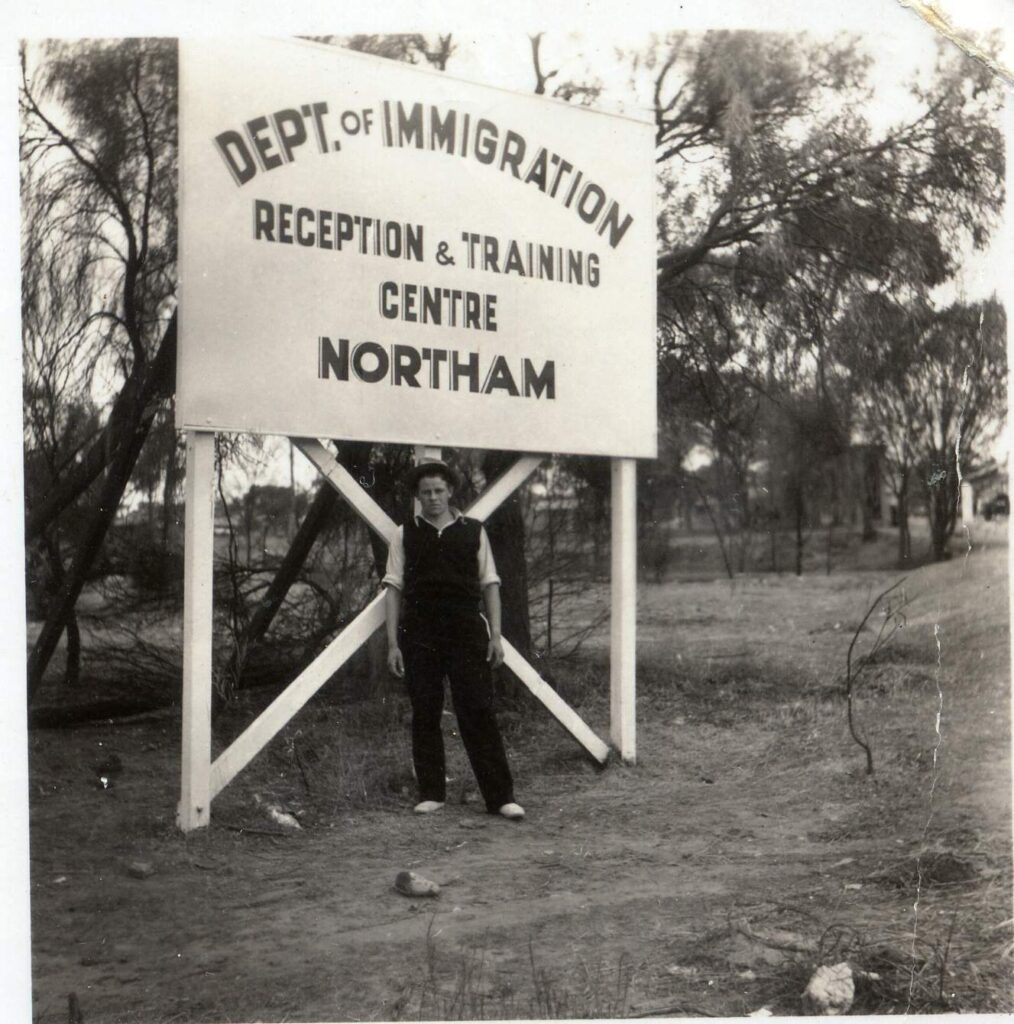
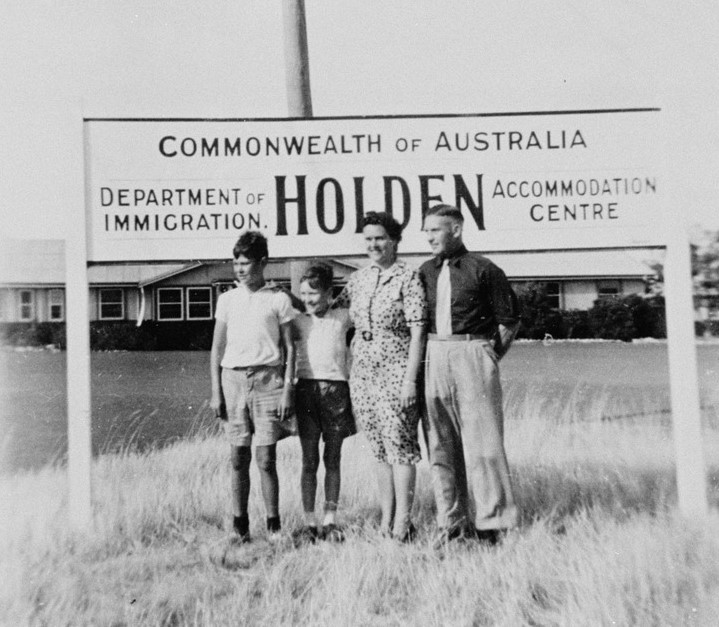
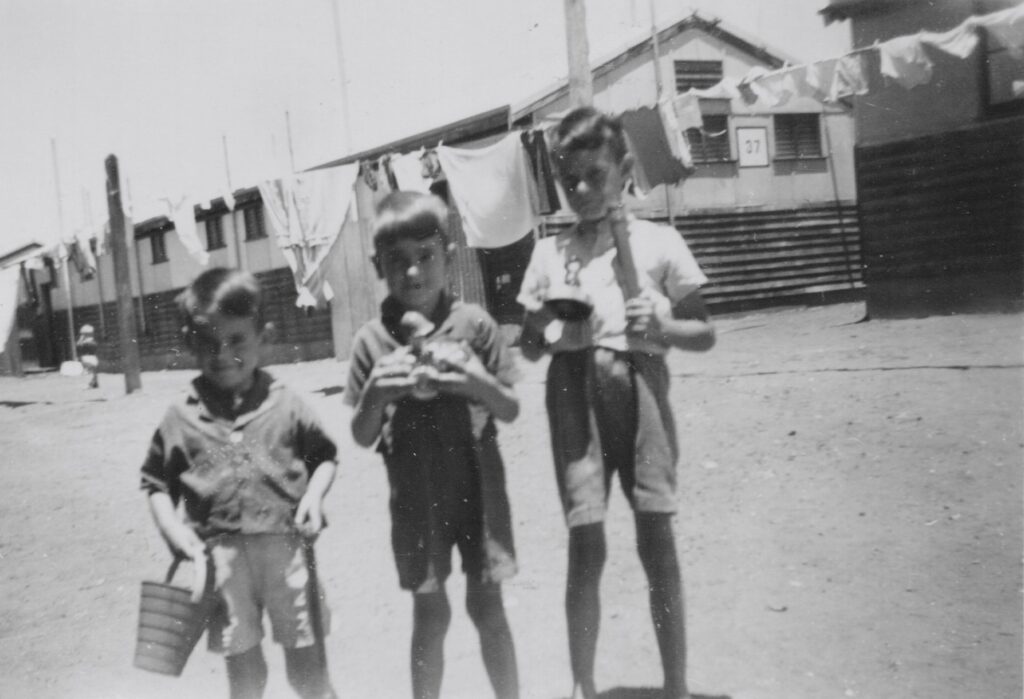
The photos below are from de Van der Linden family while at Northam (Source: Nonja Peters).
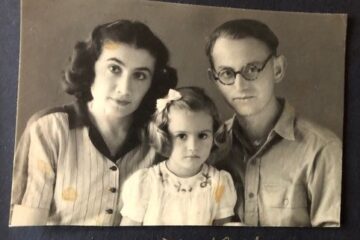
VAN LAMOEN Family
Accompanying Family Wilhelmus “Bill” aged 9 Johanna “Ankje” aged 7 Lucia “Lucy” aged 4
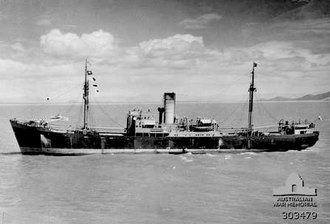
The traveled on the Sibajak. Departure Port Rotterdam, Netherlands. Arrival Fremantle – 1953
Wilhelmus “Wim” and Antonia “Toni” van Lamoen arrived in Fremantle after changing their intended destination from Melbourne to Perth. Stayed at the Holden Migration Camp, Northam before moving to Scarborough.
Source: Welcome Wall Western Australia
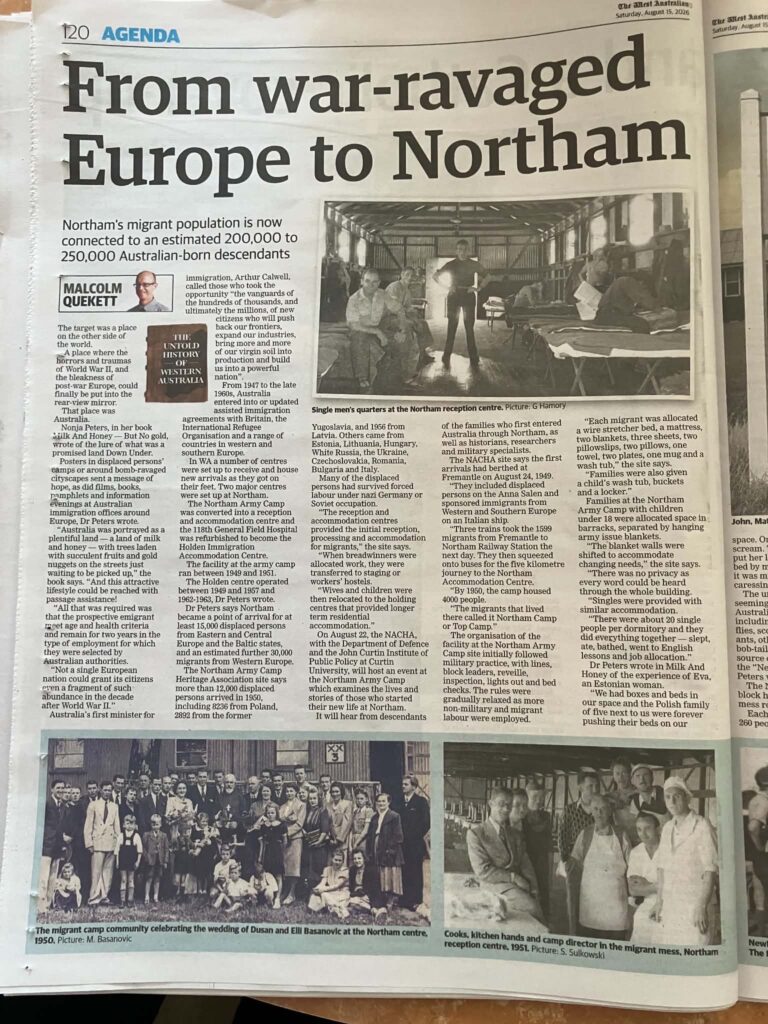
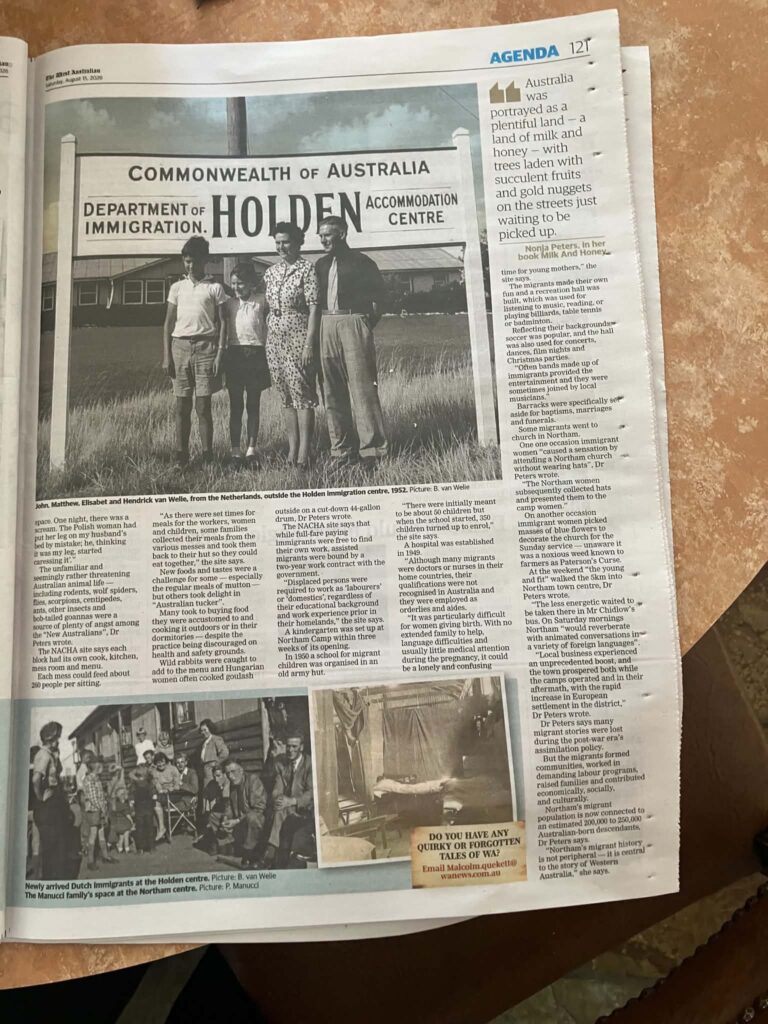
Collection of photographs relating to the Holden Immigration Camp, Northam
Can you help us?
We are keen to receive stories, photographs, documents and memories from people who stayed at this migrant centre. With your permission, we would be delighted to include them in this article, helping to preserve this important chapter of Australia’s and the Dutch-Australian community’s migration history. Contac: dutchaustraliancc@gmail.com
This article is part of a series on migration camps: Dutch Migration Gateways to Australia