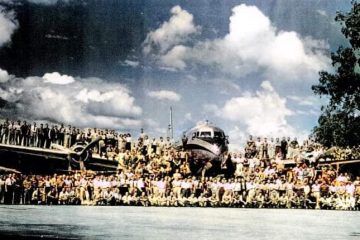
The Douglas DC-5 was one of the most unusual transport aircraft to see service during the Second World War. Designed and built in the United States by the Douglas Aircraft Company, it featured a high wing, tricycle undercarriage, and a wide fuselage optimised for passenger transport. These modern features, however, came at the wrong historical moment. With war looming and airlines cautious, the DC-5 was produced in extremely small numbers and never entered mass service.
Despite this, the DC-5 acquired an extraordinary wartime afterlife. Nowhere is this clearer than in the four aircraft that entered Dutch service through KLM and later KNILM. Together, these four Douglas-built aircraft trace a remarkable journey from pre-war civil aviation, through the collapse of the Netherlands East Indies (NEI), to Australia and beyond. Each aircraft met a different fate, offering a compact but powerful micro-history of Dutch–Australian wartime cooperation.
A rare aircraft type
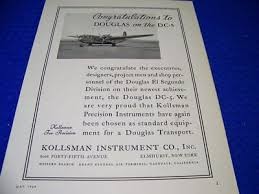
The DC-5 first flew in 1939 and incorporated several advanced design features for its time. Yet militaries favoured simpler, more rugged designs such as the DC-3/C-47, while airlines hesitated to adopt an unproven type on the eve of war. As a result, the DC-5 never standardised, and each airframe followed an unusually individual path.
KLM (Koninklijke Luchtvaart Maatschappij – Royal Dutch Airlines) was the only airline to operate the DC-5 in scheduled civil service. Four aircraft ordered by KLM were later transferred to KNILM (Koninklijke Nederlandsch-Indische Luchtvaart Maatschappij – Royal Netherlands Indies Airways) . These four aircraft form the complete Dutch DC-5 story.
From civil airliner to wartime evacuation aircraft
The German invasion of the Netherlands in May 1940 abruptly ended plans for European service and set the Dutch DC-5s on a very different trajectory. By 1941, the aircraft had been transferred to the Netherlands East Indies, where they entered KNILM service – under the command of the Netherlands East Indies Air Force , just as the strategic situation in the Pacific deteriorated.
When Japanese forces advanced into the NEI in early 1942, the DC-5s were drawn into evacuation and emergency transport roles. Three of the four aircraft escaped Java to Australia in March 1942, carrying refugees and personnel under extreme pressure. One aircraft failed to escape and was captured.
The four Dutch DC-5s and their wartime fates
PK-ADC (ex PJ-AIW “Wakago”) – escape, Allied service, and loss in Australia
PK-ADC escaped from Java to Australia carrying refugees, narrowly avoided destruction during the Japanese air raid on Broome on 3 March 1942, and went on to operate under Allied control within Australia and to New Guinea. Assigned the call sign VH-CXB, it served with the 21st Troop Carrier Squadron from Archerfield. On 6 November 1942, it crash-landed near Charleville after an engine failure and was written off.
This aircraft’s full story is told in a separate DACC article:
From Java to Charleville: the extraordinary wartime journey of the Douglas DC-5 “Wakago”.
PK-ADB – improvisation across Australia and loss in New Guinea
PK-ADB also escaped the NEI and reached Australia during the March 1942 evacuation. Shortly afterwards, Captain Gerson van Messel ferried the aircraft south from Broome towards Alice Springs under extremely difficult conditions, navigating with little more than a small-scale school atlas. Missing his checkpoints and running low on fuel as darkness fell, he made a dramatic emergency landing near Dr Stones Creek Farm, skimming over camels before surprising a local sheep farmer. Only after landing did he discover he had been less than ten minutes flying time from Alice Springs, and he successfully completed the flight soon afterwards.
Like other Dutch aircraft, PK-ADB was absorbed into Allied transport operations. Its service ended on 17 August 1942, when it was destroyed during a Japanese air raid at Port Moresby, illustrating the risks faced by Dutch aircraft drawn into the New Guinea supply chain.
PK-ADD (ex PJ-AIZ “Zonvogel”) – the long survivor
PK-ADD escaped from Java to Australia and entered Allied transport service under wartime arrangements. Unlike its sister aircraft, it avoided destruction in 1942 and survived the war intact. After the conflict, it was sold into civilian hands and later appeared in the Middle East. In 1948, it was reportedly used in an improvised military transport role during the early Arab–Israeli conflict.
PK-ADD is notable as the only Dutch DC-5 to enjoy a long post-war career, linking Dutch colonial aviation not only to Australia and the Pacific War, but also to the turbulent early post-war world.
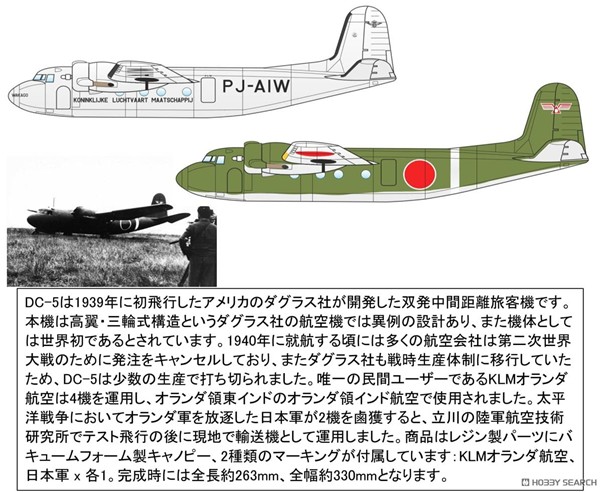
PK-ADA – damaged, captured, and evaluated by Japan
PK-ADA was damaged during the initial Japanese air attacks on Java in early February 1942 and was unable to join the evacuation flights to Australia. Abandoned as Dutch control collapsed, it was captured by Japanese forces. The aircraft was repaired and evaluated, and it appears to have been flown by Japanese personnel, though it did not enter long-term operational service.
PK-ADA stands as the counterpoint to the escape narrative: a rare example of Dutch civil aviation technology absorbed into the Japanese wartime system.
Australia as a hinge point in the DC-5 story
For three of the four Dutch DC-5s, Australia became the hinge between collapse and continued service. Aircraft designed for peaceful passenger transport were suddenly repurposed to move refugees, military personnel, and supplies across vast distances, often flown by mixed Dutch, Australian, and American crews under improvised command arrangements.
The Dutch DC-5s illustrate how displaced Dutch aviation assets were absorbed into Allied logistics at a moment when every aircraft mattered, regardless of type or origin.
Why the Dutch DC-5s matter
Individually, the Dutch DC-5s were minor players in a vast war. Collectively, they offer a remarkably concentrated view of the Dutch wartime experience: sudden displacement, improvisation under pressure, cooperation with Australia and the United States, and sharply divergent outcomes.
Seen together, the four Dutch Douglas DC-5s form a small but powerful chapter in Dutch–Australian wartime history — one in which rarity, resilience, and circumstance combined to give a handful of aircraft an outsized historical significance.