In February 2026, I visited Te Awahou Nieuwe Stroom, what I would unhesitatingly describe as the Dutch Cultural Centre of New Zealand. It is located in Foxton, approximately 160 kilometres north of Wellington, and sits directly on the banks of the Manawatū River, the geographical and historical lifeline of the region.
The official name, Te Awahou Nieuwe Stroom, is itself a carefully considered cultural statement. Te Awahou is the original Māori name for the Manawatū River at Foxton, while Nieuwe Stroom translates from Dutch as “new current” or “new stream”. Together, the bilingual name expresses movement, continuity, and renewal—ideas central to both Māori history and the Dutch migration story.
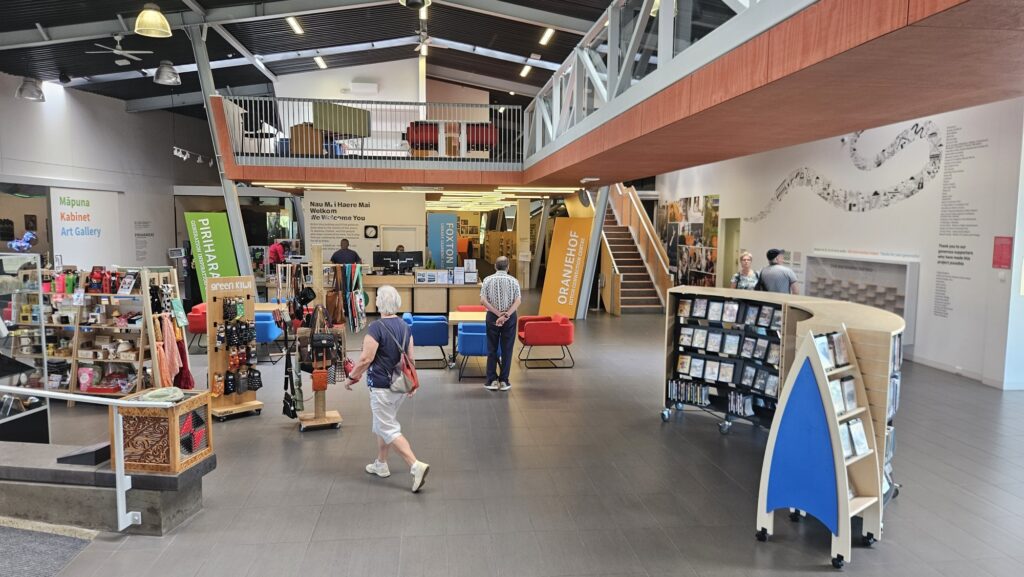
The museum is consciously structured around two equal narratives. One half houses Oranjehof – the Dutch Connection Centre, while the other presents the history and living culture of the local Māori iwi, Muaūpoko. These stories are not separated by walls of interpretation; they are connected through place, river, and time. Both communities have been shaped by movement, adaptation, and the necessity of forging new futures.
Where the Dutch story truly begins: a working windmill
What makes the Foxton story distinctive is that it did not begin with a museum or a strategic plan, but with a working windmill.
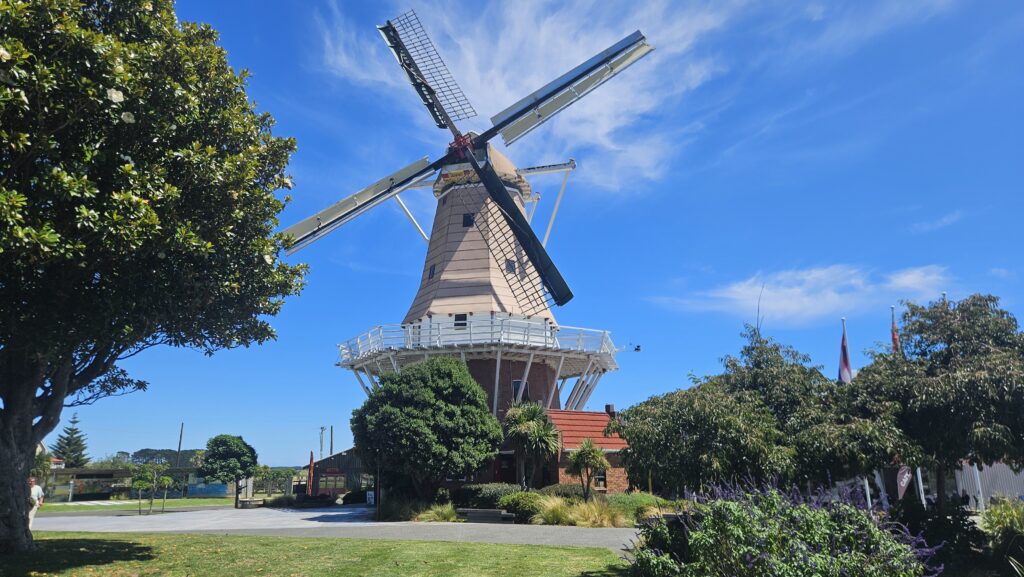
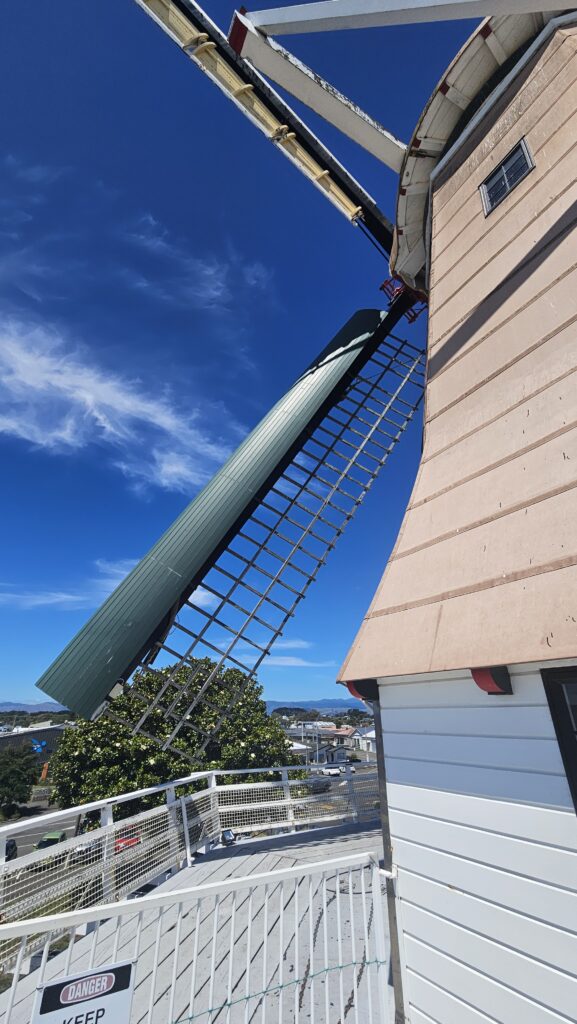
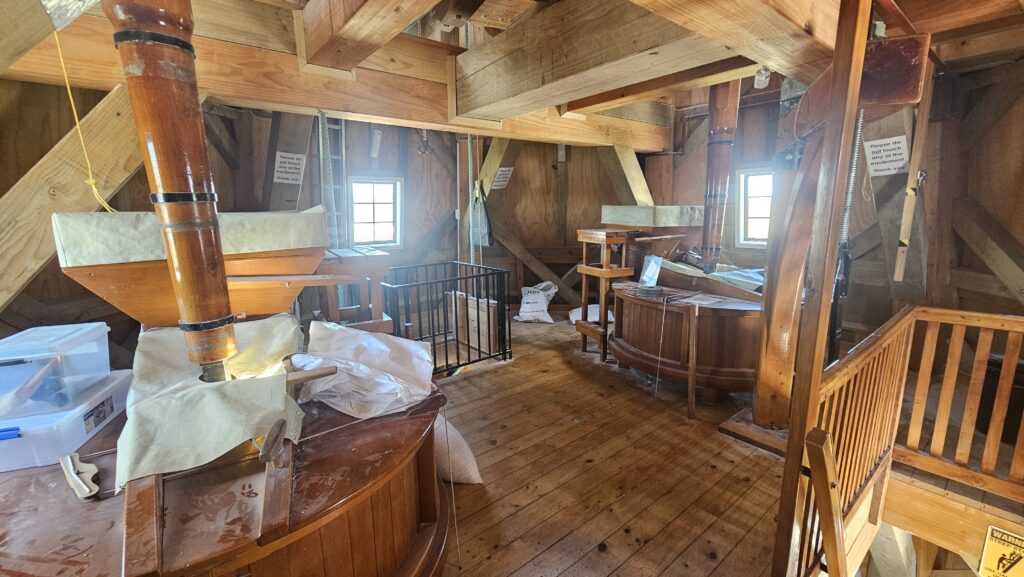
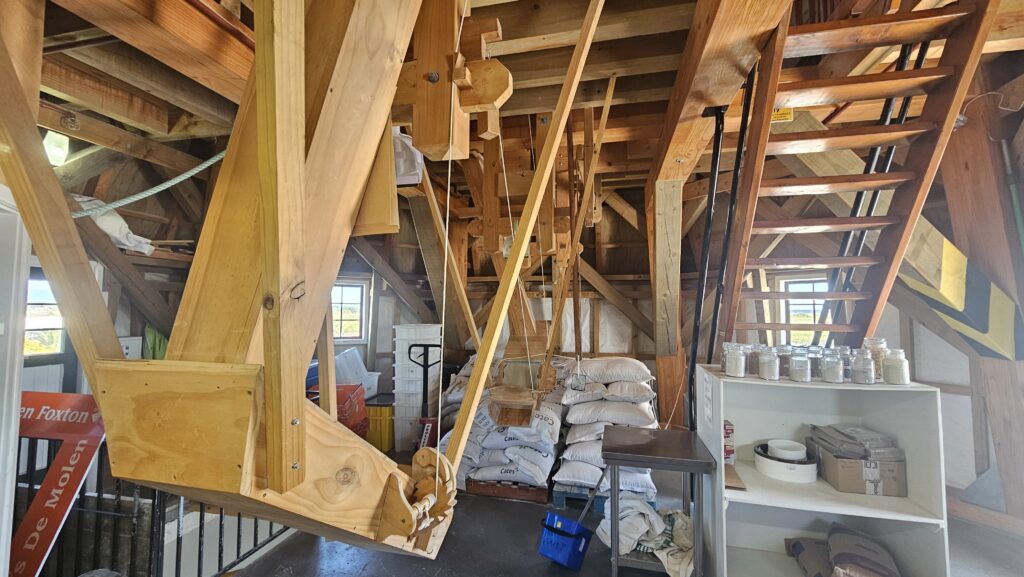
In 1990, Dutch immigrant Jan Langen began constructing De Molen, a full-scale, authentic Dutch windmill built using traditional techniques and principles. This was never intended as a symbolic structure or tourist ornament. It was designed to function exactly as windmills have done in the Netherlands for centuries: to mill grain.
That intent remains central. When we arrived, the windmill had just milled several bags of flour—a small but telling detail. De Molen is not heritage frozen in time; it is heritage in motion, living practice rather than static display.
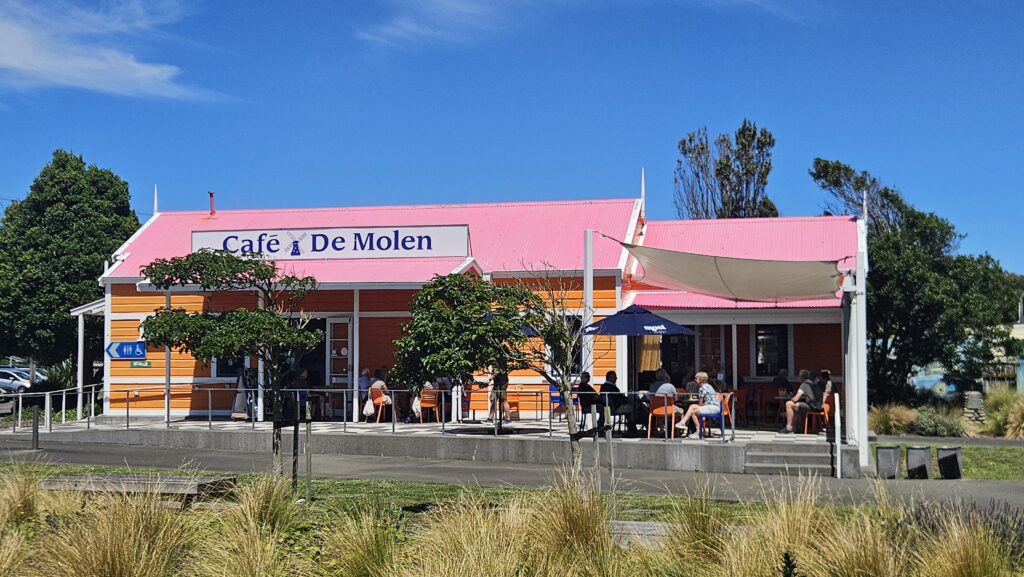
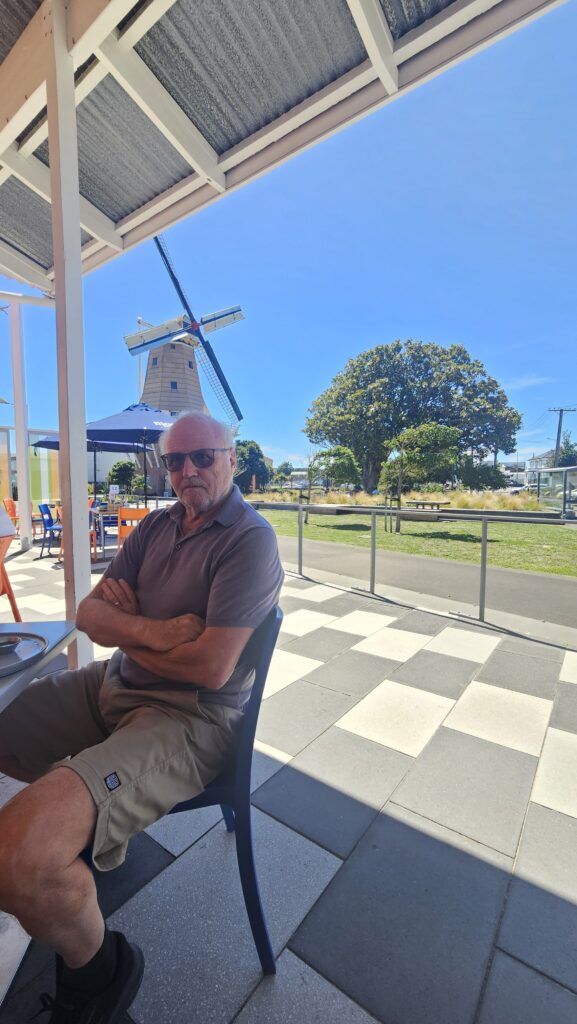
The windmill was officially opened in 2003 and quickly became Foxton’s most recognisable landmark. Shortly thereafter, Café De Molen was built alongside it. The café played a vital role well beyond hospitality. It became a social meeting place, where Dutch migrants, locals, and visitors could meet informally. Conversation, food, and shared curiosity provided an accessible entry point into Dutch culture long before the museum itself existed.
From empty hardware store to cultural institution
Roughly a decade later, an opportunity emerged that would fundamentally change the scale and ambition of the Dutch presence in Foxton. A large former hardware store, adjacent to the windmill, stood empty. Rather than seeing this as a liability, members of the local Dutch community recognised its potential.
By this stage, personal collections, photographs, letters, and oral histories had accumulated across decades of post-war Dutch settlement. There was a growing awareness that these materials—and the lived experiences they represented—were at risk of being lost if not properly preserved and interpreted.
Crucially, the vision that emerged was not for a narrowly defined ethnic museum. From the outset, there was a recognition that any serious heritage centre in Foxton needed to reflect the layered history of the place itself, including the long-standing presence and continuing authority of Ngāti Raukawa ki te Tonga. The result was a concept that placed Dutch migration within a wider, place-based narrative, anchored by the Manawatū River.
Governance, ownership, and long-term security
Te Awahou Nieuwe Stroom operates within a governance model that deserves attention. The facility is owned by the Horowhenua District Council, providing long-term stability, professional infrastructure, and integration into regional cultural planning. At the same time, the content, interpretation, and ethos of the museum remain deeply shaped by community involvement, including Dutch organisations and Muaūpoko representatives.
This balance between public ownership and community authorship is one of the reasons the centre works so well. It avoids the fragility that often affects volunteer-only heritage initiatives, while preserving authenticity and lived connection.
Oranjehof: Dutch migration told at human scale
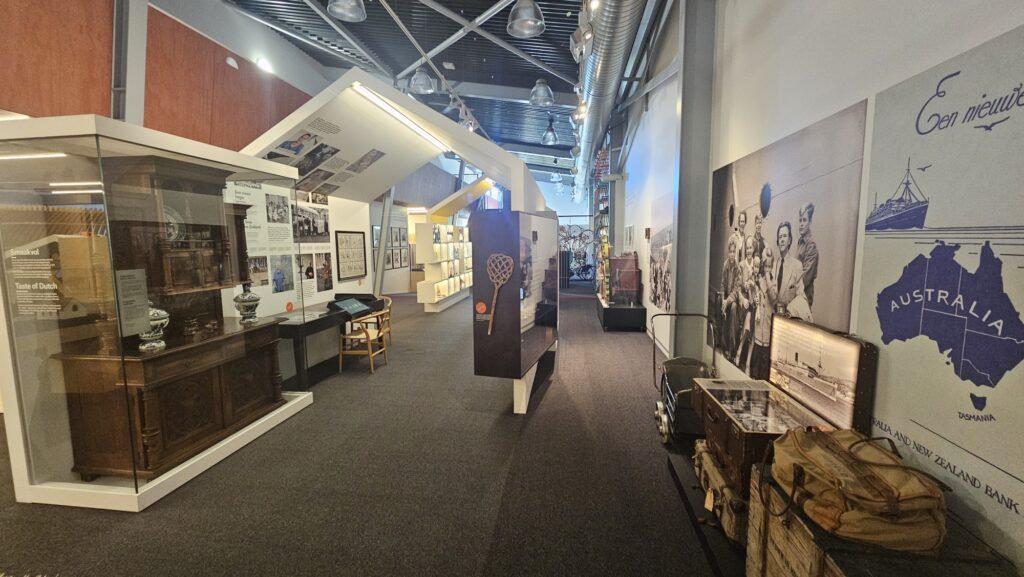
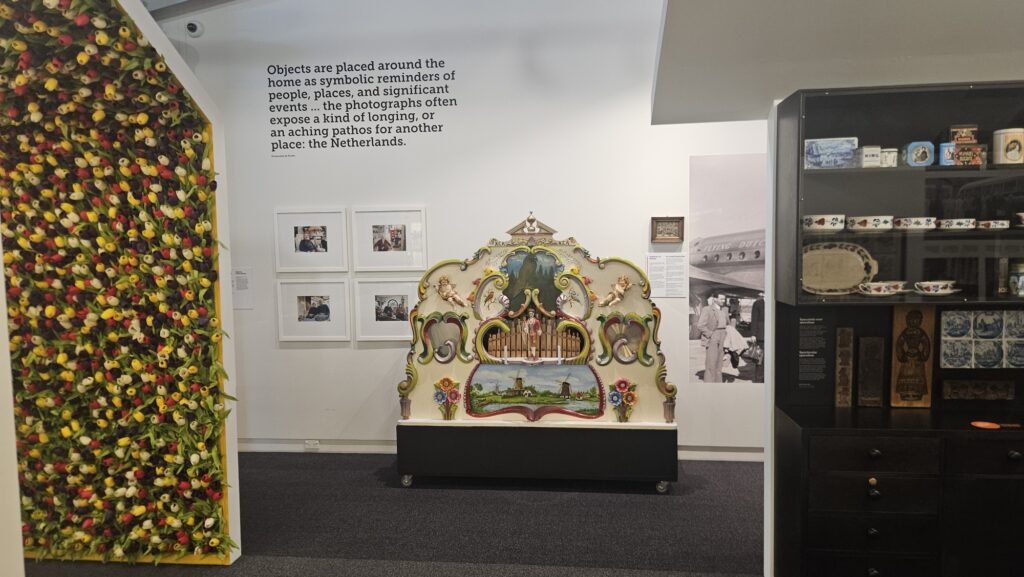
The Oranjehof section presents the Dutch story with clarity and restraint. It traces early Dutch contact with New Zealand, the large-scale post–World War II migration, the realities of arrival, work, housing, language, faith, and family life, and the gradual process of adaptation and belonging.
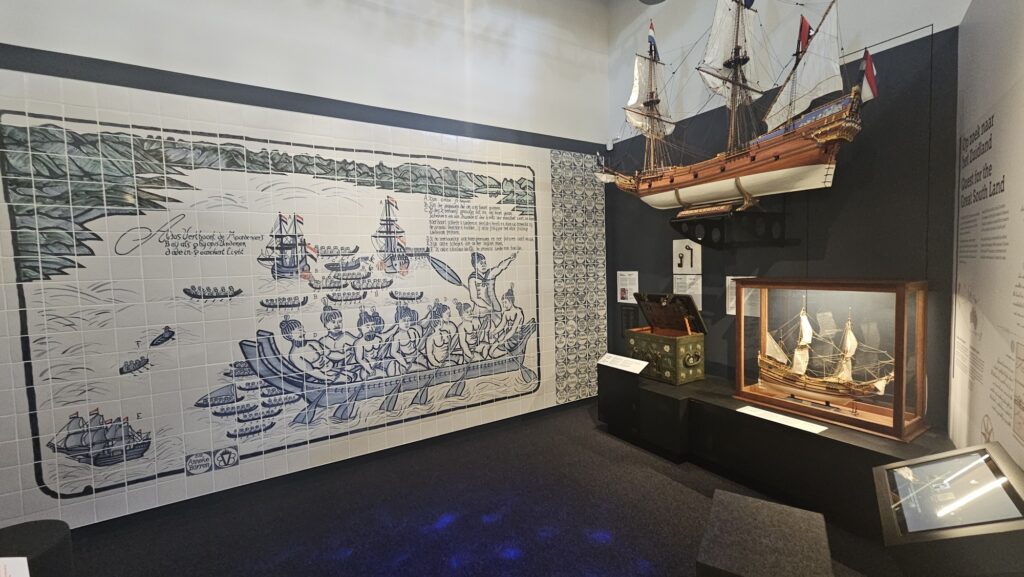
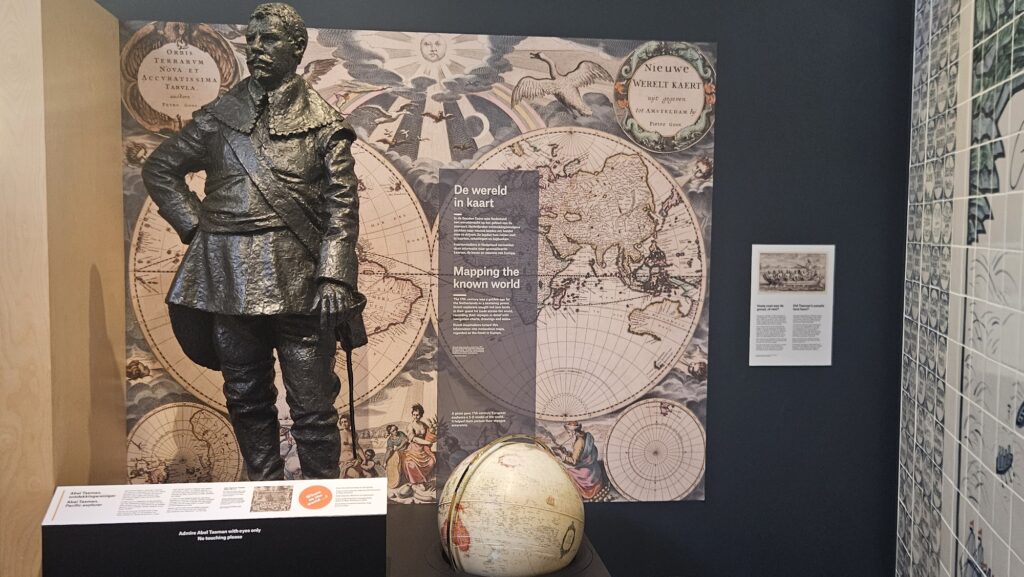
An important connecting thread here is the museum’s thoughtful display on Abel Tasman. His 1642 voyage, while brief in New Zealand, anchors the Dutch story in the wider maritime world of the seventeenth century. In doing so, Te Awahou Nieuwe Stroom consciously places Dutch migration history within a longer continuum of Dutch engagement with the Pacific, beginning with exploration and seafaring rather than settlement. This curatorial choice adds depth and historical discipline to the overall narrative.
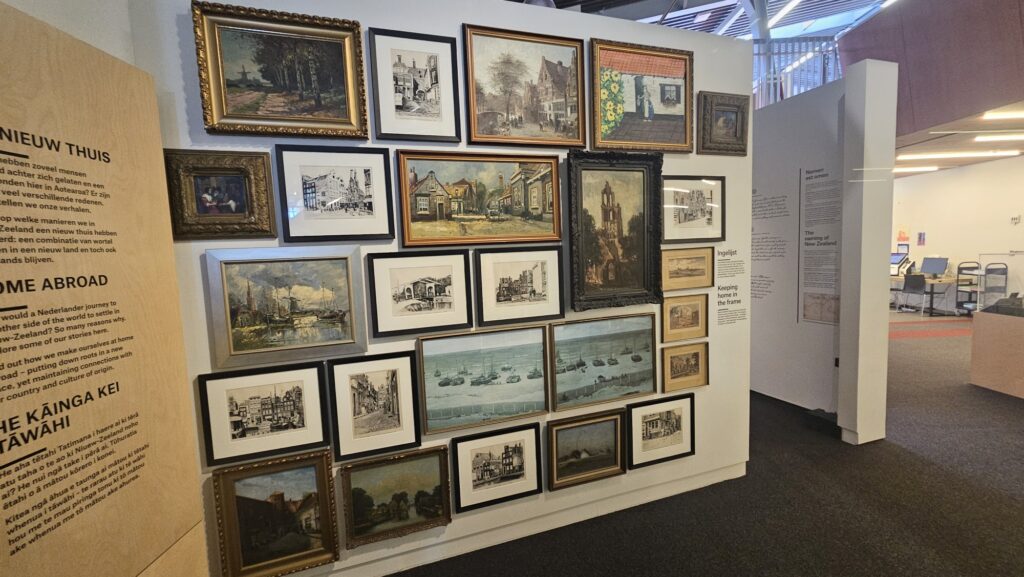
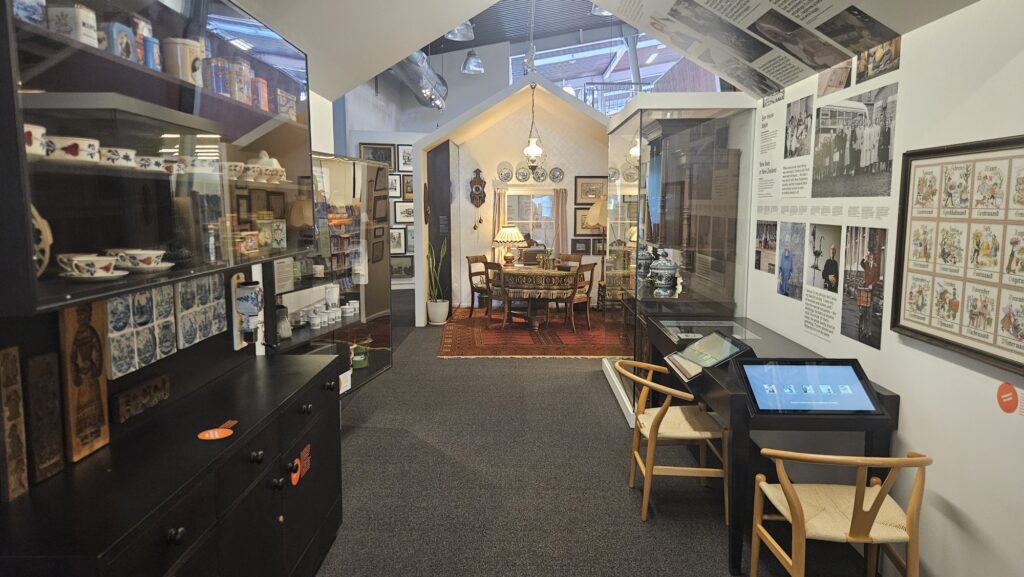
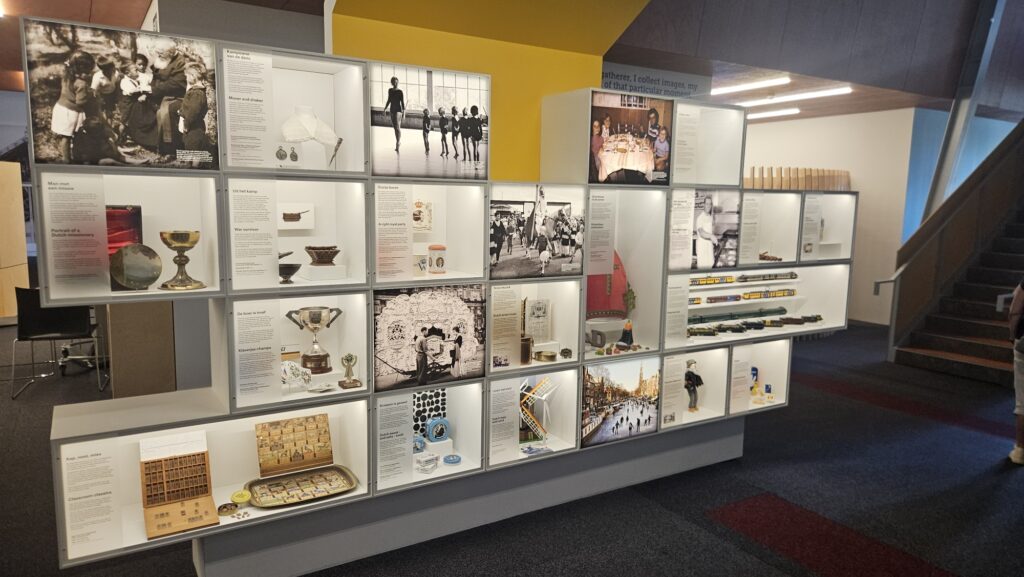
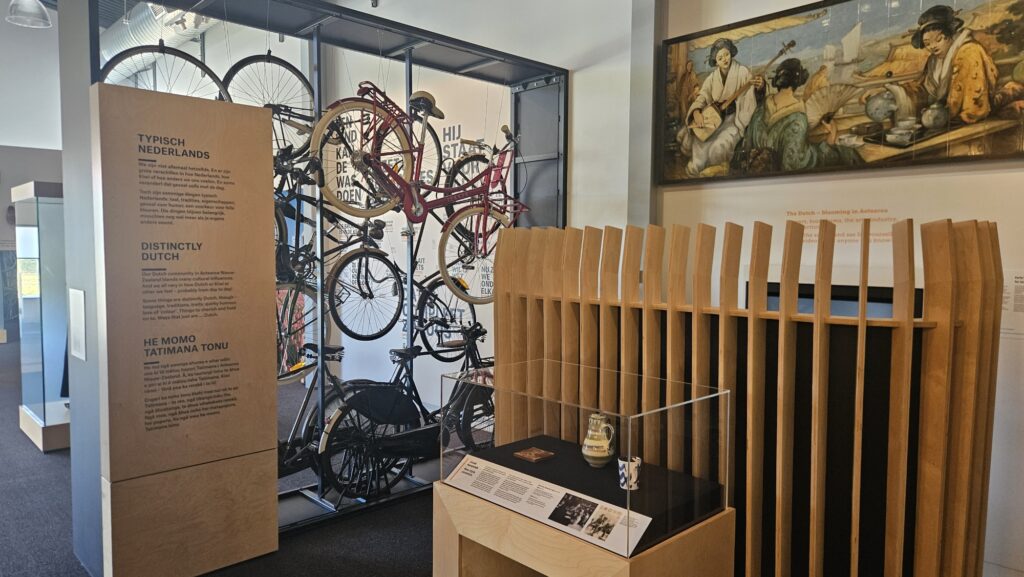
What stands out throughout Oranjehof is the human scale of the presentation. The story is carried by everyday objects, personal photographs, documents, and testimony. There is no triumphalism and little nostalgia. Instead, visitors encounter migration as it was lived: practical, demanding, sometimes disorienting, and deeply formative.
For anyone familiar with Dutch migration history in Australia, much of this will feel immediately recognisable.
A museum executed to contemporary professional standards
Beyond content, what truly distinguishes Te Awahou Nieuwe Stroom is its professional execution. This is a museum that clearly understands and applies contemporary museological principles, comparable in quality and intent to some of the strongest Dutch-heritage institutions in Australia, particularly in the maritime domain.
From an Australian perspective, the Western Australian Maritime Museum in Fremantle and the Museum of Geraldton set a high professional benchmark in interpreting Dutch seventeenth-century maritime history, especially in relation to the VOC period and shipwreck archaeology. Their treatment of Dutch exploration, trade, and maritime presence in Australian waters is of an international standard.
Te Awahou Nieuwe Stroom operates at a similar professional level, but within a fundamentally different historical framework. Where Fremantle and Geraldton focus on maritime exploration and early encounters, Foxton addresses the later, deeply human story of migration, settlement, and cultural adaptation. The connection lies not in subject matter, but in the seriousness with which history is researched, interpreted, and presented.
The exhibitions are narrative-led rather than object-driven. Artefacts are used selectively to support clearly articulated stories. Interpretation is layered and accessible, inviting both casual visitors and those seeking deeper engagement. Design, lighting, typography, and spatial flow are handled with confidence and discipline, creating a calm and coherent visitor experience.
Migration is not romanticised, nor reduced to a simple success story. Loss, rupture, adaptation, and resilience are all present, framed in a way that speaks to universal human experience. The integration of Māori and Dutch narratives within the same institution reflects best practice in bicultural interpretation, presenting distinct but intersecting histories shaped by the same river and landscape.
In short, this is a first-class regional museum by international standards.
A benchmark for the Dutch diaspora — and a lesson for Australia
From the perspective of the Dutch Australian Cultural Centre, what has been achieved in Foxton deserves explicit recognition, while also being placed within a broader Australasian context. Australia already hosts several highly professional institutions dealing with Dutch history, most notably in the maritime sphere. What Te Awahou Nieuwe Stroom adds is something complementary rather than competitive: a nationally visible, professionally curated centre dedicated specifically to Dutch migration and post-war community life.
In that sense, Foxton does not fill a gap left by Australian institutions, but addresses a different historical dimension. Together, these institutions demonstrate the breadth of Dutch engagement with the region, from seventeenth-century maritime exploration to twentieth-century migration and settlement.
In the Australian context, it is also important to note that work on Dutch migration history is very much underway, albeit in a different form. The Dutch Australian Cultural Centre has commenced a large-scale digitisation project of its extensive archival holdings, covering personal papers, photographs, organisational records, and community history accumulated over decades. This work reflects a conscious strategy to preserve Dutch migration history in Australia in a way that is accessible, sustainable, and suited to a geographically dispersed community.
While this approach differs from the place-based museum model developed in Foxton, the underlying intent is closely aligned. Both initiatives recognise that migration history is fragile, time-bound, and easily lost if not actively curated. Digitisation allows the DACC to safeguard these histories and make them available nationally and internationally, complementing the physical, locally anchored storytelling achieved at Te Awahou Nieuwe Stroom.
Full marks — and a shared future
From a DACC perspective, the conclusion is straightforward: full marks to the New Zealand Dutch community. Te Awahou Nieuwe Stroom is exemplary, not only as a Dutch heritage project, but as a museum in its own right.
Rather than inviting comparison in competitive terms, it should be seen as a shared point of inspiration across the Dutch diaspora. Foxton shows how migrant history, when treated with professionalism, humility, and care, can claim its rightful place in the cultural landscape of a nation.
Seen together, the working windmill, Café De Molen, and Te Awahou Nieuwe Stroom form a coherent and powerful whole. The windmill embodies continuity of practice, the café fosters social exchange, and the museum preserves memory and meaning.
It is a current that flows well beyond Foxton—and one from which we in Australia can learn a great deal.