From the fall of the Netherlands East Indies to renewed operations from Australia
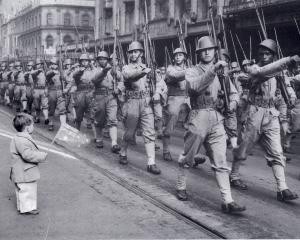
The Japanese conquest of the Netherlands East Indies in early 1942 brought Dutch military aviation in the region close to destruction. Many aircraft were lost in combat, destroyed to prevent their capture or diverted to other Allied forces. Much of the flying and technical personnel was killed, captured or left behind.
Those who escaped regrouped in Australia. They included personnel of the Military Aviation Service of the Royal Netherlands East Indies Army (ML-KNIL), the Royal Netherlands Navy Air Service (MLD), and the civil airline KNILM, whose aircraft and crews had already become closely involved in military transport and evacuation operations.
Australia became the principal base from which Dutch air power was rebuilt in the Southwest Pacific. This was not simply a matter of recreating the organisations that had existed before the Japanese invasion. The Dutch operated within the Allied command structure and depended heavily upon Australian bases, personnel, maintenance, training and logistical support, as well as American aircraft and equipment.
The result was a distinctive wartime partnership in which Dutch, Indonesian and Australian personnel served together.
Regrouping in Australia
Aircraft, crews and other personnel arrived at different locations and under extremely difficult circumstances. Many had escaped with little more than the aircraft they were flying. Ground crews, spare parts, equipment and administrative records had frequently been left behind.
Archerfield Airport in Brisbane became an important centre for Dutch aviation. Aircraft and personnel arriving from the Netherlands East Indies were assembled there, while workshops, transport services and administrative organisations were established or reorganised.
Other personnel and flying students arrived in Adelaide, Melbourne, Sydney and Canberra. Dutch flying schools were briefly re-established at Australian bases, including Mallala and Parafield in South Australia and Rathmines in New South Wales. Because Australia urgently needed its own training capacity, most Dutch students and instructors were subsequently transferred to the United States. There, the Royal Netherlands Military Flying School at Jackson, Mississippi, trained hundreds of pilots, navigators, bombardiers, wireless operators, air gunners and technical personnel. Many later returned to Australia for operational service.
Cooperation with the Royal Australian Air Force
The rebuilding of the Dutch air force could not have occurred without close cooperation with the Royal Australian Air Force.
The Dutch supplied aircrew, aircraft and a distinct Netherlands East Indies identity. The RAAF provided many of the ground crews and also supplied co-pilots, air gunners, bombardiers, photographers and other specialist personnel where Dutch numbers were insufficient. Australia provided airfields, accommodation, communications, maintenance facilities and operational support.
The United States supplied much of the aircraft and equipment. Some aircraft had been ordered and paid for by the Netherlands before the fall of the East Indies, but their allocation became the subject of difficult negotiations because Allied forces were themselves desperately short of aircraft.
This combination of Dutch aircrew, Australian personnel and American equipment reflected the wider multinational character of the Allied campaign.
No. 18 (Netherlands East Indies) Squadron RAAF
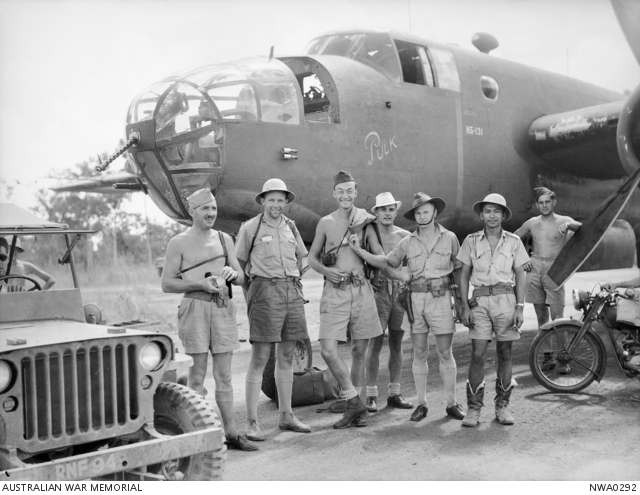
No. 18 Squadron was formed at Canberra on 4 April 1942. It was the first and most important of the joint Netherlands East Indies–RAAF combat squadrons formed in Australia.
Equipped with North American B-25 Mitchell bombers, the squadron initially undertook training and maritime patrols from Canberra. It moved to McDonald Airfield in the Northern Territory late in 1942 and began operational missions in January 1943. It subsequently transferred to Batchelor, which provided better access to targets in the Netherlands East Indies.
From northern Australia, No. 18 Squadron conducted bombing, reconnaissance and anti-shipping operations against Japanese positions across Timor, the eastern Netherlands East Indies and surrounding waters. These were long and dangerous missions, often involving low-level attacks against defended targets and shipping.
The squadron later became part of No. 79 Wing RAAF and moved to Balikpapan in 1945 as Allied forces advanced back into the Netherlands East Indies.
Although frequently described as a Dutch squadron, No. 18 Squadron was a genuinely combined unit. Dutch and Netherlands East Indies personnel served alongside hundreds of Australians, and both groups suffered casualties.
No. 120 Squadron and the proposed No. 119 Squadron
The Dutch hoped to expand their operational strength as personnel trained in the United States became available.
Plans were developed for another B-25 unit, to be designated No. 119 Squadron. However, continuing shortages of Dutch aircrew, Australian ground personnel and aircraft prevented it from becoming an operational squadron.
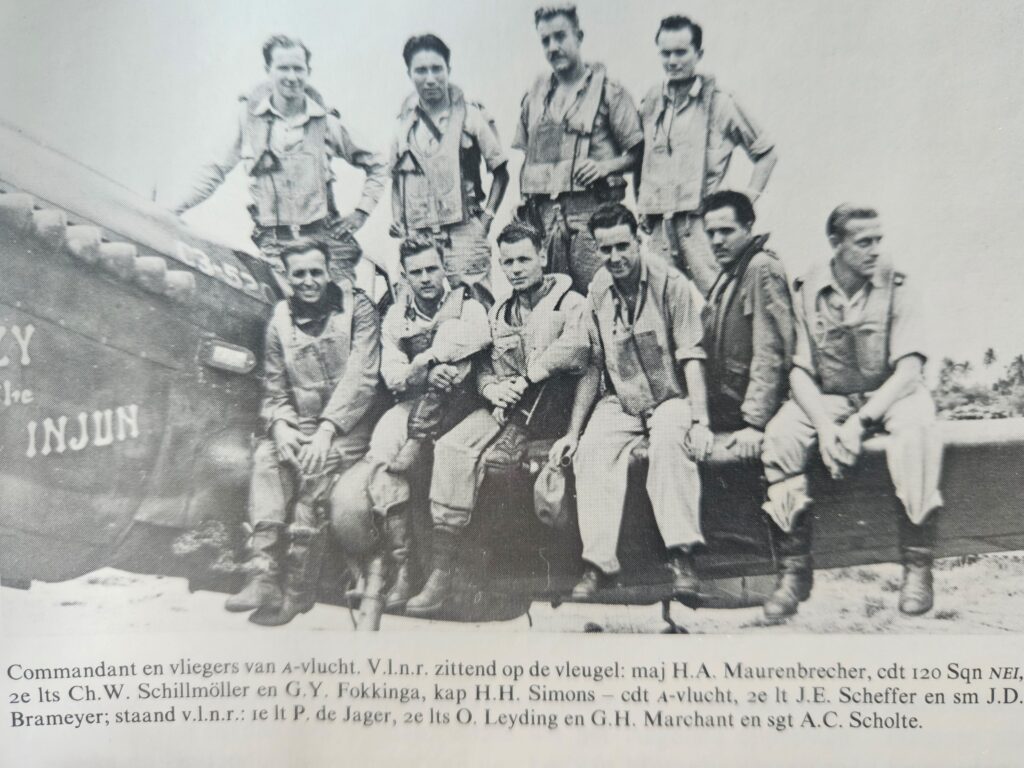
No. 120 (Netherlands East Indies) Squadron RAAF was formed at Canberra in December 1943. It was equipped with P-40 Kittyhawk fighters and, like No. 18 Squadron, combined Dutch aircrew with Australian support personnel.
Rather than operating from northern Australia, No. 120 Squadron was sent to Merauke in southern Netherlands New Guinea. Merauke was one of the few parts of the Netherlands East Indies that had not been occupied by Japan. From there, the squadron defended an important Allied base and supported operations as the campaign moved westward and northward.
The histories of Nos. 18 and 120 Squadrons illustrate the depth of Dutch–Australian cooperation. They also show the limitations under which the Dutch operated. The will to rebuild a larger air force was present, but personnel, aircraft and Allied priorities determined what was practically possible.
Dutch military air transport
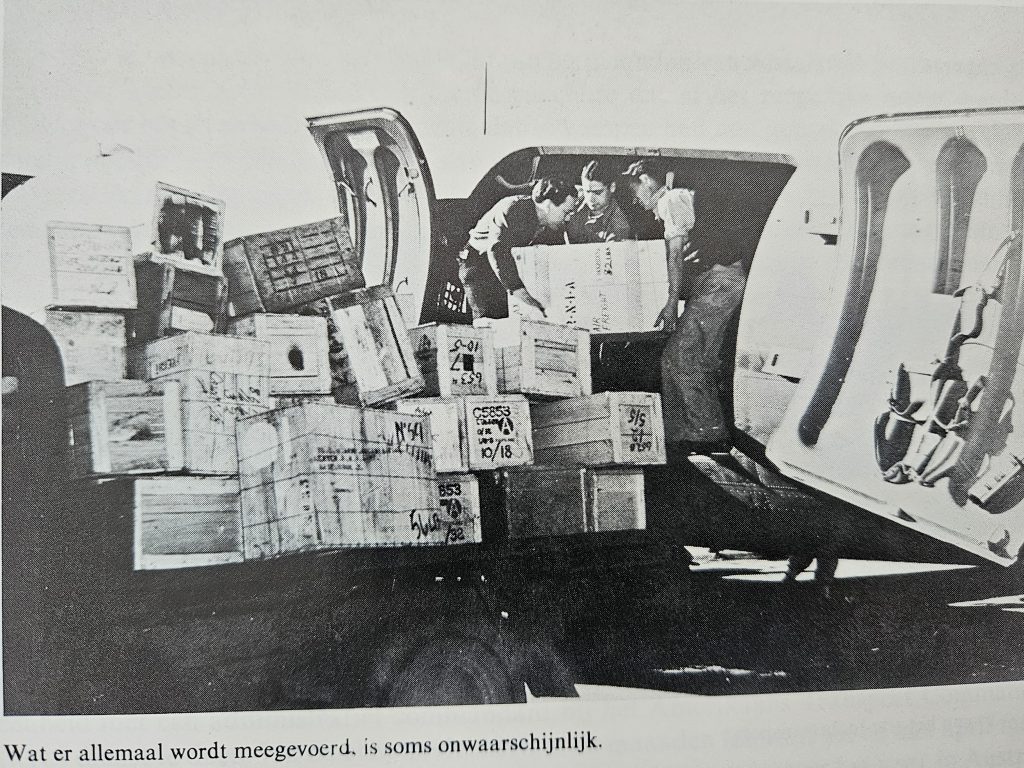
Combat squadrons were only part of the Dutch aviation presence in Australia. Military air transport was equally important.
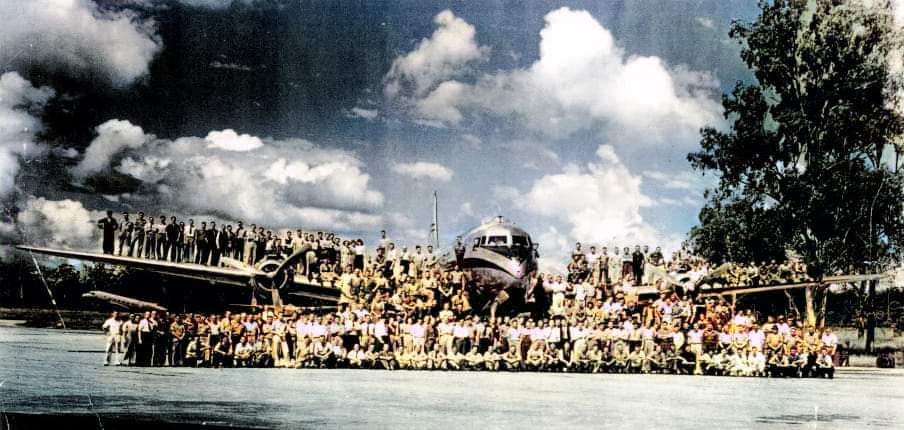
Former KNILM aircraft and crews played a central role in evacuating officials, military personnel, civilians and records from the Netherlands East Indies. After reaching Australia, they were incorporated into a succession of Netherlands East Indies transport organisations based principally at Archerfield.
Dutch transport crews carried personnel, supplies, mail and equipment across Australia and to New Guinea and other forward areas. Some flights involved long distances, difficult weather, limited navigation facilities and the continuing possibility of enemy action.
The transport organisation underwent several changes during the war, culminating in the formation of No. 19 (Netherlands East Indies) Transport Squadron in August 1945.
Following the Japanese surrender, its task changed rapidly. Transport aircraft were urgently required to carry supplies, officials and medical personnel and to assist with the recovery and repatriation of former prisoners and civilian internees. Dutch transport operations continued from Australia into the immediate postwar period.
Royal Netherlands Navy aviation
The Royal Netherlands Navy Air Service formed another distinct part of the Dutch aviation story.
Before the Japanese invasion, its Dornier Do 24 and Catalina flying boats had conducted maritime reconnaissance, patrol, bombing and transport missions throughout the archipelago. During the collapse of the Netherlands East Indies, these aircraft also helped evacuate military personnel and civilians to Australia.
Dutch naval aviation suffered a devastating blow during the Japanese attack on Broome on 3 March 1942. Numerous Dutch flying boats crowded into Roebuck Bay were destroyed, and many Dutch servicemen and civilian evacuees were killed.
Some surviving Catalinas and personnel continued to Ceylon, where they became associated with No. 321 (Dutch) Squadron RAF. Other aircraft and personnel remained connected with Australia. Dutch naval flying boats undertook transport, reconnaissance, training and special missions between Australia, New Guinea and islands near or within Japanese-occupied territory.
These naval operations were organisationally separate from the ML-KNIL squadrons but formed an important part of the broader Dutch air effort supported from Australia.
A network across Australia
Dutch aviation activity was spread across a wide Australian network.
Archerfield was the principal transport and technical centre. Canberra/Fairbairn was associated with the formation and training of the combat squadrons. Mallala, Parafield and Rathmines were used for training, while Nowra provided bombing practice.
In the Northern Territory, McDonald and Batchelor became operational bases for No. 18 Squadron, supported by airfields such as Pell and Gould. Broome was a vital evacuation and staging point, while Lake Boga, Rose Bay, Bundaberg, Charleville and other locations also formed part of the wider aviation network.
This geographical spread demonstrates that the Dutch air presence was not confined to one squadron or one base. It was a national Australian story extending from southern training establishments and Brisbane workshops to the operational airfields of northern Australia.
A shared Dutch–Australian history
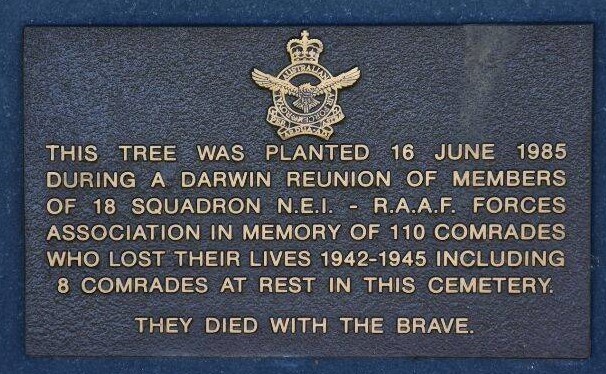
Between 1942 and 1947, Dutch military aviation in Australia developed from a scattered collection of survivors, aircraft and incomplete organisations into an effective operational force.
Its achievements depended upon Dutch determination, Australian support and American equipment. Dutch and Indonesian personnel brought experience of the Netherlands East Indies and a strong commitment to continue the struggle. Australian personnel supplied much of the organisational, technical and operational capacity required to return them to the air.
Together they flew bombing, fighter, reconnaissance, maritime patrol, transport, evacuation and relief missions. Their cooperation represents an important chapter in the wartime relationship between Australia, the Netherlands and Indonesia.
The individual squadrons, aircraft, bases and people involved in this history are explored in the DACC’s Dutch and Netherlands East Indies Air Forces in Australia during World War II Research Portal.
Sources and further information
- Australian War Memorial – No. 18 (NEI) Squadron
- Australian War Memorial – No. 18 (NEI) Squadron RAAF
- Royal Australian Air Force – Establishment of RAAF Base Fairbairn
- Peter Dunn, Australia @ War
- Nicholas Michael Sambaluk, Building Dutch Air Power in World War II
- Dr Jack Ford, Allies in a Bind: Australia and the Netherlands East Indies in the Second World War
- De Militaire Luchtvaart van het KNIL in de jaren 1942–1945