A migration story about hope, establishing a new life and an early farewell in Tasmania
In the post-war Netherlands, increasing numbers of people decided to seek their future elsewhere. The Kroon family from The Hague also made this momentous decision. In 1950, they exchanged their familiar surroundings for a future on the other side of the world: Australia.
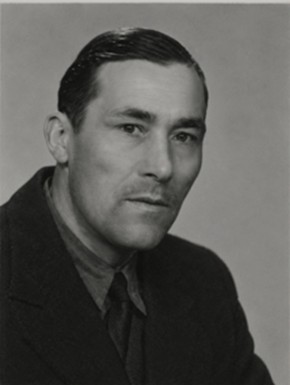
Jacobus Hendricus Kroon, who was known within the family as Henk and later in Australia as Hendrie, was born in The Hague on 14 November 1904. He was the son of Jacobus Hendricus Kroon, a plumber, and Christina Barbara van de Pavert. Like his father, he chose a technical occupation and became an electrician.
On 4 April 1928, he married Folkertje Ruhl, who had been born in Hoorn on 18 September 1905. Folkertje was the daughter of Hendrik Ruhl, a sawmill worker, and Margaretha Helena Ruitenburg. She worked as a domestic servant.
The couple established their family in The Hague, where they lived at 65 De Vriesstraat. Their children grew up there: their son, Jacobus Hendricus, born on 3 September 1928, and their daughter, Margaretha Helena, born on 29 November 1930 and known as Henny.
A new life on the other side of the world
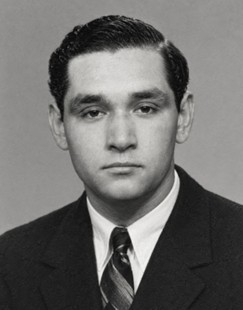
In 1950, the family decided to take an enormous step. The Netherlands was still living in the shadow of the Second World War, while Australia offered opportunities to people hoping to establish a new life elsewhere.
On 29 November 1950, Jacobus Hendricus Kroon and his family arrived in Sydney. They had travelled from Rotterdam aboard the SS Volendam.
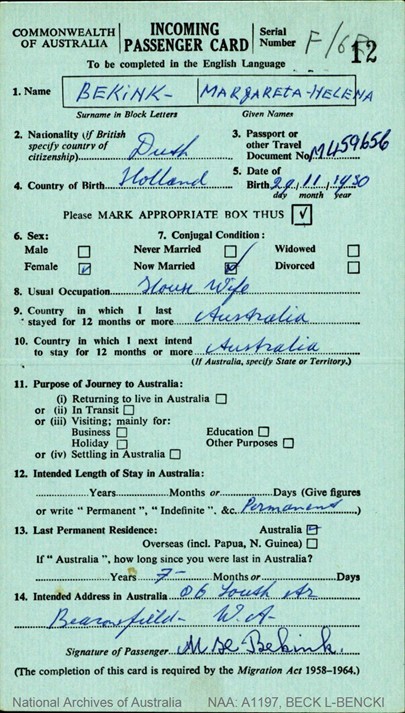
Those on board included Henk, his wife Folkertje and their son, Jacobus Hendricus Jr. Their daughter Henny also travelled with them, accompanied by her husband, Willem Johannes Bekink, who had been born in The Hague on 11 February 1931.
Their destination was Launceston on the island of Tasmania, where the family settled permanently. Jacobus Hendricus found employment as an electrician, and the family lived at 132 Charles Street in Launceston.
Establishing a life in Tasmania
The family had travelled thousands of kilometres to establish a new life in Australia. Moving from De Vriesstraat in The Hague to Charles Street in Launceston represented an enormous change.
It is not yet fully known what the family’s everyday life was like. What contacts did they establish? How did Henk’s employment progress? Did the children find their place in Australian society, and did the family remain together in Tasmania?
These are questions that remain to be answered through further historical research. What is clear, however, is that the family’s experience in Australia soon took a tragic turn.
An early death
Jacobus Hendricus Kroon died on 5 February 1952 at only 47 years of age. He had been in Australia for little more than a year when his life came to an end.
He was buried at Carr Villa Memorial Park in Kings Meadows, near Launceston, Tasmania.
This must have been an extremely difficult period for Folkertje and the children. Only a short time earlier, they had begun establishing a new life together. They now had to continue without their husband and father, far from their country of birth.
The family’s grief, however, did not end there.
The death of their daughter Henny
In 1953, their daughter Margaretha Helena Kroon, better known as Henny, also died. She was only 22 years old, or 23 if her death occurred after 29 November.
Henny was married to Willem Johannes Bekink, with whom she had emigrated from the Netherlands to Australia.
She was buried beside her father at Carr Villa Memorial Park. Father and daughter thus found their final resting place together in distant Tasmania.
For her husband Willem and her mother Folkertje, this must have represented another devastating loss.
What happened to the surviving family members?
This is where the story that can presently be reconstructed from the available information comes to an end.
Little is known about Folkertje Ruhl’s later life in Australia. Did she remain in Tasmania, or did she eventually return to the Netherlands? What became of her son, Jacobus Hendricus Kroon Jr, after the family’s migration?
Important details are also still missing about Willem Johannes Bekink, Henny’s husband.
The Kroon and Bekink families therefore left a history in Australia that has not yet been fully uncovered.
An appeal to relatives and researchers
The period during which the Kroon and Bekink families lived in Australia deserves further genealogical investigation. Records from the years 1950 to 1955 may be particularly valuable.
Australian archives, cemetery registers, historical newspapers and immigration records may provide further information about where they lived, their employment and what subsequently happened to the surviving family members.
There may also be descendants or relatives in Australia who possess memories, photographs or documents relating to the family.
Anyone with further information about members of the Kroon, Ruhl or Bekink families in Australia is warmly invited to make contact.
Additional information can be sent to Fred Stuij at info@alblasserwaard-genealogie.nl.