From Groningen to Tasmania
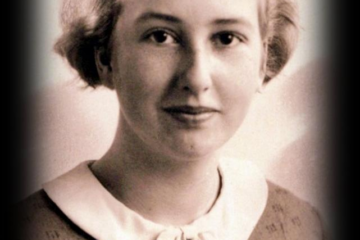
Egbert (Eb) Pinkster was born on 6 August 1910 in Groningen, the Netherlands. He was one of the original Groningen Seven, a group of Dutch men who organised a migration venture to Tasmania following the Second World War.
The group shared connections through their Reformed Christian background and sought to establish new lives in Australia through a cooperative building enterprise.
Pinkster and Eerke van der Laan were selected to travel ahead of the other migrants in 1950. Their task was to investigate employment opportunities, housing, land availability and the practical prospects for the proposed building business.
Searching for opportunities in Tasmania
Their first investigations took them to northern Tasmania, including Launceston. Finding the prospects there less attractive than they had hoped, they were advised to investigate opportunities south of Hobart.
In an account preserved by historian Kees Wierenga, the two men missed the morning bus from Hobart to Kingston and began walking.
They were offered a lift by local builder Archie Smith, who subsequently helped them find employment and establish contacts with government authorities.
Smith also provided them with a meal of lamb chops and peas cooked over a campfire. The two Dutchmen remembered the hospitality with particular appreciation.
This chance encounter became an important part of the early history of Little Groningen.
Establishing the Australian Building Corporation
Pinkster and van der Laan were involved in discussions with the Tasmanian Government concerning the proposed migration and building enterprise.
In June 1950, they met Premier Robert Cosgrove. Contemporary newspaper reports and government correspondence document the interest in bringing Dutch building workers and potentially prefabricated housing to Tasmania.
The migrants subsequently established the Australian Building Corporation, intending initially to construct their own homes and then undertake building work for Australian customers.
Their plans also included a joinery workshop.
The beginnings of Little Groningen
At Kingston, Pinkster and van der Laan negotiated arrangements for land that could accommodate the Dutch families.
On 11 September 1950, they appeared before Kingborough Council to discuss the proposed subdivision and the practical requirements for roads and water supply.
The negotiations were an important step towards establishing the settlement that became known as Little Groningen.
The building enterprise subsequently provided employment and housing opportunities for the original migrants and others who followed them to Tasmania.
The settlement also developed into a centre of Dutch Reformed religious, educational and community life.
A contribution to Dutch-Australian settlement
Pinkster’s historical significance lies particularly in his role during the formative months of the Kingston migration project.
Together with Eerke van der Laan, he helped transform the plans developed by a group of men in Groningen into a practical settlement and building enterprise in Tasmania.
His contribution illustrates the importance of organised migration, cooperation between migrants and assistance from local Australians in the development of Little Groningen.
Further biographical information about Pinkster’s later life and activities in Tasmania would be valuable in completing his personal history.
Sources and further reading
- Kees Wierenga, Dutch Migration to Tasmania in 1950 – Motivation, Intention and Assimilation, University of Tasmania, 2005.
- Kees Wierenga, Little Groningen – Tasmania.
- Kees Wierenga, The van der Laan’s wedding anniversary in Tasmania.
- The Mercury, 27 June 1950, p. 4, concerning the meeting with Premier Cosgrove, cited in Wierenga’s thesis.
- Tasmanian State Archives, PCS 1/101, 1950, government correspondence cited in Wierenga’s thesis.
This article is based principally on the historical research of Kees Wierenga, whose Tasmanian research collection was entrusted to the Dutch Australian Cultural Centre.
Related research
This article forms part of the DACC’s Research Portal – Little Groningen: Dutch migration, faith and community in Kingston, Tasmania, which brings together historical research, family stories and documents relating to the Dutch Reformed community at Kingston.