The Dutch Australian Cultural Centre (DACC) has reached an important milestone in the long-term preservation of Dutch-Australian heritage. After several years of preparation, planning and infrastructure development, the DACC Archive Digitisation Project has moved from concept to active implementation.
Preserving a unique national archive
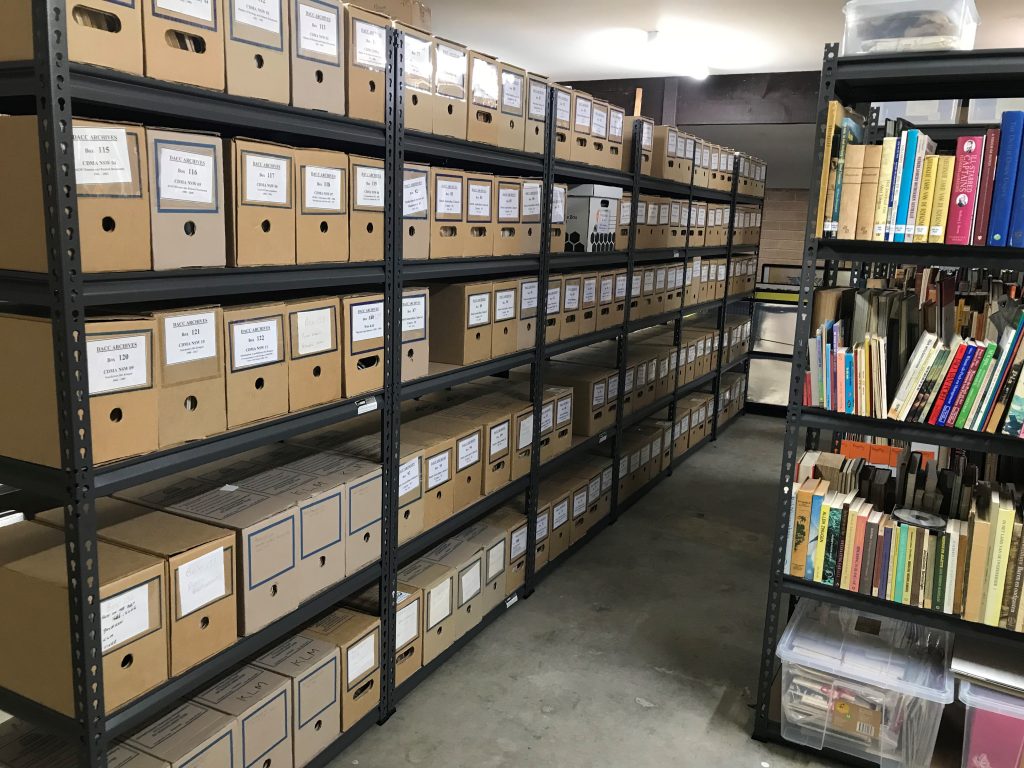
Since its foundation in 1983, the DACC has taken responsibility for safeguarding the records of many Dutch migrant clubs, associations and community organisations across Australia. Over time, these records were entrusted to the DACC in the form of boxes of paper documents, photographs and related material. Building on the exceptional archival groundwork laid over many years by Sr. Lia van Haren, the DACC has now moved from preparation to active digitisation of its national Dutch-Australian archive. Today, this collection comprises 190 fully catalogued archive boxes stored in Sydney and represents one of the most significant repositories of Dutch-Australian migration history.
The importance of this collection was formally recognised in 2008 through a Significance Assessment commissioned by the National Library of Australia, which confirmed that the DACC holds rare and unique material not available elsewhere and of high value for future research.
Laying the groundwork for digitisation
In 2019, following the election of a new Board, the DACC began investigating what would be required to digitise its archive to professional standards. At the same time, the organisation expanded its public outreach through a dedicated website showcasing Dutch-Australian stories. That website now hosts more than 1,300 articles and attracts thousands of visitors each month.
Parallel work focused on developing digitisation policies and workflows consistent with international archival standards. This included decisions on scanning specifications, file formats, metadata structures and long-term digital preservation. The DACC selected eHive—used by archives and museums worldwide—as the primary platform for making its digitised collection accessible to researchers and the public. Necessary equipment and IT systems were put in place with support from the Netherlands Embassy.
The DACC Digital Team, led by a qualified academic with expertise in historical research and archival methodology, now provides professional oversight for volunteers contributing to the digitisation work.
Collaboration and international context
Separate from the DACC, the Huygens Institute in the Netherlands has, since 2006, played a leading role in Dutch-Australian historical research, working closely with Dr Nonja Peters in Perth to organise symposia, exhibitions and working groups. The Institute has also overseen the digitisation of 55,000 Dutch migration cards held by the Nationaal Archief in The Hague.
Since 2019, the DACC and the Huygens Institute have renewed contact to exchange expertise on digitisation standards and archival practices. In parallel, the two organisations are exploring opportunities to make the digitised migration cards accessible via the DACC website, subject to privacy guidelines. This international cooperation provides a strong reference point for the DACC’s own digitisation efforts.
From preparation to practice: Box 150
In late 2025, the DACC commenced scanning as part of a carefully designed trial phase. Box 150 was selected as a test example because it contains a wide variety of document types and relates to the NSW Dutch Folk Dance Group.
This trial provided practical insight into the complexity of the archive, the time required to digitise different materials, and the resources involved. It also demonstrated how digitised records can be curated into coherent thematic stories that combine documents, photographs and contextual information.
Importantly, the Box 150 trial produced reliable data on time and effort per item and per series. This information now provides a solid basis for estimating future staffing, volunteer capacity and budget requirements as the project expands.
Making the archive accessible
A key principle of the DACC digitisation project is immediate accessibility. As materials are digitised and processed, they are prepared for publication through eHive and linked to relevant content on the DACC website. This ensures that Dutch-Australian heritage becomes visible and usable as early as possible for researchers, educators and the wider community.
While the archive is, at its core, a migration archive, the digitisation work aims to reflect the full variety of Dutch-Australian life, including cultural activities, social organisations, business history and other significant primary research materials. Administrative records such as meeting minutes will be digitised in later phases, allowing priority to be given to more unique and historically rich materials.
Looking beyond the DACC collection
In addition to its own archive, the DACC is aware of a very large, currently unsorted Dutch migration collection in Victoria. Discussions are underway to support efforts to sort and, in time, digitise this material using compatible standards. The DACC is also in contact with custodians of two significant private collections, exploring how best to preserve these materials and, where appropriate, integrate them into the broader digitisation initiative.
Moving forward
With Board approval of the digitisation strategy in December 2025, the DACC is now moving ahead with confidence. Digitisation of the NSW archive will continue, while collaboration with partners in Australia and the Netherlands will help strengthen preservation efforts nationally and internationally.
The DACC Archive Digitisation Project represents a major step towards ensuring that the stories, experiences and contributions of Dutch migrants and their descendants are preserved and made accessible for future generations.
Paul Budde – December 2025