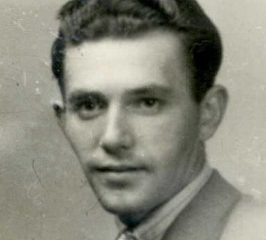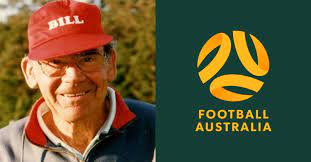
William (Bill) Vrolyks was born in the Netherlands in 1925. In 1945 at the age of twenty, he was sent to Australia as part of the Royal Dutch Air Force for training to fight the Japanese during the Second World War. At the time, there was a major union boycott in support of Indonesian independence, which meant the trainees were flown all over Australia to help load ships that would go to Indonesia. During this time Vrolyks was also employed as a guard at the Indonesian prisoners camp in Casino. After the end of the war, Vrolyks married a local girl in Sydney and settled there in 1948.
Football
Bill Vrolyks is best known for his involvement in football. He played football in the Netherlands as a young man, and during his time in Australia with the Royal Dutch Air Force Vrolyks became captain of the Dutch Air Force Team. His journey in football spans decades, leaving an indelible mark on Australian soccer and beyond.
In particular, Vrolyks played a pivotal role in the establishment of the Dutch-Sydney Austral club, where he began his football career. He played 354 games for Sydney Austral. Later, he transferred to Leichhardt Annandale, where he played 56 games. In total Bill Vrolyks amassed an impressive record of 510 first-grade matches throughout his career. As a player, he also had the privilege of playing alongside legendary Australian footballer Joe Marston.
Coaching
Beyond his achievements on the field, Vrolyks was instrumental in shaping the coaching landscape in New South Wales. He played a key role in implementing the first coaching structure in the state and extended his expertise interstate, aiding in the formation of similar coaching groups. Ultimately, Vrolyks was part of the push that established the Australian Coaches Federation.
His dedication to coaching extended beyond formal structures. Vrolyks coached teams at various clubs around Sydney including Pan Hellenic, Sydney Croatia, and the senior NSW team from 1969-1971. He also generously devoted his time and effort to coaching camps and clinics at the Parklea Academy for a decade, all without financial compensation. Vrolyks moved to the NSW Central Coast in the late 1970s and found teams to coach there, as well. He was coach of Umina, the Central Coast State League team, and clubs at Woy Woy, Southern-Ettalong and Wyoming. His commitment to the sport earned him the honor of being named a Life Member of the NSW Coaches Federation.
Throughout his career Vrolyks coached various NSW and state youth teams, leaving a lasting impact on generations of young footballers. His remarkable contributions to the sport were recognised with the award of the Order of Australia Medal in 1988. Over two decades later in 2001, his contributions to Australian football were recognised further with his induction into the Football Australia Hall of Fame, solidifying his place as a revered figure in the nation’s sporting history.
Community service
Vrolyks’ legacy also extends beyond the football field. His selflessness and dedication to community service were evident through his volunteer work with organisations including Meal on Wheels. Additionally, he played a significant role in the Torch Relay for the 2000 Sydney Olympic Games, carrying the torch around The Entrance (NSW)—a testament to his enduring commitment to his community.
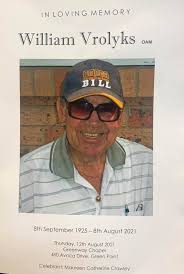
Bill Vrolyks passed away in August 2021, leaving a legacy that continues to inspire. With his passing Australia’s football scene bade farewell to an icon who had mentored and coached three generations of footballers.
Selected sources
- Football Australia, “Bill Vrolyks OAM”, https://footballaustralia.com.au/bill-vrolyks
- Football Australia, “Vale Bill Vrolyks OAM”, 9 August 2021, https://footballaustralia.com.au/news/vale-bill-vrolyks-oam
- Ron Pratt, Richard Beazley and Christ Conti, “The History of Australian Schools Football”, School Sport Australia, pp.1-3.
- Kevin Best and Alistair Kennedy, Tiger Tales: The History of the Wyoming Football Club, 1970-2010, entries for years 1992-1993.
See also: