Early life in the Netherlands
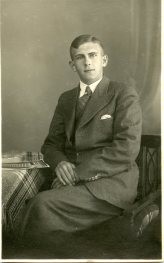
Cornelis Antonie de Jong was born in 1916 in Asperen, a small rural town along the river Linge. He grew up in a family marked by poverty, limited formal education, and the social pressures of interwar Dutch society. Work was often seasonal or insecure, schooling was short for most children, and family life was shaped by strong religious and cultural divisions within Dutch Protestantism.
From an early age, education became central to De Jong’s outlook. Despite financial hardship, he argued that learning offered the only realistic path out of poverty. This conviction would later define both his professional life and his contribution to the Dutch community in Australia.
Teaching in the Netherlands East Indies
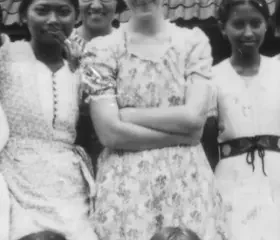
In 1939, De Jong accepted a teaching appointment through the Dutch Reformed Church mission system and left for the Netherlands East Indies. He arrived in Java just months before the outbreak of war in the Pacific and was posted to schools in Central Java, including Klaten near Surakarta (Solo). His qualifications in English and teaching soon led to increased responsibility, and he was appointed headmaster shortly before the war disrupted civilian life.
During this period he met Agatha, also a teacher, whom he later married in Surakarta in July 1941. Their early married life unfolded under the growing shadow of war, as the Netherlands was already occupied by Germany and tensions in Asia escalated rapidly.
War, KNIL service and capture
Following the Japanese attack on Pearl Harbor and the Netherlands’ declaration of war, De Jong was conscripted into the Koninklijk Nederlands Indisch Leger (KNIL). He served in North Sulawesi in a communications role during the Japanese landings in January 1942, part of the Battle of Manado in the Minahasa region.
After the fall of Netherlands East Indies, De Jong was captured following a failed attempt at withdrawal and guerrilla movement. He was transported to Makassar and later sent to Japan as a prisoner of war.
Prisoner of war in Japan
In late 1942 De Jong was transported aboard the Asama Maru to Nagasaki and interned at Fukuoka No. 2 POW Camp, located at the Koyagi Island shipyards. There he was forced to work in shipbuilding and dock construction under harsh conditions marked by hunger, disease, and physical abuse. (There is separate article on Claude Belloni who also ended up in Fukuoka and described that in detail in the book: The Sun in his eyes.)
Despite captivity, De Jong sought intellectual and emotional survival through reading, writing, and study. He kept notebooks, copied poetry, reflected on religion and politics, and formed friendships with fellow POWs, including British sailors. These years left a lasting mark on his health but also reinforced his belief in education and ideas as sources of resilience.
Liberation and post-war instability
After Japan’s surrender in August 1945, De Jong passed through Manila and was reunited with his wife on Morotai in October 1945. They returned to North Sulawesi and attempted to rebuild their lives as teachers in Tomohon, but the Indonesian Revolution quickly destabilised the region.
Repeated evacuations, forced relocations, and growing insecurity made long-term settlement impossible. Like many Dutch and Indo-European families, the De Jongs experienced the post-war period not as peace, but as continued displacement.
Migration to Australia
In January 1951 the family migrated to Australia, arriving in Sydney via Darwin. They were first accommodated at a hostel in Kensington and then transferred to the Bathurst Migrant Camp, a former military facility repurposed for post-war migration.
Life at Bathurst reflected the wider migrant experience of the early 1950s: shared amenities, institutional routines, and uncertainty about the future. From there, the family moved to the Illawarra region, where De Jong initially worked at the steelworks while rebuilding financial stability.
Teaching and Dutch community life in the Illawarra
De Jong eventually returned to teaching, first through requalification and later as a primary school teacher and deputy headmaster in the New South Wales public system. His experience with migrant children, language barriers and cultural adjustment proved invaluable in classrooms with high numbers of post-war arrivals.
Alongside his professional work, he became deeply involved in Dutch community life in the Illawarra. He served as president of the local Dutch community organisation, assisted fellow migrants with English, taxation and bureaucracy, and acted as an informal advocate for Dutch newcomers navigating Australian systems.
The 1953 North Sea flood and community leadership
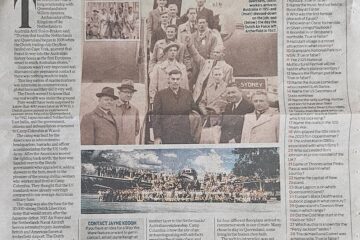
One of De Jong’s most visible public roles came in 1953, following the catastrophic North Sea floods in the Netherlands. As president of the Dutch community, he helped organise fundraising efforts in Australia and publicly expressed gratitude for Australian support. Contemporary local reporting records him speaking on behalf of the Dutch people, emphasising both the scale of the disaster and the sense of belonging Dutch migrants felt in Australia.
This episode illustrates how Dutch migrants rapidly moved from settlement to civic engagement, acting as intermediaries between homeland crises and Australian public life.
Later years and legacy
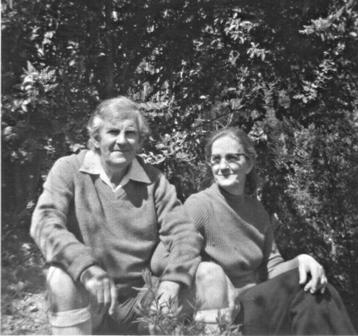
De Jong continued teaching until health issues linked to wartime experiences and later strokes led to early retirement. In later years he and Agatha travelled widely, maintained strong family connections, and remained engaged with books, music and community life. He died in 1981.
His life traces a trajectory shared by many Dutch Australians: rural origins, wartime rupture, captivity and loss, post-war displacement, and gradual rebuilding through work, education and community engagement. It is a story that links the Netherlands, the former Netherlands East Indies, and Australia through one individual life shaped by global events.
Source and further reading
This article is based on a detailed family narrative published online as Cornelis Antonie de Jong on the “Waltzing the world” website. The full account includes extensive personal recollections, wartime documents, poems and migration details and is recommended for readers seeking a deeper exploration of this life story.