This is an abstract from the full article click here. It is a deeply personal memoir by Dutch migrant Johan Luchters provides a rich and highly detailed first-hand account of post-war migration experiences at the Scheyville Migrant Accommodation Centre in New South Wales during the early 1960s. Far more than a recollection of childhood memories, the text offers an intimate social history of Dutch migration to Australia and captures the emotional complexity of leaving Europe to begin a new life on the other side of the world.
Luchters describes his family’s migration from the Netherlands in 1960 as part of the large post-war migration movement encouraged by both the Dutch and Australian governments. Coming from a family with eight children, he recounts the enormous sense of adventure associated with emigrating to Australia, then perceived in the Netherlands as a land of sunshine, opportunity and freedom. The account vividly captures the excitement and uncertainty of international air travel at a time when few ordinary Dutch families had ever seen an aircraft, let alone flown across the world. Stops in Bangkok, Beirut, Manila and Biak in Dutch New Guinea became part of the migration journey itself.
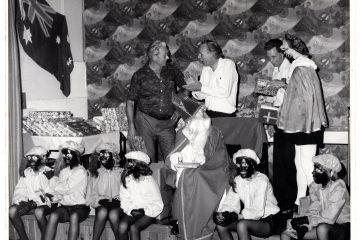
One of the most valuable aspects of the memoir is the detailed portrayal of daily life inside Scheyville Migrant Accommodation Centre. Luchters recreates the atmosphere of the camp from a child’s perspective: the heat, the unfamiliar Australian food, the migrant school, sports, wildlife, church life, friendships and the multicultural environment in which migrants from many countries lived together. His recollections reveal Scheyville not as a place of hardship alone, but also as a place of discovery, excitement and social connection.
The memoir provides particularly important insights into the educational and social structures within Scheyville. Luchters describes the migrant school, his teachers, sporting activities, friendships with children from Germany, Finland, Yugoslavia and Australia, and his gradual integration into Australian life. His reflections demonstrate how quickly migrant children often adapted linguistically and socially to their new environment.
Religion and community life also play a central role in the narrative. As an altar boy in the Scheyville Catholic Church, Johan formed a close relationship with Father Victor Doyle, whose mentorship and excursions beyond the camp opened up much of Australia to him. The memoir highlights the important role played by churches, priests and religious sisters in supporting migrant families during their early settlement years.
Equally valuable are the descriptions of migrant labour and adaptation. Johan’s parents worked both inside and outside the camp — his mother in the camp kitchen and his father as electrician, movie operator and barman. Their experiences reflect the difficult balancing act faced by many migrant families: building a future while coping with separation from relatives and the pressures of resettlement.
The memoir also documents the interaction between migrants and local Australian society. Johan recalls working on nearby farms, travelling through regional New South Wales and developing strong attachments to the Australian landscape. His descriptions of the bush, wildlife and outdoor life reveal how migration shaped not only economic opportunities but also identity, memory and emotional attachment to place.
A particularly moving section concerns the family’s eventual decision to return to the Netherlands after three years in Australia. While Johan’s mother longed to return to her family in Holland, Johan himself wished to remain in Australia. The tension between opportunity abroad and emotional attachment to home was a common experience among post-war migrants and is powerfully reflected in the narrative.
The later sections of the memoir are especially significant from a heritage perspective. Decades after returning to Europe, Johan reconnected with Scheyville through the internet and eventually revisited Australia in 2009 with his wife. This return journey demonstrates the enduring emotional significance Scheyville retained for many former residents.
An important element of this rediscovery was the assistance provided by Jonathan Sanders and the staff of Scheyville National Park. Luchters describes how Sanders personally invited him to revisit the site and helped preserve photographs, documents and memories associated with the camp. The memoir therefore also highlights the crucial role of heritage preservation in maintaining migrant memory and identity.
Beyond its personal dimension, the memoir provides a broader reflection on migration, multiculturalism and identity. Luchters contrasts contemporary debates in the Netherlands about immigration with his own positive memories of multicultural life in Scheyville, where children from many backgrounds lived together without significant ethnic tensions.
See also: Scheyville Migration Camp – then and now