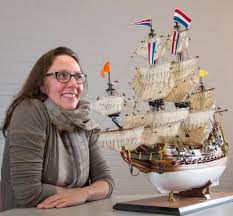
For centuries the Dutch connection with Australia has largely been told through stories of exploration, trade and shipwrecks. Dutch navigators were the first Europeans to chart much of Australia’s coastline, leaving traces of their journeys scattered along the continent’s shores. Today, those stories continue to be uncovered and interpreted through the work of a new generation of researchers. Among the most prominent is Professor Wendy van Duivenvoorde, whose work has helped bridge Dutch maritime history and Australian archaeology.
Professor Wendy van Duivenvoorde is one of Australia’s leading maritime archaeologists and currently holds a professorship in maritime archaeology at Flinders University in Adelaide. Her research spans archaeology, shipbuilding history, cultural contact and underwater heritage. Yet her journey into Australian history began thousands of kilometres away in the Netherlands.
Growing up in the Netherlands, a country whose identity has long been shaped by the sea, van Duivenvoorde developed an early fascination with maritime history. During her studies at the University of Amsterdam she became increasingly interested in archaeology and volunteered on maritime excavation projects. What started as curiosity evolved into a career dedicated to exploring humanity’s relationship with the sea.
Her academic path became international. After completing studies in the Netherlands, she undertook doctoral research in nautical archaeology at Texas A&M University, one of the world’s leading centres in maritime archaeology.
Australia entered the story through one of the most dramatic episodes in Dutch maritime history: the wreck of the VOC ship Batavia. Built in Amsterdam and wrecked on the coast of Western Australia in 1629, the Batavia became infamous for the mutiny and violence that followed the disaster. Van Duivenvoorde came to Australia specifically to participate in research linked to the ship and its archaeological legacy.
The Batavia story occupies a unique place within Dutch–Australian history. It represents one of the earliest and most dramatic Dutch encounters with Australian shores. For maritime archaeologists it also offers an unparalleled opportunity to understand seventeenth-century shipbuilding and life at sea.
Professor van Duivenvoorde’s research extends well beyond a single wreck. She has become internationally recognised for her expertise in Dutch East India Company shipbuilding and maritime technology. Her work has examined several of the famous Dutch shipwrecks along the Western Australian coast, including the VOC vessels Vergulde Draeck, Zuytdorp and Zeewijk. Through archaeological analysis of ship construction techniques and artefacts, her research helps reconstruct how Dutch ships were designed, built and operated during the great age of maritime expansion.
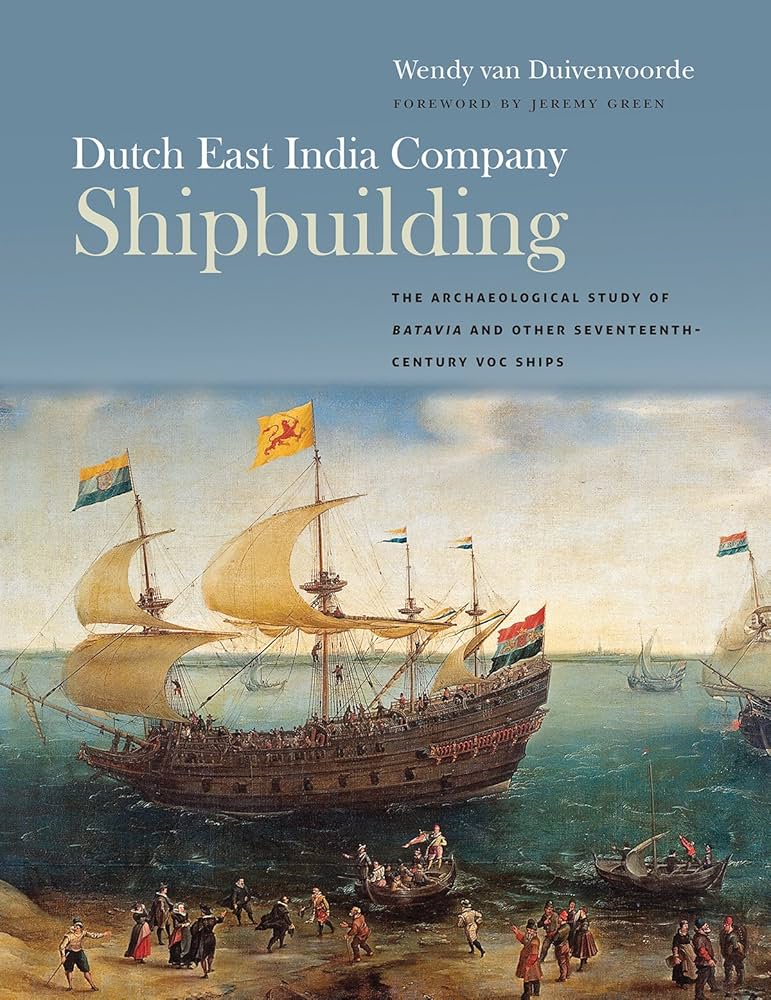
Her book Dutch East India Company Shipbuilding: The Archaeological Study of Batavia and Other Seventeenth-Century VOC Ships has become an important reference in maritime archaeology and Dutch East India Company shipbuilding. The volume was authored by Van Duivenvoorde, with a foreword by maritime archaeologist Jeremy Green. Drawing on archaeological and historical evidence, the book demonstrates how Dutch shipyards pioneered innovative shipbuilding methods that contributed to the Netherlands becoming one of the world’s leading maritime powers during the seventeenth century.
Her personal story also forms part of a broader Dutch–Australian narrative. Having grown up in the Netherlands and later moving to Australia through her maritime research, Professor van Duivenvoorde became part of a long tradition of Dutch connections with Australia. Unlike earlier waves shaped by trade, exploration or postwar migration, her journey was driven by scholarship and historical research. Yet like many Dutch migrants before her, she brought knowledge and expertise that enriched Australian life and deepened links between the two countries.
Her work also reflects an evolving understanding of maritime archaeology itself. Shipwrecks are no longer simply viewed as isolated disasters or treasure sites. Increasingly they are understood as cultural landscapes that reveal wider stories about technology, trade networks, human mobility and cultural encounters. Her studies have explored these broader themes, linking maritime archaeology with social history and cultural heritage.
Importantly, this research contributes to preserving a shared Dutch–Australian heritage. Through agreements between Australia and the Netherlands, historic Dutch shipwrecks are recognised as important parts of both countries’ cultural histories. Research by scholars such as Professor van Duivenvoorde ensures that these connections remain visible and accessible for future generations.
SBS Video – Dirk Hartog lecture at Maritime museum 21-10-2016
A perfect evening for a “Dirk Hartog” lecture at the Maritime Museum in Sydney with Prof. Wendy van Duivenvoorde, Dutch C-G Willem Cosijn and a rooftop projection for all of Sydney to see.
This is a YouTube video. After playing the video, press the return button to go back to the DACC Hub.