Long before ambassadors, embassies and formal diplomatic relations between Australia and the Netherlands, there was already practical cooperation between South Australia and the Dutch East Indies (now Indonesia). It was not driven by politics or military alliances, but by telecommunications. In the nineteenth century telegraph cables were the equivalent of today’s internet backbone: strategic infrastructure that connected economies, governments and societies.
What initially appears to be an engineering story gradually reveals itself as a story of international cooperation involving South Australia, the Dutch East Indies administration in Batavia, British cable companies and regional communications networks extending from Europe through Asia into Australia.
The Overland Telegraph changed Australia forever
To understand the significance of the Java–Darwin connection, it is first necessary to understand the enormous importance of the Australian Overland Telegraph.
The 3,200 km Overland Telegraph Line linking Adelaide and Port Darwin was completed on 22 August 1872 under the leadership of Charles Todd, Superintendent of Telegraphs for South Australia. Historians have described it as one of the greatest engineering feats in nineteenth-century Australia.
The line crossed some of the most remote and difficult terrain on earth. Around 36,000 poles were erected through central Australia, together with repeater stations, batteries and telegraph equipment. South Australia pursued the project partly because it hoped to become Australia’s communications gateway to the world.
Within months of completion, the line connected with the submarine cable from Java.
Communication with Europe dropped from months by ship to mere hours by telegraph. Australia was no longer isolated.
Yet this Australian triumph depended on infrastructure and cooperation extending far beyond Australian shores.
Batavia was already becoming a communications hub
Australian narratives usually begin with Australia entering the global network. Dutch East Indies sources suggest a different perspective.
Before Australia joined the system, Batavia had already developed international communications links through Singapore. The Dutch East Indies gained access to wider telegraph systems during the late 1850s and 1860s. Early attempts experienced setbacks, including the failure of one of the first Batavia–Singapore cables, which forced authorities to rethink route design and resilience.
Research into Southeast Asian telegraph development shows that concerns over reliability, maintenance and alternative routes already shaped planning decisions. In many respects these issues resemble today’s debates over submarine internet cable resilience and strategic vulnerability.
By the late 1860s Batavia had become an increasingly important communications node.
Australia joins an existing network
The route that ultimately connected Australia followed a chain:
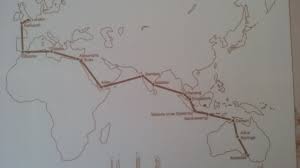
London → India → Singapore → Batavia → Banjoewangi → Port Darwin → Adelaide
A Dutch East Indies yearbook later described the process in revealing terms (paraphrased):
“By the establishing of the telegraphic connection between Java and Singapore in 1870 the Dutch East Indies were connected with the worldwide telegraph system. The connection Java (Banjoewangi) – Australia (Port Darwin) followed.”
This is significant because it presents a Dutch East Indies rather than Australian perspective.
Australia was not creating a new network. Instead, Australia was joining a communications system already expanding through Singapore and Java.
The Dutch East Indies government helped build the network
One of the most revealing discoveries concerns the direct role of the Dutch East Indies government itself.
Charles Todd’s own records stated:
“…the land line through Java was to be constructed by the Government of Netherlands India.”
This changes the character of the story completely.
The project was not simply a private cable undertaking. It involved:
- British Australia Telegraph Company
- South Australian Government
- Charles Todd and the South Australian Telegraph administration
- Government of the Netherlands East Indies
Such a project required agreement on:
- route selection
- technical interfaces
- territorial rights
- maintenance responsibilities
- operating procedures
In effect, telecommunications diplomacy existed before formal diplomacy.
Negotiations before construction
Charles Todd’s papers also reveal another important detail.
Commander Noel Osborne travelled through the Australian colonies in 1870:
“…to complete the necessary negotiations.”
No direct evidence has yet emerged of South Australian officials travelling to Batavia or Dutch East Indies officials travelling to Adelaide. However, negotiations, infrastructure commitments and approvals strongly suggest formal correspondence between Batavia and South Australia.
At the time communication occurred between Adelaide and Batavia rather than Canberra, which did not yet exist.
Long before embassies, officials and telegraph administrators were already engaged in practical international cooperation.
Banjoewangi: the forgotten Australia gateway
One of the least recognised places in this story is Banjoewangie, now Banyuwangi, at the eastern end of Java.
The submarine cable reached Port Darwin in November 1871 and then continued to Banjoewangi, where the connection was completed on 20 November 1871. Messages flowed immediately afterwards.
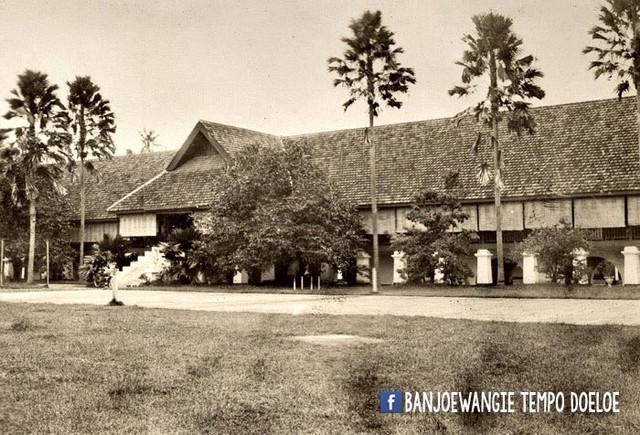
Indonesian historical research now provides another perspective.
The study Posterijen en Telegrafie: Sejarah dan Peran Media Komunikasi Pos dan Telegraf di Banyuwangi Tahun 1864–1919 describes Banyuwangi as:
“the communication link between Australia and Java.”
This is a remarkable interpretation because it sees Banyuwangi not merely as a cable landing point but as an international bridge.
The same study records that Het Nieuws van den Dag reported in 1871 on the laying of telegraph cables between Port Darwin and Banyuwangi.
This demonstrates that the project had a public profile within the Dutch East Indies.
The Batavia narrative may have differed from Adelaide
Australia celebrated the completion of the telegraph network as ending communications isolation.
Dutch East Indies and East Java sources suggest a more practical framing.
A regional East Java chronology recorded:
“1871. Telegraph communication between Banjoewangi and Port Darwin (Australia) opened (English telegraph office).”
This reference to an “English telegraph office” is especially intriguing because it indicates an ongoing operational presence rather than a temporary engineering project.
Batavia may therefore have viewed the connection less as a dramatic breakthrough and more as another expansion of a growing communications network.
The forgotten ship Edinburgh
The story did not end with construction.
Like modern submarine cables, the system required maintenance and repairs.
Photographic and archival evidence identifies the Edinburgh as one of the telegraph fleet vessels involved in cable operations between Java and Darwin. Later records indicate that severe currents and sea conditions repeatedly damaged sections of the Port Darwin–Banjoewangi cable.
Indonesian archival material also records:
“Arrival of the British ship Edinburgh to repair the telegraph connection broken between Port Darwin and Banyuwangi.”
Although the precise repair date still requires confirmation, the evidence shows that the network required continuing international maintenance and generated official administrative reporting.
The cable had become an ongoing operational system.
Traces remained in local memory
The Indonesian Banyuwangi study notes that the former telegraph station later became known locally as Asrama Inggrisan (“English Compound”).
The memory of British telegraph personnel remained embedded in local history.
The Australia connection left a lasting local imprint.
The cable before the embassy
Today Australia still depends on submarine communications infrastructure.
Questions of resilience, route security and strategic dependence remain central policy concerns.
Remarkably, many of those same issues shaped nineteenth-century telegraph planning.
What has largely been forgotten is that Australia’s first major communications breakthrough depended partly on Dutch East Indies infrastructure and cooperation.
Long before wartime alliances, migration agreements and formal diplomacy, Adelaide and Batavia were already engaged in a practical form of telecommunications diplomacy.
The cable came before the embassy.
Paul Budde (May 2026)
Sources and links
Australian Overland Telegraph Line
National Museum of Australia – Overland Telegraph
Overland Telegraph & Undersea Cables (PastMasters)
1871 Java–Port Darwin Cable archive
Repairing the Port Darwin–Banjoewangie cable (State Library Victoria)