Introduction
During the Indonesian Revolution (1945–1949), the struggle between the newly proclaimed Republic of Indonesia and the returning Dutch colonial authorities was fought not only on land and through diplomacy, but also in the air. Less well known is the decisive role aviation played in sustaining the Republican cause under conditions of economic isolation and military blockade. Dutch naval and air forces sought to sever the Republic’s external links, while Republican aviation relied on improvised networks, surplus aircraft and international support.
One incident in particular — the shoot-down of a Douglas C-47 Dakota near Yogyakarta on 29 July 1947 — has become emblematic of this largely overlooked air war. Known as the VT-CLA or Jogja incident, it involved Indonesian air force personnel, foreign pilots, and Dutch fighter aircraft enforcing the blockade. It also illustrates the complex moral, legal and political ambiguities surrounding air operations during the Indonesian Revolution.
Indonesian aviation and Dutch colonial legacies
The foundations of Indonesian military aviation were, paradoxically, laid during the colonial period. Before the Second World War, a number of Indonesians received aviation and technical training within the Royal Netherlands East Indies Army (KNIL) air force. This training, originally intended to strengthen Dutch colonial defence, later became a critical asset for the Republican movement.
Among those shaped by this colonial legacy were Air Vice Commodore Adisucipto and Air Vice Commodore Dr Abdulrachman Saleh, both of whom would later play central roles in the development of the Indonesian Air Force (AURI). Their technical expertise and leadership highlight a recurring pattern in post-colonial conflicts: skills developed within imperial systems were later repurposed in struggles for independence.
Breaking the blockade: foreign pilots, surplus aircraft and humanitarian flights
Following Japan’s surrender in 1945, the Dutch sought to reassert control over the Netherlands East Indies, including through a comprehensive blockade of Republican-controlled territory. Aviation quickly became one of the few remaining channels through which the Republic could maintain external connections.
This effort relied heavily on foreign ex–Second World War pilots — Americans, British and Australians — flying surplus Douglas C-47 transport aircraft. These aircraft operated on routes linking Republican Java with destinations such as Singapore and Manila. Cargoes typically consisted of high-value goods and humanitarian supplies that could be exchanged for funds, medicines and logistical support essential to sustaining the Republican administration and armed forces.
One such aircraft was the Dakota VT-CLA, owned by Kalinga Airlines, an Indian airline associated with Biju Patnaik, an ex–Royal Air Force pilot, businessman and later Indian politician who actively supported the Indonesian independence struggle. The aircraft was leased to the Indonesian government and used for humanitarian and diplomatic missions.
The Jogja (VT-CLA) flight: clearance, mission and interception
The VT-CLA flight of 29 July 1947 was not a covert or military operation. Indonesian Air Force sources state that it was returning from a humanitarian mission transporting medical supplies donated by the Malayan Red Cross to the Indonesian Red Cross. On board were senior AURI officers Adisucipto and Abdulrachman Saleh, returning from this mission, together with other personnel.
Indonesian accounts further record that the flight had received prior approval from British and Dutch colonial authorities the previous day. Its planned arrival was publicly announced, including through radio broadcasts and reporting in The Malayan Times. Conscious of the risks posed by Dutch air patrols, the Indonesian Air Force commander, Air Commodore Suryadarma, issued strict instructions: the aircraft was to approach at a specified time, make no unnecessary manoeuvres, and land immediately at Maguwo airfield without escort.
VT-CLA departed Singapore at approximately 1300 hours. The flight was uneventful until it entered Indonesian airspace over the Bangka–Belitung region, where two Dutch Curtiss P-40 Kittyhawk fighters were observed. These aircraft initially withdrew but later reappeared and began shadowing the Dakota.
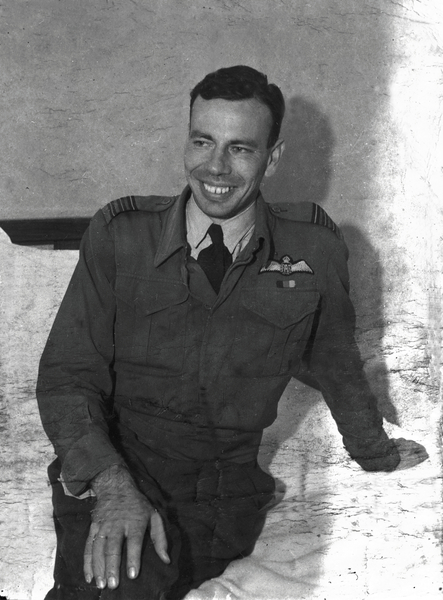
As VT-CLA approached Yogyakarta in the late afternoon, airfield personnel at Maguwo were placed on alert. Shortly before landing, the aircraft lowered its undercarriage and began its final approach.
The attack
At this point, two ML-KNIL Kittyhawk fighters of No. 120 Squadron, piloted by First Lieutenant B.J. Ruesink and Sergeant-Major W.E. Erkelens, closed in on the Dakota and opened fire. The transport aircraft was unarmed and configured for transport rather than combat — a type also used by Dutch units themselves.

Multiple bursts of fire struck VT-CLA. One engine caught fire, the aircraft began to lose control, and a final attempt to reach the runway failed. Witnesses on the ground observed the Dakota trailing smoke as it descended rapidly. The aircraft struck trees and embankments before crashing and exploding near the boundary of Ngoto and Wojo villages, approximately three kilometres from Yogyakarta.
Eyewitness accounts describe villagers rushing to the scene in fading light, improvising torches and stretchers to assist survivors and recover the dead. Initially, some locals assumed the aircraft was Dutch, as its crew were foreign and no flag markings were visible. Humanitarian instincts quickly prevailed, and assistance was given regardless of nationality.
Casualties and survivors
The crash proved catastrophic. Those killed included the Australian pilot Alexander Noel Constantine; the British co-pilot Roy Lance Hazlehurst; the Indian flight engineer Bhida Ram; the Indonesian radio operator Adisumarmo Wiryokusumo; Air Vice Commodore Adisucipto; Air Vice Commodore Dr Abdulrachman Saleh; and Zainul Arifin from the Republican trade office.
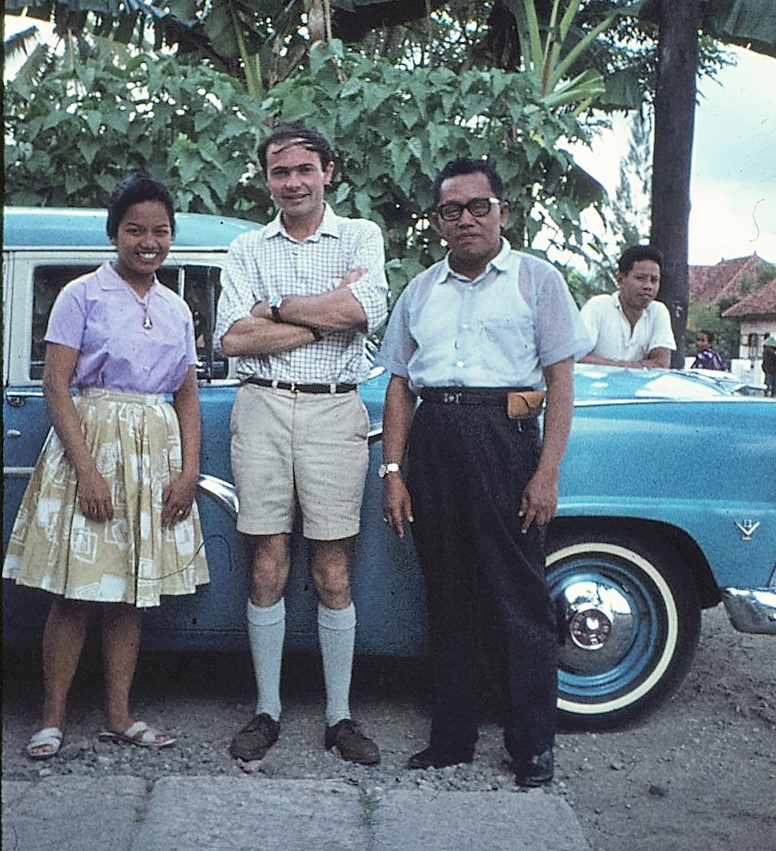
Two passengers initially survived: Mrs Noel Constantine, who was seriously injured but later died in hospital, and Abdul Gani Handoko Cokro, who suffered minor injuries.
The reason, Abdul Gani, survived is said that he was at the rear of the aircraft ,airsick. When the plane crashed. All other passengers and crew were in the cockpit or nearby.
The bodies of the victims were laid out at Hotel Tugu in Yogyakarta, allowing the public to pay their respects. Indonesian officers were later buried in Yogyakarta cemeteries at the request of their families.
Dutch justification and the unresolved weapons claim
Dutch authorities later justified the interception by claiming that VT-CLA was transporting weapons in violation of the blockade. No independent or conclusive evidence has ever emerged to substantiate this claim. Indonesian sources consistently state that the aircraft was carrying humanitarian medical supplies, and no verified cargo inventory or recovered weapons have been produced.
The existence of prior flight clearance and public notification further complicates the Dutch position. The weapons allegation nonetheless played an important role in Dutch military and diplomatic framing of the incident, allowing it to be presented as a legitimate enforcement action rather than an attack on a humanitarian transport aircraft.
International reaction and compensation
The incident provoked international reaction, particularly from India, given the Indian ownership of the aircraft and the involvement of Indian nationals. Indonesian sources record that the Indian Government lodged strong protests following the shoot-down.
Subsequently, the Dutch Government provided compensation, including the transfer of a replacement C-47 aircraft and a financial payment. While compensation acknowledged responsibility at a practical level, it could not offset the loss of experienced Indonesian aviation leaders at a critical stage of the Revolution.
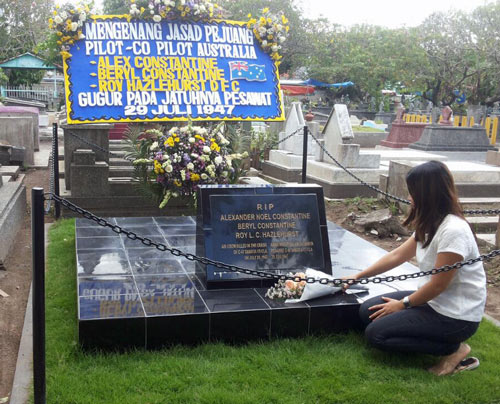
Memory, commemoration and graves
The loss of Adisucipto and Abdulrachman Saleh had a profound impact on Indonesian aviation. By official order, 29 July was later designated Indonesian Air Force Service Day, centred on Adisucipto Airport in Yogyakarta, ensuring that the VT-CLA incident remains embedded in national memory.
In Indonesian commemorations, Noel Constantine is remembered not for his nationality, but because he died while supporting Republican aviation under blockade conditions.
Ben Ruesink and the Dutch air campaign
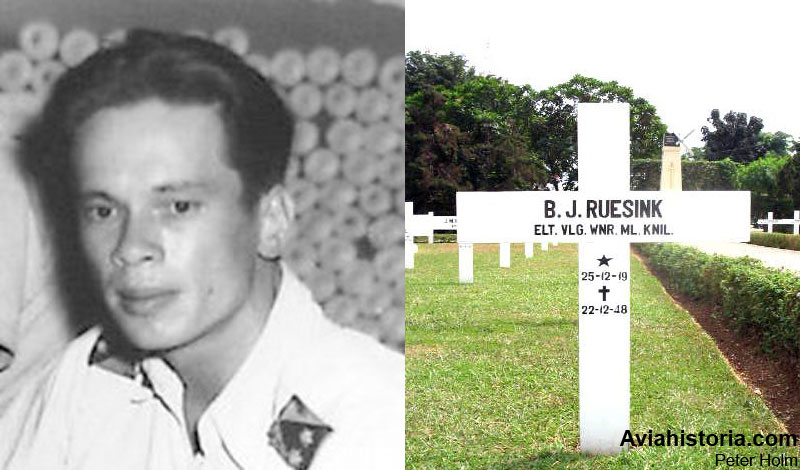
Another pilot closely linked to the same events was Bernhard Jan “Ben” Ruesink, one of the ML-KNIL Kittyhawk pilots identified in Indonesian sources as participating in the attack on VT-CLA. Ruesink served with No. 120 Squadron and was part of the Dutch air campaign aimed at suppressing Republican aviation during mid-1947.
Ruesink was later killed on 22 December 1947 when the Kittyhawk he was flying was destroyed by the premature detonation of a bomb during an operation near Kaliangkrik, Magelang, Central Java. He is buried at the Ruesink was killed on 22 December 1947 when the Kittyhawk he was flying was destroyed by the premature detonation of a bomb during an attack near Kaliangkrik, Magelang, Central Java. He is buried at the Dutch Field of Honour Menteng Pulo in Jakarta, providing a tangible point of connection to the Dutch military presence during the final phase of the colonial air campaign., providing a tangible reminder that pilots on both sides of the conflict paid with their lives during this turbulent period.
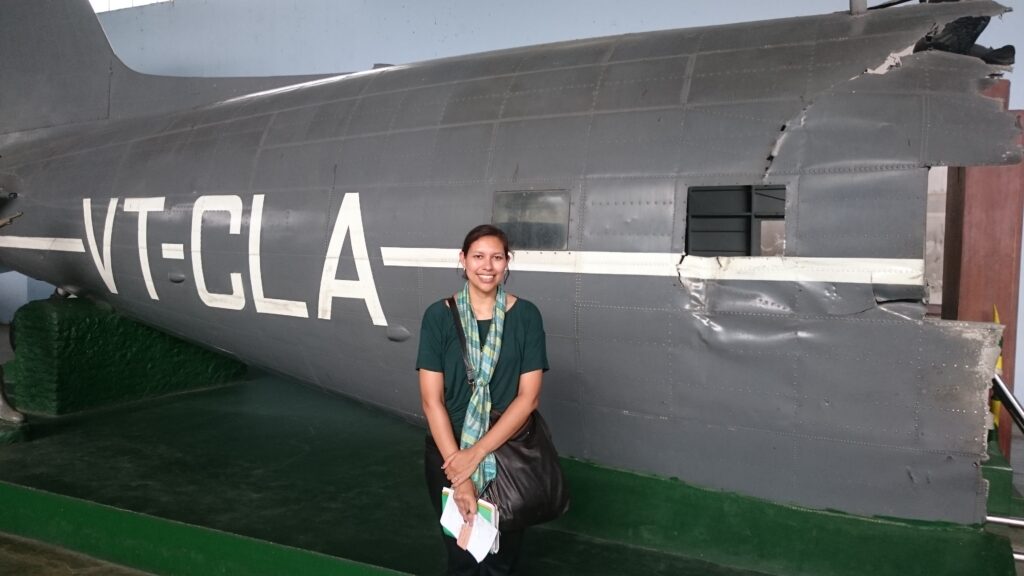
Further insight into the legacy of these foreign pilots has emerged through later research into burial sites and commemoration. In the case of Noel Constantine, clarification of burial details and remembrance involved contributions from private researchers, including Elizabeth and Michael Kramer. Michael Kramer’s research and correspondence formed part of the background that prompted the present article, illustrating how individual historical inquiry continues to recover overlooked dimensions of the Indonesian Revolution.
Conclusion
The Jogja (VT-CLA) incident of 29 July 1947 exposes the complex intersection of colonial legacies, humanitarian action, military enforcement and international involvement during the Indonesian Revolution. It demonstrates how air power and logistics were central to sustaining the Republic under blockade, and how individuals from multiple nations became entangled — sometimes fatally — in the process of decolonisation.
For Dutch–Australian–Indonesian history, this episode underscores the importance of looking beyond formal diplomacy and land warfare. Aviation networks, humanitarian flights and individual agency played decisive roles, yet remain under-represented in historical narratives. Revisiting incidents such as VT-CLA helps illuminate the broader, interconnected realities of post-war Southeast Asia.
With thanks to Michael Kramer.
Source note
This article draws in part on the Indonesian-language publication Awal Kedirgantaraan Indonesia (The Beginnings of Indonesian Aviation) specifically pages 104–113, including the chapter Petang Kelabu: Musibah VT-CLA. This official Indonesian Air Force history provides detailed accounts of Republican aviation, foreign pilot involvement, humanitarian missions and the circumstances surrounding the VT-CLA incident, and forms a key Indonesian historiographical source for this article.
See also: