From evacuation flights to a major transport organisation
Following the Japanese invasion of the Netherlands East Indies, Australia became the principal base for rebuilding Dutch military aviation in the Southwest Pacific. An essential part of this effort was the creation of an air transport organisation capable of moving personnel, equipment, official communications and urgently needed supplies across the enormous distances between Australia, New Guinea and the Netherlands East Indies.
Experienced pilots, wireless operators and flight engineers from the civil airlines KNILM and KLM formed the nucleus of the first Dutch transport unit. Working initially with the United States Army Air Forces, they operated dangerous services between Brisbane and New Guinea.
These early operations developed into the Netherlands East Indies Transport Sections at Brisbane and Melbourne, Nos. 1 and 2 Netherlands East Indies Transport Squadrons, and ultimately No. 19 (Netherlands East Indies) Squadron RAAF.
Archerfield Airport in Brisbane remained the principal Australian centre of these operations.
The Depot Aircraft Division at Archerfield
In February 1942, while the campaign in the Netherlands East Indies was still underway, ML-KNIL personnel were sent to Australia to receive American aircraft intended for the defence of Java.
The largest group travelled from Bandung in four Lockheed Lodestars. It comprised 43 personnel, including Captain Boot, 18 pilots, seven telegraphists and 14 mechanics. Three of the Lodestars reached Archerfield on 14 and 15 February 1942.
During the flight from Cloncurry to Brisbane, the aircraft carrying Captain Boot developed serious problems with both engines and made an emergency landing at Chinchilla. Boot and four members of the crew continued to Archerfield by police car. After repairs, the aircraft also reached Archerfield.
The Dutch personnel formed part of the Depot Vliegtuigafdeling, or Depot Aircraft Division. Their original assignment was to receive aircraft—including new B-25 Mitchell bombers—and prepare them for delivery to Java.
The rapid Japanese advance made that plan impossible. A further ML-KNIL detachment led by Major Roos consequently travelled from Java to Australia to help establish a more permanent Dutch military aviation organisation.
The Depot Aircraft Division was not itself the subsequent transport service, but its arrival established an early Dutch technical and operational presence at Archerfield.
Evacuated KNILM personnel
Several KNILM aircraft and crews escaped to Australia during the final weeks of the Netherlands East Indies campaign. They participated in evacuation and charter flights before KNILM’s wartime Australian operations ended and most of its available aircraft passed into American service.
Many former KNILM and KLM pilots, wireless operators and flight engineers were left in Australia without their former civilian employment. Their extensive experience of tropical aviation made them particularly valuable to the Allied air transport organisation.
In late December 1942, 21 Netherlands East Indies flying personnel were selected for a new transport flight attached to the United States Fifth Air Force.
Transport Afdeeling Brisbane
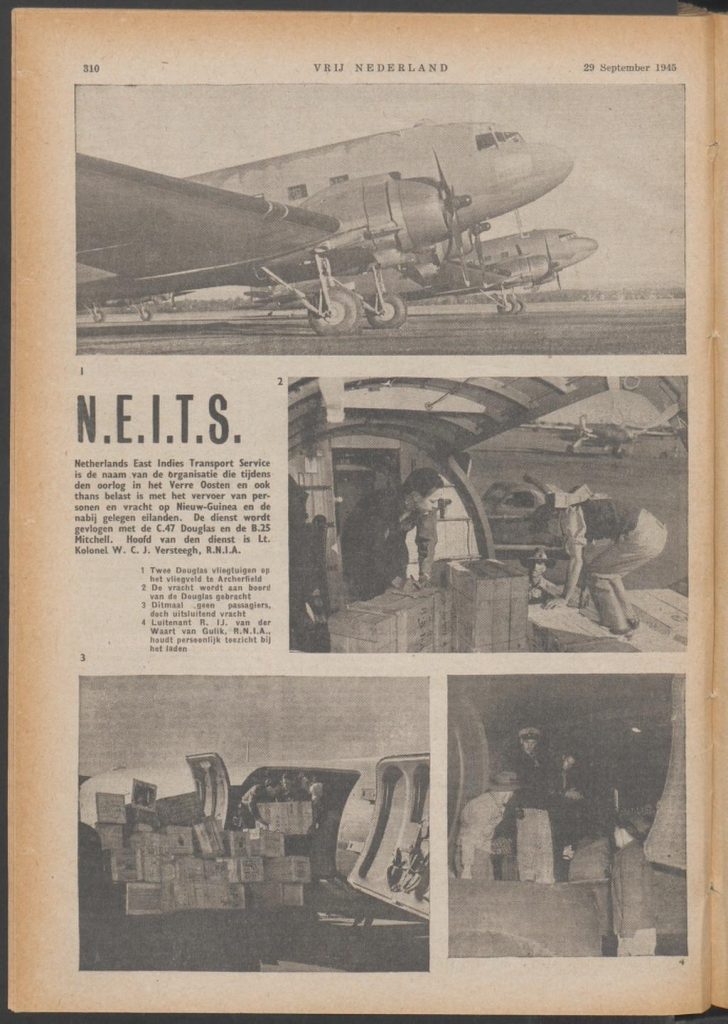
The Transport Afdeeling Brisbane, commonly known in English as the NEI Transport Section Brisbane or NEI-TSB, became operational at Archerfield on 16 January 1943.
It was attached initially as a separate Dutch flight to the USAAF’s 39th Troop Carrier Squadron, part of the 317th Troop Carrier Group. From September 1943, the Dutch personnel operated with the 21st Troop Carrier Squadron of the 374th Troop Carrier Group.
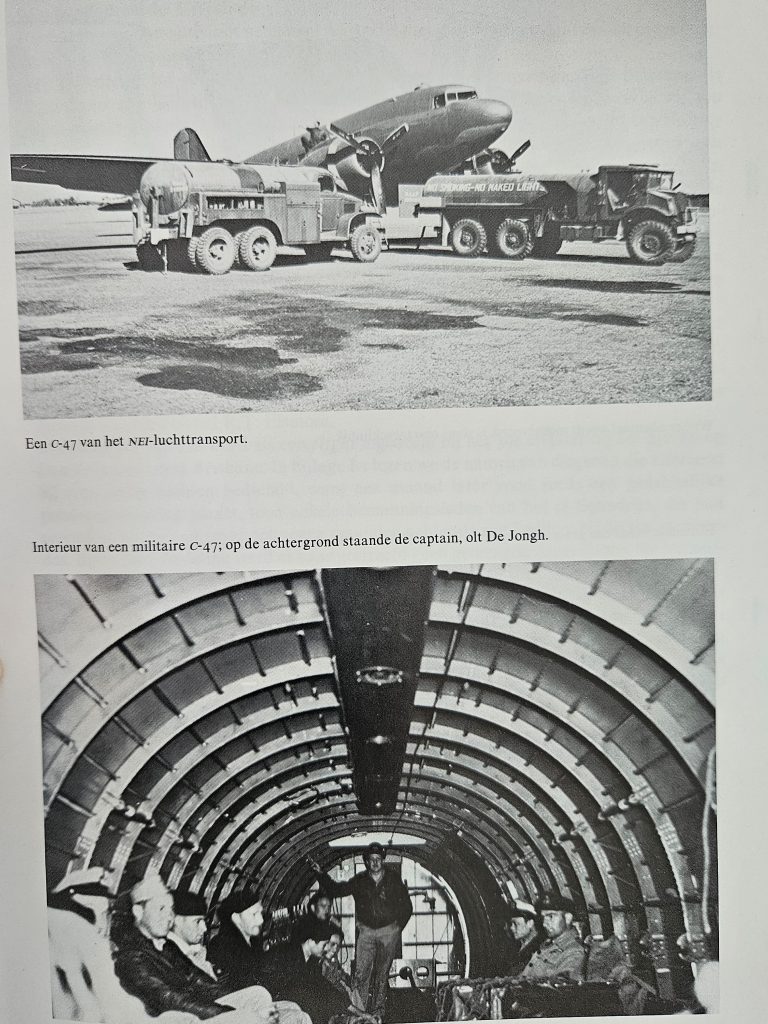
The Dutch crews principally flew American Douglas C-47 transport aircraft rather than aircraft belonging to their own unit. Their knowledge of tropical weather and long-distance flying proved particularly useful to American crews newly arrived in the theatre.
Major G.A. de Stoppelaar served as the Dutch unit’s administrative commander and liaison officer with the Fifth Air Force. Captain H.A. Berts was his deputy, while Captain Gerson van Messel became flight superintendent and operational leader.
The first regular route connected Brisbane, Townsville and Port Moresby. Aircraft carried troops, equipment and supplies north and frequently returned with wounded Australian and American servicemen.
During the fighting around Wau in January and February 1943, four Dutch crews helped fly troops and supplies from Port Moresby into the small and dangerously sloping Wau airfield. Fighting was taking place close to the landing ground, and the surrounding mountains and difficult weather made these missions particularly hazardous.
MacArthur’s night courier service
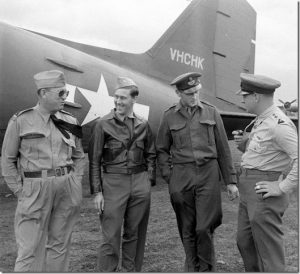
From February 1943, the Dutch crews were assigned a daily night courier service between General Douglas MacArthur’s headquarters in Brisbane and Port Moresby.
The courier carried operational orders from Brisbane to commanders in New Guinea and returned with reports from the field. The schedule generally required departure from Archerfield at approximately 8.30 p.m., departure from Townsville at around 1 a.m. and arrival at Port Moresby between 5 and 6 a.m.
The aircraft departed Port Moresby again at approximately 7 a.m. and returned through Townsville to Archerfield, arriving at about 5 p.m.
Because of the tropical weather, limited navigation facilities and exhausting schedule, the American transport command requested volunteers. The entire Dutch transport group reportedly agreed to undertake the assignment.
The Dutch crews operated this exclusive courier service for approximately eighteen months without a serious incident.
Wider transport operations
The Brisbane crews also supported American bomber units stationed in northern Australia and flew to an expanding range of destinations as the Allied advance continued through New Guinea.
Their routes eventually included Lae, Salamaua, Finschhafen and other recently captured airfields. They also transported Netherlands East Indies personnel and supplies to:
- No. 18 (Netherlands East Indies) Squadron at McDonald and Batchelor in the Northern Territory;
- No. 120 (Netherlands East Indies) Squadron at Merauke and later Biak;
- KNIL units and Dutch administrative detachments;
- the Netherlands Indies Civil Administration;
- the Netherlands Forces Intelligence Service; and
- the Netherlands East Indies Government-in-Exile.
Merauke became an important intermediate stop between Australia and northern New Guinea.
Personnel of Transport Section Brisbane, September 1943
The following nominal roll was recorded on 29 September 1943 under Headquarters Fifth Air Force Special Order No. 272. Names and ranks have been retained because they provide an important record of the Dutch and Netherlands East Indies personnel who operated the service.
Command and administration
- Major G.A. de Stoppelaar—administrative commander;
- Captain H.A. Berts—acting commander; and
- Captain G. van Messel—head of flying operations.
Pilots
- First Lieutenant F. van Breemen;
- First Lieutenant E.W. Dunlop;
- First Lieutenant P.A. Deenink;
- First Lieutenant A.G. Ekels;
- First Lieutenant A. Reyers;
- Adjutant Officer M.S. Rab; and
- L.C. Reyns.
Telegraphists and aviation wireless operators
- Adjutant Officer J.W. Hoogland;
- Adjutant Officer D.K.R. Sweitser;
- Sergeant W.J. van Aarem;
- Sergeant W.C. Bosson; and
- Sergeant J.W. Swart.
Flight engineers and airborne mechanics
- Sergeant A.C. Brand;
- Sergeant J. Gijzemijter;
- Sergeant A.F. van Rassel;
- Sergeant H. Schultz;
- Sergeant J. Elleman;
- Sergeant C. Kop;
- Sergeant J.A.J. Meier; and
- Sergeant J. de Reus.
Flight engineers frequently occupied the second pilot’s position and several received additional training as second pilots.
The Melbourne transport organisation
A separate transport organisation developed from the transport section of the NEI Aircraft and Personnel Pool at Fairbairn in Canberra. It began forming during late 1943 and initially supported No. 18 Squadron with Lockheed C-60A Lodestars and a Douglas C-47A Dakota.
The unit became the NEI Transport Section Melbourne, based at Laverton, on 1 February 1944. Unlike the Brisbane section, which initially flew American aircraft within the USAAF organisation, the Melbourne section operated Netherlands East Indies aircraft.
It transported personnel and equipment to Nos. 18 and 120 Squadrons and supported KNIL, NICA and NEFIS detachments in New Guinea. In April 1944, its crews participated in the movement of No. 120 Squadron’s personnel and equipment to Merauke.
Formation of Nos. 1 and 2 NEI Transport Squadrons
On 1 September 1944, the two transport organisations were reorganised:
- the Melbourne Transport Section became No. 1 Netherlands East Indies Transport Squadron; and
- the Brisbane Transport Division became No. 2 Netherlands East Indies Transport Squadron.
Major Wittert van Hoogland had commanded the Brisbane organisation but was hospitalised in the United States during June 1944. Major J. Verwijs assumed command on 21 August 1944.
No. 2 NEITS ceased operating as part of the American transport organisation and began working up as an independent Dutch unit. It officially became operational on 4 October 1944.
No. 1 NEITS transferred from Melbourne to Archerfield on 1 October 1944, completing its move during the following week. Approximately 100 Australian civilian technicians were recruited in Brisbane to help maintain the expanding transport fleet.
Maintaining two separate squadrons proved impractical because of shortages of trained personnel, mechanics and spare parts. On 7 November 1944, No. 2 NEITS was merged into No. 1 NEITS. The administrative transfer of its personnel was completed on 15 November, when No. 2 Squadron was formally dissolved.
The resulting No. 1 NEITS was a large and unusual organisation combining Dutch and Netherlands East Indies military personnel, former civilian airline employees, RAAF personnel and Australian civilian technicians.
Personnel of the combined squadron, November 1944
The following personnel were recorded in a nominal roll dated 7 November 1944.
Command and specialist appointments
- Major Engineer J. Verwijs—commanding officer;
- Captain G. van Messel—head of flying operations;
- Ensign D.K.R. Sweitser—assistant head of administration;
- Sergeant Major J. Gijzemijter—chief mechanic;
- First Lieutenant O. van Embden—navigation;
- First Lieutenant E.J. Visser—transport matters;
- Mr Brennan—transport matters; and
- Miss N. Sinclair—typist.
First pilots qualified as C-47A captains
- Captain A.G. Ekels;
- Captain A. Reyers;
- Captain Th.G. van der Schroeff;
- First Lieutenant E.W. Dunlop;
- First Lieutenant J.A. Deknatel;
- First Lieutenant E.J.C. Kiewiet de Jong;
- First Lieutenant H.F. Schenk;
- First Lieutenant J.L.M. Theunissen;
- First Lieutenant R.L.M. Swane; and
- First Lieutenant P. de Vos.
Second pilots
- First Lieutenant W. Buwalda;
- First Lieutenant W.A. Muurling;
- First Lieutenant J. Tuyt;
- Sergeant Major A.F. van Rassel;
- Sergeant Major H. Schulz;
- Sergeant Major W.L. de Bruin;
- Sergeant Major S.D.A. van Campen; and
- Sergeant Major B.H. Klaassens.
Telegraphists and aviation wireless operators
- Sergeant L.F. van den Berg;
- Sergeant H. van Beuge;
- Sergeant W.C. Bosson;
- Sergeant H.J.H.M. Corbiere;
- Sergeant J. Erkelens, Royal Netherlands Navy Air Service;
- Sergeant K.W.F. Groothof;
- Sergeant J.P. Loembang Tobing; and
- Sergeant R.J. Ismael.
Mechanics and flight engineers
- Sergeant Major A. Bruins;
- Sergeant Major E. de Graaff;
- Sergeant Major G. Elleman;
- Sergeant Major C. Kop;
- Sergeant Major J.A.J. Meyer;
- Sergeant Major A.C.J. Rens; and
- Sergeant Major J.W. Swart.
The presence of J.P. Loembang Tobing and R.J. Ismael is an important reminder that Indonesian personnel also served within the Dutch military aviation organisation.
Aircraft and maintenance
Immediately after the November 1944 merger, the enlarged No. 1 NEITS possessed aircraft of several types. Its operational fleet included:
- Douglas C-47 Dakota transport aircraft;
- Lockheed C-60A Lodestars;
- North American TB-25 Mitchells converted or employed for transport duties; and
- Lockheed Model 12A light transport and communications aircraft.
The authorised or paper strength and the number of serviceable aircraft varied continually. In January 1945, the combined squadron had 19 transport and communications aircraft: seven C-47s, three C-60As, five TB-25s and four Lockheed 12As.
Historical accounts also refer to a 24-aircraft establishment following the merger. This represented the enlarged organisation rather than a guarantee that 24 aircraft were simultaneously serviceable.
Major inspections and repairs were undertaken at several Australian locations. Australian National Airways performed work at Mascot and Essendon, while engines were overhauled at Wagga Wagga. Maintenance delays and shortages of spare parts remained continuing problems.
Supporting the Allied advance
From October 1944, regular services operated from Brisbane through Darwin to Merauke, Hollandia, Wakde, Noemfoor, Biak and Morotai. The squadron also maintained services between Brisbane and Melbourne for Dutch government and military officials.
The transport aircraft carried supplies and personnel for NICA, NEFIS, KNIL units and the operational squadrons. They also transported government officials, including Lieutenant Governor-General Dr Hubertus van Mook and Lieutenant General L.H. van Oyen.
During the Borneo campaign in 1945, No. 1 NEITS carried personnel and supplies to the captured airfields at Tarakan and Balikpapan. NICA personnel were flown into Balikpapan, and the route from Brisbane through New Guinea and Morotai was extended there after No. 18 Squadron transferred to Balikpapan.
No. 19 (Netherlands East Indies) Squadron RAAF
Because No. 1 NEITS performed both Allied operational assignments and national duties for the Netherlands East Indies government, its status within the Allied command structure created difficulties. The unit did not receive the same priority for equipment and spare parts as a recognised first-line Allied transport squadron.
The Dutch therefore sought its formal recognition within the RAAF organisation. This took effect on 15 August 1945, coincidentally the day Japan accepted the Allied surrender terms.
No. 1 NEITS became No. 19 (Netherlands East Indies) Squadron RAAF.
At the time of its formation, No. 19 Squadron was equipped with approximately:
- 13 Douglas C-47A and C-47B Dakotas;
- eight TB-25C and TB-25D Mitchells adapted for freight operations; and
- three Lockheed Model 12As.
Five Netherlands East Indies Lockheed C-60A Lodestars were also in the wider aircraft strength but were then on loan to the RAAF.
The Manila flight
No. 19 Squadron played a small but significant role in preparations for the formal Japanese surrender.
On 21 August 1945, Captain Gerson van Messel flew Lieutenant General L.H. van Oyen, acting commander of the KNIL, from Archerfield to Manila in a Douglas C-47. Van Oyen represented the Netherlands East Indies Government-in-Exile in the surrender preparations before continuing towards Tokyo aboard an American aircraft.
Relief and repatriation
Japan’s surrender created an immense humanitarian transport requirement. Hundreds of thousands of Allied prisoners of war and civilian internees across the Netherlands East Indies required food, medicine and evacuation.
In September 1945, No. 19 Squadron began relief operations associated with the Recovery of Allied Prisoners of War and Internees organisation, or RAPWI.
Dutch C-47s transported medical teams, nurses, food, equipment and other supplies from Australia towards Java and other parts of the archipelago. Return flights evacuated former prisoners and civilian internees.
On 13 September 1945, Dutch pilot Captain H.J.A.C. Arens flew TB-25 N5-129 from Singapore to Kemajoran airfield at Batavia carrying two British intelligence officers. This was reportedly the first Allied aircraft to land in Java after Japan’s surrender.
The squadron also helped restore government communications and carried NICA officials and technical personnel into areas returned to Allied control.
Rapid postwar expansion
The postwar workload required an enormous expansion of the transport fleet. Forty additional Dakotas were acquired: 39 from American surplus stocks in the United States and the Philippines and one DC-3D obtained from Douglas. Several surplus C-54 aircraft were also leased.
Not all aircraft were available simultaneously. Some were cannibalised to provide spare parts, while others were undergoing repair, conversion or transfer.
In February 1946, transport aircraft associated with No. 18 Squadron and aircraft from the Royal Netherlands Navy Air Service were transferred to the expanding transport organisation. No. 19 Squadron became closely connected with the Netherlands Indies Government Air Transport organisation.
The squadron progressively transferred aircraft, personnel and operations to Kemajoran Airport at Batavia. However, Archerfield remained an important training, maintenance and administrative base during the transition.
Between 1 January and 1 November 1946, the organisation reportedly flew approximately 43,000 hours and carried 110,000 passengers and 6.5 million kilograms of freight and mail.
The Indonesian struggle for independence
The transport organisation’s postwar operations took place amid the Indonesian struggle for independence. Australian trade unions imposed maritime bans on Dutch shipping associated with attempts to restore colonial authority, increasing reliance upon air transport.
Tensions between Australia and the Netherlands intensified after the first major Dutch military offensive against the Indonesian Republic in July 1947. These political developments formed the difficult background to the final phase of Dutch military aviation operations from Australia.
Departure from Archerfield
Most of No. 19 Squadron’s operational organisation had moved to the Netherlands East Indies by 1946, but maintenance, training and support activities continued at Archerfield into 1947.
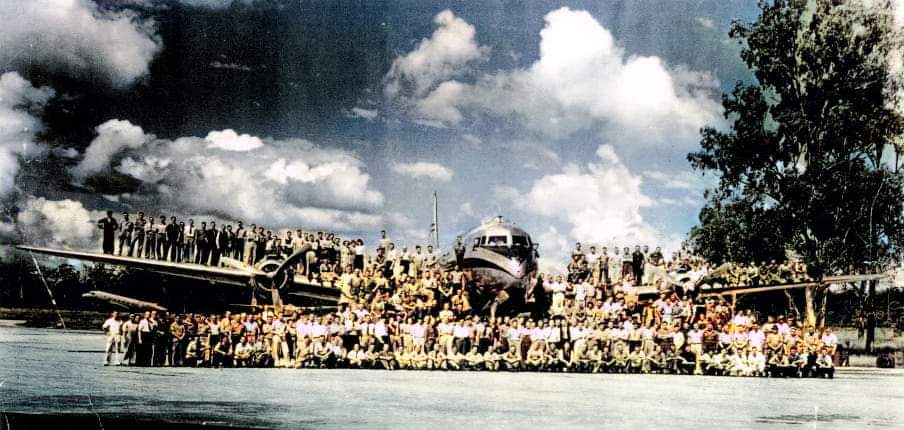
The squadron was formally farewelled from Archerfield in 1947. A remarkable photograph shows Dutch personnel and family members standing on top of a Dakota while airport staff gathered below.
The last Dutch military aircraft departed Archerfield in September 1947, ending more than five years of Netherlands East Indies military aviation activity at the Brisbane airfield.
Historical significance
The Netherlands East Indies transport services maintained the connections upon which the Dutch military, intelligence and civil administration in exile depended.
Their aircraft and crews:
- carried MacArthur’s operational courier between Brisbane and New Guinea;
- supported Nos. 18 and 120 Squadrons;
- supplied KNIL, NICA and NEFIS personnel;
- connected the Netherlands East Indies Government-in-Exile with its dispersed organisations;
- supported the Allied advance into New Guinea and Borneo;
- delivered relief supplies after Japan’s surrender; and
- evacuated prisoners of war and civilian internees.
The service was a genuinely multinational undertaking. Dutch, Indonesian, Australian and American personnel—together with former civil airline employees and Australian civilian technicians—worked within an organisation that evolved continually in response to wartime necessity.
Related DACC articles
- DACC Air Force Research Portal
- The Dutch at Archerfield Airport, Brisbane
- Archerfield Memories—including the Netherlands East Indies Transport Service
- Joop Gijzemijter at the Netherlands East Indies Transport Service
- No. 120 (Netherlands East Indies) Squadron RAAF
- No. 18 (Netherlands East Indies) Squadron RAAF
- Merauke during World War II
Sources and further reading
- Gerben Tornij, Netherlands East Indies Air Transport Units of the ML-KNIL, 16 January 1943–1 November 1946, third revision, November 2025.
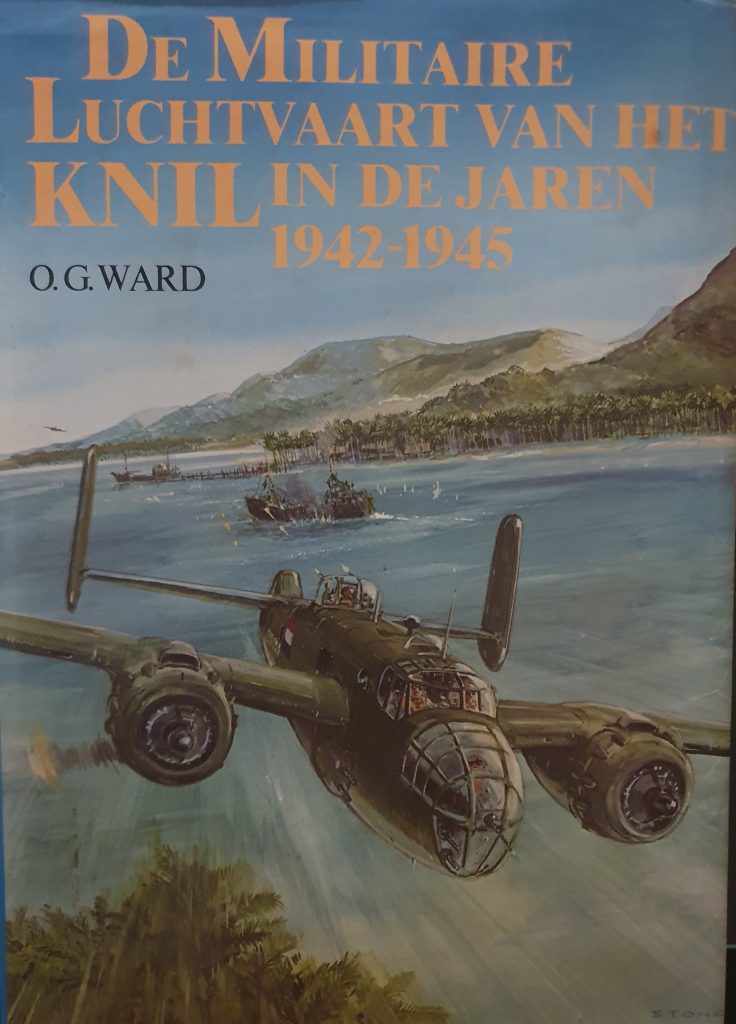
- O.G. Ward, De Militaire Luchtvaart van het KNIL in de jaren 1942–1945, National Library of Australia catalogue record.
- Archerfield Airport—history.
Military Air Transport in Australia started soon before the fall of the Netherlands East Indies (NEI). In the few months before this happened evacuations started to happen, mainly of Dutch civilian personnel including families of the Royal Netherlands East Indies Airline (KNILM). These civil aircrafts became the earliest core of military air transport in Australia. They already operated at that time under the command of the Military Airforce Division of the NEI Army (ML-KNIL) . They were also involved in the very last evacuation of people who would later form the Netherlands East Indies Government in Exile, operating from Camp Columbia in Brisbane.
NEI Depot Aircraft Division
In February 1942, a crew from the ML-KNIL was sent to Australia to receive the aircraft from the Americans. This group was known as the Depot Vliegtuigafdeling (NEI Depot Aircraft Division), The largest group of this Division left in four Lockheed Lodestars from Bandung. The detachment consisted of 43 people including Captain Boot, 18 pilots, 7 telegraphists and 14 mechanics. Three arrived at Archerfield Airport on 14 and 15 of February 1942.
En-route from Cloncurry to Archerfield, the third plane with Captain Boot onboard developed severe engine trouble on both engines and made an emergency landing in a meadow at Chinchilla Airport. The captain and four crew traveled by police car to Archerfield. The engines were repaired and a few days later the aircraft continued its flight to Archerfield.
For that purpose, the Depot Aircraft Division of the ML-KNIL had by that time already been formally established at Archerfield, Brisbane.
The handover at Archerfield was thought to only require about a week per crew.
The plan therefor was still to fly the new B-25s from there to Java as soon as possible. The Government hoped they could still be used for the defense of NEI. By this time the Japanese had already invaded NEI (this had started on January 10) and the Japanese were now on their way to Java and the capital Batavia.
It soon became clear that the Dutch were fighting a losing battle and another ML-KNIL detachment departed from Java for Australia. This detachment, led by Major Roos, was tasked with setting up a permanent ML-KNIL organisation in Australia for the operation of the aircraft.
Separately for the supply of the 18 Squadron in MacDonald and later Batchelor, both airfields in the Northern Territory, was in August 1943 in Essendon, Melbourne a 2nd transport division established, the NEI-Transport Section, Melbourne (NEI-TSM).
They both became part of operational groups under RAAF control. All of their stores and equipment were supplied by the United States of America. However NEI-TSM in contrast to NEI-TSB, operated as a totally independent Dutch transport division.
The Brisbane and Melbourne divisions were later combined in one squadron stationed at Archerfield, Brisbane. The aim was to establish 2 transport squadrons, but the main problem that had haunted the Dutch from the beginning was the ongoing chronical shortage of staff.
Initially transport concentrated on foodstuff, goods and personnel. Flights followed strict routes and time schedules. There was also strict control on the shipping lists. Once the Americans started to liberate more and more areas, transpost changed. It now concentrated on food and medical goods for the liberated areas. Bureaucrats were now also flown into these areas to start reestablishing central control and administration.
Flights back also included evacuees from POW camps.
NEI Transport Department Brisbane
In January 1943, the NEI-TSB was the first air transport service formally established after the capitulation.
The Section administered initially eight pilots, four aviation wireless operators, a second pilot-air gunner and eight flight engineers of which three to be cross-trained as second pilots. All were former civil KNILM and KLM personnel evacuated to Archerfield. Following the capitulation of the allied forces in Java they continued to work for the KNILM for about one-and-a-half-month operating charter flights within Australia. By May however they all had ended up jobless because the company ceased operations when their planes were sold to the Americans.
Consequently, some of them were seconded to the ML-KNIL and became the core of the new Transport Section (TSB). The NEI-TSB was equipped with three Lockheed Lodestars and five B-25 Glen Mitchell´s.
They became a flight unit of the USAAF especially attached to the 39th Troop Carrier Squadron (TCS) and the 317th Troop Carrier Group (TCG) USAAF both stationed at Archerfield.
NEI Transport Sectie Brisbane (TSB)
De nominatieve lijst per 29-9-1943 volgens HQ 5th USAAF Special Order nr. 272 dd. 29-9-1943
| Staff: De Stoppelaar, G.A. -maj-administratief commandant Berts, A.H. -kap -waarnemend commandant Vliegers: kapitein G. van Messel-hoofd vliegdienst 1e luitenants F. van Breemen, E.W. Dunlop, P.A. Deenink, A.G. Ekels, A. Reyers M.S. Rab aoo, L.C. Reyns Telegrafisten: aoo’s J.W. Hoogland en D.K.R. Sweitser sgts W.J. van Aarem, W.C. Bosson en J.W. Swart Boordwerktuigkundigen: sgts A.C. Brand, J. Gijzemijter, A.F. van Rassel, H. Schultz, J. Elleman, C. Kop, J.A.J. Meier en J. de Reus De boordwerktuigkundigen vlogen vaak als tweede bestuurder mee. |
NEI-TSB – special services unit for General MacArthur
| From February 1943 onwards, the Dutch were asked to operate daily night courier flights between Archerfield and Port Moresby and later also Hollandia. General MacArthur, who was headquartered in, what became the MacArthur Building in the CBD of Brisbane, requested the services of the Dutch to courier reports backwards and forwards between these two destinations.These night flights were not without danger, and MacArthur had stipulated that they needed to be operated by volunteers. The whole NEI TSB crew agreed to take on that job and the operation remained exclusive to them. The operation did not have one single incident during their one-and-a-half-year of operation! |
On their way to New Guinea the planes also stopped in Merauke and as such became a pleasant break for the military over there, they were often bored because of long periods of waiting in the jungle here without any action. NEI-TSB and NEI-TSM were also tasked to undertake transport flights in USAAF Douglas C-47 Skytrain planes within Australia and they also ferried men and material to 120 Squadron in Merauke (later on to Biak also in Dutch New Guinea) and the 18 Squadron at Batchelor (NT).
The work of the NEI-TSB dramatically increased with the formation of the NEI Government-in-Exile in neighboring Wacol.
2 NEI Transport Squadron
The 2nd Netherlands East Indies Transport Squadron (2 N.E.I.T.S.) played a crucial role in the Dutch military operations during World War II, particularly after the occupation of the Dutch East Indies by Japanese forces. Operating in exile from Australia, the squadron was part of the Royal Netherlands East Indies Army (KNIL) and was heavily involved in the Allied war effort in the Pacific theater.
Initially commanded by Major Wittert van Hoogland, 2 N.E.I.T.S. faced a significant leadership change in June 1944 when van Hoogland was hospitalised in the United States. Major J. Verwijs, M.Sc., took over as Commanding Officer on 21 August 1944, leading the unit through a critical period marked by structural changes within the Dutch forces.
Throughout late 1944, the squadron’s operations were increasingly integrated with other Dutch and Allied forces. By 1 October 1944, 1 N.E.I.T.S. had been established at Archerfield, signaling a strategic consolidation of transport squadrons. On 15 November 1944, 2 N.E.I.T.S. was officially dissolved, and its personnel were transferred to 1 N.E.I.T.S., marking the end of its independent existence. This reorganisation reflected the broader efforts to streamline and enhance the effectiveness of Dutch military operations in the region.
1 NEI Transport Squadron at Archerfield
In September 1944, after the regrouping of the various Dutch headquarters in Camp Columbia in Wacol, NEI-TSB merged with NEI-Transport Section, Melbourne (NEI-TSM).
Because of their increase in size after the merger, as well as its increased importance being the main transport unit for the NEI Government-in-Exile, the combined sections became an official squadron, known as the 1 NEI Transport Squadron (NEI TS). At the start, 16 Dutch Dakota aircraft were stationed at Archerfield and operated also with civil and RAAF crews. The aircraft strength was expanded with four Douglas C-47 Skytrains and five Lockheed 12 light transport planes. The USAAF had largely left Archerfield due to the transfer of their units from Australia to Dutch New Guinea, leaving room for the expanded Transport Squadron. An extra 100 civil engineers were recruited in Brisbane to assist with the increase in activities. Repairs and maintenance of NEI TS aircraft were also undertaken at Mascot, Sydney and in Wagga Wagga.
The transport squadron operated flights for the NEI Government-in Exile, in support of the Netherlands Indies Civil Administration (NICA) who was in charge of food aid and housing recovery for the local population. They also supported the Netherlands Forces Intelligence Service (NEFIS).
Further assistance was provided to the battalion headquarters of the KNIL, its subordinate units in Casino (NSW) and the KNIL companies and detachments of guides/interpreters operating with the allied ground forces in New Guinea. The flights to destinations in New Guinea were the main task of the unit.
At the first stage of the Borneo campaign in 1945 the Squadron supported the 26 Australian Brigade at the Battle of Tarakan, the Australian Brigade also included a KNIL infantry company. This was an important event for the Dutch as this was for the first time since the capitulation in 1942, that a unit of just KNIL personnel participated in the fight against the Japanese. While the Allied forces won the battle, its overall success in relation to loss of lives and costs was questionable. However, the Allies were now able to advance for the first time towards Java and the other islands of the Archipelago.
Steel plates had to be installed by the Engineering Corp on the beach of the island, allowing the planes to land safely – a remarkable and dangerous exercise.
De nominatieve lijst per 7-11-1944.
| Commando: commandant: maj-ir J. Verwijs hoofd vliegdienst: kap G. van Messel assistent tvs. hoofd administratie: vaandrig D.K.R. Sweitser hfd. monteur: sgt-maj J. Gijzemijter navigatie: 1e It 0. van Embden vervoerszaken: 1e It E.J. Visser, Mr. Brennan typiste: Miss N. Sinclair Vliegers: kaps A.G. Ekels, A. Reyers en Th.G. van der Schroeff 1e Its E.W. Dunlop, J.A. Deknatel, E.J.C. Kiewiet de Jong, H.F. Schenk, J.L.M. Theunissen, R.L.M. Swane en P. de Vos Zij waren alien gekwalificeerd als eerste bestuurder (captain) op een transportvliegtuig van het type Douglas c-47A. De volgende vliegers stonden genoteerd als tweede bestuurder: 1e Its W. Buwalda, W.A. Muurling en J. Tuyt sgts-maj A.F. van Rassel, H. Schulz, W.L. de Bruin, S.D.A. van Campen en B.H. Klaassens Telegrafisten: sgts L.F. van den Berg, H. van Beuge, W.C. Bos-son, H.J.H.M. Corbiere, J. Erkelens (MLD), K.W.F. Groothof, J.P. Loembang Tobing en R.J. Ismael Monteurs/boordwerktuigkundigen: sgts-maj A. Bruins, E. de Graaff, G. Elleman, C. Kop, J.A.J. Meyer, A.C.J. Rens en J.W. Swart |
19 (NEI) Transport Squadron – after the War
Coincidentally, on the same day of the surrender of Japan on 15 August 1945, the Squadron was renamed 19 (NEI) Transport Squadron. It operated under RAAF control. Other names used include: 19 (Netherlands East Indies) Squadron RAAF, 19 Squadron and 19 Squadron ML-KNIL.
The Japanese surrender
| After the two atom bombs on Hiroshima and Nagasaki on 6 and 9 August and the Russian invasion in Manchuria on the 8th of that month, the Japanese finally agreed to a surrender on August 15th. The Supreme Commander of the Allied Powers Douglas MacArthur demanded the Japanese to fly to Manila to discuss the conditions for the surrender, but he did not directly participate in those negotiations. This event known as the Manilla Conference was attended by Australian, Dutch, and other Allied officials. The formal surrender was signed by MacArthur and the Japanese, was only signed on 2 September, on the USS Missouri in the Bay of Tokyo.19 Squadron played a small role in the preparations of the surrender of Japan. On 21 August Captain Gerson van Messel flew Lt Gen L.H. van Oyen, the acting Commander General of the KNIL to Manilla, in a Douglas C-47 Skytrains rom Archerfield. He attended the conference on behalf of the NEI Government-in-exile.The pilot was the same Captain Gerson van Messel who in 1939, had set the above mentioned aviation record with his passenger’s flight from Darwin to Sydney. |
With war over, the 19 Squadron now began flying to destinations in the Dutch East Indies and Dutch New Guinea. Transport requirements massively increased as an estimated 200.000 NEI and allied PoWs and civilian internees in concentration camps in the NEI, needed food and medicines as they were on the brink of starvation. An estimation that soon proved to be far too low.
To be able to manage this enormous task all transport aircraft of 18 Squadron were, in February 1946, transferred to the 19 Squadron, as well as aircraft from the Navy (MLD). The Squadron became the executing agency of the NIGAT (Netherlands Indies Government Air Transport). This required even more aircraft and more personnel at Archerfield.
Staff were both recruited in the Netherlands and Australia and new planes were ordered, Canada was also able to assist here. After the arrival of the final batch of three Douglas C-47 Skytrains and a C-117/DC-3D from Canada in October 1946 the Squadron had a total strength of 47 Dakotas. Most of the training took place on the Amberley Airfield in Brisbane.
With the situation in NEI slowly improving, planes, staff and material were gradually moved to Kemayoran Airport at Batavia (Jakarta). However, this became increasingly more difficult and complicated as the Indonesian people wanted to end Dutch colonialisation and were fighting for independence. They were supported in this struggle by Australian Trade Unions who blockaded maritime transport from Australia to Indonesia. The boycott did not include air traffic and this created extra pressure on the air force. Occasionally however also air transport became involved in the boycott.
In July 1946 the Dutch launched their euphemistically called ‘Police Action’ against the Indonesian freedom fighters. In his book Black Armada, the author Rupert Lockwood mentioned the following event.
“A RAAF officer in Brisbane said that after the Police Action the Air Force had been instructed not to supply petrol to Dutch planes. The officer added that this instruction came from the RAAF Headquarters in Melbourne and applied ‘for the moment’. The ban grounded three Dutch planes at Archerfield aerodrome, Brisbane”.
It led to political turmoil as it was questioned in the Australian Parliament if the RAAF was under the control of the Government or the Trade Union. As mentioned the 19 NEITS Squadron operated under RAAF control. However, the political pressure on the Netherlands had significantly increased as the Australian Government objected to the Dutch atrocities during the Indonesian war of independence.
Indonesia gained independence in 1949 after a bloody war of independence against the Dutch. Australian mediation and diplomacy played a key role in this process.
19 Squadron officially farewelled Archerfield in 1947, where this most amazing picture was taken. On top of one of the Dakotas is the Dutch staff with their family members. At ground level are staff members of Archerfield Airport.
The last Dutch military plane left Archerfield in September 1947.
See also: Archerfield Memories – includes the Netherlands East Indies Transport Service – By Jean White
The following website also offers information on the Air Force of the Royal Netherlands East Indies Army. Key in Netherlands East Indies for an overview of available files.