Among the many military establishments that operated in Queensland during the Second World War, few have faded from public memory as completely as the LHQ School of Military Intelligence at Southport on the Gold Coast.
During the final years of the war, the school trained military intelligence personnel for service in the Southwest Pacific Area. Among those who attended were members of the Netherlands Forces Intelligence Service (NEFIS), the Dutch intelligence organisation operating from Australia.
The Dutch connection with Southport is no longer a matter of speculation. The surviving NEFIS archives in the Netherlands contain a specific file covering the training of NEFIS personnel at the LHQ School of Military Intelligence at Southport during 1944–45.
This places the school within the wider network of Australian facilities used by Dutch intelligence personnel during the war. NEFIS maintained its headquarters at Camp Columbia in Brisbane from 1944, while its personnel received specialist training at Australian establishments including Southport.
One particularly well-documented student was Jan Bakker, a Dutch Engelandvaarder who would later become a prominent intelligence officer.
Jan Bakker joins NEFIS
Born in Eibergen in the Netherlands in 1922 and raised in Bandung in the Netherlands East Indies, Bakker reached Britain in 1944 after an adventurous escape from occupied Europe through Switzerland, France, Spain and Gibraltar.
After joining the Royal Netherlands East Indies Army (KNIL), Bakker was sent to Australia for military training. He was commissioned as a reserve second lieutenant in November 1944 and assigned to NEFIS.
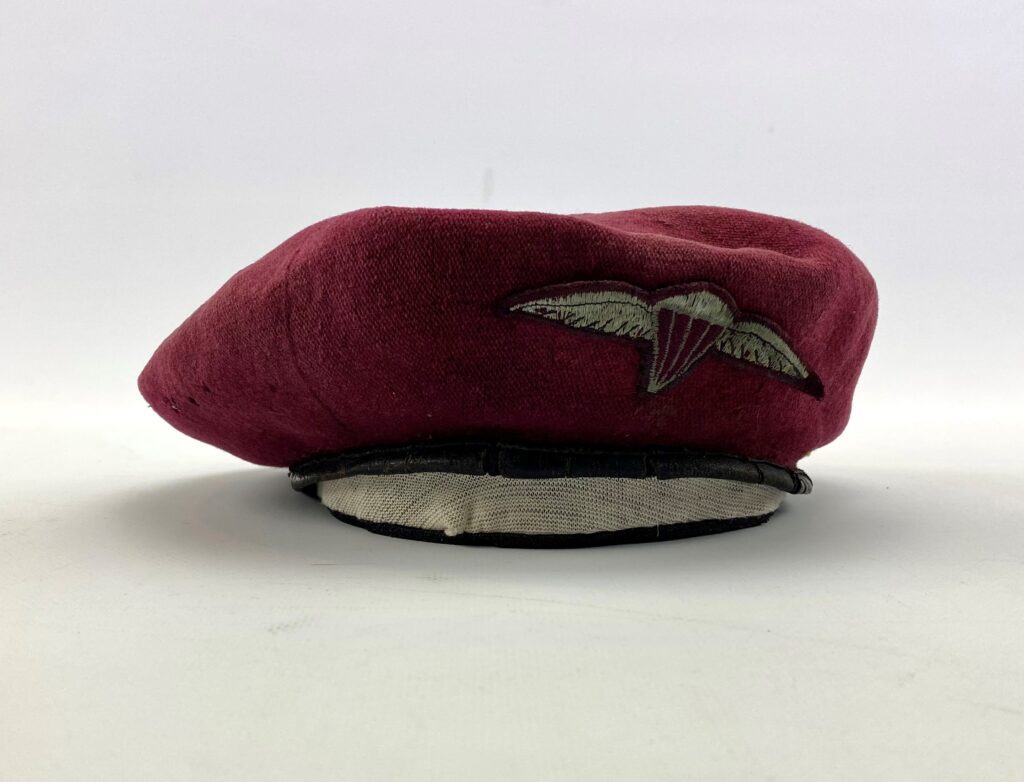
Bakker also underwent parachute training before attending the LHQ School of Military Intelligence at Southport. His surviving record provides a rare personal example of the training received in Australia by personnel being prepared for Dutch intelligence work.
Training intelligence officers at Southport
The LHQ School of Military Intelligence at Southport was quite different from the clandestine special-operations training establishment at Z Experimental Station near Cairns.
ZES prepared personnel for activities such as infiltration, survival, communications and clandestine operations behind enemy lines. Southport was primarily concerned with the professional skills required by military intelligence officers: collecting, interpreting, recording and communicating information that could be used by military commanders.
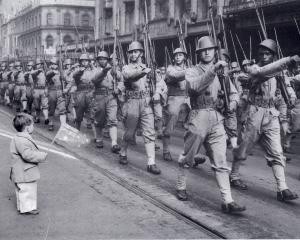
A remarkable visual record of the school survives in Australian War Memorial film footage taken on 4 January 1945. The film shows students in the school’s Photo Interpretation Wing learning to examine aerial photographs stereoscopically, prepare tracings and construct aerial photographic mosaics. It also shows Colonel Mander Jones, the school’s Chief Instructor, taking a parade of students.
The curriculum was considerably broader than photo interpretation. Surviving lecture notes from officers who trained at the school cover subjects including aerial photography, map reading and surveying, patrol and intelligence reports, message writing, signals, liaison, Japanese military organisation, tactics and weapons, and conditions in New Guinea.
This was therefore analytical and operational military-intelligence training rather than the specialised clandestine training associated with Z Experimental Station.
For NEFIS, access to the Southport school provided another element in the development of a professional intelligence organisation in Australia. Its personnel could receive Australian military-intelligence training while other specialist establishments provided parachute, wireless, jungle and clandestine operational training.
The surviving NEFIS records show that Jan Bakker was not simply an isolated Dutch officer who happened to attend the school. NEFIS personnel were formally being trained at Southport during 1944–45, making the school part of the broader Australian training network used by the Dutch intelligence service.
Jan Bakker’s training at Southport
Jan Bakker provides a particularly well-documented example of a NEFIS officer attending the Southport school.
After being commissioned as a reserve second lieutenant and assigned to NEFIS in November 1944, Bakker underwent parachute training and was subsequently sent to the LHQ School of Military Intelligence.
He completed the six-week course in June 1945. His performance in the written and oral examinations was assessed as “Good”, and his Australian instructors described him as an alert and inquisitive officer who showed considerable initiative, leadership and organisational ability.
The Southport course marked an important stage in Bakker’s transition from military officer to professional intelligence operative. Only weeks later, Japan surrendered and the focus of Dutch intelligence activity shifted rapidly from the war against Japan to the political and military upheaval accompanying the Indonesian declaration of independence.
Bakker subsequently served as an intelligence and security officer in the Netherlands East Indies. He eventually became head of the Intelligence and Security Group of the KNIL T-Brigade in Central Java and was involved in intelligence operations during the Indonesian War of Independence.
His intelligence career continued after the transfer of sovereignty. He served in Netherlands New Guinea and later worked for the Dutch Foreign Intelligence Service. Under the codename “Virgil”, he developed an important human-intelligence network in Indonesia during the dispute over Netherlands New Guinea.
Bakker’s later career should not be attributed simply to six weeks of training at Southport. Nevertheless, his Australian training formed part of the professional preparation for an intelligence career that would continue for many years after the Second World War.
Significance
The Dutch connection with the LHQ School of Military Intelligence adds another dimension to the history of NEFIS in Australia.
NEFIS did not develop its capabilities within a separate Dutch system. Its personnel made use of a network of Australian and Allied training establishments, each providing different forms of specialist preparation. Z Experimental Station near Cairns was associated particularly with clandestine and special-operations training, while Southport provided professional military-intelligence instruction in subjects ranging from photo interpretation and reporting to signals, liaison and knowledge of Japanese forces.
The surviving NEFIS archives confirm that the connection with Southport extended beyond Jan Bakker. A specific file covering 1944–45 records the training of NEFIS personnel at the LHQ School of Military Intelligence, demonstrating that this was an institutional relationship rather than the experience of a single Dutch officer.
Southport therefore deserves a place in the wider history of Dutch and Indonesian intelligence activities from Australia. Together with Camp Columbia, Z Experimental Station, Batchelor and other wartime facilities, it formed part of the Australian infrastructure through which NEFIS developed the personnel and capabilities needed for intelligence operations directed towards the Netherlands East Indies.
Jan Bakker’s subsequent career provides a particularly well-documented example of where that training could lead. His story connects a largely forgotten wartime intelligence school on Queensland’s Gold Coast with the much larger history of Dutch intelligence operations in Southeast Asia during and after the Second World War.
Sources and further reading
Nationaal Archief (Netherlands), Inventaris van het archief van de Marine en Leger Inlichtingendienst, de Netherlands Forces Intelligence Service en de Centrale Militaire Inlichtingendienst in Nederlands-Indië, archive 2.10.62, inventory no. 28.
Direct archival evidence concerning the training of NEFIS personnel at the LHQ School of Military Intelligence at Southport, 1944–1945.
Australian War Memorial, School of Military Intelligence, film F07558, Southport, Queensland, 4 January 1945.
Contemporary film of the Photo Interpretation Wing, showing stereoscopic examination of aerial photographs, preparation of tracings and aerial mosaics, and Colonel Mander Jones as Chief Instructor. The AWM identifies the film as public domain.
Australian War Memorial—papers of Lieutenant R.A. Littlejohn, PR02071. These training notebooks and papers from the LHQ School of Military Intelligence include lecture notes concerning the Japanese Army and other aspects of intelligence and commando training.
Stichting Genootschap Engelandvaarders, De Schakel, July 2016, 37th year, no. 149.
Biographical account of Jan Bakker recording his appointment as a reserve second lieutenant, assignment to NEFIS, parachute training and completion of the six-week LHQ School of Military Intelligence course in June 1945, together with his instructors’ assessment.
Camp Columbia Heritage Association, “From Camp Columbia to Operation Kraai: The Australian Training of NEFIS Officer Jan Bakker”. Further biographical information on Bakker’s Australian training and subsequent intelligence career.
DACC Research Portal – Dutch and Indonesian Intelligence and Special Operations from Australia during WWII.
Links to the wider DACC research collection on NEFIS, the NEI Section, intelligence organisations, training, clandestine operations and the personal stories of Dutch and Indonesian participants.