Dutch bombers over northern Australia
During 1942 and 1943 No. 18 (Netherlands East Indies) RAAF Squadron operated North American B-25 Mitchell bombers from northern Australian airfields as part of Allied operations against Japanese forces in Timor and the Netherlands East Indies. These missions included armed reconnaissance, strike operations and maritime patrols, often flown at low altitude over long distances.
Operational losses were frequent. One of the earliest accidents involving the squadron occurred on 5 April 1943 with the loss of Mitchell N5-140 near Darwin.
Armed reconnaissance mission along the Timor coast
On that day three Mitchell aircraft — N5-130, N5-145 and N5-140 — departed on an armed reconnaissance mission along the north coast of Timor from Dili to Baucau. Shortly after take-off from Darwin, N5-140 suffered a crash landing at sea approximately five miles north of the city.
All crew members were killed in the accident and the aircraft was written off. The remaining two Mitchells continued the mission, flying at about 12,000 feet before descending to low level — around ten feet above sea level — to carry out the reconnaissance. Visibility during the flight was reported as good and no enemy activity was observed.
The crew
The crew of N5-140 consisted of pilot Sergeant-Major G. Tijmons and co-pilot Sergeant K. van Bremen. The remainder of the crew included bomb aimer Sergeant Weller of the Royal Australian Air Force, radio operator Sergeant-Major F. J. M. van Wylick and air gunner Flight Sergeant Hill of the Royal Australian Air Force.
The composition of the crew reflected the multinational nature of No. 18 Squadron, which combined Dutch and Australian personnel in operational service.
Recovery operations
Salvage and recovery work was directed from Darwin by Lieutenant-Colonel Fiedeldij. On 5 and 6 April 1943 the bodies of the crew were recovered. The remains of two crew members were successfully freed from the submerged cockpit, despite the presence of sharks in the area. The other victims were later washed ashore.
The airmen were buried on 7 April 1943 at the cemetery near the Adelaide River, one of several wartime burial locations associated with Allied air operations in the Northern Territory.
Significance
The loss of N5-140 illustrates the hazards faced by Dutch and Allied aircrews operating from remote northern bases during the Pacific War. Even routine reconnaissance missions involved considerable risk due to mechanical failure, navigation challenges and demanding operational conditions.
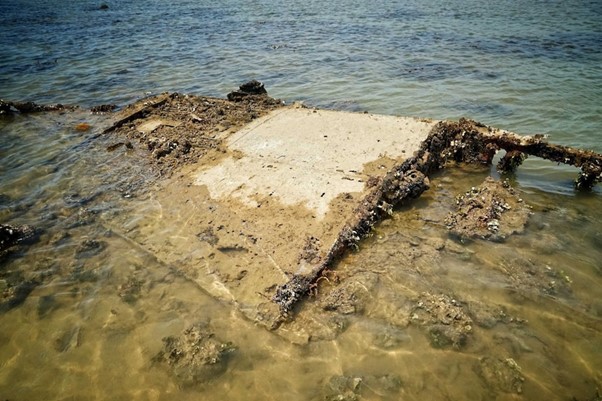
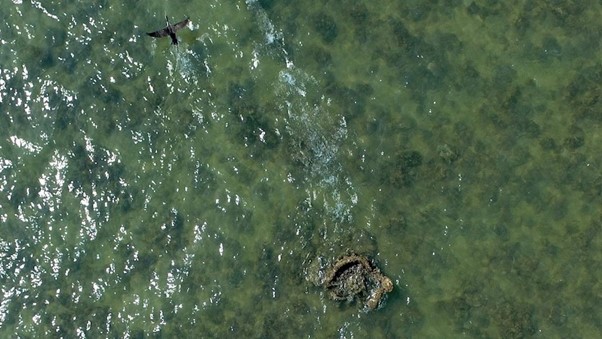
Today the wreck site near Darwin forms part of the wider aviation archaeology landscape of the Northern Territory. Together with other crash sites and surviving relics, it provides a material reminder of the role played by Dutch bomber units in Allied operations from Australia.
Two articles from ABC Darwin showed some of the remnants of the Dutch plane.
The accident is also reported in: De Militaire Luchtvaart van het KNIL in de jaren 1942-1945 by O.G. Ward