The human cost of Dutch air operations from Australia
No. 18 (Netherlands East Indies) Squadron RAAF conducted bombing, reconnaissance and anti-shipping operations from airfields in northern Australia during the Second World War.
The squadron was a joint organisation. Dutch and Netherlands East Indies personnel formed most of its flying crews, while Australians served as air gunners, wireless operators, technical personnel and members of its ground organisation. The casualties therefore included both Dutch and Australian servicemen.
Two serious accidents during 1943—the loss of B-25 Mitchell N5-132 near McDonald Airfield and the loss of N5-140 off Darwin—demonstrate the dangers faced before crews had even reached enemy territory.
ML-KNIL casualty record
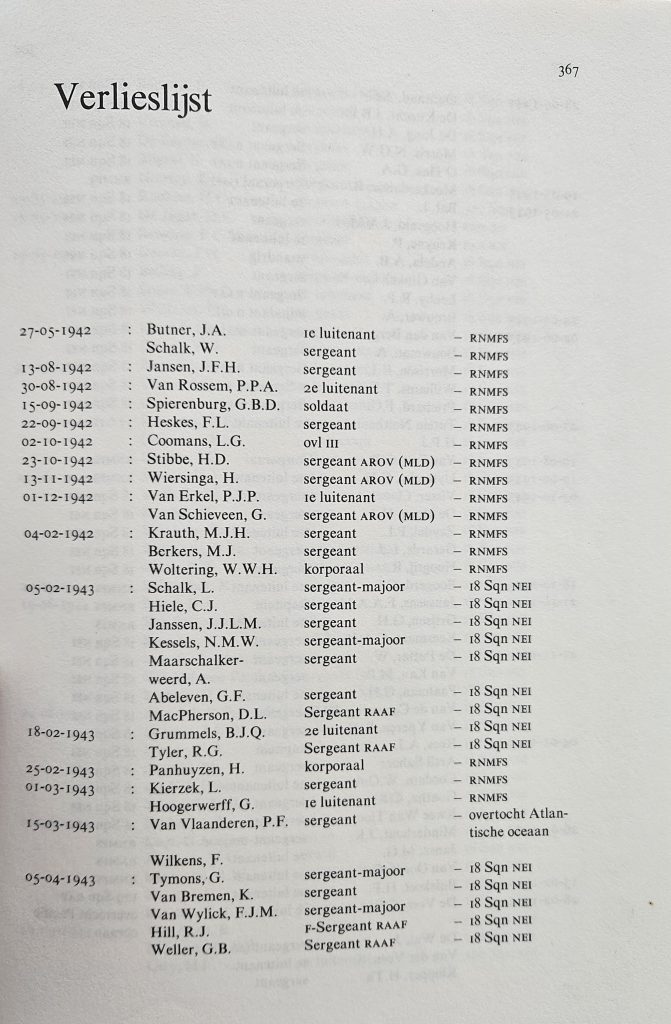
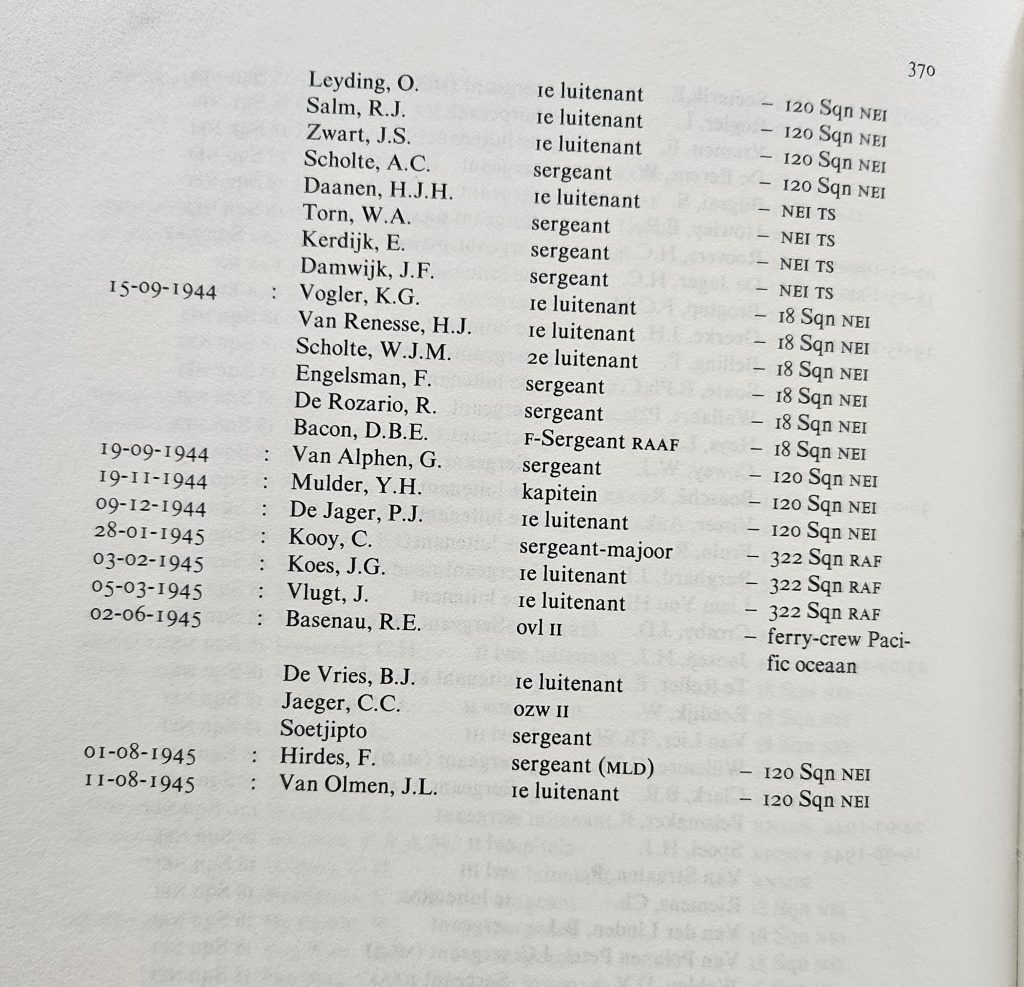
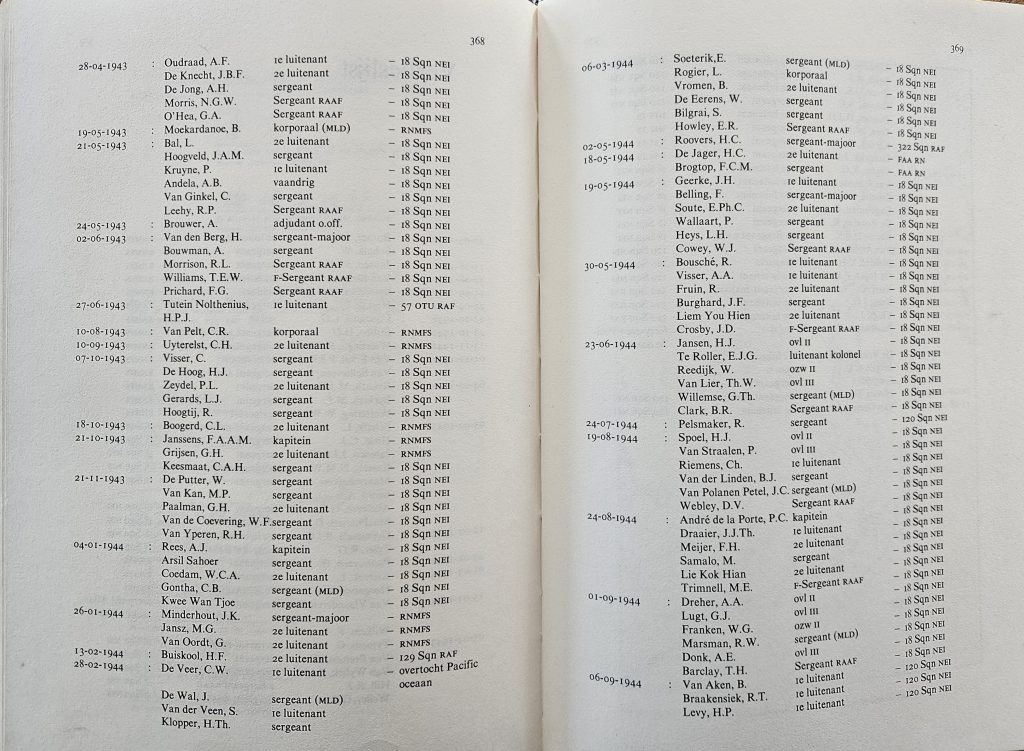
The three pages reproduced below come from O.G. Ward’s De Militaire Luchtvaart van het KNIL in de jaren 1942–1945. They list fatal casualties of the Military Aviation Service of the Royal Netherlands East Indies Army after the evacuation from Java.
The list extends beyond the Northern Territory and records personnel killed in Australia, the United States, the Netherlands East Indies, Europe and other theatres. It provides a valuable reference to individual members of the ML-KNIL who lost their lives following the evacuation from Java.
Fatal casualty list for the Military Aviation Service of the Royal Netherlands East Indies Army following the evacuation from Java. The list includes deaths in Australia and several other theatres and is not confined to No. 18 Squadron or the Northern Territory. Source: O.G. Ward, De Militaire Luchtvaart van het KNIL in de jaren 1942–1945.
The loss of B-25 Mitchell N5-132—5 February 1943
On 5 February 1943, No. 18 Squadron prepared eight B-25 Mitchells for an attack on Japanese buildings and installations at Dobo in the Aru Islands.
The operational formation included:
- N5-143, flown by Lieutenant Wetters;
- N5-140, flown by Lieutenant Grummels;
- N5-145, flown by Sergeant-Major Eikelboom;
- N5-134, flown by Lieutenant Cooke;
- N5-136, flown by Lieutenant Bal;
- N5-135, flown by Lieutenant Swane;
- N5-129, flown by Lieutenant Winckel; and
- N5-137, flown by Lieutenant Hagers.
The aircraft carried 500-pound general-purpose bombs and four-pound incendiaries. The raid caused extensive fires, and the formation reportedly encountered neither fighter interception nor anti-aircraft fire.
Before the operational force could depart from Darwin, Mitchell N5-132 was lost during the staging flight from McDonald Airfield. The heavily loaded aircraft took off at approximately 6.40 a.m., failed to gain sufficient height and struck trees several miles from the airfield. It crashed and caught fire, causing one or more of its bombs to explode.
The squadron’s accident report attributed the loss to the premature retraction of the wing flaps. Combined with the aircraft’s heavy take-off weight, this caused it to lose altitude and strike the treetops.
Those aboard N5-132
The aircraft carried Dutch and Australian personnel:
- Sergeant-Major L. Schalk, pilot;
- Sergeant C. Hiele, second pilot;
- Sergeant J.J. Janssen, wireless telegraphist;
- Sergeant A. Maarschalkerweerd, mechanic;
- Sergeant G.F. Abeleven, mechanic;
- Sergeant-Major N.W. Kessels, mechanic;
- RAAF Sergeant D.L. MacPherson, wireless operator and air gunner;
- RAAF Sergeant H.O. Walton, wireless telegraphist and air gunner; and
- RAAF Leading Aircraftman M.T. Palamountain, telephone operator and passenger.
All nine men died as a result of the crash.
They were buried on 6 February 1943 at Adelaide River War Cemetery. Lieutenant-Colonel Hume-Moir conducted the Protestant service, while Flight Lieutenant Haiper conducted the Roman Catholic service.
The loss of B-25 Mitchell N5-140—5 April 1943
On 5 April 1943, three No. 18 Squadron B-25 Mitchells were assigned to an armed reconnaissance mission along the northern coast of Timor, from Dili to Baucau:
- N5-130, flown by Lieutenant Gus Winckel;
- N5-145, flown by Lieutenant Guus Hagers; and
- N5-140, flown by Sergeant-Major G. Tijmons.
Shortly after departing Darwin, N5-140 crashed into the sea approximately five miles north of the city. All five crew members were killed.
The other two Mitchells continued to Timor. They crossed the coast at approximately 12,000 feet before descending to extremely low altitude to conduct the maritime reconnaissance. Visibility was reported as good, but no significant enemy activity was observed.
The crew of N5-140
The crew comprised:
- Sergeant-Major G. Tijmons, pilot;
- Sergeant K. van Bremen, second pilot;
- RAAF Sergeant Weller, bomb aimer;
- Sergeant-Major F.J.M. van Wylick, wireless operator; and
- RAAF Flight Sergeant Hill, air gunner.
Recovery operations were directed from Darwin by Lieutenant-Colonel B.J. Fiedeldij. During 5 and 6 April, Lieutenants Fred Pelder and Oudraad entered the water and succeeded in releasing the two pilots from the submerged cockpit despite the presence of sharks. The remains of the other crew members were recovered after being washed ashore.
The five men were buried at Adelaide River War Cemetery on 7 April 1943.
The complete history of this accident and the surviving aircraft remains near Nightcliff is covered in The loss of B-25 Mitchell N5-140: a Dutch bomber tragedy off Darwin.
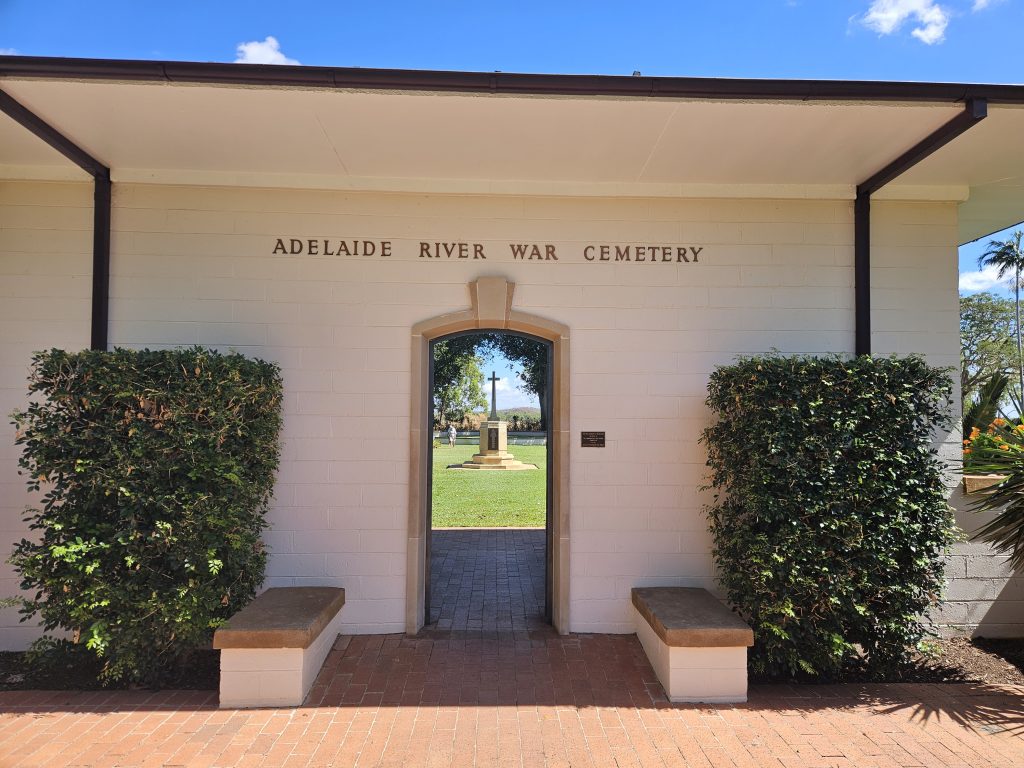
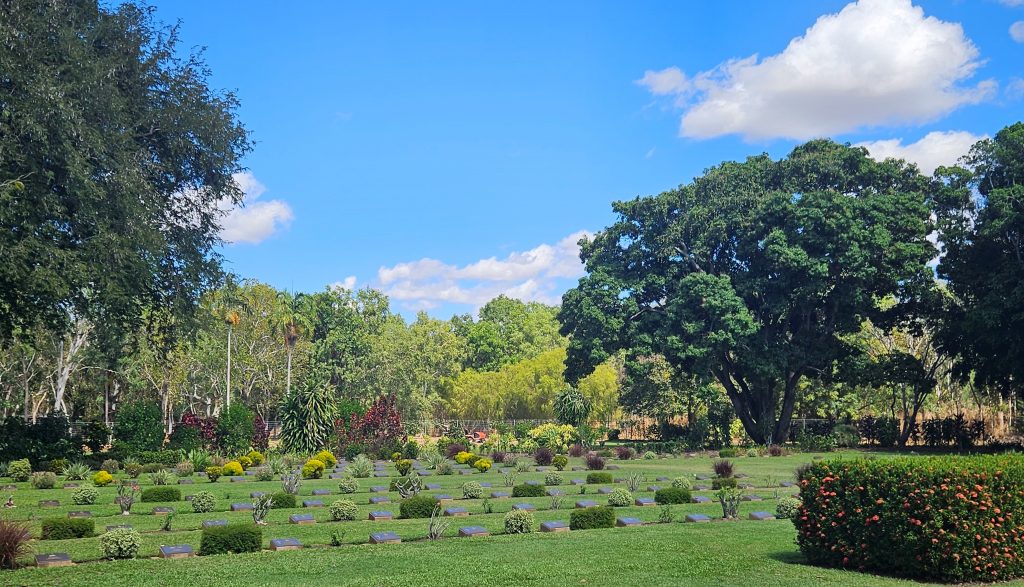
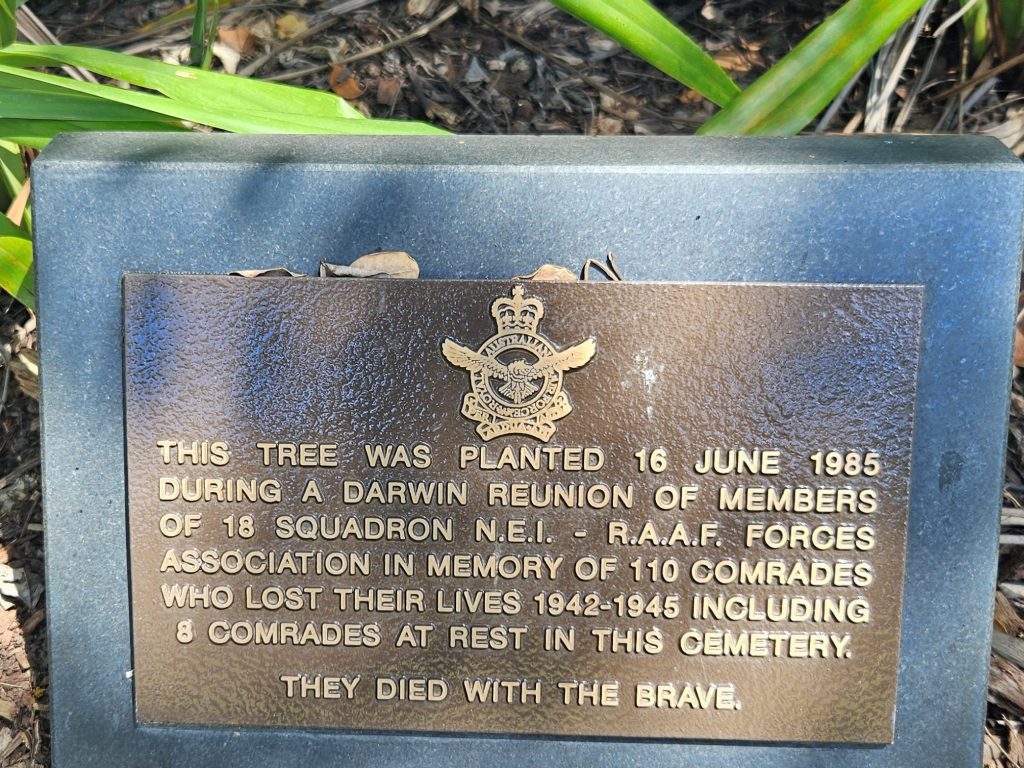
Adelaide River War Cemetery
Adelaide River War Cemetery became the principal burial place for Commonwealth service personnel killed while serving in northern Australia. Dutch airmen and Australian personnel serving with No. 18 Squadron were initially buried there following the two accidents.
After the war, the remains of the Dutch servicemen were transferred from Australia. Some were reburied at the Netherlands Field of Honour at Menteng Pulo in Jakarta, while others were returned to the Netherlands or interred elsewhere. Details of their present burial locations are recorded in the individual files maintained by the Netherlands War Graves Foundation.
The cemetery continues to commemorate the multinational Allied personnel who served and died in northern Australia.
Adelaide River War Cemetery in the Northern Territory. Dutch and Australian personnel killed in No. 18 Squadron accidents were buried here during the war. Photograph: Paul Budde, August 2023.
Another Dutch connection with Adelaide River
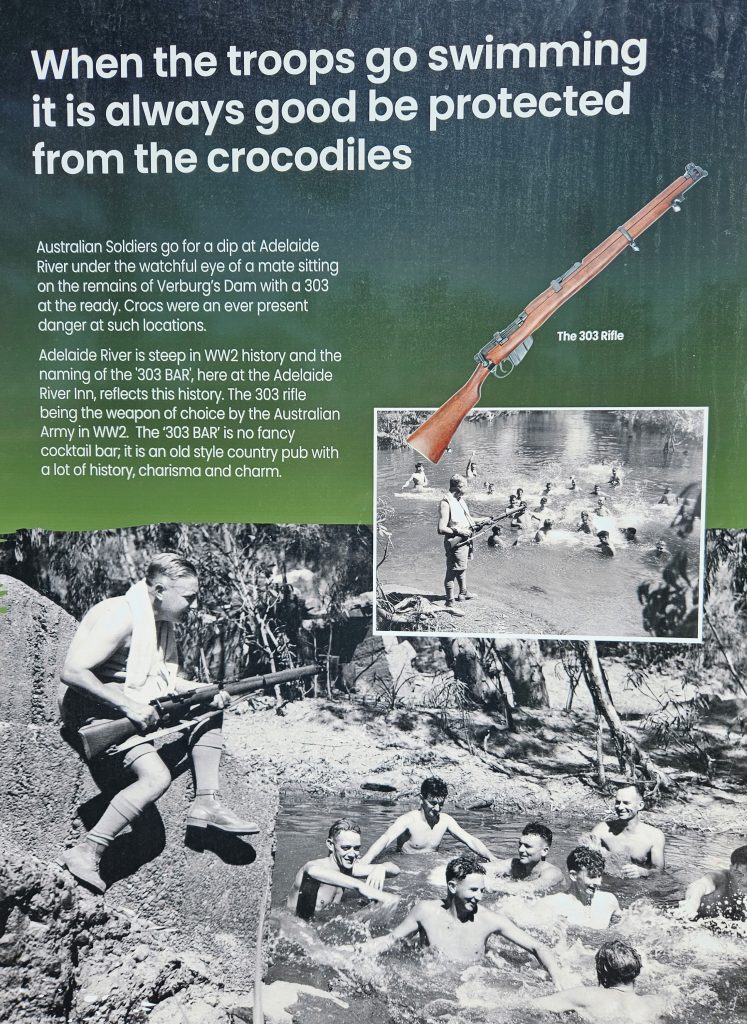
A photograph preserved at Adelaide River shows servicemen swimming near the remains of a dam constructed in 1925 by Dutch engineer Edwin Verburg. Although unrelated to the wartime burials, it records an earlier Dutch association with the district.
Remembrance
The deaths aboard N5-132 and N5-140 demonstrate that the risks faced by No. 18 Squadron were not confined to combat over Japanese-held territory. Aircraft operated at great weight from remote airfields in tropical conditions, while crews undertook demanding flights over long stretches of sea and sparsely inhabited country.
The casualties also illustrate the Dutch–Australian character of the squadron. Dutch and Australian personnel flew together, died together and were initially buried together in the Northern Territory.
Related DACC articles
- No. 18 (Netherlands East Indies) Squadron RAAF
- No. 18 Squadron moves to McDonald Airfield
- The loss of B-25 Mitchell N5-140
- The Dutch at Batchelor Airport
- WWII Gould Airfield—used for maintenance by the Dutch
- WWII Pell Airfield—used for maintenance by the Dutch
- Dutch artefacts of No. 18 Squadron at the Darwin Aviation Museum
- DACC Air Force Research Portal
Sources and further reading
Oorlogsgravenstichting—Netherlands War Graves Foundation.
O.G. Ward, De Militaire Luchtvaart van het KNIL in de jaren 1942–1945, National Library of Australia catalogue record.
Peter Boer, No. 18 (N.E.I.) Squadron RAAF: the first difficult year, 4 April 1942–May 1943.
Commonwealth War Graves Commission—Adelaide River War Cemetery.