The reintroduction of KLM’s air service to Australia in 1951 must be understood against the backdrop of an earlier Dutch aviation network that had already reached the continent before the war—and had then been abruptly dismantled by it.
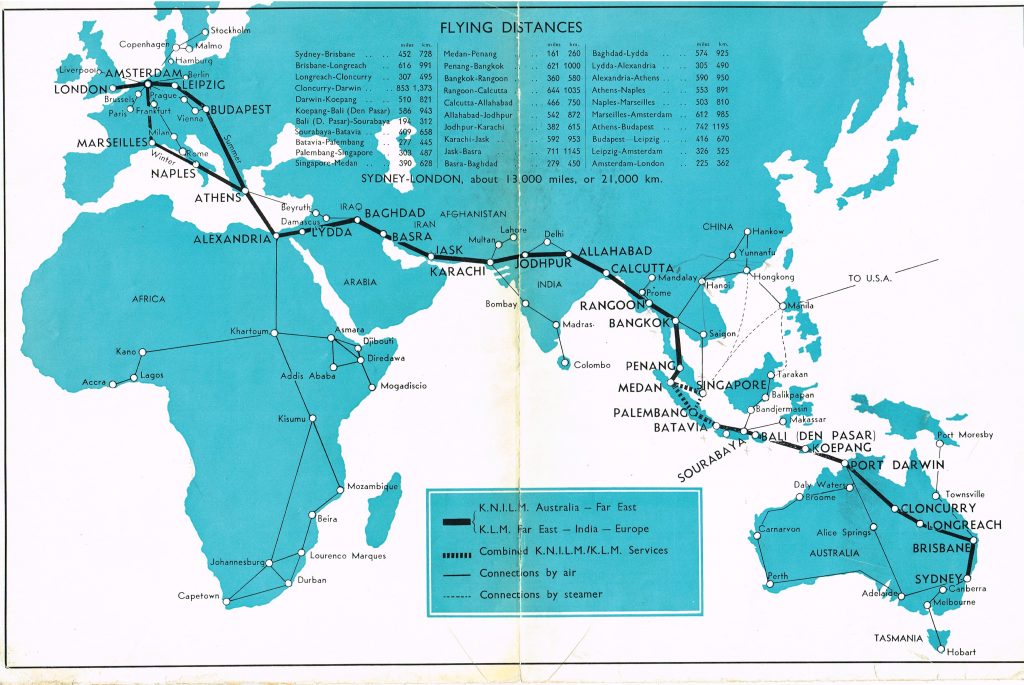
During the 1930s, KNILM (Koninklijke Nederlandsch-Indische Luchtvaart Maatschappij) operated an extensive network across Southeast Asia and extended its services to Australia via Darwin, with connections reaching both Sydney and Melbourne. In combination with long-haul routes operated by KLM Royal Dutch Airlines from Amsterdam to the Netherlands East Indies, this created a functioning aviation corridor linking Europe, Asia and Australia.
These developments did not occur without resistance. British aviation interests sought to protect their imperial routes and were reluctant to allow a competing Dutch service—widely regarded at the time as more efficient—to establish regular line flights to Australia. As a result, prewar Dutch ambitions for a fully integrated Europe–Australia air service were constrained by political and commercial pressures.
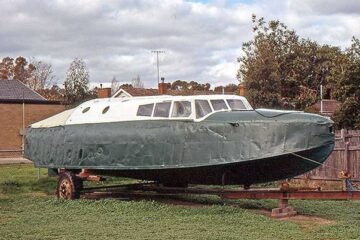
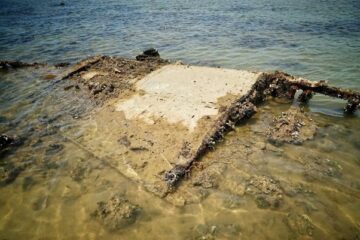
This network collapsed in early 1942 with the Japanese invasion of the Netherlands East Indies. KNILM ceased operations, but an important part of its legacy continued. Aircraft, crews and technical personnel that managed to escape were relocated to Australia, where they became integrated into the Allied war effort. Dutch aircraft and airmen subsequently played a role in military transport and operational support across the Southwest Pacific. Civil aviation between the Netherlands and Australia was effectively suspended for the duration of the war and its immediate aftermath—creating an interruption of nearly a decade.
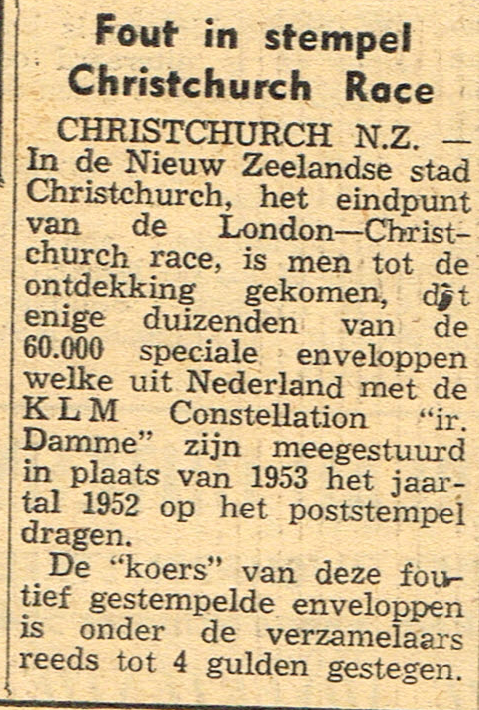
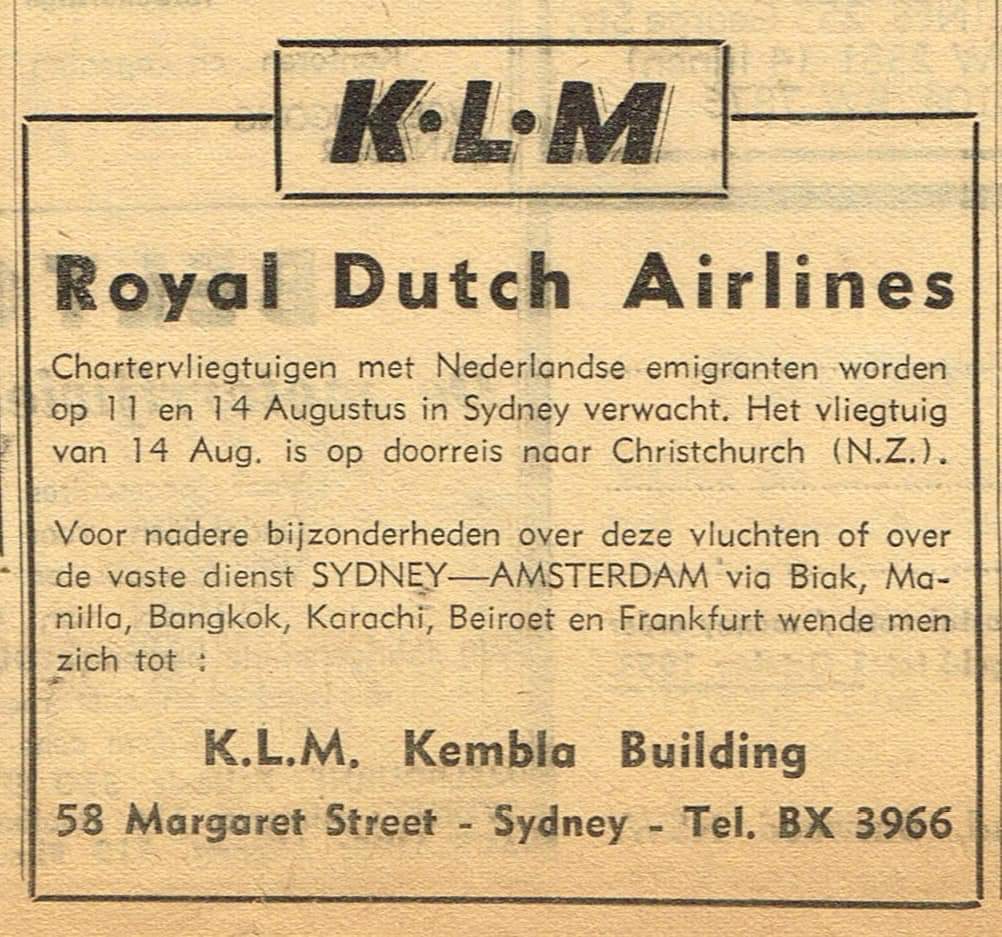
It was therefore of considerable significance when, on 12 July 1951, a KLM Lockheed Constellation named Arnhem arrived in Sydney. This marked the first regular civilian air service between the Netherlands and Australia since WWII, and symbolised the restoration of a connection that had been technologically established before the war but politically constrained and then completely disrupted by it.
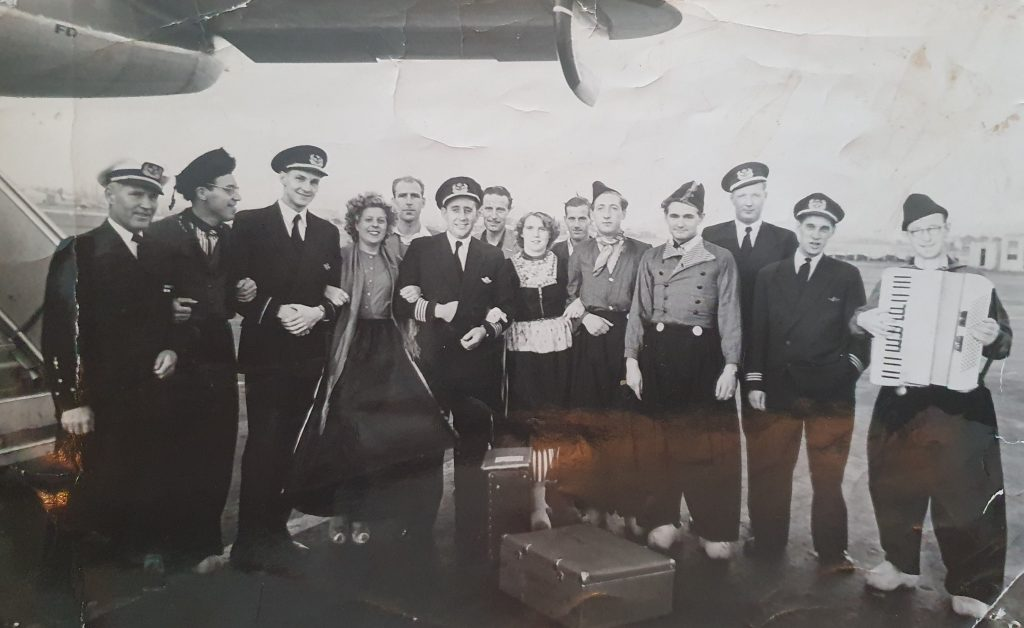
The aircraft used on the route was the Lockheed Constellation, one of the most advanced long-range airliners of its time. With its distinctive triple-tail design, pressurised cabin and improved range, it represented a major step forward in intercontinental aviation. Passenger capacity was limited—typically around 40 to 50 travellers—but the aircraft offered a level of comfort, reliability and speed that had not previously been available.
Even so, the journey from Amsterdam to Sydney remained complex. A typical route included multiple stopovers—Munich, Cairo, Baghdad, Karachi, Bangkok, Biak (in Netherlands New Guinea), and Darwin—before reaching Sydney. These stopovers reflected both the technical limits of piston-engine aircraft and the geopolitical realities of early postwar aviation, where each segment depended on negotiated landing rights and international cooperation.
The arrival of the Arnhem in Sydney was treated as a diplomatic event. It symbolised the reopening of civilian air links after years of wartime disruption and was presented as part of the broader reconstruction of international relations. Civil aviation, in this context, functioned as a visible and practical expression of renewed cooperation between nations.
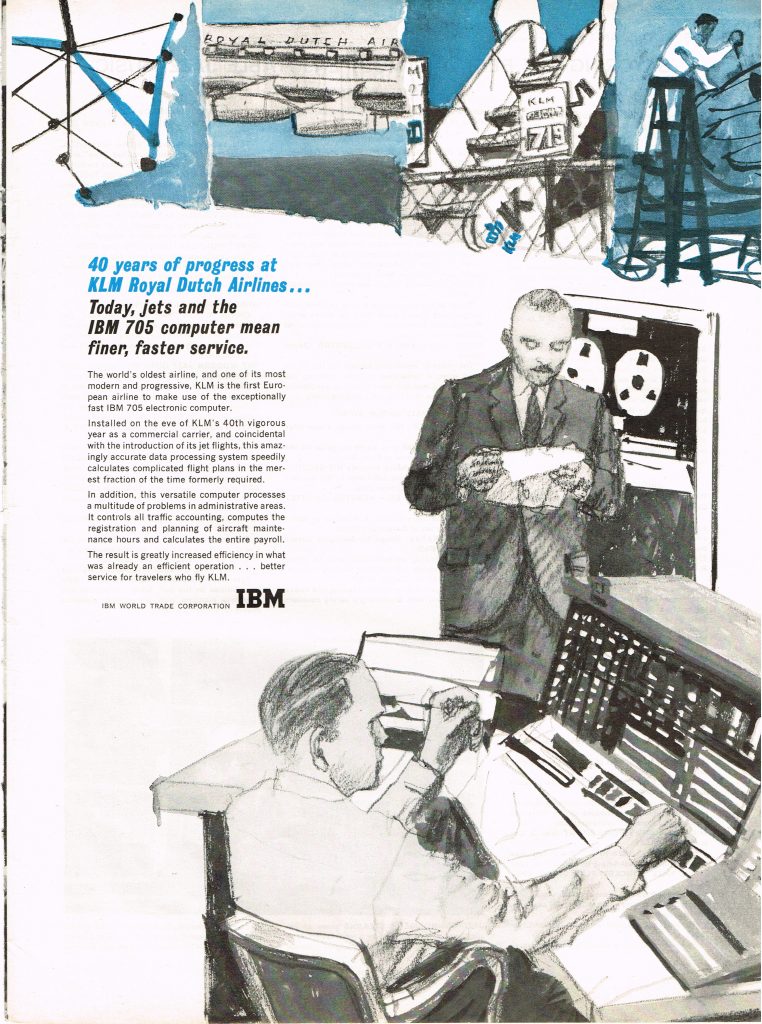
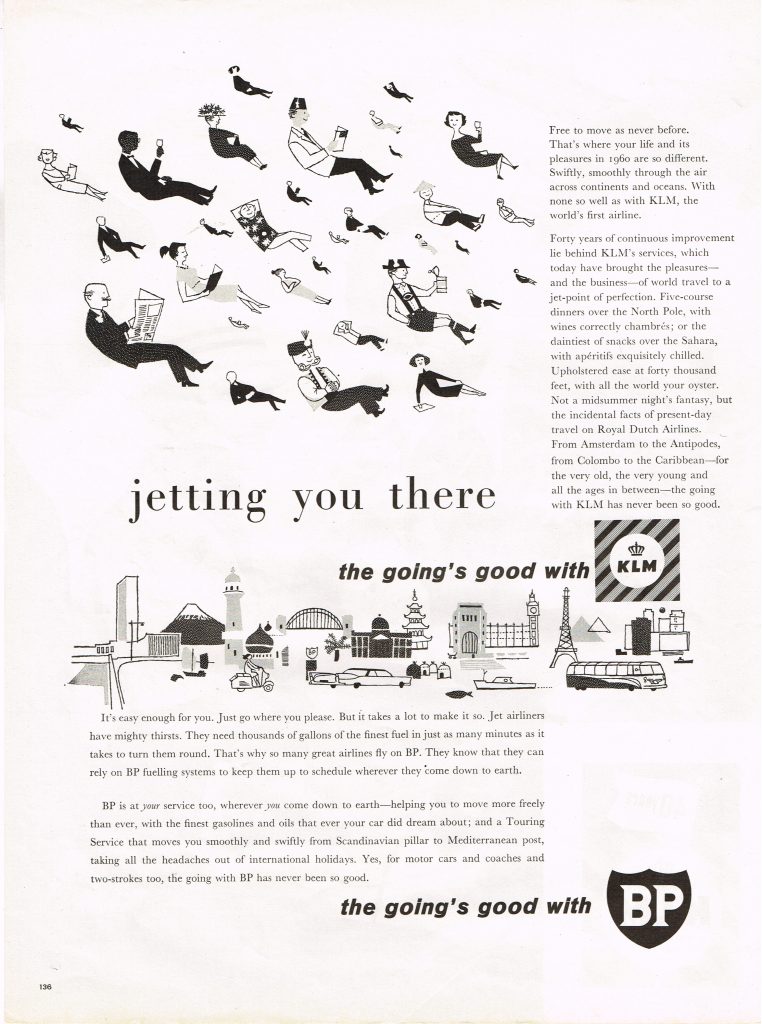
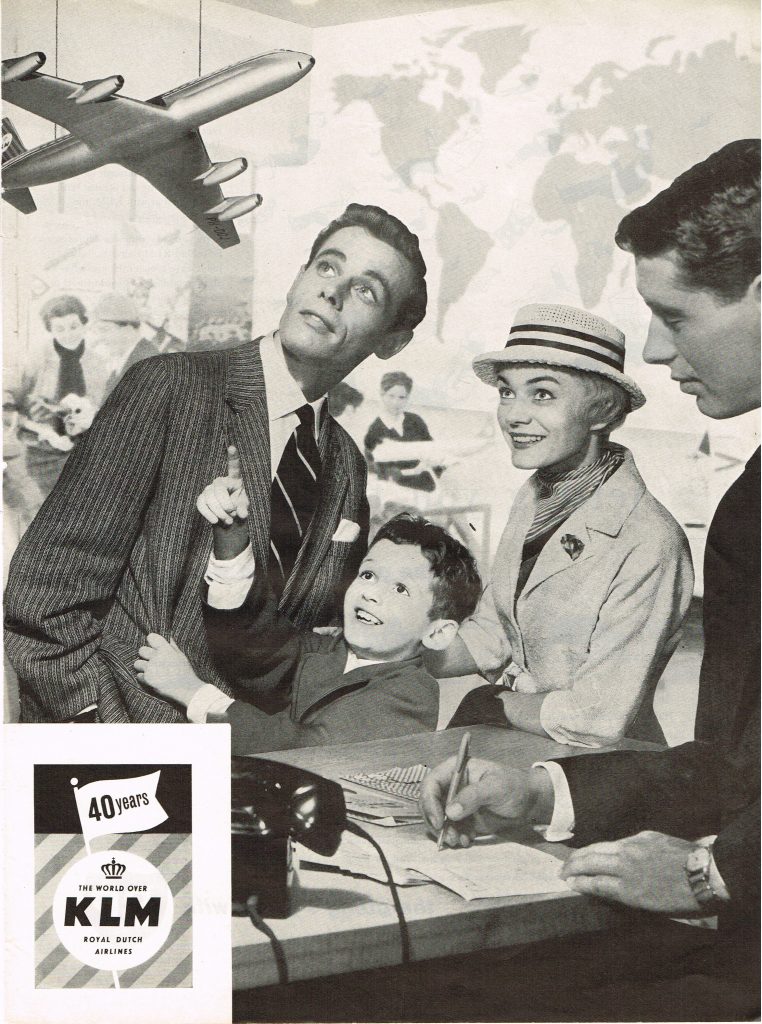
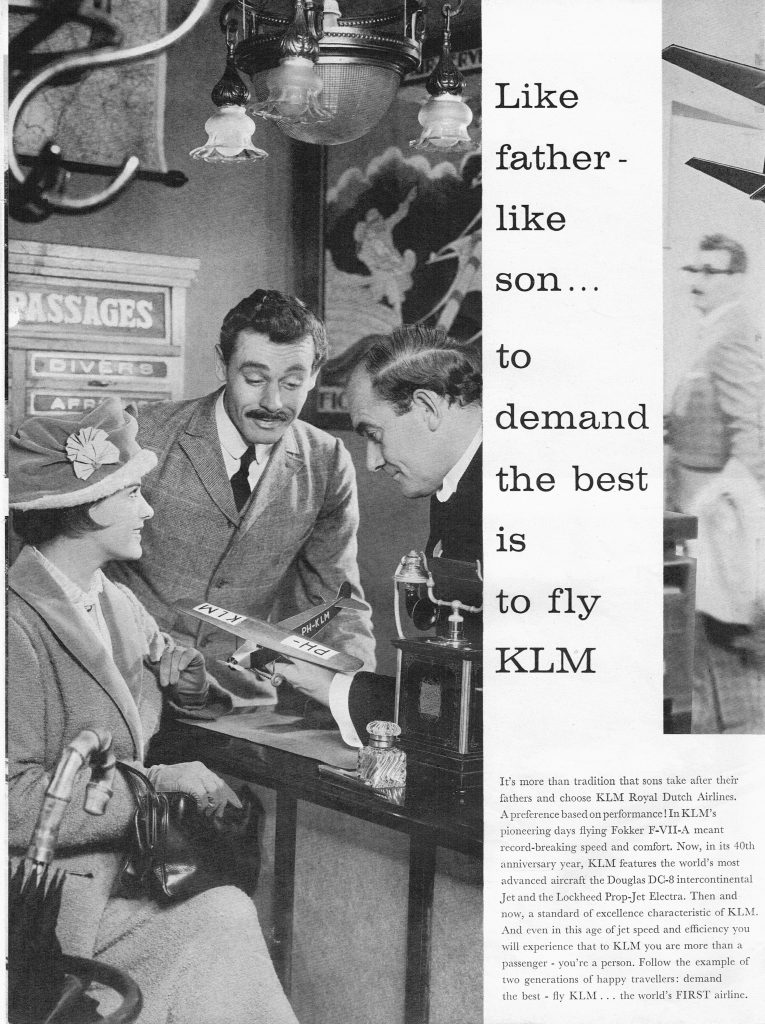
KLM’s marketing and public messaging reinforced this interpretation. The airline emphasised that it was restoring a vital intercontinental connection—the first civilian service since the war—and presented the route as a modern air bridge linking Europe and Australia. The service also demonstrated the re-establishment of a global aviation system based on agreements across multiple countries, stretching from Europe through the Middle East and Asia to the Pacific.
Initially, the service was primarily used by government officials, diplomats, business executives, engineers and administrative personnel involved in postwar reconstruction and international coordination. However, as the 1950s progressed, its use gradually broadened. Increasingly, migrants and private travellers began to make use of the service—still a costly option, but one that offered speed and flexibility compared to traditional sea travel.
This human dimension of early long-distance air travel is now being actively documented. The Aviodrome Aviation Museum in the Netherlands has collected personal accounts and stories from passengers who travelled on these early intercontinental flights, including journeys between Europe and Australia. These recollections highlight not only the technical achievement of the flights but also the lived experience—long stopovers, multiple climates, and the sense of undertaking a journey that was still both demanding and exceptional.
The postwar KLM service can thus be seen as both a continuation and a transformation of earlier Dutch aviation efforts. Where KNILM had established regional and Australia-linked services before the war—despite significant political resistance—KLM now operated a fully integrated intercontinental route in a new geopolitical environment shaped by decolonisation and emerging global aviation frameworks.
The Constellation remained KLM’s principal long-haul aircraft throughout the 1950s. Improved versions, such as the Super Constellation, further enhanced performance and efficiency. However, the era of piston-engine intercontinental travel was relatively short-lived. From around 1960 onwards, KLM began introducing jet aircraft, most notably the Douglas DC-8 and later the Boeing 707. These aircraft significantly reduced travel times, required fewer stopovers, and increased passenger capacity, marking the transition to the modern jet age.
KLM continued to operate services to Australia for several decades after the introduction of jet aircraft. However, in line with broader restructuring of long-haul aviation routes and increasing reliance on partnerships and code-sharing arrangements, the airline eventually withdrew its own direct – 3 times a week – operations. KLM ceased its own flights to Australia in 2001, after which services were maintained through partner airlines rather than KLM-operated aircraft. Apparently, the route via Singapore, although very popular, was a total loss-maker and they didn’t have traffic rights for the SIN-SYD leg. KLM has had a very long history with Australia. In 2001, the new codeshare agreement covered Perth, Melbourne, Brisbane, Adelaide, Cairns and Darwin.
In this broader context, the arrival of the Constellation Arnhem in Sydney on 12 July 1951 stands as a pivotal moment. It marked the restoration of civilian aviation links after nearly a decade of interruption, reconnected the Netherlands and Australia within a global aviation system, and bridged the gap between the prewar Dutch aviation network and the modern era of international air travel.
See also:
The story of Evert Herman van Hummel a flight engineer from 1938 till approx. 1970
The following are images of documents from the DACC archives.