Introduction
The wartime history of No. 18 (Netherlands East Indies) Squadron RAAF is closely connected with Darwin and the airfields of the Northern Territory.
From late 1942, the joint Dutch–Australian squadron operated North American B-25 Mitchell bombers from McDonald and Batchelor airfields. Its crews flew bombing, reconnaissance and anti-shipping operations against Japanese forces in Timor and the Japanese-occupied Netherlands East Indies.
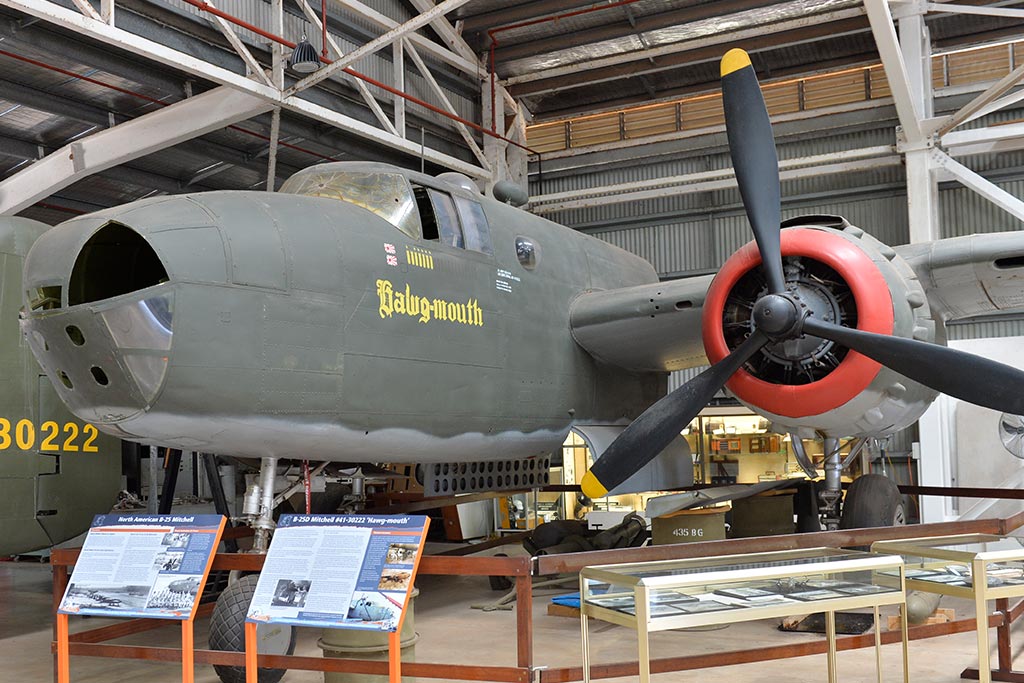
Several objects associated with the squadron are preserved by the Darwin Aviation Museum. They include commemorative items, insignia and personal memorabilia. The museum also displays a B-25 Mitchell representing the type flown by the squadron.
However, an important distinction must be made. While several museum objects have a documented association with No. 18 Squadron, the displayed B-25 has not been identified as an aircraft that served with the Dutch squadron. Reports that structural remains of a Dutch-operated Mitchell may be held in museum storage also remain unconfirmed.
No. 18 Squadron artefacts at the Darwin Aviation Museum
The Darwin Aviation Museum preserves several objects associated with No. 18 Squadron. These include wartime personal items and insignia as well as objects produced to commemorate the squadron after the war.
The museum has begun documenting its collection through its eHive online catalogue. The catalogue descriptions, inscriptions and names have been retained here because they form part of the historical record.
Wartime and personal objects
Identification tag of H.C.A. Smits Verburgt
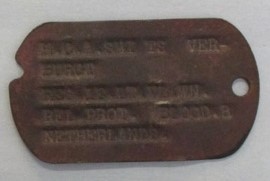
The museum collection includes an identification tag belonging to H.C.A. Smits Verburgt. The tag is stamped:
H.C.A. SMITS VERBURGT / RES. 1E. LT. VL. WN. / REL. PROT. BLOOD. B / NETHERLANDS
The information identifies him as a Reserve First Lieutenant and air observer. It also records his religion as Protestant, his blood group as B and his nationality as Netherlands.
Care should be taken when transcribing his name, as the spacing on the original tag has previously resulted in it being rendered incorrectly.
No. 18 Squadron shoulder flash
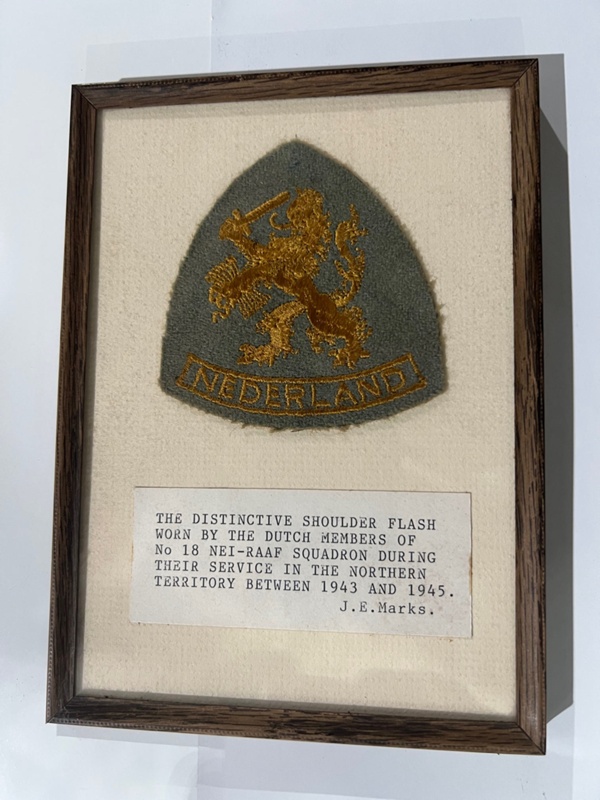
The collection includes a distinctive shoulder flash of the type worn by Dutch members of No. 18 Squadron during their service in the Northern Territory between 1943 and 1945. This example is associated with J.E. Marks.
The insignia provides tangible evidence of how the squadron’s Dutch identity was maintained while it operated within the RAAF organisation.
“United We Stand” squadron artwork
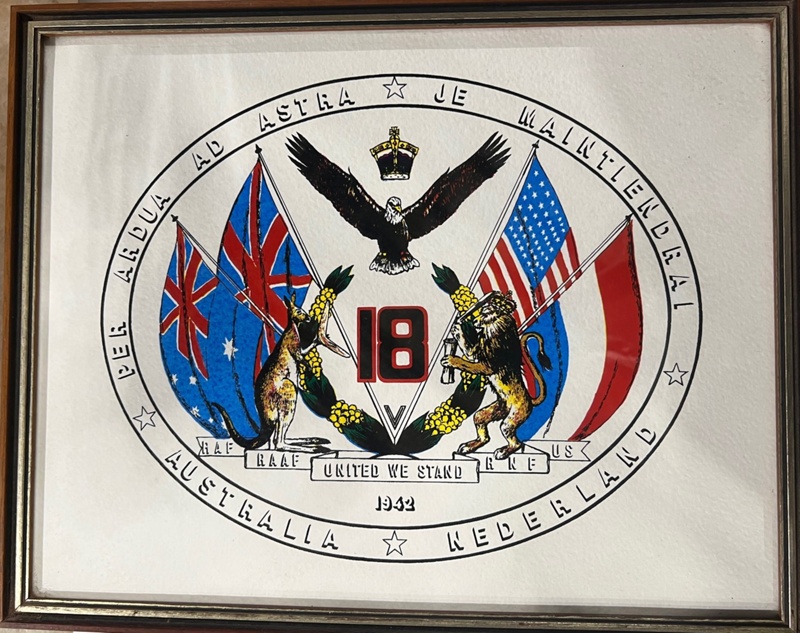
A framed, hand-painted artwork bears the inscription:
No. 18 NEI RAAF Squadron—United We Stand 1942
The artwork expresses the combined Dutch–Australian identity of the squadron at the time of its establishment in Australia.
A framed, hand-painted artwork bears the inscription:
No. 18 NEI RAAF Squadron—United We Stand 1942
The artwork expresses the combined Dutch–Australian identity of the squadron at the time of its establishment in Australia.
Dutch cigar box
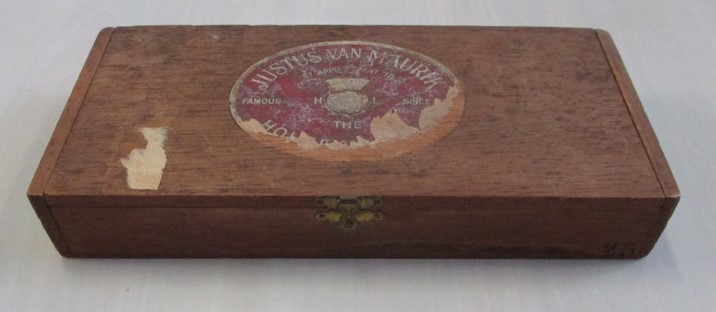
A Dutch cigar box dating from approximately 1939–1945 is also preserved in the collection. Its direct connection with No. 18 Squadron has not yet been established.
Although the box may have been used or retained by Dutch military personnel, further provenance information is required before it can be attributed to a particular person or unit.
Postwar commemoration
Dutch Commemorative Cross and Australian service ribbon
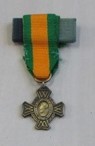
Dutch Commemorative Cross and Australian service ribbon
A miniature Dutch Commemorative Cross is preserved together with a ribbon bar for an Australian service medal. The two pieces have been sewn together and are dated to approximately 1946.
The Dutch inscription has been catalogued as:
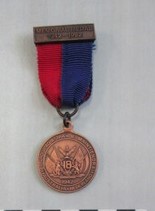
No. 18 Squadron 1942–1992 commemorative medal
This commemorative medal was produced for the fiftieth anniversary of No. 18 Squadron in 1992. It has a red and blue ribbon and combines Australian, Netherlands and RAAF emblems on its face. An aircraft and commemorative inscription appear on the reverse.
The inscription records:
Memorial Medal / 1942–1992 / Per ardua ad astra / Je maintiendrai / Australia–Nederland / 18 Squadron NEI–RAAF / G.A. Wallace / 55181
The medal records both the squadron’s joint Dutch–Australian character and its continuing importance to former members fifty years after its establishment.
No. 18 Squadron Association badge
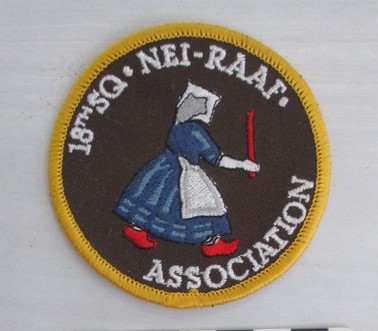
A cloth badge belonging to the No. 18 Squadron Association was manufactured by Arcade Badge Embroidery Co. Pty Ltd, probably between 1980 and 1990.
The badge is evidence of the postwar association established by former squadron members and their families to maintain contact, preserve the squadron’s history and commemorate their shared service.
The B-25 Mitchell displayed in Darwin
The Darwin Aviation Museum displays a substantially complete North American B-25 Mitchell bomber.
The aircraft is important for interpreting the history of No. 18 Squadron because it allows visitors to see the type of medium bomber flown by its Dutch, Indonesian and Australian personnel. It illustrates the aircraft’s dimensions, crew positions, construction and operational environment.
At present, however, no evidence has been identified showing that this particular aircraft served with No. 18 Squadron. It should therefore be described as a representative example of the aircraft type rather than as a former Dutch squadron aircraft.
Reports of Dutch B-25 remains in storage
There have been informal reports that structural remains from a Dutch-operated B-25 may be held in containers or storage areas associated with the museum.
These reports remain unverified. No photographs, aircraft serial numbers, recovery records or museum catalogue entries have yet been located that conclusively establish the identity of these remains.
Further research may eventually determine whether any of the stored components came from a No. 18 Squadron aircraft. Until that evidence is found, their Dutch provenance should not be presented as established fact.
The surviving wreckage of B-25 N5-140
A confirmed physical remnant of No. 18 Squadron survives near Darwin, although it is not part of the museum collection.
B-25 Mitchell N5-140 crashed into the sea approximately five miles north of Darwin on 5 April 1943, shortly after departing on an armed reconnaissance mission along the coast of Timor.
All five crew members were killed:
- Sergeant-Major G. Tijmons, pilot;
- Sergeant K. van Bremen, co-pilot;
- Sergeant Weller RAAF, bomb aimer;
- Sergeant-Major F.J.M. van Wylick, radio operator; and
- Flight Sergeant Hill RAAF, air gunner.
Recovery work was directed by Lieutenant-Colonel B.J. Fiedeldij. The bodies were recovered on 5 and 6 April and the five airmen were buried near Adelaide River on 7 April 1943.
Parts of N5-140, including sections identified as a wing and engine, have subsequently been photographed when exposed near Nightcliff at exceptionally low tide. These remains provide a direct physical connection with No. 18 Squadron’s wartime operations from northern Australia.
The wreck site should be distinguished from the artefacts held by the Darwin Aviation Museum. It is an in-situ archaeological site associated with a fatal wartime accident and should be treated with appropriate respect.
Preserving the squadron’s material heritage
The objects preserved in Darwin range from personal insignia and commemorative material to surviving aircraft wreckage. Together, they help connect the squadron’s operational history with the individuals who served in it.
Further cataloguing may reveal additional information about the ownership and provenance of particular objects. Aircraft components should only be attributed to No. 18 Squadron where serial numbers, recovery documentation or other reliable evidence support that identification.
These artefacts complement the photographs, documents, oral histories and personal accounts collected elsewhere in the DACC Air Force Research Portal.
Related DACC articles
- No. 18 (Netherlands East Indies) Squadron RAAF during World War II
- The loss of B-25 Mitchell N5-140: a Dutch bomber tragedy off Darwin
- The Dutch at Batchelor Airfield in the Northern Territory
- No. 18 Squadron moves to McDonald Airfield
- B-25 Mitchell N5-128: from early squadron service to museum memory
- Captain Cornelis Keesmaat and the crash of B-25 N5-156 near Darwin
- The “Pulk”: restored B-25 bomber from No. 18 NEI Squadron RAAF