In the opening months of 1942, as Japanese forces advanced through Southeast Asia, the authorities of the Netherlands East Indies transferred part of their gold reserves to Australia for safekeeping.
The surviving evidence identifies two ships that delivered Netherlands East Indies gold to Australia: Ruys in January 1942 and Boissevain in February. Their cargoes were placed in the custody of the Australian Treasury and the Commonwealth Bank.
The gold formed part of a much wider movement of people, records, military equipment and government assets away from the threatened Netherlands East Indies.
Protecting financial reserves from Japan
The Netherlands had been occupied by Germany since May 1940. The Netherlands Government-in-Exile operated from London, while the administration in Batavia continued to govern the Netherlands East Indies.
The Indies possessed considerable economic importance. Its exports included oil, rubber, tin, sugar, quinine and other commodities required by the Allied economies. Its financial reserves were therefore important not only to the colonial administration but also to the wider Dutch war effort.
When Japan entered the Pacific War in December 1941, the Netherlands East Indies faced the possibility of invasion and occupation. Gold and other financial assets risked being captured if they remained in the archipelago.
Moving these reserves to Australia was consequently part of a broader precautionary effort. It was undertaken before the final collapse of Dutch authority on Java in March 1942.
MS Ruys and the first documented consignment
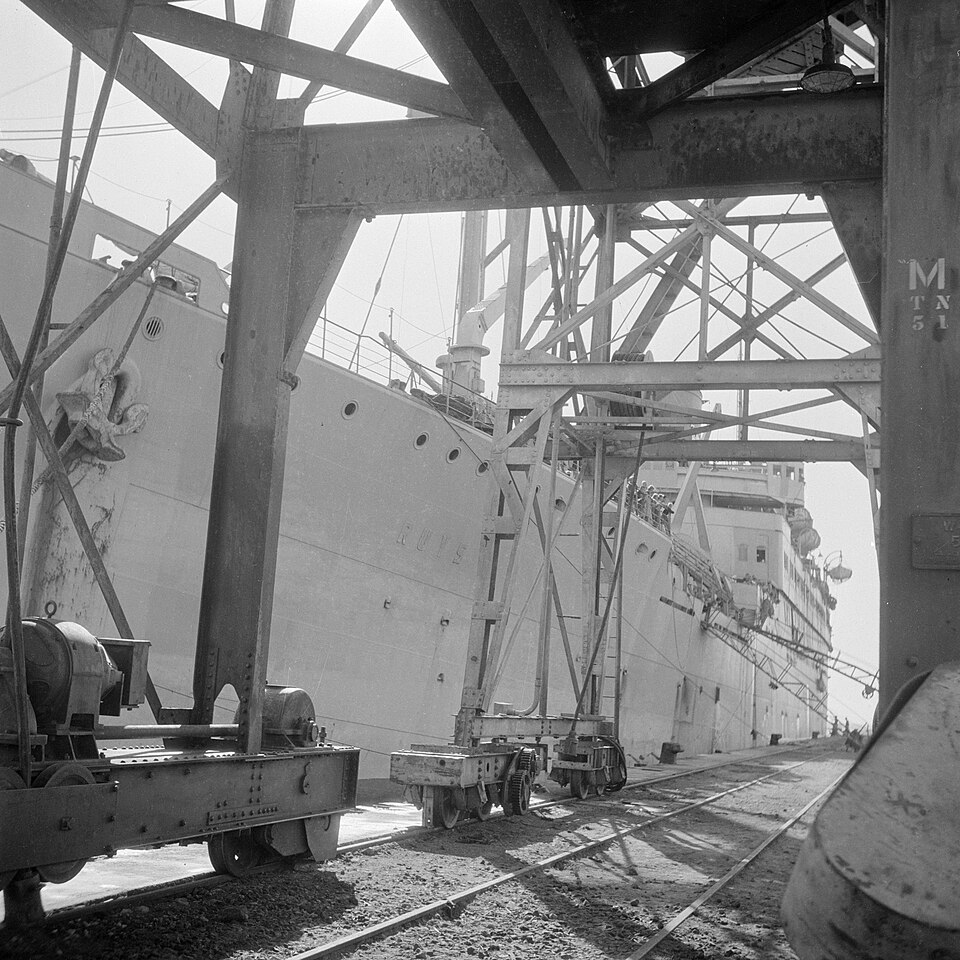
The first documented consignment reached Australia aboard the KPM motor ship Ruys on 21 January 1942.[1]
Australian records described the cargo as Netherlands East Indies gold reserves valued at ten million guilders. It was delivered directly to the Australian Treasury Department for safekeeping.[2]
The figure of ten million guilders describes the official monetary value recorded in the correspondence. It should not be converted into a physical weight without knowing the precise form, fineness and valuation basis of the consignment.
Ruys was a 14,155-gross-ton passenger and cargo liner built for the Koninklijke Paketvaart-Maatschappij and completed in 1938. Together with its sister ships Boissevain and Tegelberg, it operated KPM’s long-distance services between Asia and Africa.
The vessel should not be confused with the much larger Ruys of the Rotterdamsche Lloyd. Construction of Ruys began before the war, but the ship was not launched until 1946 and did not enter service until 1947.
The transport of the gold aboard Ruys occurred while the Netherlands East Indies administration was still functioning in Java and before the major maritime evacuation of March 1942. It was therefore a precautionary transfer undertaken as the military threat was rapidly increasing.
Gold aboard Boissevain
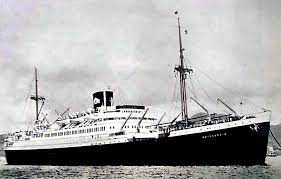
A second documented shipment arrived aboard Boissevain on 24 February 1942. The bullion was transferred immediately to the Commonwealth Bank of Australia.[3]
Boissevain was a large Dutch passenger and cargo liner operated by the Koninklijke Paketvaart-Maatschappij. She subsequently served as an Allied troopship, but in February 1942 she was among the Dutch vessels carrying valuable cargoes away from the threatened Netherlands East Indies.
The available source does not provide a reliable figure for the quantity or monetary value of the gold carried aboard Boissevain. It should therefore be described simply as an additional consignment of gold bullion.
Together, the Ruys and Boissevain shipments demonstrate that Australia was already serving as a secure repository for Netherlands East Indies assets before the surrender of Java.
The evacuation from Java
After the Allied defeat in the Battle of the Java Sea on 27–28 February 1942, the evacuation became increasingly chaotic. Tjilatjap—now Cilacap—on Java’s southern coast became the principal departure point for ships attempting to reach Australia or Ceylon.
Japanese aircraft attacked the port on 4 March. Numerous ships were destroyed, abandoned or scuttled, while others attempted to escape through waters patrolled by Japanese naval and air forces.[4]
Dutch merchant vessels carried government officials, military personnel, refugees, records, currency, bank documents, industrial equipment and other strategically valuable cargoes.
Because these different assets travelled during the same general evacuation, later accounts can easily conflate the ships and their cargoes. The surviving evidence nevertheless allows several distinctions to be made.
Australian custody of the gold
The gold brought aboard Ruys was placed with the Australian Treasury, while the Boissevain consignment was transferred to the Commonwealth Bank.[7]
This was an arrangement for safekeeping. It did not mean that ownership of the gold passed to Australia or that the Australian Government could use it as part of its own reserves.
Foreign government assets held in Australia required administrative arrangements governing security, custody, access and eventual return. Such arrangements were particularly sensitive because the Netherlands East Indies administration needed to retain control over its financial resources while operating outside occupied territory.
The relevant National Archives of Australia file is titled Safe Custody in Australia for Goods and Currency from the NEI. Its wording indicates the central purpose of the arrangement: the Netherlands East Indies assets were being protected in Australia from wartime capture or loss.[8]
The Netherlands Indies Commission
Dutch and Netherlands East Indies authorities required substantial funds for military purchases, ship maintenance, fuel, salaries and administration. However, the available evidence does not establish that the bullion safeguarded in Australia was directly drawn upon to meet these expenses.
The institutions responsible for Dutch and Netherlands East Indies purchasing and financial administration in Australia developed rapidly during the opening months of 1942.
A Netherlands East Indies Purchasing Commission was established in Melbourne on 24 January 1942. Its purpose included arranging supplies and handling economic matters connected with the Indies.[9]
On 8 April 1942 it was superseded by the Netherlands Indies Commission for Australia and New Zealand, led by Dr Jacob van Hoogstraten. The new commission dealt with Australian authorities over shipping, cargoes, purchasing, personnel and financial arrangements.[10]
The first gold shipment had arrived before either the Japanese conquest of Java or the establishment of the full Netherlands Indies Commission. It should therefore be understood primarily as a protective transfer ordered by the still-functioning Netherlands East Indies administration.
Dutch cargoes and Australian wartime needs
The gold was only one part of the extensive cargo carried to Australia aboard Dutch ships. Other vessels arrived with aircraft, military equipment, railway locomotives, textiles, machinery and supplies originally intended for the defence or economy of the Netherlands East Indies.
Australia faced severe wartime shortages and wanted access to useful cargoes that could no longer reach their original destination. Negotiations followed between the Australian Government and Dutch representatives over inventories, ownership and purchase.[11]
Aircraft aboard Dutch ships included Vought Sikorsky Kingfishers, Douglas Boston light bombers and Brewster Buffalo fighters. These were purchased and allocated to the Royal Australian Air Force.[12]
Other cargoes were similarly acquired or redirected for Australian use. The gold was treated differently. It remained a Dutch or Netherlands East Indies financial asset placed in Australian custody, rather than material available for purchase or wartime allocation.
What remains uncertain
The surviving evidence establishes that at least two gold consignments reached Australia, but it does not answer every question.
Further archival research would be needed to determine:
- the precise quantity and composition of the bullion aboard each ship;
- the complete itinerary of the consignments;
- the vaults in which the gold was physically stored;
- whether additional Netherlands East Indies gold reached Australia aboard other vessels;
- how custody was administered during the remainder of the war; and
- when and to whom the individual consignments were ultimately released.
Australia as a financial refuge
Australia served not only as a military base and place of refuge for Dutch and Netherlands East Indies personnel. It also provided secure custody for financial assets removed from the path of the Japanese advance.
The gold aboard Ruys and Boissevain formed part of the surviving material foundation from which Dutch and NEI authorities continued their wartime activities. Its transfer also demonstrates the importance of Dutch merchant shipping during the collapse of the Netherlands East Indies.
The ships carried far more than troops and ordinary cargo. They transported government officials, records, bank documents, currency and gold—the administrative and financial resources required for a displaced government to continue functioning.
Return to the Research Portal: The Dutch Merchant Fleet and the Allied War Effort in Australia.
Endnotes
[1] Jonathan Ford, “The Netherlands Merchant Navy in the Pacific War,” Journal of Australian Naval History, vol. 6, no. 1 (2009), pp. 81–83.
[2] National Archives of Australia, series A981, item NEI 30, Safe Custody in Australia for Goods and Currency from the NEI, Treasury Department to Department of External Affairs, letter dated 21 January 1942; Ford, “The Netherlands Merchant Navy in the Pacific War,” p. 83.
[3] Ford, “The Netherlands Merchant Navy in the Pacific War,” p. 83. Ford records that additional gold bullion delivered by Boissevain on 24 February 1942 was transferred immediately to the Commonwealth Bank.
[4] Ford, “The Netherlands Merchant Navy in the Pacific War,” pp. 81–82. Nineteen Dutch ships were lost at Tjilatjap between 3 and 7 March, including vessels destroyed, abandoned or scuttled.
[7] NAA, A981, item NEI 30; Ford, “The Netherlands Merchant Navy in the Pacific War,” p. 83.
[8] NAA, A981, item NEI 30, Safe Custody in Australia for Goods and Currency from the NEI.
[9] Ford, “The Netherlands Merchant Navy in the Pacific War,” p. 83. The Netherlands East Indies Purchasing Commission was established in Melbourne on 24 January 1942.
[10] Ibid. The Netherlands Indies Commission replaced the Purchasing Commission on 8 April 1942.
[11] NAA records concerning Dutch cargoes in Australia; Ford, “The Netherlands Merchant Navy in the Pacific War,” pp. 83–84.
[12] Ford, “The Netherlands Merchant Navy in the Pacific War,” p. 83. The cargoes included 18 Vought Sikorsky Kingfisher seaplanes, 31 Douglas Boston light bombers and 17 Brewster Buffalo fighters.