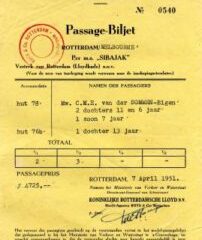
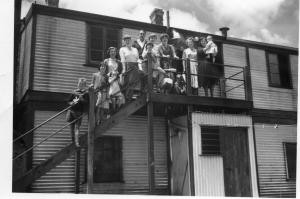
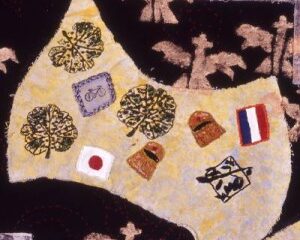
Anton Roodhuyzen recalls his childhood in the Netherlands East Indies, his family’s internment during the Japanese occupation, their post-war evacuation to the Netherlands and his eventual migration to Australia.
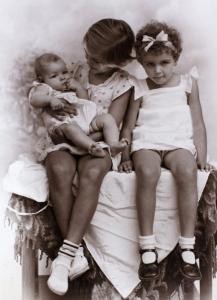
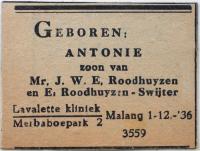
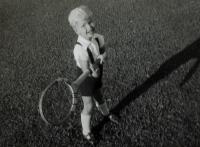
My full name is Antonie Roodhuyzen. I am of European Dutch descent and was born on 1 December 1936 in the city of Malang, on the island of Java in what was then the Netherlands East Indies.
I graduated in art photography from the Royal Academy of Art in Rotterdam. I arrived in Australia in 1988 after living in New Zealand for 14 years and have been an Australian citizen since 1996.
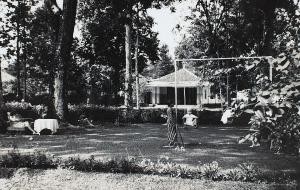
My early life in Java was like living in paradise. Of course, I did not know that when I was only six years old. Like many things in life, it was something I realised much later.
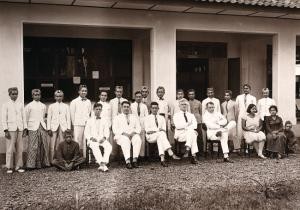
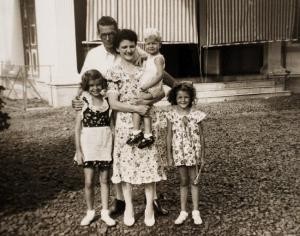
My father, Jan Willem Evert Roodhuyzen, was sent to the Netherlands East Indies by the Dutch Government as an assistant tax inspector. He was later promoted to Chief Tax Inspector for the island of Java.
There were many servants looking after our household. We had a gardener, a cook, someone responsible for cleaning and another person who did the washing. I also had my own nanny, or baboe, as they were called. Her name was Anna—not a particularly Indonesian name—but I was very fond of her.
One day, while playing in the front garden, I suddenly saw hundreds of soldiers marching down the street. I had never seen anything like it, and my amazement remains vivid in my memory. I can still recall my mother rushing towards me and dragging me inside against my will, as I wanted to see what was happening.
The Japanese occupation
Then life began to change.
First, my father told us that he would no longer be living at home. He was among the first to be interned and was sent to Buitenzorg, now known as Bogor. He later told me that he had been forced to report because the Japanese erected large signs ordering all Dutch males aged 11 and over to come forward. Those who failed to do so risked being shot.
At the age of six, I did not fully comprehend what was happening, but I remember my sadness at seeing him leave. I think we were able to visit him only three or four times before learning that he had been transferred to another camp. We did not know where he had gone, and the Japanese refused to give us any information.
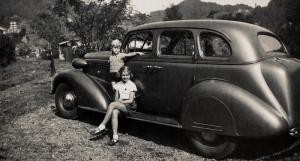
Soon afterwards, most Dutch women and children were also interned. One of my sisters had diphtheria, which proved to be a blessing because the Japanese were extremely afraid of infectious diseases. My mother, my two sisters and I were therefore allowed to remain at home for another seven months.
We were then sent to Camp Karees in Bandoeng, where life became chaotic. Imagine sharing a large house with 30 women and children, all of whom were strangers. At least we were sleeping in some form of bed. Life was difficult, and I found the daily quarrels between mothers defending their misbehaving children very depressing.
I cannot remember exactly how long we remained in Karees, but to my knowledge it was not very long. Japanese guards suddenly ordered us to pack our belongings and herded us into a nearby truck. We called them vuile gele erwten—“dirty yellow peas”—which was our nickname for these intruders.
Shortly afterwards, we arrived at the railway station and were ordered to enter the carriages as quickly as possible. It was already getting dark.
Internment at Tjideng
After a three-day train journey, interrupted by many stops in the middle of nowhere, we arrived in Batavia—now Jakarta. We were transported by truck to Tjideng, one of the most notorious civilian internment camps in the Netherlands East Indies.
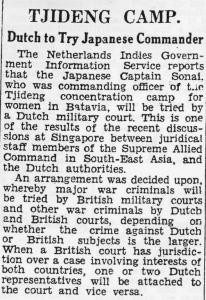
Its commander was Captain Kenichi Sonei, and he was an absolute lunatic.
Every month, when the moon was full, Sonei would go berserk. At his worst, he would wound his own soldiers or even beat them to death. The Dutch women were also at his mercy.
He would beat women with a type of club, and nobody was permitted to help them. People had to wait for several hours until the coast was clear before they could provide assistance, and often it was too late. If somebody died, nobody was allowed to touch the body. In the heat of the day, the skin of the arms and legs would adhere to the asphalt.
This was not a pleasant sight for anyone, let alone a small boy.
The newspaper excerpt was located at the Battye Library in Perth. Research undertaken by Dr Sue Summers at Curtin University, involving dozens of former Tjideng internees, supports Anton’s recollections of the camp commander’s extreme cruelty. Captain Kenichi Sonei was subsequently convicted of war crimes and executed in 1946.
Already separated from my father, I then lost my mother when she was sent to another camp because she was ill. Where did they send her? You guessed it—they would not tell us. My eldest sister, who was also ill, was then sent to another camp. Again, her destination was unknown.
I was left with my other sister, who was only 12 years old. She tried very hard to be a sister, friend and mother to me. I was also ill with bacillary dysentery and amoebic dysentery. It is difficult when you lose years of schooling.
Liberation and reunion
For me, the war ended when food suddenly became available again, including bread, flour and sugar. After years of starvation, some people literally ate themselves to death despite doctors warning them not to overeat.
A week or so later, I was told that my father had arrived to see us. I went home immediately, and there he was. He embraced me with tears in his eyes, yet I did not immediately recognise him. It took me some time to become accustomed to having a father again. That may sound horrible, but it was the experience of many young children.
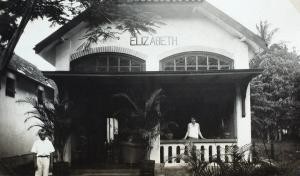
[My father was able to tell me that my mother was at St Carolus Hospital in Batavia. He stole a bicycle from one of the Japanese, and we rode there together, with me sitting on the back.
At first, I did not recognise my mother because her body was bloated by oedema. But I was so glad to be with her again, as I had always been very close to her.
There was an orphanage across the road from the hospital that temporarily accommodated many men, women and children. It was a blessing to be free again and able to walk around without fearing the sight of a Japanese soldier.
Evacuation to the Netherlands
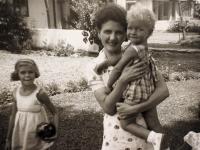
We were among the first people evacuated from Indonesia in 1945. The day we boarded the Staffordshire at Tandjong Priok, the port of Batavia, was my ninth birthday. I had nothing left to wear except a pair of underpants.
We were transported to Singapore and then transferred to the Nieuw Amsterdam, a luxury liner that had been converted into a troopship.
In Suez, we were given a surprise reception and taken aboard a cattle train into the desert. There we found four large halls, resembling aircraft hangars, called Vroom & Dreesmann, Peek & Cloppenburg, De Bijenkorf and C&A.
They turned out to be large warehouses containing food and clothing for the cold winter ahead.
When we arrived in Southampton, I was diagnosed with double pneumonia, infections in both middle ears and measles. I was transferred from the Nieuw Amsterdam to a hospital ship, which I remember as being named either Atlantis or Atlantic. I vaguely remember being aboard that ship with my mother while the rest of the family remained on the Nieuw Amsterdam.
Our arrival in Amsterdam on 7 January 1946 was far from pleasant. I was seriously ill, and it was bitterly cold. It was also the first time I had ever set foot in the Netherlands.
A military ambulance took us to my grandmother’s home in The Hague. I was told that I was so ill and so close to death that it was a credit to the care provided by my family that I eventually recovered. It was nearly a year before I was allowed to go outside again.
I remember that day very clearly. It was spring and cool. I stood in the street and looked at the houses. They all appeared to be joined together, like the houses later shown in the television series Coronation Street. I was filled with fear and disbelief.
With my hand on my throat, I asked myself: “Do I have to live here?”
Starting again in the Netherlands
The Netherlands was itself devastated by the war, and many goods could be purchased only with ration coupons. Butter was one example.
Many Dutch people resented those who arrived from the Netherlands East Indies because we received additional coupons and certain privileges while everybody was suffering from food and housing shortages.
The same year, I had to begin school. I had never attended school before, even though I was already ten years old. I was fortunate that a woman in Tjideng had taught us to read, write and do mathematics. With this basic knowledge, I did not have to begin entirely from the start.
I was sent to a bridging school where the teachers were very patient with us. It was comforting to be among other pupils who had also come from the Netherlands East Indies.
New Zealand and Australia
I never felt particularly attracted to Dutch society. After completing high school and university, I decided to go abroad. It took some time, but in 1974 I took the plunge and moved to New Zealand.
In October 1988, I moved to Western Australia. Choosing Western Australia as the place where I would work and live was like returning to paradise. It was different from the Netherlands East Indies, but it was still paradise.
I remained in contact with my family in the Netherlands and spent five months there in 2006. Before retiring, I was self-employed and operated my own advertising photography business in Australia.
I describe myself as Netherlands East Indies Dutch rather than simply Dutch. I believe this is a unique identity because we were a relatively small community.
I have returned to Indonesia many times, mostly to Bali. On one occasion, I visited East Java and saw the house in Malang where I was born. It brought back many memories.
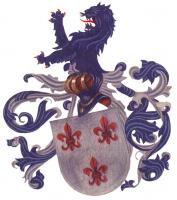
.To the best of Anton’s knowledge, the Roodhuyzen family crest dates from 1543 and originated in the small village of Katwijk aan Zee in the Netherlands. The panther-like qualities of the blue cat are believed to symbolise the strength and power required to withstand the wild sea. The helmet symbolises fighting and the defence of the land, while the three wrought-iron spears represent courage, faith and love.
Compiled by Anton Roodhuyzen and Dr Sue Summers, 2006.
Originally published by Dutch Australians at a Glance. Republished by the Dutch Australian Cultural Centre with acknowledgement.