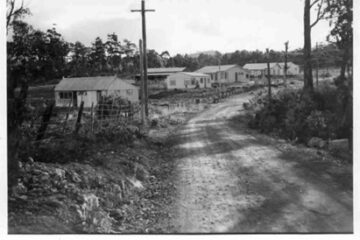
“Dutch Migration to Tasmania in 1950: Motivation, Intention and Assimilation” is a thesis by Kees Wierenga, submitted in October 2005 for a Bachelor of Arts with Honours in History at the University of Tasmania. The study delves into the experiences of Dutch migrants who relocated to Tasmania in 1950, focusing on their motivations for emigrating, their intentions upon arrival, and their efforts toward assimilation.
Central to the thesis is the group originally known as the “Groningen Seven” (G7): Barteld Jan Folkerts, Fokke Haan, Eerke Jacob van der Laan, Pieter Laning, Egbert Pinkster, Jan Thomas Steen and Jan de Vries. The composition of the migration project subsequently changed. Fokke Haan did not ultimately emigrate, while building contractor Geert de Haan joined the group and provided expertise essential to its planned building enterprise in Tasmania.
The study provides a nuanced understanding of the Dutch migrant experience in mid-20th century Tasmania, shedding light on the broader themes of post-war migration, cultural adaptation, and community formation.
An earlier online presentation divided the thesis into separate sections through the DAAAG collection. Access the chapter-by-chapter version of the thesis.
Readers’ Responses
Related research – The Groningen Seven and Little Groningen
Kees Wierenga’s 2005 thesis provides the historical foundation for understanding the organised migration of the Groningen Seven to Tasmania in 1950. It examines their reasons for emigrating, the establishment of their cooperative building enterprise and their experiences of settlement and assimilation.
The Dutch Australian Cultural Centre has developed a collection of related articles based on Wierenga’s research, including biographies of the original migrants, the history of the Australian Building Corporation, and the establishment of Little Groningen at Kingston.
Research portal
This thesis provides an important historical foundation for the DACC’s Research Portal – Little Groningen: Dutch migration, faith and community in Kingston, Tasmania..
The DACC acknowledges Kees and Irene Wierenga for their contribution to preserving this historical material and making it publicly accessible.