How Orange received its Dutch name
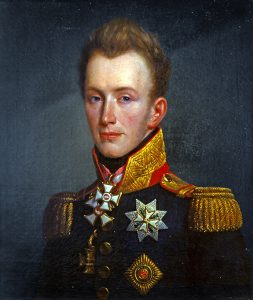
The city of Orange in New South Wales has an unusual historical connection with the Netherlands. Its name honours Prince Willem of Orange, who later became King Willem II of the Netherlands (1840–1849).
The connection originated during the Napoleonic Wars, when the young Prince served alongside British military officers, including Thomas Mitchell, who would later become Surveyor General of New South Wales.

Mitchell and the Prince were both born in 1792. They became acquainted during the Peninsular War, when both were associated with the military campaigns of the Duke of Wellington against Napoleon.
The Prince belonged to the House of Orange-Nassau, which had been forced into exile following the French invasion of the Dutch Republic in 1795. He subsequently served in the British Army and distinguished himself during the Napoleonic Wars.
After arriving in Australia, Mitchell became Surveyor General of New South Wales in 1828. He was also involved in surveying and planning the convict-built Great North Road between Sydney and the Hunter Valley.
Mitchell’s association with the Prince was commemorated in the naming of Orange. The name appeared on a parish map in 1829, although the settlement, previously known as Blackman’s Swamp, was not officially proclaimed a village until 18 November 1846.
The district forms part of the traditional lands of the Wiradjuri people, whose history extends back thousands of years before European settlement.
Rediscovering the Dutch connection
When we arrived in Australia in 1983, I was already aware of the Dutch connection with Orange. However, apart from a relatively small number of history enthusiasts, few people seemed to know why the city carried this name.
On one of our early explorations of New South Wales, we visited Orange with considerable anticipation. To my disappointment, there was no obvious commemoration of the Prince, and even the local tourist office appeared unaware of the Dutch connection.
When we returned in 2005, little seemed to have changed. However, someone who overheard my enquiries at the tourist office mentioned a winery called Prince of Orange.
This led us to Coral and Harald Brodersen – she Australian and he Danish – who had established the Prince of Orange winery.
Through their enthusiasm and hospitality, Coral and Harald had taken a particular interest in the city’s Dutch historical association. They developed relationships with the Dutch community in Australia, including the Dutch Ambassador and the Consul General in New South Wales.
Coral also presented a case of their wine to Willem-Alexander, then Prince of Orange and now King of the Netherlands, and his wife Máxima.
Their winery became known not only for its wines but also for its annual dinners, which provided opportunities to explore aspects of the region’s history.
The 2008 dinner honouring Sir Thomas Mitchell
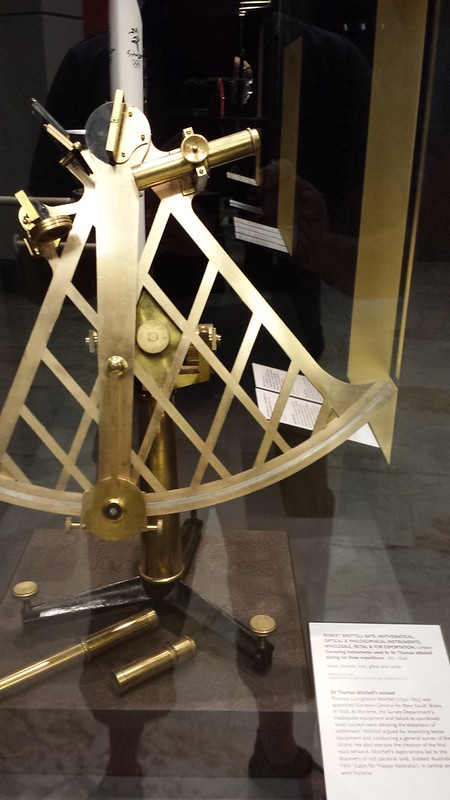
In 2008, the theme of the winery’s annual dinner was the life and work of Sir Thomas Mitchell, one of Australia’s most important early surveyors and explorers.
At the time, I was chairman of the Convict Trail Project, an organisation involved in preserving the convict-built Great North Road. Mitchell’s role in surveying this road, combined with his association with the Prince of Orange, made the occasion particularly interesting to me.
The dinner brought together people interested in the history of Orange, the Dutch connection and the legacy of Thomas Mitchell.
Among those attending was Warwick Watkins, then Surveyor General of New South Wales. He presented Coral and Harald with two framed portraits, one of Prince Willem of Orange and the other of Sir Thomas Mitchell, in recognition of their efforts to promote this historical association.
I also met Edward “Ted” Sly, a great-great-grandson of Sir Thomas Mitchell through Mitchell’s daughter Camilla Mann (née Mitchell). Ted was then 90 years old and shared an extraordinary family connection with the early colonial surveyor.
Warwick Watkins also expressed his support for the Convict Trail Project and the work being undertaken to preserve the Great North Road.
The Mayor of Orange at the time, John Davis, acknowledged the importance of recognising the city’s Dutch connection.
For me, the occasion demonstrated how an almost forgotten historical association could provide opportunities for cultural cooperation, heritage interpretation and tourism between Australia and the Netherlands.
The Prince of Orange and the Battle of Waterloo
The historical significance of Prince Willem extends well beyond the naming of an Australian city.
During the final campaign against Napoleon in 1815, the Prince commanded troops in the Allied army. He participated in the Battle of Quatre Bras and was wounded at the Battle of Waterloo on 18 June 1815.
Waterloo was not simply a British victory. The Allied forces included troops from Britain, the Netherlands, the German states and Prussia. The arrival of the Prussian army under Field Marshal Blücher played a decisive role in Napoleon’s defeat.
The battlefield, now in Belgium, was then part of the newly established United Kingdom of the Netherlands.
For the Dutch royal family, Waterloo became an important symbol of national independence and the restoration of the House of Orange.
Historian Jeroen Koch has described how the Prince’s participation in the battle, particularly his wounding, contributed to his popularity in the Netherlands and strengthened the position of his father, King Willem I.
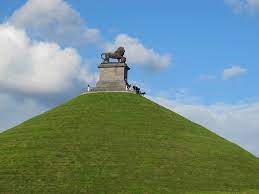
The significance attached to the Prince’s role can still be seen at Waterloo. The Lion’s Mound, constructed in the 1820s, commemorates the Allied victory and marks the traditional location where the Prince was wounded.
The Dutch painter Jan Willem Pieneman also depicted the battle in his monumental painting The Battle of Waterloo (1824), now held by the Rijksmuseum in Amsterdam. The wounded Prince appears prominently in the composition.
The Prince subsequently became King Willem II of the Netherlands in 1840.
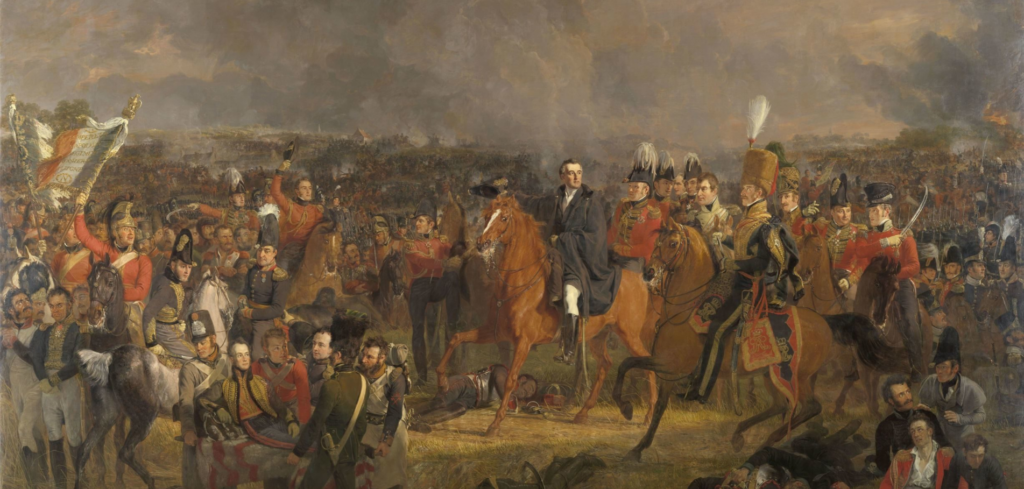
Here the Duke of Wellington is receiving the message that Prussian forces are coming to his aid. Wellington, commander of the Anglo-Dutch troops, is the central figure in this group portrait of the major players at Waterloo. Lying wounded on a stretcher in the left foreground is the Dutch Crown Prince, later King William II. Originally intended for Wellington, the painting remained in the Netherlands thanks to William I who bought the picture for his son.
An enduring Dutch-Australian historical connection
The story of Orange illustrates how events in European history continued to influence Australia long after the Napoleonic Wars.
A friendship formed during military campaigns in Europe was commemorated in the naming of a town thousands of kilometres away.
The efforts of Coral and Harald Brodersen, together with the support of local historians and civic representatives, helped bring this connection back into public awareness.
It is also a reminder that Dutch-Australian history extends well beyond the better-known periods of Dutch maritime exploration, twentieth-century migration and the Second World War.
The Napoleonic Wars themselves created other possible connections with colonial Australia. The DACC explores these in a separate article:
From the Napoleonic Wars to colonial Australia – tracing possible Dutch military connections.
The naming of Orange remains one of the more distinctive examples of the Netherlands’ historical presence in Australia’s colonial landscape.
Paul Budde (2008, updated November 2026)
Sources and further reading
- Orange City Council – A brief history of Orange. Historical background on the city’s name and establishment.
- Orange City Council – 175th anniversary. Confirmation of the village’s proclamation in 1846.
- Jeroen Koch, The King as Father: Orangism and the Uses of a Hero: King William I of the Netherlands and the Prince of Orange, 1815–1840.
- Rijksmuseum – The Battle of Waterloo. Painting by Jan Willem Pieneman, 1824.
- DACC – Orange Dutch Society. Additional information about the Dutch community in Orange, including historical newspaper clippings and the 1978 royal visit.
Prince William of Orange
The following is abstract from the article: ‘The King as Father*, Orangism and the Uses of a Hero: King William I of the Netherlands and the Prince of Orange, 1815–1840’ by Jeroen Koch. It explains the importance and popularity of Prince William.
The popularity of the Prince of Orange was above all the fruit of the Battle of Waterloo, fought on 18 June 1815. In the Netherlands the hero of Waterloo was not Arthur Wellesley, the Duke of Wellington (although King William I made the British commander-in-chief ‘Prince of Waterloo’ in 1815). It was not Gebhard Leberecht von Blücher or August Neidhardt von Gneisenau, the German heroes of the battle, either. Nor was it Napoleon, whom the French still seem to regard as the real victor. In the Netherlands the hero of Waterloo, and of Quatre-Bras two days before Waterloo, was—and is— the Prince of Orange, the former adjutant of Wellington in the Peninsular War. The legendary battle would be invoked over and over again to augment Orange rule.
Waterloo had been a gift from heaven for his father the Dutch king Willem I. It meant a lot that Napoleon was given his coup de grâce on Dutch soil (at that stage the Southern Netherlands now Belgium, his territory). First, for the Great Powers, the king realised, the new kingdom had proven its worth; it indeed was le Boulevard de l’Europe—the bulwark against renewed French aggression that the Congress of Vienna wanted it to be. Second, Waterloo, and especially the heroic role of the 22-yearold prince William, who was wounded on the battlefield, gave his father and the House of Orange the longed-for popular legitimacy, as the royal family immediately recognised.
In 1826, a Dutch lion, cast in iron, was placed upon an artificial hill on the battlefield. This also was a tribute to the Prince of Orange; although irreparably damaging the battlefield— much to the chagrin of Wellington—hill and lion mark the place where the prince was wounded.
Wilhelmina of Prussia, the king’s old mother, wrote a few weeks after the battle. ‘The complete and glorious victory of the allies, gained in the Netherlands and deciding the fate of France and all of Europe and saving the kingdom of my son from a mortal threat; and the heroic part played by my grandson it really established the Royal House and gave it firm ground’.
And every year Waterloo would be remembered: from 1816 until the Second World War, 18 June was a national holiday in the Netherlands. The remembering of the last battle against Napoleon had immediately become part of William I’s royal soft power tools.
Thomas Mitchell
Thomas Mitchell and the Prince were born in the same year, 1792. It was at the battlefields in Spain (Peninsula War 1811/1812 where the allied forces fought Napoleon) that the friendship between these two nineteen-year-old boys blossomed and when Mitchell surveyed the Central West of NSW, in 1833 he named this place Orange in honour of his friend.
At the dinner the current Surveyor General of NSW, Warwick Watkins, presented Coral and Harald with two magnificent framed pictures – one of Prince Willem of Orange and one of Sir Thomas Mitchell. Henceforth these will be proudly on display at the winery.
Because of all their good work, the Dutch connection with Orange is now much more widely known in the city itself; as its Mayor John Davis said at the dinner. It provides both Australia and the Netherlands with a great new platform to build on the work of Coral and Harald.
The relationship opportunities between these communities that arise from here on will certainly be explored. I can envisage a Prince of Orange display at the museum, perhaps a statue of the Prince and some heritage and tourism activities that will encourage both Australians and Dutch tourists to visit. Equally I wouldn’t be surprised if people from Orange, while travelling to Europe, are motivated to find out more about this Prince, and later King, of the Netherlands after which their town has been named.
Thomas Mitchell honoured in Orange
.
At the dinner I met Edward “Ted” Sly, the great great grandson of Sir Thomas Mitchell, from Mitchell’s daughter Camilla Mann (nee Mitchell). They are all long ‘livers’. Ted is 90 and his mother was also 90 before she died. So there is nearly a first-hand connection with the great ‘Explorer General’
At the event Warwick Watkins provided his support for the Convict Trail Project and was happy to link his name to the good work that is done by this organisation.
Paul Budde
Related research
The Napoleonic Wars created other, less direct connections between Dutch military history and colonial Australia. The DACC has also explored the career of Lieutenant Jonathan Warner, who served in a British regiment that incorporated Dutch colonial soldiers and later supervised convict labour on the Great North Road.
From the Napoleonic Wars to colonial Australia – tracing possible Dutch military connections
See also: Orange Dutch Society
More information:
Winery: www.princeoforangewines.com.au
Background Prince Willem of Orange (Wikepedia):
http://en.wikipedia.org/wiki/William_II_of_the_Netherlands
Background Sir Thomas Mitchell (Wikepedia): http://en.wikipedia.org/wiki/Sir_Thomas_Mitchell