Introduction
The Scheyville Migration Camp occupies an important, though often understated, place in Australia’s postwar migration history. Located about 50 kilometres north-west of Sydney, the camp served as a reception and training centre for thousands of migrants between 1949 and 1964.
For many European arrivals—including significant numbers from the Netherlands—the site represented one of their first sustained encounters with Australia. It was a place where the transition from war-affected societies to a new life in Australia began, often under modest and highly structured conditions.
From training farm to migrant centre
Scheyville’s history reaches back to 1909, when it was established as a government agricultural training farm. Its purpose was to train young men, often from disadvantaged backgrounds, in rural skills. During World War II, the site was repurposed for military use.
In the postwar period, as Australia embarked on a large-scale immigration program, Scheyville was transformed into a migrant reception and training centre. It formed part of a broader national network of camps designed to process, house and prepare new arrivals for employment. Unlike some other centres, Scheyville combined accommodation with structured training, particularly for rural and manual work.
Life in the camp
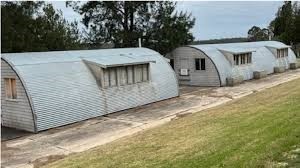
Conditions at Scheyville were basic. Migrants were housed in former army barracks, often with shared facilities and limited privacy. Daily life was organised around communal routines, including meals in dining halls and participation in training or orientation programs.
English language instruction and job placement services were central to the camp’s function. The aim was rapid integration into the Australian workforce, reflecting the government’s broader policy objectives at the time.
For many migrants, this environment came after years of upheaval in Europe. Dutch arrivals, in particular, often carried the legacy of occupation and hardship, including the Dutch Hunger Winter. While Scheyville offered stability and opportunity, it also represented a continuation of adjustment under constrained conditions.
Shared experiences and differing backgrounds
One of the defining characteristics of Scheyville was the diversity of its residents. Migrants from the Netherlands, Eastern Europe, the Baltic states, and Southern Europe lived side by side. While united by the experience of migration, their personal histories varied widely.
Some had endured severe wartime deprivation; others had experienced displacement, political upheaval, or the loss of family and homeland. These differences shaped how individuals experienced the camp environment and their early years in Australia.
The collective life within Scheyville created a shared framework for adaptation, but it also brought together a wide range of memories and expectations. This diversity remains an important aspect of the camp’s historical significance.
Cultural memory and interpretation
The legacy of Scheyville extends beyond official records. It is preserved in personal recollections, community histories, and cultural works. The experiences of migrants have been explored through interviews, radio programs, and creative expressions, including theatre.
Such interpretations highlight the emotional dimensions of migration that are often absent from administrative histories. They explore themes of displacement, resilience, identity, and belonging—issues that continue to resonate across generations.
The Macdonald College connection
After the migrant camp closed in 1964, the site entered a new phase when it became home to the Macdonald College. This continued Scheyville’s long-standing association with training and education.
The transition from migration centre to educational institution reflects a broader continuity in the site’s purpose. Across its different phases—training farm, military facility, migrant camp, and college—Scheyville has consistently functioned as a place of preparation and transition.
Scheyville today
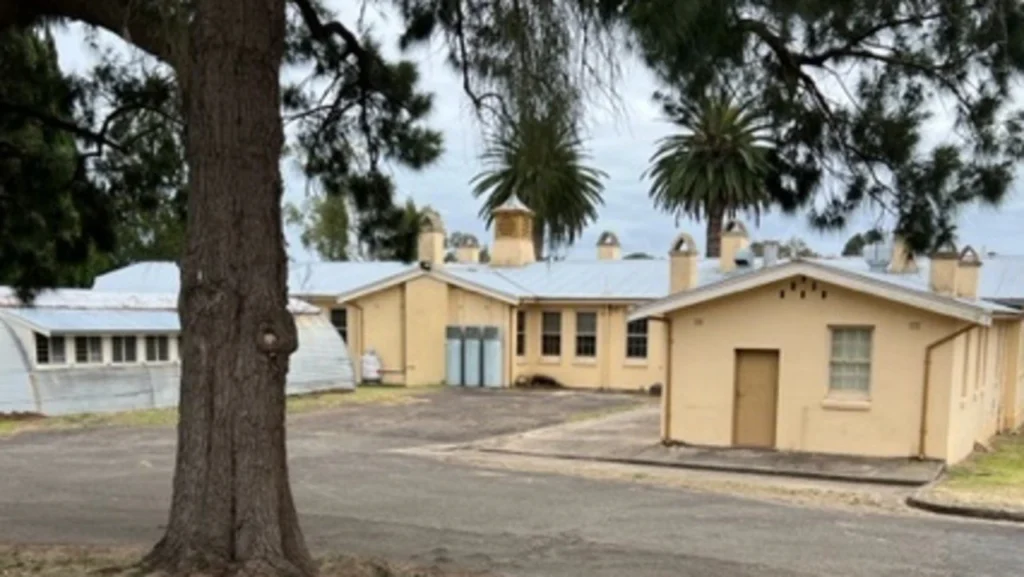
Today, the former camp forms part of Scheyville National Park. Many of the original buildings remain intact, including barracks and communal facilities, offering a rare physical record of Australia’s postwar migration infrastructure.
The site is accessible to the public and provides an important setting for heritage interpretation. Unlike more formal museum environments, Scheyville allows visitors to engage directly with the physical landscape in which these early migrant experiences unfolded.
Conclusion
Scheyville Migration Camp represents a significant chapter in Australia’s migration history. It illustrates the practical realities of postwar immigration policy, as well as the human dimension of resettlement.
For Dutch migrants and many others, Scheyville was part of a broader journey shaped by war, displacement, and the search for stability. Its legacy lies not only in its historical function, but also in the memories and stories that continue to emerge from those who passed through it.
As such, Scheyville remains an important site for understanding the shared heritage of migration in Australia.
Scheyville Migration Camp – then and now -Carla Moore explains in a SBS video from 2011
15 May 2011 @ Scheyville 100 years of this location will be celebrated. I was there briefly, as a Dutch-born immigrant. So was Carla Moore, who wrote a play about this and spoke to Anneke Boudewijn, of SBS Radio, Dutch program. While my parents’ experiences in the occupied Netherlands, during WWII were as awful and scary as others. (Hunger winter, included.) Carla’s parents brought worse memories with them. I ‘connected’ so much with her play, on several levels. The experiences and the link with the MacDonald College.
This is a YouTube video. After playing the video, press the return button to go back to the DACC Hub.
Can you help us?
We are keen to receive stories, photographs, documents and memories from people who stayed at this migrant centre. With your permission, we would be delighted to include them in this article, helping to preserve this important chapter of Australia’s and the Dutch-Australian community’s migration history. Contac: dutchaustraliancc@gmail.com
This article is part of a series on migration camps: Dutch Migration Gateways to Australia
See also: