The wartime story of Jan Bakker and his family
The story of Johannes (Jan) Bakker and his wife Maria van Rijswijk is one of war, separation, loss and rebuilding across continents. It begins in the Netherlands in the late 1930s, moves to the Netherlands East Indies during the final years of Dutch colonial rule, passes through Japanese prisoner-of-war and civilian internment camps, and reaches Australia in the uncertain aftermath of the Pacific War. It continues into post-war migrant Brisbane, where the family would eventually find stability in one of the Dutch Houses in Coopers Plains, Brisbane — a stability hard won after more than a decade of upheaval.
Marriage and life in Java
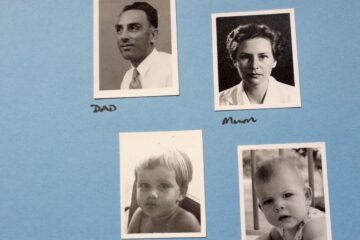
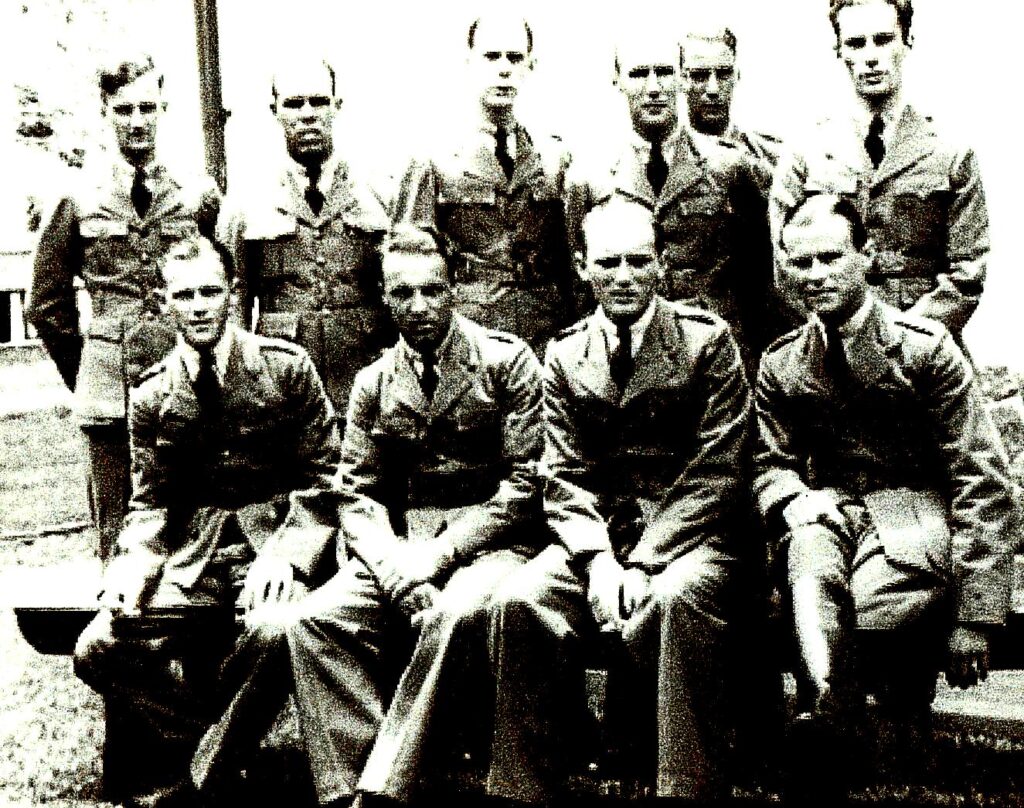
Jan Bakker was born in Wevershoef , near Hoorn, he left the Netherlands in 1939 to join the air arm of the Koninklijk Nederlands-Indisch Leger (KNIL). Like many Dutch servicemen posted overseas, he and Maria van Rijswijk (born in Nijmegen) were, in 1940, initially married by proxy. After Maria travelled to the Netherlands East Indies, the couple formally married in Andir, near Bandung, where they began their married life together.
Their early years in Java were marked by the birth of two children, Anneke and Johny. These were years in which colonial society still functioned with a degree of normality, yet beneath the surface tensions were rising. Japan’s expansion across Asia would soon draw Dutch military personnel and their families into a conflict that would transform their lives irrevocably.
Combat flying and the fall of Java
When Japan entered the war in December 1941, Dutch forces in the Netherlands East Indies were rapidly mobilised. Dutch air units attempted to slow the Japanese advance across the archipelago, often working alongside Australian, British and American forces in increasingly desperate circumstances.
Jan Bakker served as a pilot during this campaign. He flew bombing missions under dangerous conditions, with aircraft losses mounting and airfields frequently under attack. The defence of Java quickly became untenable, and in March 1942 Dutch forces were compelled to surrender. For Bakker, this marked the beginning of a long period of captivity far from his young family.
Prisoner of war in Japan
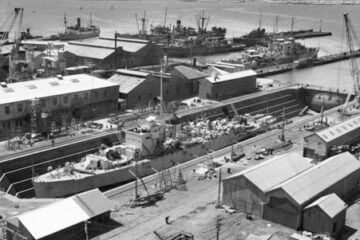
After initial detention in Southeast Asia, Jan was transported to Japan as part of the forced relocation of Allied prisoners of war. There he was assigned to heavy industrial labour, including work in shipyards and engineering facilities that supported the Japanese war effort.
Conditions were harsh. Prisoners suffered from chronic hunger, disease and exhaustion. Discipline was strict and punishment could be severe. Survival depended on resilience and mutual support among fellow prisoners.
For his earlier actions as a pilot during the February 1942 campaign, Jan was later awarded the Dutch Flying Cross. Yet this recognition stood in stark contrast to the years he spent as a captive labourer, struggling simply to stay alive.
Maria, the children and the women’s camps
While Jan endured captivity, Maria and the children were interned in Japanese civilian camps in Java. Their experience reflects the broader suffering of Dutch and Indo-European women and children during the occupation. Families were separated, accommodation was overcrowded and food supplies steadily deteriorated.
The surviving family document shows that the recollections of camp life are not limited to Maria alone. Some passages clearly describe her experiences, while others relate to sisters and close female relatives who were also interned, sometimes in different camps or under different circumstances. Together these accounts form a collective testimony of women’s wartime survival.
As the war progressed, conditions worsened. Disease spread easily in overcrowded barracks and medical supplies were scarce. In March 1944 a diphtheria outbreak swept through the camp. With no serum available, both Anneke and Johny died within the space of a week. Their deaths were a devastating blow to Maria, who had already endured prolonged separation from her husband and the daily struggle for survival.
Despite her grief, she continued to assist others, undertaking hospital duties and later work connected with the Red Cross. Like many women in the camps, she drew strength from faith and from informal support networks that developed among internees.
Liberation, fear and the Bersiap period
The Japanese surrender in August 1945 did not immediately bring safety. In Indonesia, the period that followed — later known as the Bersiap — was marked by revolutionary upheaval, violence and deep uncertainty. Dutch and Indo-European civilians remained vulnerable as nationalist forces asserted control and Allied troops attempted to restore order and organise evacuations.
The recollections associated with the Bakker family reflect this tense atmosphere. Liberation from Japanese rule did not mean an immediate return to normal life. Instead, many women and children had to stay in the camps and lived in fear while waiting for transport to safer locations.
It was during this unsettled post-war period that Maria eventually became a refugee at Camp Columbia in Wacol, near Brisbane. At that time the camp functioned as a reception and refugee centre for displaced people arriving from the former Netherlands East Indies and elsewhere in the region. It would only later, from 1948 onward, take on a more formal role as a migration centre.
Jan’s route to Brisbane and reunion
After liberation, Jan was moved through Allied processing centres, including Manila, before being flown to Australia. In December 1945 he arrived in Bundaberg for medical assessment and retraining by the regrouped Dutch air force. He was then sent to Brisbane, where he stayed at the Mornington Hotel.
Through contacts at the Dutch Club in Elizabeth Street he learned that his wife was also in Queensland. He immediately travelled to Wacol to find her. Their reunion after years of uncertainty must have been overwhelming. They had survived very different wartime paths and had not known whether the other was still alive. Relief and joy were accompanied by the painful awareness of what had been lost — including the deaths of their two children and the physical and emotional toll of captivity and internment.
Return to the Netherlands and renewed service
Like many Dutch families displaced by the war, the Bakkers initially returned to the Netherlands. There, in 1946, another daughter, Marie, was born. Yet the family’s connection to Indonesia was not yet over. Jan was later deployed again during the Dutch military operations of the late 1940s, the so-called police actions aimed at suppressing the Indonesian struggle for independence.
During this period a second daughter, Elizabeth, was born in Jakarta in 1948. By then the future of Dutch colonial rule was collapsing, and for many families the prospect of long-term stability in Indonesia had disappeared.
Migration and a new beginning in Brisbane
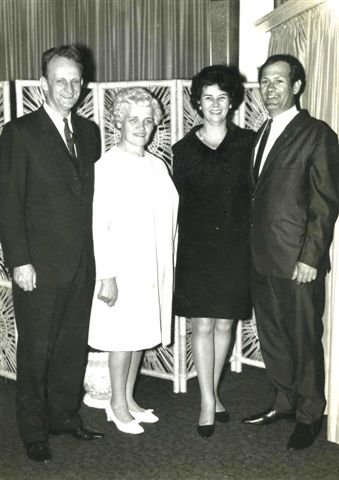
In 1950 the Bakker family decided to migrate permanently to Australia. They again passed through Wacol — this time within the context of post-war assisted migration rather than refugee evacuation. From there they moved into temporary accommodation, first in a shared house in Annerley and later in the former military camp at Rocklea.
In 1952 they were offered the opportunity to select one of the newly constructed Dutch Houses in Coopers Plains. They chose a home at 27 Macgroarty Street. These houses, built with Dutch design elements and partly using imported materials, became an important focal point for the developing Dutch migrant community in Brisbane. For the Bakkers, after everything they had endured, the house represented permanence, security and the chance to rebuild family life.
A story that continues
The Bakker story did not end with their settlement in Coopers Plains. In later years their daughter Marie married fellow Dutch migrant Fred van Breemen, whose own family had arrived in Brisbane through the post-war migration programme. Through this marriage this Dutch House remained within the extended family.
Fred and Marie eventually took over the house from her parents and continued living there. As of 2026 the home remains in family hands — a rare example of intergenerational continuity linking wartime survival in Southeast Asia with the enduring legacy of Dutch migrant life in Brisbane.
The experiences of Jan and Maria Bakker therefore connect several major strands of Dutch-Australian history. Their lives link the KNIL war effort in the Netherlands East Indies with Japanese captivity, civilian internment, the trauma of the Bersiap period, wartime refugee evacuation through Camp Columbia and later migration through Wacol. Above all, their story shows how lives broken by war were gradually rebuilt through family resilience and community support in Queensland.
Wartime recollections of the Bakker family (1939–1952)
The compiled collection below brings together the wartime memories of KNIL air force pilot Johannes (Jan) Bakker, his wife Maria van Rijswijk and several female relatives who were interned in civilian camps in Java during the Japanese occupation. The material includes personal memoir fragments, letters and retrospective family accounts describing aerial combat in the Netherlands East Indies, captivity and forced labour in Japan, civilian internment, the loss of two young children during a camp epidemic, the uncertainty of the Bersiap period and eventual evacuation through Australia. Because the document was assembled from different voices over time, the camp narratives do not always refer to the same individual and should be read as a collective family testimony. Together they provide a rare and deeply personal insight into wartime survival and the later migration of the Bakker family to Brisbane.