By Dr Nonja Peters
This paper examines the complex experiences of Dutch, Eurasian, and Indonesian evacuees who fled the Japanese occupation of the Netherlands East Indies during the Pacific War and found temporary refuge in Australia. Drawing on archival sources and eyewitness accounts, it explores their reception, living conditions, and the political tensions that shaped their stay — from cooperation under the wartime Allied alliance to postwar hostility during Indonesia’s struggle for independence. It also highlights the role of the Netherlands Indies Welfare Organisation for Evacuees (NIWOE), the influence of Australia’s White Australia Policy, and the impact of Australian trade union boycotts on Dutch shipping. The study captures the contradictions of war, where humanitarian needs intersected with political agendas, and sheds light on a largely overlooked chapter in Dutch–Australian–Indonesian history.
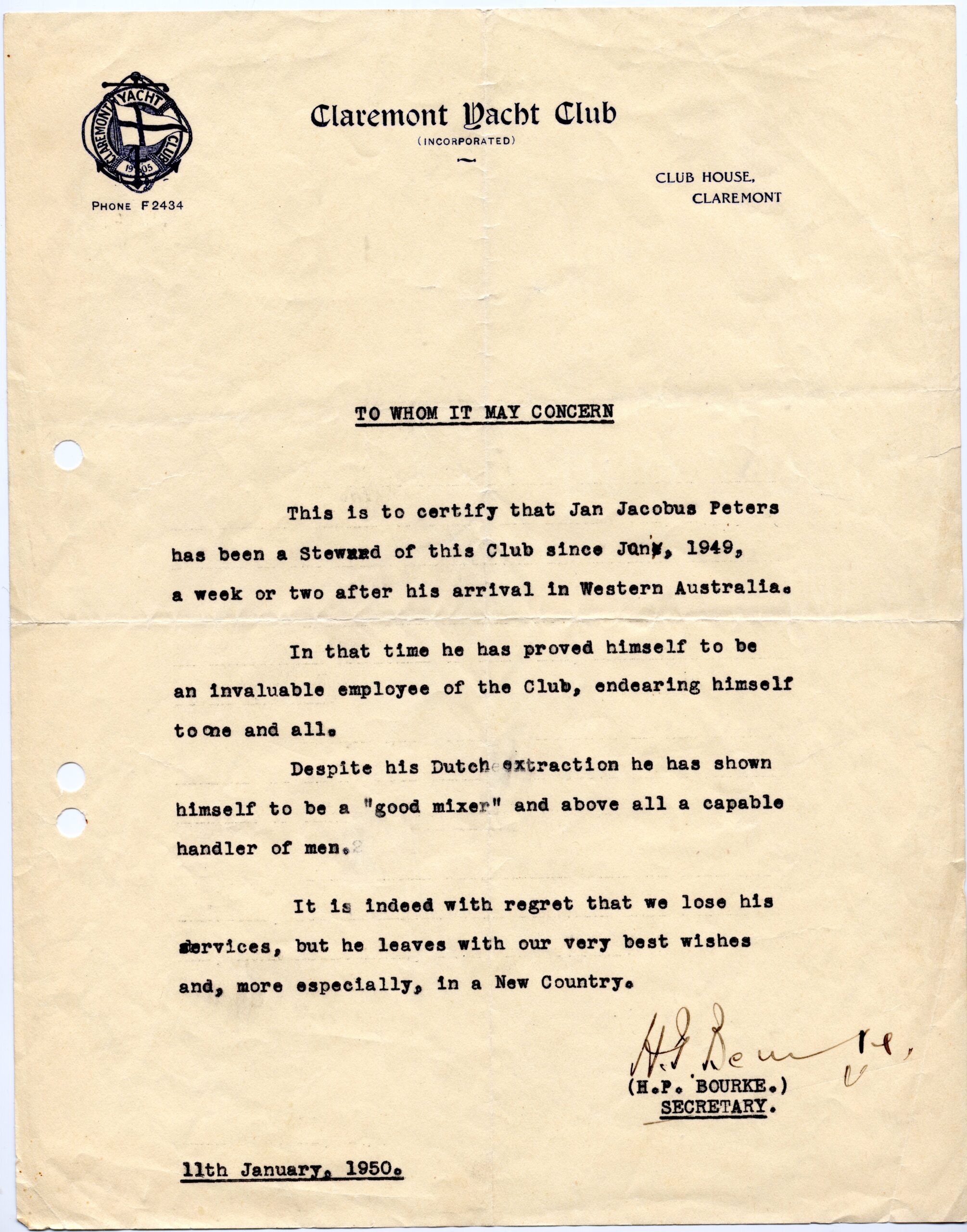
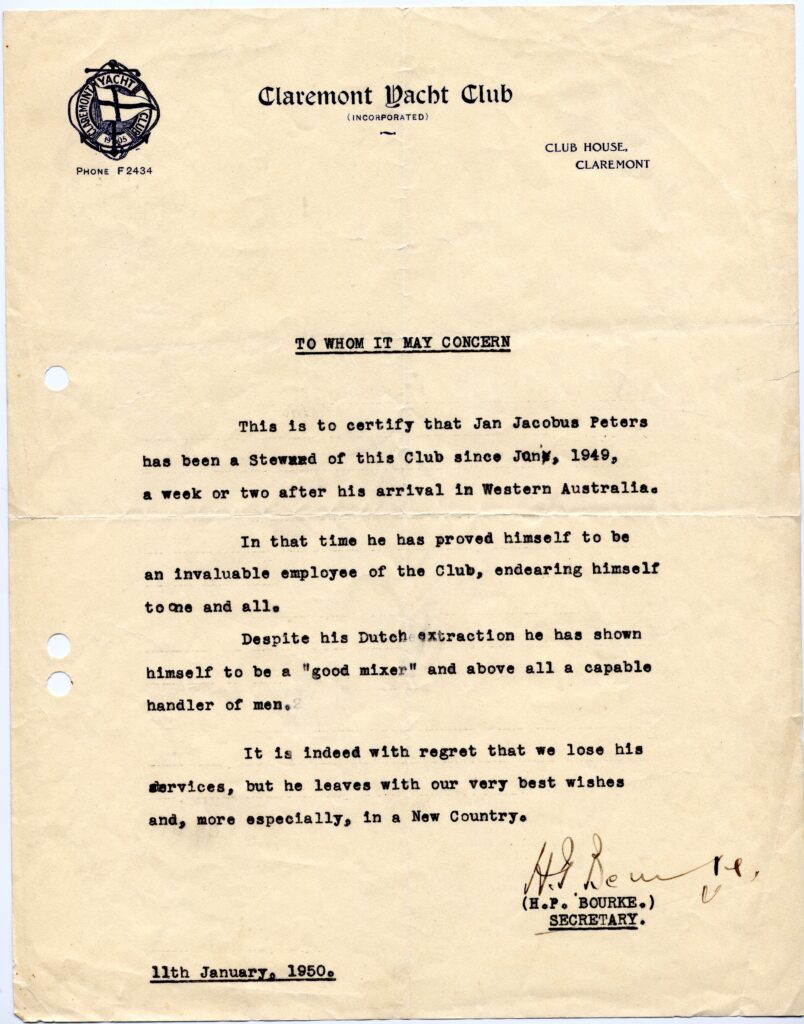
The letter below is relevant to the publication above in relation to the sentence “Despite his Dutch extraction…”
Additional evidence: Camp Columbia’s humanitarian role
Subsequent research provides further detail about the reception of former internees at Camp Columbia in Brisbane. Sophia Kruyswijk-van Thiel records the recollections of VK-KNIL member Wilma Kortenhorst, who assisted evacuees arriving by air between September and December 1945. Predominantly undernourished women and children were met at the airfield by VK-KNIL personnel, transported by military bus to Camp Columbia and received there by medical and welfare staff. The Australian Red Cross supplied basic toiletries, while VK-KNIL women later accompanied evacuees into Brisbane to obtain clothing.
This account demonstrates that Camp Columbia’s post-war humanitarian role began several months before the arrival of the Dutch “mercy ship” Tarakan in January 1946. Further details are available in Camp Columbia hosted refugees from the Japanese camps.
Sophia Kruyswijk-van Thiel, Het Vrouwenkorps-KNIL (Dutch University Press, 2004), pp. 155–156. Tilburg University Research Portal.