Introduction
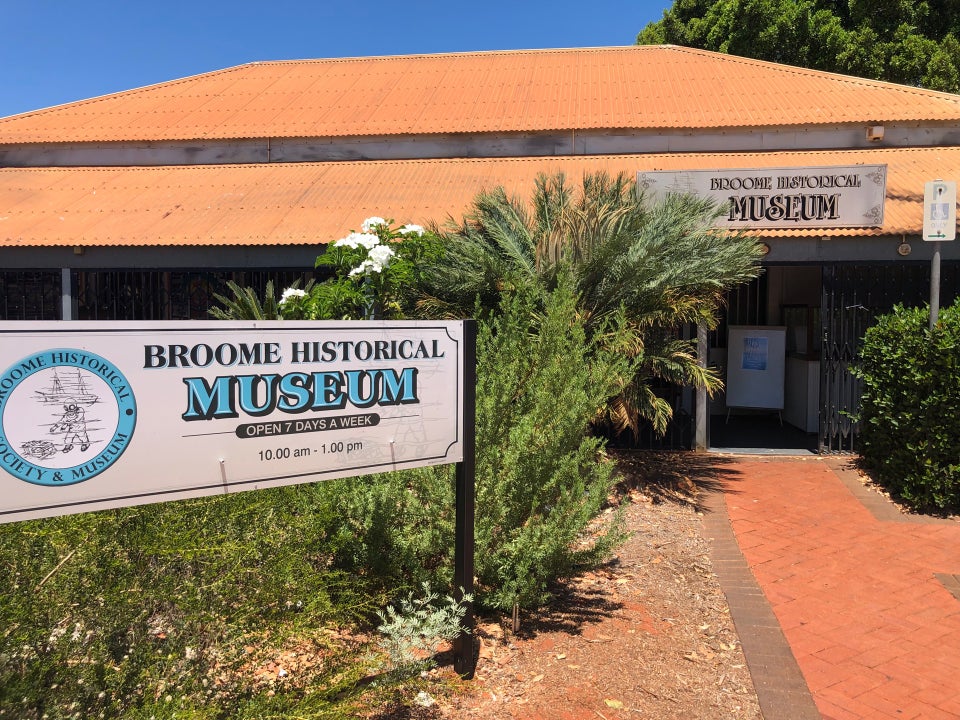
The Broome Historical Museum, operated by the Broome Historical Society, is one of Western Australia’s most important regional museums and a key institution for preserving the town’s maritime, multicultural and wartime history. Located in a small heritage precinct overlooking Roebuck Bay at Town Beach Reserve, the museum occupies several historic buildings, including the former Customs House and the Sailmaker’s Shed.
Its collections document the rapid transformation of Broome during the early months of the Pacific War, when the town became a temporary refuge for Allied personnel and civilians fleeing the collapse of the Netherlands East Indies. For Dutch-Australian heritage, the museum is particularly significant because it preserves artefacts, photographs and archival material relating to the presence of Dutch and Netherlands East Indies evacuees and to the dramatic wartime events during the Japanese air raid that unfolded in the town in March 1942.
Dutch-related objects and interpretation
The Dutch wartime story at the Broome Historical Museum is presented primarily through local historical material rather than large aircraft exhibits. Photographic collections, personal items, wartime documentation and salvaged wreck components together reconstruct the atmosphere of emergency evacuation, loss and recovery that characterised Broome in early 1942.
Displays relating to the concentration and destruction of Allied flying boats in Roebuck Bay include historic photographs of damaged or sunken aircraft, interpretive maps showing evacuation routes from Java and locally preserved material connected to rescue efforts and civilian casualties. These exhibits provide an immediate, community-level interpretation of events and complement more technical aviation displays in larger museums elsewhere in Western Australia.
A distinctive strength of the museum lies in its archival holdings relating to individuals and families connected with wartime Broome. The research collection includes manuscripts, local records, oral histories and directories documenting the sudden influx of evacuees and the profound social impact this had on a small pearling settlement.
Salvaged artefacts from the flying-boat wrecks
The museum’s air raid collection includes several artefacts recovered from flying-boat wreck sites in Roebuck Bay — sites that are today recognised as protected maritime war graves. These objects serve as poignant reminders of the loss of more than eighty men, women and children during the Japanese air attack on the town.
Among the most significant items in the collection is a large radial engine and propeller assembly from a Dutch Dornier Do-24 flying boat. Recovered in the late 1970s, the artefact represents one of the most tangible surviving relics of Netherlands East Indies naval aviation operations in Australia.
After decades of exposure to saltwater, the engine began to deteriorate due to chloride contamination. A conservation project supported by the Embassy of the Kingdom of the Netherlands, the Shire of Broome and regional community grants enabled specialist conservators to stabilise the object using sponge-blasting techniques. This treatment significantly extended the life of the artefact and ensured its continued display for educational and commemorative purposes.
Today, the preserved engine provides visitors with a direct physical connection to the dramatic events associated with the destruction of flying boats in Roebuck Bay. Detailed accounts of the aircraft type, its wartime service and the conservation project are explored in separate DACC articles.
Maritime and community context
The museum’s strong focus on Broome’s pearling and maritime heritage also helps explain why the town became an improvised anchorage for evacuation aircraft. Exhibits relating to the pearling industry and the town’s multicultural workforce place wartime aviation within a longer historical framework, demonstrating how global conflict intersected with local economic and social structures.
The museum’s extensive visual archive — including photographs of aircraft wreckage, rescue operations and temporary refugee accommodation — remains an important resource for researchers and descendants seeking to reconstruct personal experiences connected with wartime Broome.
Significance for Dutch-Australian heritage
For the Dutch Australian Cultural Centre, the Broome Historical Museum represents an essential complementary heritage institution. While aviation museums interpret aircraft technology and operational strategy, the Broome collection preserves the local and human dimension of Dutch wartime history in Australia — documenting refugee experiences, civilian loss and the long-term memory of one of the most dramatic wartime episodes on the Australian mainland.
Through its preservation of salvaged aviation artefacts, archival records and community narratives, the museum continues to contribute significantly to research, commemoration and public understanding of Western Australia’s role as an early refuge and operational staging point during the Pacific War.
Visitors can view the Dornier engine and other objects from the air raid collection at the Broome Historical Museum, which is open daily at the Town Beach heritage precinct.