The Japanese air raid on Broome

A disastrous and emotional event that left deep scars in both the Netherlands and Australia was the bombing of Broome.
After the conquest of Timor, Australia was now in striking range of Japanese bombers. After Bali fell, Darwin was bombed by the Japanese on February 19th here they also destroyed several ships of KNIL Marine fleet.
Broome had become an important Allied aviation and evacuation staging point in northern Australia because of its proximity to Java, its airfield and the sheltered waters of Roebuck Bay.
Due to the encroachment of the Japanese in the SE part of the Archipelago, the management of the Royal Netherlands East Indies Airways (KNILM) foresaw that the route via Koepang (Timor) and Darwin to Sydney would become impossible in the foreseeable future. It was decided to operate a direct Java-Broome flight with a DC-3, in preparation for the regular services to be operated later. Captain E. W. Dunlop started with the PK-AFZ from Kemajoran, Batavia (now Jakarta) on February 4, 1942. The route followed was: Batavia – Surabaya – Broome – Dalywaters – Cloncurry – Charleville – Sydney. N.B. On February 2, Captain G. van Messel left for Sydney with the PK-AFV and called at Broome on the return journey.
Description of Broome by the Dutch military in 1942
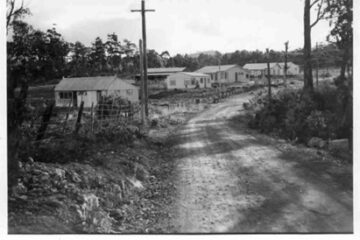
In 1942, Broome is little more than a village that would make an excellent setting for a “Wild West” film. The population consists mainly of fishermen and farmers. Everything feels primitive, including the nearby airport, where the KNILM aircraft departed from Java at intervals and arrived during Friday.
The spoiled Americans, who operate there with B-17s and B-24s, call it a “rotten” field and that agrees with the opinion of most KNILM people. On the site one feels like one is back in the pioneering days. of the aviation industry. An old sheep farmer, who runs a shop selling all kinds of things, supervises a small hangar. The further entourage consists of a few sheds for “traffic control and handling”, some military barracks and tents, a petrol truck and countless flies, which in the evening make way for equally annoying mosquitoes. Source: De KNILM vliegt door…


After the Fall of Singapore, the Japanese moved on to NEI.
Broome was now a refueling point for aircraft, located between the Dutch East Indies and the larger towns of Australia on the east coast. As a result, many Dutch refugees, from Java, among others, who had been chased away by the Japanese invasion, came to Broome. Due to its location, Broome grew into a significant Allied military base. During the fall of Netherlands East indies it has been estimated that between 6,000 and 8,000 refugees passed through Broome, mainly landed by seaplanes. Most of these were military personnel. There were approximately 250 Dutch civilian refugees, most of whom were family members of Dutch officials.
In early March three squadrons of Dornier D0-24K and Consolidated PBY-5 Catalina aircraft arrived in Broome with 132 aircrew, 27 naval personnel as passengers and 89 civilians.
Transporting people from the flying boats – moored in the bay – to ‘terra firma’ could take some time and accommodation in Broome was overstretched, so many had to stay on board of the planes for several hours as well as overnight for those arriving late in the day.
On 2 March 1942, a Japanese reconnaissance aircraft was reported over Broome. The following morning, 3 March, Japanese Mitsubishi A6M Zero fighters attacked aircraft moored in Roebuck Bay and parked at the airfield. The attack lasted only a short time but destroyed or damaged numerous Allied aircraft. Several Dutch flying boats still carried evacuees from Java, including women and children who had been unable to disembark.
The Airforce of the Royal Netherland Navy (MLD) was badly hit, the Do 24 X-1, X-3, X-20, X-23 and X-28 were destroyed, as well as the Consolidated PBY Catalina flying boats Y-59, Y-60, Y-67 and Y -70.Of them 5 Dutch Do 24K’s and 4 PNY-5’s were lost as were NEI airplanes, between 35 and 40 Dutch people were killed in the raid and some 60+ were badly injured.
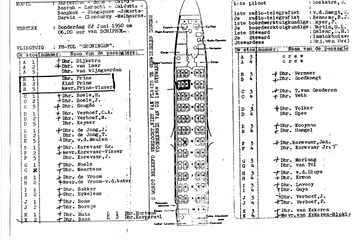
The attack also resulted in the loss of an American Liberator carrying military personnel and evacuees. The total number of fatalities associated with the Broome air raid remains difficult to establish precisely, but more than 80 people are generally considered to have died, including Dutch military personnel, women and children. In 1950, the remains of a number of Dutch victims originally buried at Broome were reinterred at the Perth War Cemetery at Karrakatta. The cemetery contains both identified and unidentified graves. For a list of the victims click here.
Paul Budde (last update November 2026)
Additional historical resources and research
The following collection brings together supplementary research, historical photographs, exhibition material, eyewitness accounts, commemorative presentations and audiovisual records relating to the Japanese attack on Broome on 3 March 1942.
These resources provide further information about the Dutch aircraft and personnel involved, the experiences of evacuees, the identification and remembrance of victims, and subsequent efforts to investigate and preserve the surviving wartime heritage.
The material has been assembled from contributions by historians, museums, archives, researchers and media organisations. Together, these resources complement the historical account above and provide opportunities for further research into the Dutch–Australian experience at Broome.
The Broome Air Battle – research by Dr Nonja Peters
Surviving aircraft remains


Broome historical exhibition
Historical photographs — Royal Netherlands Navy archives.


The lost Dutch diamonds — Carnot Bay
On 3 March 1942, PK-AFV, a Douglas DC-3-194 airliner operated by KNILM, was also shot down over Western Australia by a fighter plane from the Imperial Japanese Navy Air Service. It crash-landed on a beach at Carnot Bay, resulting in the deaths of four passengers and the loss of diamonds. These belonged to a Bandung firm named NV de Concurrent – worth an estimated £150,000–300,000 (the equivalent of A$10–19 million in 2010). It is widely believed that the diamonds were stolen following the crash, although no-one has ever been convicted of a crime in relation to their disappearance. Some of the diamonds were recouped. Full story here.
Dutch casualties and remembrance

The following is a PowerPoint presentation from Dr Nonja Peters, commemorating the Dutch victims who died in the raid.
Gus Winckel — Dutch resistance during the attack
The sole defender was Lodestar pilot Lieutenant Gus Winckel who claimed two Zeroes through groundfire. This is a link to a transcript of a radio talk presented by ABC war correspondent, Peter Hemery ‘Interview with Dutch Pilot on Broome Air Raid’ recorded in 1942. It also mentions the actions of Gus Winckel.
Aircraft losses during the attack
Aircraft destroyed or lost during the attack and associated aerial engagements included:

5 x Dornier Do24 (Marine Luchtvaardienst) flying boats
2 x Consolidated LB30 Liberator (USAAF) bomb/transport
2 x Boeing B17 ‘Flying Fortresses’ (USAAF) bomber
1 x Lockheed Lodestar (NEI) (bomber/transport
2 x Douglas DC-3 Dakotas (NEI) transport
2 x Mitsubishi A6M Zeros (Imperial Japanese Navy) fighter
8 x Consolidated PBY Catalinas (USN/MLD/RAF) flying boat
2 x Short S.23 ‘C’ Class Empire’ (BOAC/QEA/RAAF) flying boats
1 x Lockheed Hudson (NEI) bomber/transport
The destruction at Broome further weakened the remaining Dutch naval aviation capability following the collapse of the Netherlands East Indies. Surviving aircraft and personnel were subsequently reorganised for Allied service, with Australian bases, including Lake Boga in Victoria, playing an important role in flying-boat operations, maintenance and training.

SBS television report — Broome commemorations
SBS Video – Broome honours the fallen and survivors of 1942 – 7-3-2012
Archaeological research and heritage preservation
Broome plane wreck could uncover lost secrets of deadly World War II air raid (September 2022)
| A vital piece of Broome’s World War II history has been restored after spending nearly three decades exposed to the harsh elements of northern WA. Various grants, including support from the Netherlands Embassy and the Consulate General in Australia, have aided the museum to tick it off the list of things needed for the restoration. Read the full story here. |
Broome research portal
This article forms part of the Dutch Australian Cultural Centre’s research collection on Broome and the Dutch during the Second World War. The collection brings together the evacuation from Java, the Japanese air raid of 3 March 1942, personal accounts, Dutch aviation, remembrance and archaeological research.
For the complete collection, see Research Portal — Broome and the Dutch: Evacuation, Tragedy and Shared Wartime Heritage, 1942–1945.
See also:
Traces of War – Japanese air raid on Broome
Gerrit Johannes Philippus Dieterich – Flying boat captain
Date of birth: February 27th, 1914 (Den Helder, the Netherlands)
Date of death: February 15th, 1976 (Grand Rapids, United States)
Nationality: Dutch (1815-present, Kingdom)
Gerrit Dieterich flew over 2000 hrs with Dornier Wal and Dornier Do-24K-1 between 1937 and 1942 and over 5000 hrs on the Catalina PBY-5 and 5A between 1942 and 1946.
After the falling of the Dutch East Indies in Japanese hands, he was placed with No 321 Squadron which flew from China Bay on Ceylon.
In the night of 2 and 3 March 1942 he was involved in a crash landing with the Dornier Do-24K, X-36 near Anna Plains, to the south of Broome. The crew and passengers (refugees from the Dutch East Indies) were not harmed. The plane was destroyed by the crew. The other planes of the same flight arrived safely at Broome, but were destroyed during a Japanese attack, during which many refugees were killed. Source TracesOfWar
A Child’s Tale of Survival: Theo Doorman’s Story
In this 12-minute documentary, viewers are taken on a journey back to March 3, 1942, the day that World War II reached Broome in Western Australia. Titled “A Child’s Tale of Survival: Theo Doorman’s Story,” this film sheds light on the harrowing events of that day and the indelible mark it left on one survivor of the Japanese attack.
Through an exclusive interview and archival footage, the documentary captures the firsthand account of Theo Doorman, who, as a six-year-old boy, survived the devastating attack on Broome. His vivid recollections offer a unique perspective on the chaos and terror unleashed upon the unsuspecting shores of Roebuck Bay by Japanese forces.
Director Petr Salz skillfully weaves together historical context and personal narrative to paint a vivid picture of the boy’s experience. Theo’s father, the Dutch naval hero Rear Admiral Karel Doorman, battled valiantly the Japanese fleet in the Java Sea. This personal link adds depth and poignancy to Theo’s narrative as he shares his memories of the sacrifices made by his family
SBS Video – Broome March 1942 – Pilot Henk Hasselo and Navigator Frits van Hulsen remember. 8-3-2012
For many years it was a forgotten day in the Dutch and Australian history books.This year a few of the survivors of the Japanese attack on Broome harbour revisted Broome for the first time. They came from far to remember that fateful day when 88 people people died in Broome on the Western Australian coast.
See also:
Seaplane crash saved people from Japanese attack on Broome – Gerard Lemmens 1942
Dutch involved in marine archaeology in Broome
70th anniversary of the Broome Air Raid – 2012
Lieutenant David “Bo” Davis: Australia’s north-west defender and Dutch Cross of Merit recipient
A Dutch flying boat remembered: the Dornier Do-24 engine at Broome