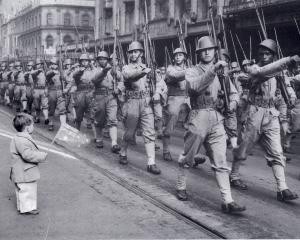
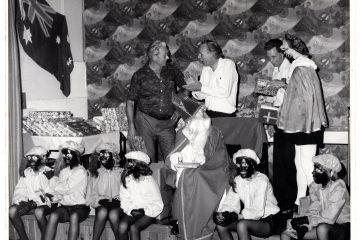
Bernhard Jan “Ben” Ruesink’s short life connected the Netherlands East Indies, occupied Europe, Britain, Australia, New Guinea and postwar Indonesia. After escaping from the occupied Netherlands by a difficult route through Switzerland, Spain, Portugal and Gibraltar, he reached Britain in January 1944. He subsequently travelled to Australia, where he trained as a military pilot within the Royal Australian Air Force training system before serving with Dutch military aviation.
His story illustrates both the international rebuilding of the Netherlands East Indies air arm in Australia and the complicated transition from the Second World War to the Indonesian struggle for independence.
Early life and military training
Bernhard Jan Ruesink was born at Rambi Poedji—now Rambipuji—in East Java on 25 December 1919. His father, Johan Gerrit Ruesink, served in the Netherlands East Indies administration and was at one time mayor of Kediri.
After the family returned to the Netherlands, Ben completed his HBS-B secondary education. In 1938 he entered the Royal Military Academy at Breda to train as an officer for the Royal Netherlands East Indies Army.
His military personnel card records his progress through the cadet ranks before the German invasion interrupted his training. He was serving as a cadet ensign in the KNIL infantry when the Netherlands was occupied in May 1940.
Escape from the occupied Netherlands
Following the closure of the military academy, Ruesink briefly studied mining engineering at Delft and later worked in the Limburg mines. He also became involved in resistance activity.
Together with fellow KNIL cadet Freddy van der Upwich, Ruesink made several attempts to reach Britain. Their first attempt, on 11 June 1941, involved trying to cross the North Sea from Noordwijk in a canoe fitted with an outboard motor. When the canoe began filling with water, they were forced to abandon the attempt and swim back.
A second escape attempt ended with their arrest near the Belgian border. Ruesink was imprisoned for approximately three months in the Scheveningen prison commonly known as the Oranjehotel.
He left the Netherlands again on 11 February 1942. His journey took him through Switzerland and subsequently through Spain, Portugal and Gibraltar. He finally arrived by ship at Liverpool on 4 January 1944—almost two years after leaving the Netherlands.
Ruesink’s successful journey made him one of the group known as the Engelandvaarders: Dutch men and women who escaped from occupied Europe to continue the struggle from Allied territory. He was awarded the Kruis van Verdienste, or Cross of Merit, in recognition of his escape and wartime service.
From Britain to Australia
Ruesink departed Britain on 23 February 1944 and arrived in Australia on 2 May. On 16 May he was posted to the Netherlands East Indies military detachment in Melbourne.
Australia had become an important centre for rebuilding Dutch and Netherlands East Indies military aviation after the Japanese occupation of the NEI. Dutch personnel trained at Australian flying schools, while operational and support units were assembled for service in northern Australia and New Guinea.
On 4 July 1944 Ruesink received a temporary appointment as a lieutenant in the infantry. On 1 August he was appointed second lieutenant pilot in the Military Aviation of the Royal Netherlands East Indies Army.
Flying training in Australia
On 18 August 1944 Ruesink was attached to No. 11 Elementary Flying Training School at Benalla in Victoria. The former wartime airfield and accommodation complex was subsequently converted into the Benalla Migrant Camp, creating an unusual connection between Dutch wartime aviation and postwar Dutch migration.
He subsequently trained at No. 5 Service Flying Training School at Uranquinty in New South Wales. Service flying schools provided more advanced instruction, including navigation, formation flying, instrument flying and operational procedures.
Ruesink’s Australian training brought him into the wider organisation supporting the Dutch squadrons. This included the Netherlands East Indies Personnel and Equipment Pool, which managed personnel, replacement crews, training and aircraft for the operational NEI squadrons.
His personnel records also contain references to No. 119 and No. 120 (Netherlands East Indies) Squadron RAAF. No. 119 Squadron was a short-lived Dutch B-25 Mitchell formation at Canberra, while No. 120 Squadron operated P-40 Kittyhawk fighters in New Guinea and the Netherlands East Indies.
Marriage and family
Ruesink’s Australian service also had a lasting personal consequence. On 24 September 1945 he married Australian-born Patricia Mary Dinley in Melbourne. Patricia had been born at Fairfield, Victoria, on 1 July 1922.
The family records name three children: David Walton, Kerry Ann Gill and Carole Jeanne. The first two children were formally legitimised by their parents’ marriage; Carole was born subsequently in Semarang. By 1948 the family was living near Bandung.
This Australian marriage and family connection make Ruesink’s story part of the wider Dutch–Australian social history created by the wartime presence of Netherlands East Indies personnel.
Postwar service in Indonesia
Following the Japanese surrender, Ruesink continued serving with Dutch military aviation in Indonesia. His work brought him into the conflict that followed Indonesia’s declaration of independence in August 1945.
On 29 July 1947 Ruesink and Sergeant Major Pilot W.E. Erkelens, flying P-40 Kittyhawks, intercepted the Indian-registered Dakota VT-CLA near Yogyakarta. The aircraft was carrying passengers and medical supplies for the Indonesian Republic.
The Dakota crashed with the loss of eight of the nine people aboard. Dutch authorities maintained that the pilots had fired warning shots and that the Dakota had struck the ground or an obstruction while flying at very low altitude. Indonesian, Indian and other contemporary accounts attributed the crash to Dutch gunfire. The incident became the subject of an international dispute and remains a contested episode of the Indonesian conflict.
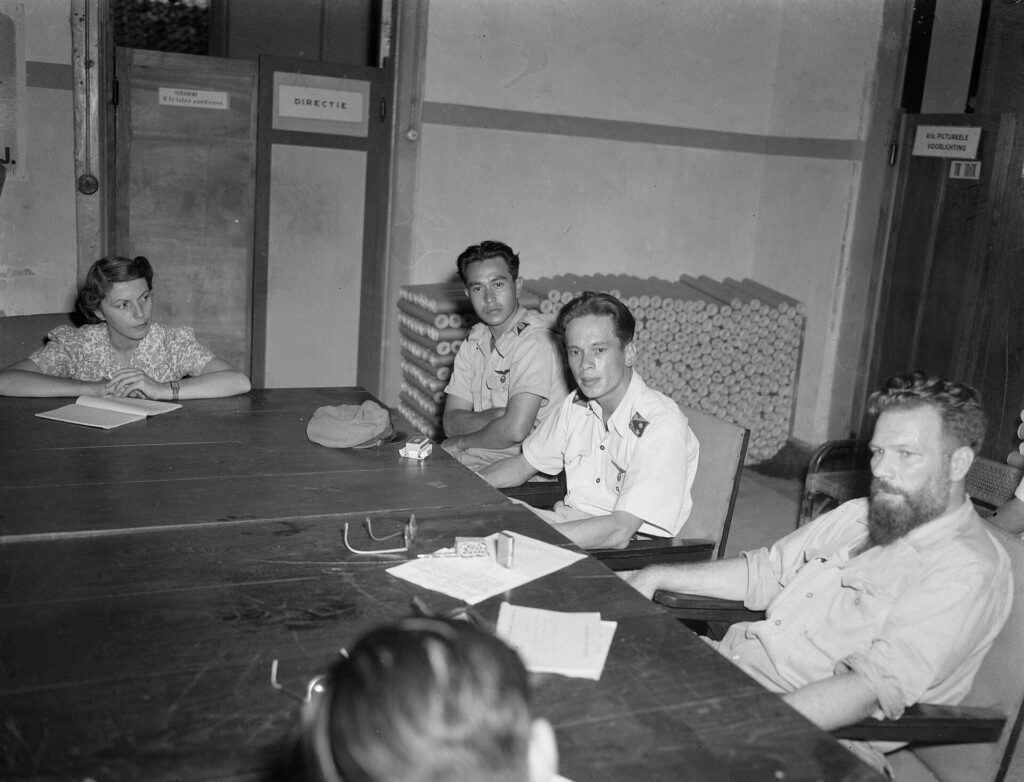
Death during Operation Kraai
Ruesink was promoted to first lieutenant pilot, but his military career ended only a few days before his twenty-ninth birthday.
On 22 December 1948, during the Dutch offensive known as Operation Kraai, he was flying a Curtiss P-40 Kittyhawk near Magelang in Central Java. His aircraft was lost near Kampong Kaliangkrik after the bombs it was carrying apparently exploded prematurely following their release.
Bernhard Jan Ruesink was buried at the Netherlands Field of Honour Menteng Pulo in Jakarta. His name is also commemorated on the military aviators’ memorial at Soesterberg in the Netherlands.
Decorations and aviation qualifications
Ruesink’s records include:
- Kruis van Verdienste—Cross of Merit, awarded for his escape from occupied Europe;
- Oorlogsherinneringskruis—War Commemorative Cross, with the applicable campaign clasps; and
- his Dutch military pilot and observer brevet.
The pilot and observer brevet was an aviation qualification rather than a military decoration.
A Dutch–Australian aviation story
Ben Ruesink’s career was brief, but it crossed several major chapters of twentieth-century history. Born in the Netherlands East Indies, trained for the KNIL in the Netherlands, imprisoned during the German occupation, and recognised as an Engelandvaarder, he eventually reached Australia and learned to fly through the Australian military training system.
His subsequent service also illustrates the difficult transition from the Allied war against Japan to the Dutch–Indonesian conflict. Remembering the complete story requires acknowledging both his courage in escaping occupied Europe and the contentious circumstances in which Dutch military aviation was employed in postwar Indonesia.
Military personnel records
The surviving personnel cards reproduced below record Ruesink’s military appointments, Australian training, family information, decorations and death. They have been preserved because they provide primary-source evidence for his unusual journey and service.
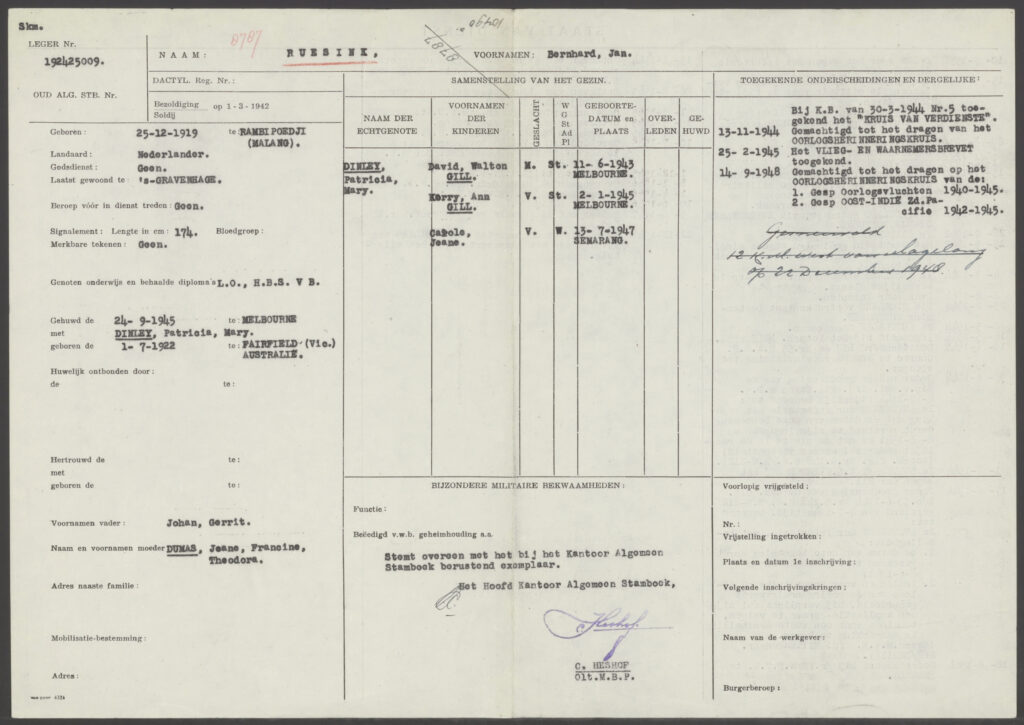
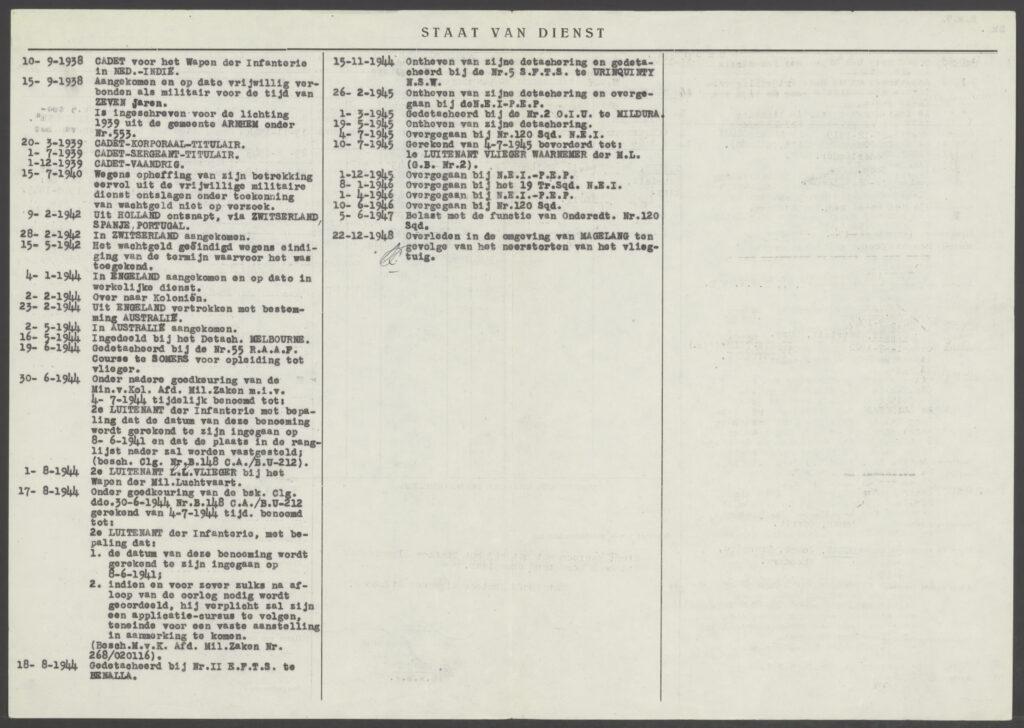
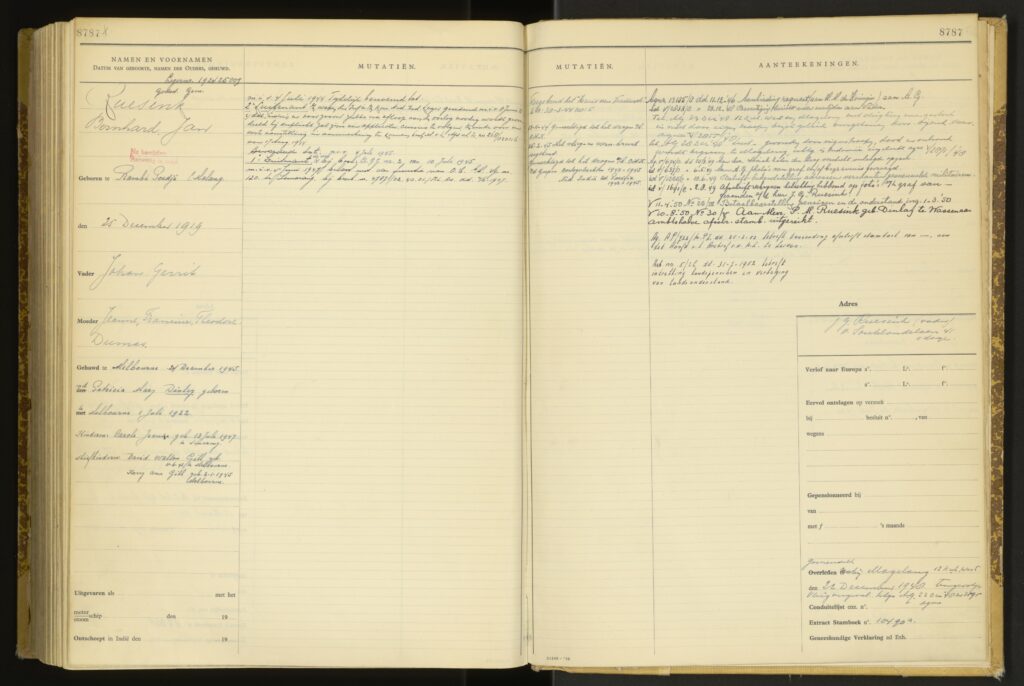
Military personnel record containing details of Ruesink’s marriage, family, decorations and death in December 1948. Source: Bronbeek records; supplied by researcher Michael Kramer, May 2026.
Related DACC articles
- DACC Air Force Research Portal
- Dutch air force activities in Australia during World War II
- The NEI Personnel and Equipment Pool Squadron—Canberra and Bundaberg
- 119 Netherlands East Indies Squadron RAAF in Australia during WWII
- 120 Netherlands East Indies Fighter Squadron RAAF—WWII
- Benalla Migrant Camp—a temporary home for Dutch and European migrants
Sources and further reading
- National Archives of the Netherlands – journey of Engelandvaarder Bernhard Jan Ruesink
- Museum Engelandvaarders – Bernhard “Ben” Jan Ruesink
- Ons Land – Bernhard Jan Ruesink
- Oorlogsgravenstichting – Bernhard Jan Ruesink
- Military personnel records preserved at Bronbeek and supplied to the DACC by Michael Kramer.