By Catherine Mahoney
The Netherlands Services Canteen was officially opened on Saturday, 29 January 1944 by the Netherlands Consul-General, Mr J. B. D. Pennik. The event was celebrated with a cocktail party attended by members of the Dutch community, Brisbane’s Lord Mayor, J. B. Chandler, and officers of the Australian and Allied Forces.
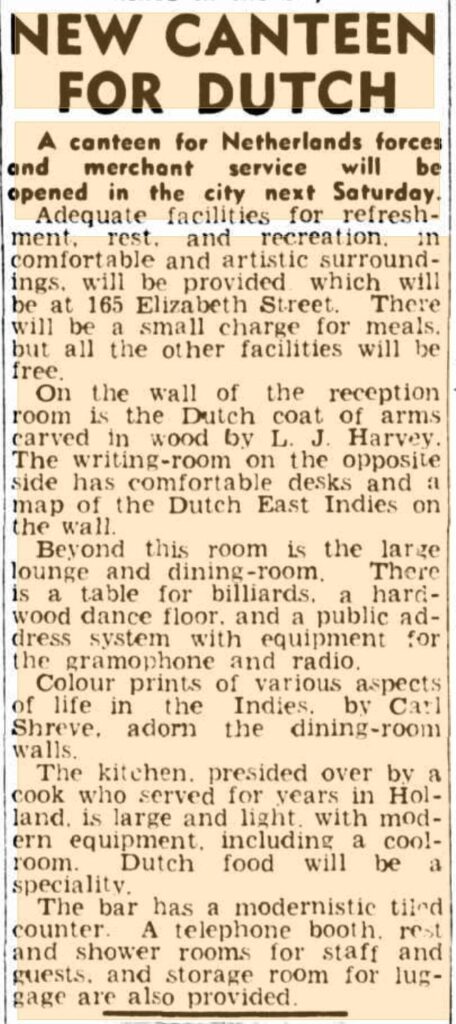
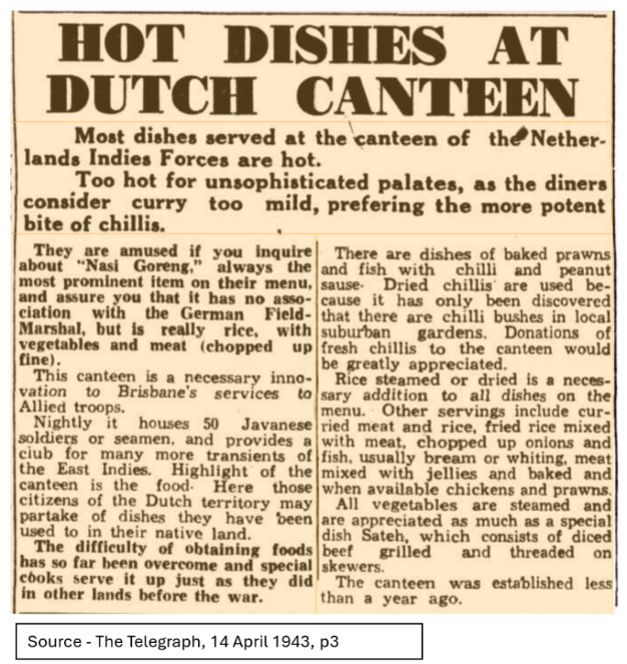
Even though the Canteen was opened in January 1944, there are news stories of its operation as early as April 1943.
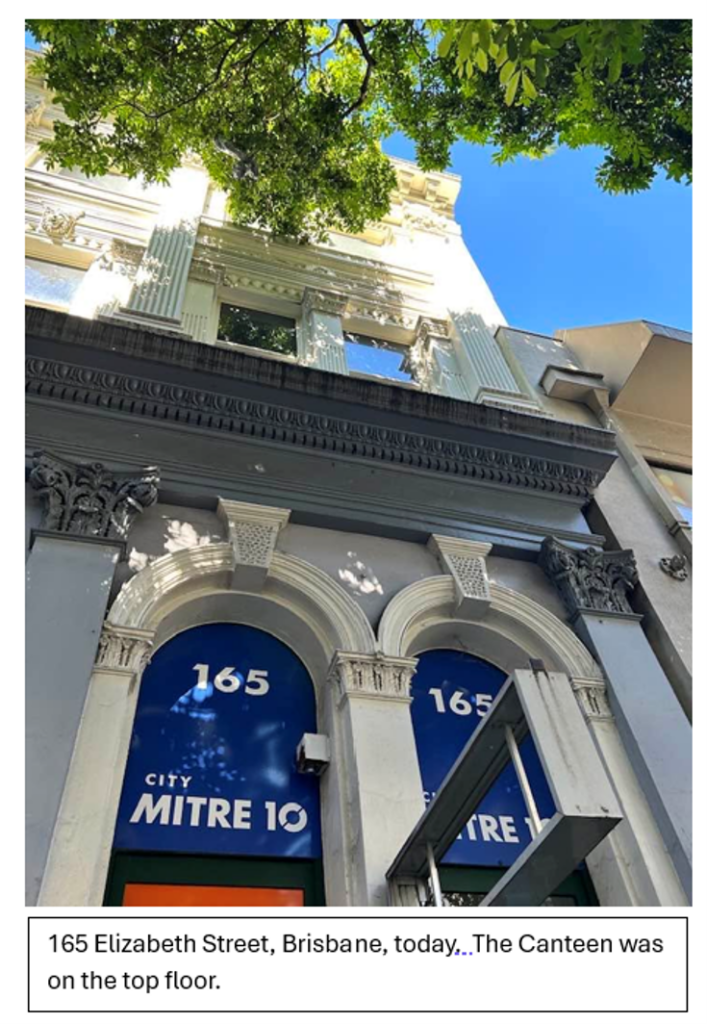
Premises were secured on Level 3 at 165 Elizabeth Street, Brisbane, with renovations directed by Dr Langer. The aim was to provide facilities for refreshment, rest and recreation in comfortable and artistic surroundings.
A Dutch Coat of Arms, carved from wood by Mr L. J. Harvey, adorned the entrance.
The Canteen lounge featured a pale green ceiling with grey beams and natural grey granite walls, providing a nice, cool atmosphere in Brisbane’s sub-tropical climate. There was a hardwood floor for dancing, fringed with tables and chairs of light coachwood, upholstered in green leather. A billiard table stood solidly at one end, and reproductions of famous Dutch paintings adorned the walls. Pale gold curtains framed the windows. Drinks were served from a small bar with a modernistic tiled counter. Music was played through speakers connected to both a gramophone and a radio.
Adjoining the lounge was a dining room that sat 80 guests and served all meals except breakfast. Mr R. R. Woonders, the chef, had served for 30 years in Holland. The menu included speciality dishes such as nasi goreng, baked prawns, fish with chilli and peanut sauce, curried meat and rice, fried rice, and satay. The kitchen was equipped with several gas stoves, boilers and a cool room. Carl Shreve prints adorned the walls, depicting various aspects of life in the Indies.
The Canteen also offered a reading and writing room, a storage room for luggage, a telephone booth, and showers and rest rooms for staff and guests.
There was a small cost for meals and drinks, but the other Canteen facilities were free.
The Canteen was controlled by a committee including President Colonel de Stoppelaar, Honorary Secretary Commander P. H. Bloem, and committee members Dr J. E. Brouwer, Mr van Leuven, Lieutenant Buys and J. H. Schweers.
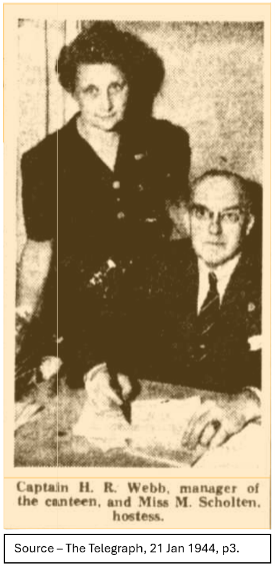
Captain H. R. Webb was the manager and Miss M. Scholten was the hostess. They were supported by staff from Australia and the Dutch East Indies.
One week after the Canteen was officially opened, a fire, thought to have been sparked by a short circuit, swept through the building just after midnight on Friday, 4 February 1944. The whole third floor, housing the Canteen, was swept by flames. Six fire units attended the blaze and had the fire under control by 1 am. The event was heart-breaking for the Canteen and its patrons, as much effort and funding had been devoted to its establishment. Regardless, the Canteen recovered quickly and was soon hosting events again.
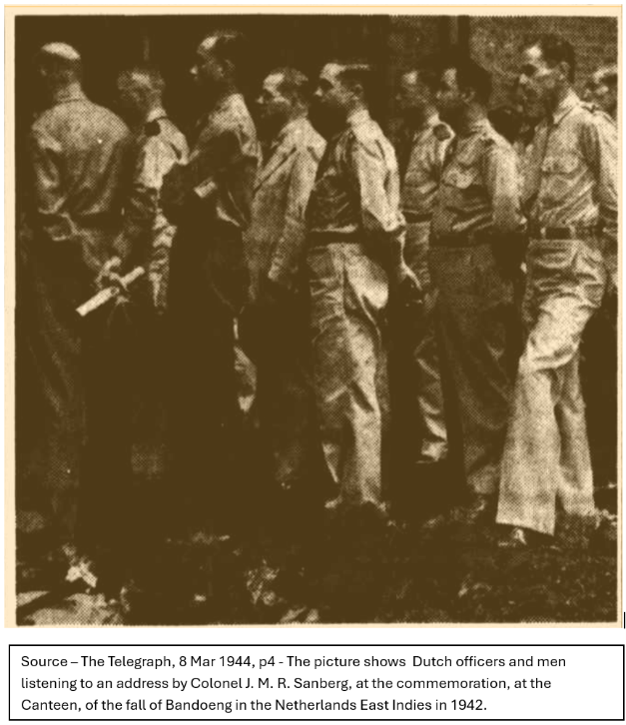
In March 1944, the second anniversary of the fall of Bandoeng was commemorated by a large gathering at the Canteen of Dutch army, navy and air transport officers and civilians. Colonel Sandberg and Dr van der Plas addressed the gathering, which concluded the night by singing the Dutch national anthem.
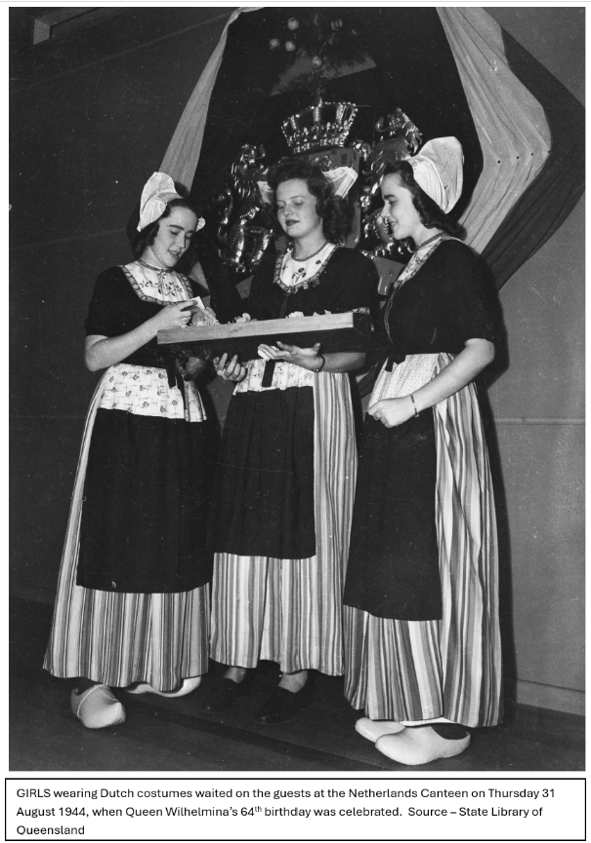
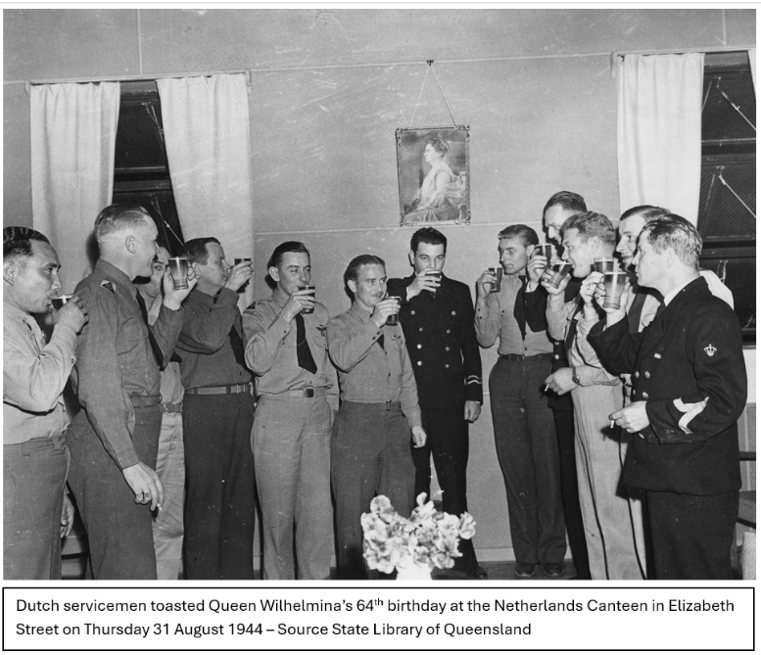
In August 1944, patrons celebrated Queen Wilhelmina’s 64th birthday at the Canteen. Girls dressed in Dutch costumes served guests, and Dutch servicemen toasted the Queen.
In September 1945, there was another party at the Canteen to celebrate Queen Wilhelmina’s 65th birthday. The Canteen continued to operate until at least June 1946, but it is unclear when it ceased operating.
July 2026