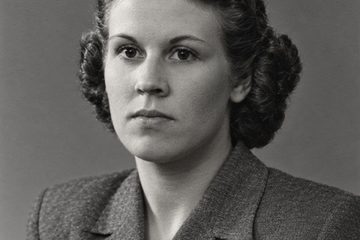
A Dutch naval engineer from the Netherlands East Indies to wartime Australia
When the story of the Royal Netherlands Navy during the Second World War is told, the focus is usually on submarines, destroyers and the men who commanded them in combat. Less visible, but equally essential, were the naval engineers who kept those vessels operational. Without their expertise, engines would fail, submarines would remain in port, and naval operations would simply not have been possible.
One such officer was Lieutenant Commander (Engineer) Klaas Cornelis Jan Lugten. Although little known today, surviving records preserved in the archives of the Bronbeek Museum in Arnhem (see below) provide an insight into the career of a professional naval engineer whose service connected the Netherlands, the Netherlands East Indies and Australia.
A career in the Marine Stoomvaartdienst
Klaas Cornelis Jan Lugten was born in Johannesburg, South Africa, around 1897. He joined the Royal Netherlands Navy as an officer of the Marine Stoomvaartdienst (M.S.D.), the engineering branch responsible for the machinery, propulsion systems and technical maintenance of Dutch warships.
Unlike executive officers, whose responsibility was the command and navigation of ships, officers of the Marine Stoomvaartdienst specialised in engineering. They were responsible for boilers, engines, generators, pumps and all the complex mechanical systems that enabled modern warships to operate. As naval technology became increasingly sophisticated during the early twentieth century, these officers became indispensable members of every ship’s company.
Service in the Netherlands East Indies
Lugten’s career was closely linked with the Netherlands East Indies, where the Royal Netherlands Navy maintained one of its principal overseas commands.
One of the earliest references to his career shows that in 1926 he was serving in Batavia as an Officer M.S.D. 2nd Class (Bataviaasch nieuwsblad.) That year he was granted leave to travel from the Netherlands East Indies to the Netherlands, demonstrating that he was already an experienced engineering officer within the colonial naval establishment.
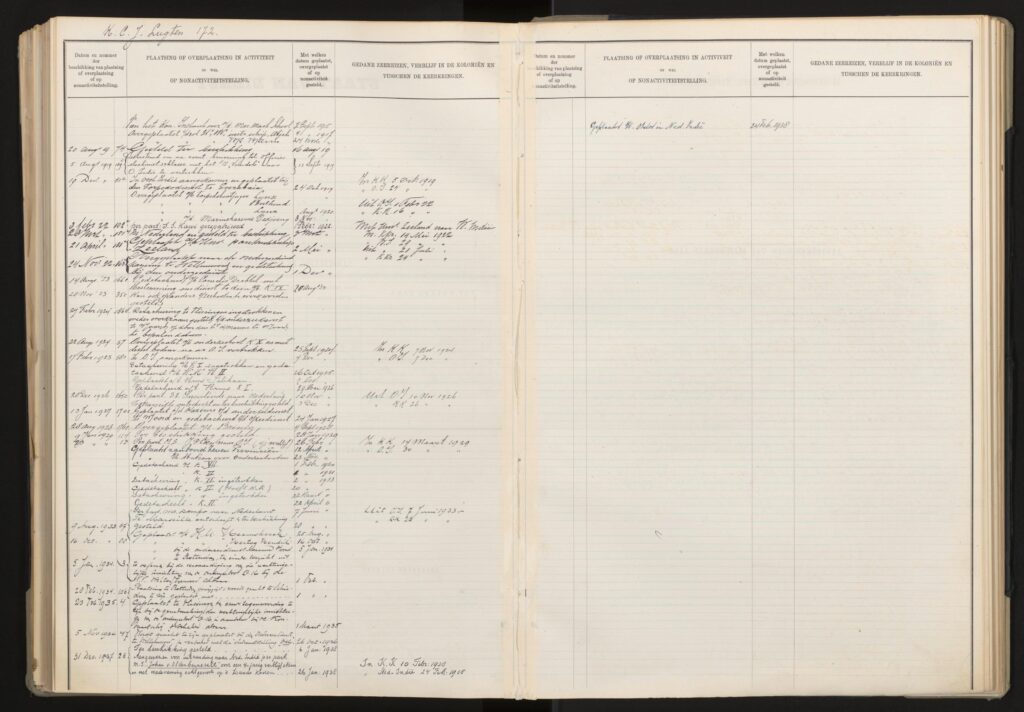
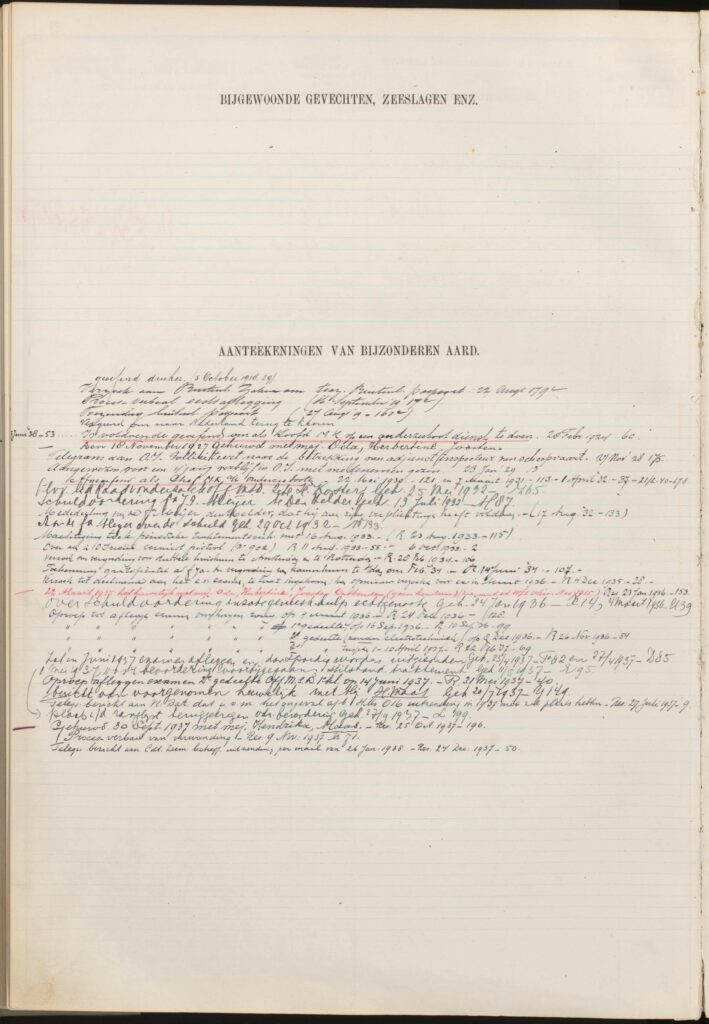
The surviving personnel records, preserved at the Bronbeek Museum, record a succession of postings, detachments, examinations and promotions during the following decade. Together they illustrate the career of a professional naval engineer rather than a frontline combat officer, reflecting the technical expertise required to support an increasingly modern fleet.
One particularly interesting entry records his assignment to the Netherlands East Indies aboard the famous passenger liner Johan van Oldenbarnevelt:
“Assigned for service in the Netherlands East Indies by the passenger liner Johan van Oldenbarnevelt, together with his wife, at government expense.”
The records also note his marriage to Hendrika Aldas on 30 September 1937, providing another personal milestone within an otherwise technical service record.
From the Indies to the Submarine Service
During the 1930s Lugten’s career advanced steadily. By 1937 he had been promoted to Officer M.S.D. 1st Class and was serving with the Submarine Service at Willemsoord in Den Helder, the principal base of the Royal Netherlands Navy’s submarine fleet (Marineblad jrg 52)..
This appointment represented one of the most technically demanding positions available to an engineering officer. Dutch submarines were among the most advanced vessels in the fleet and required highly specialised knowledge of propulsion systems, batteries, diesel engines and auxiliary machinery.
Lugten’s posting to the Submarine Service also provides an interesting connection with Australia’s wartime history. Following the fall of the Netherlands East Indies in 1942, several Dutch submarines continued the fight against Japan from Australian bases, particularly Fremantle. Their story is told here and provides important context to Lugten’s engineering career.
War and Australia
When Japan conquered the Netherlands East Indies in 1942, many Dutch naval personnel escaped to Australia, where the Royal Netherlands Navy established important operational, administrative and engineering headquarters.
Evidence from later records places Lieutenant Commander Lugten in Melbourne during the Second World War. Although his precise wartime duties remain to be established, his extensive experience as a senior engineering officer and his earlier service with the Submarine Service strongly suggest that he contributed to the technical support of Dutch naval operations from Australia.
Engineering officers rarely appear in operational histories, yet their contribution was essential. Every submarine, destroyer and support vessel depended upon skilled engineers to maintain engines, propulsion systems and mechanical equipment under demanding wartime conditions.
A personal reminder of Australia
One of the most evocative reminders of Lugten’s Australian service survives in the collection of the Bronbeek Museum.
Preserved among his personal effects is an Australian Red Ensign bearing a handwritten dedication dated Victory in the Pacific Day, 15 August 1945:
“Keep this little Australian flag as a remembrance of V.P. Day.”
The final handwritten word appears to read “Portia”, although its exact meaning remains uncertain. It may have been the name of the person who presented the flag, a nickname, or perhaps something else entirely.
Whatever its origin, the flag provides a rare and personal connection between a Dutch naval officer and Australia at the moment peace returned to the Pacific. It also reflects the friendships that developed between Dutch servicemen and Australians during the years that the Royal Netherlands Navy operated from Australian ports.
The value of the Bronbeek archives
The surviving personnel records held by the Bronbeek Museum offer an excellent example of how archival material can illuminate individual lives. These official service records document promotions, postings, examinations, overseas assignments and important personal events such as marriage, allowing historians to reconstruct the careers of officers whose contributions have often remained in the background.
Although only part of Lugten’s service record has so far been examined, it already reveals the career of a highly trained naval engineer whose professional life spanned the Netherlands, the Netherlands East Indies and wartime Australia.
Further research in Dutch and Australian archives may yet reveal additional details of his wartime responsibilities and the important engineering work he carried out in support of Allied naval operations.
Remembering the engineers
The history of the Royal Netherlands Navy in Australia is often told through its ships and submarines. Yet those vessels depended just as much on the engineers who designed, maintained and repaired them as on the officers who commanded them.
Lieutenant Commander (Engineer) Klaas Cornelis Jan Lugten represents this often-overlooked group of specialists. His surviving service record and the small Australian flag preserved in the Bronbeek Museum remind us that the Allied war effort depended not only on those who fought at sea, but equally on those whose technical expertise kept the fleet operational.
Through officers like Lugten, another important Dutch–Australian connection emerges—one that deserves to be remembered alongside the better-known stories of wartime naval operations.
Documents from the Bronbeek Archives