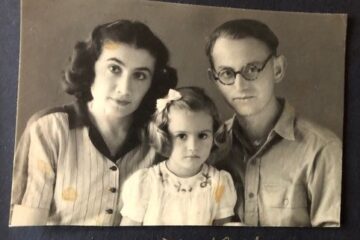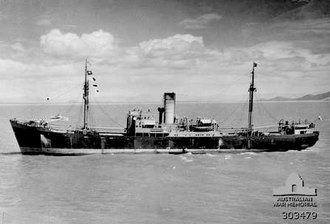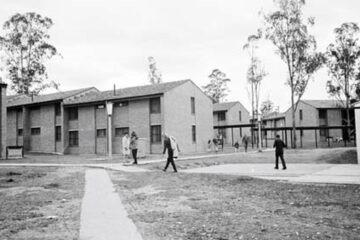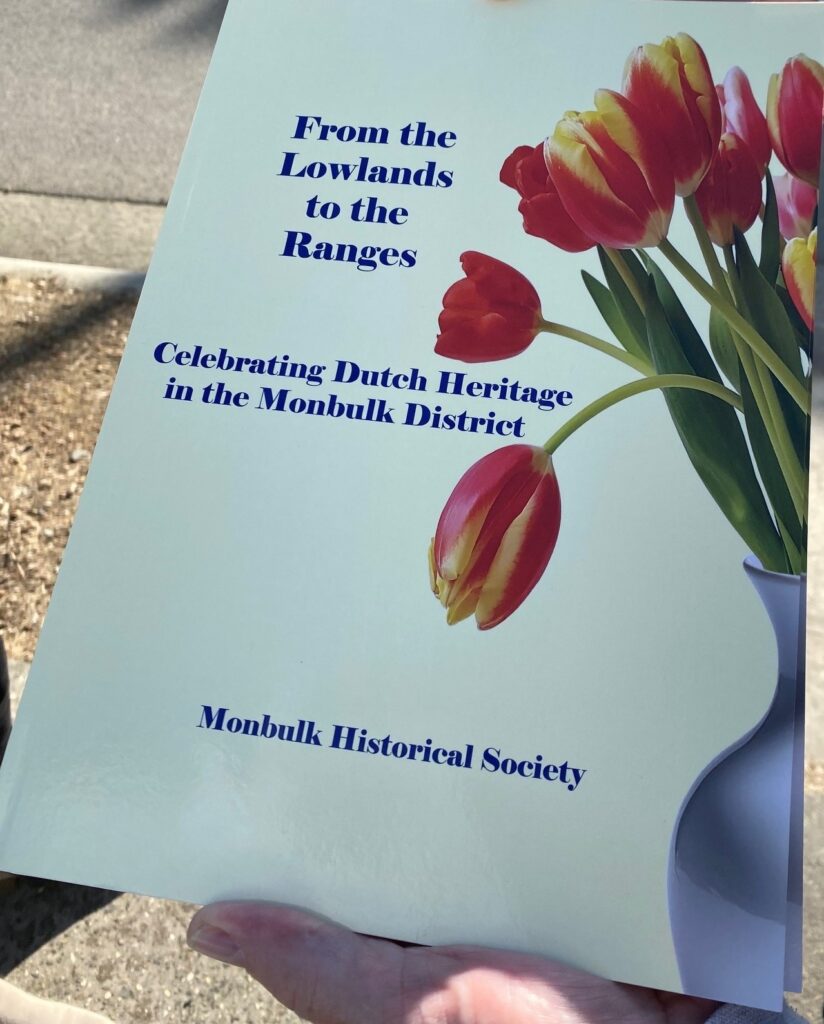
In August 2026, the Monbulk District Historical Society published From the Lowlands to the Ranges – Celebrating Dutch Heritage in the Monbulk District. The book brings together more than 50 stories of Dutch families who settled in Monbulk and the surrounding Dandenong Ranges, recording their migration journeys, early experiences in Australia and contributions to the district.
The publication grew out of the community exhibition From the Lowlands to the Ranges, presented at the Monbulk Living and Learning Centre in May 2026. The exhibition attracted hundreds of visitors and brought together family photographs, personal recollections and migration histories that had often never previously been recorded publicly.
The exhibition and book were developed through cooperation between the Monbulk and Lilydale historical societies. Jill A’Vard of the Monbulk Historical Society played a leading role in researching and compiling the stories, supported by other historical society members and participating families. The Netherlands Embassy and Consulate-General in Australia supported the community heritage project.
Dutch settlement in the Dandenong Ranges
The landscape and agricultural opportunities of Monbulk and the Dandenong Ranges attracted many Dutch migrants during the postwar decades. Some established farms, nurseries and horticultural businesses, while others found employment with Dutch families who had arrived before them.
The flower-growing industry became one of the most visible Dutch influences in the district. Dutch horticultural knowledge helped establish the area’s reputation for tulips, hyacinths and other flowers. Families such as the Van Berkels developed businesses that continued across several generations.
Yet the book goes beyond accounts of commercial success. It also documents the difficulties encountered by migrants establishing themselves in unfamiliar surroundings. Some initially lived without electricity or running water. Others passed through migrant reception centres such as Bonegilla before finding employment and accommodation in the Monbulk district.
Many arrived carrying memories of the German occupation of the Netherlands, wartime hunger, forced labour, imprisonment or family separation. These experiences were seldom discussed in an Australia that expected migrants to assimilate quickly and concentrate on building a new life.
Making the “invisible migrants” visible
Dutch migrants have sometimes been described as Australia’s “invisible migrants” because they generally learned English quickly, intermarried and integrated into Australian society. Their apparent success, however, also meant that their distinctive migration experiences were often overlooked.
In many families, the Dutch language was not passed on to the next generation. Family stories and memories consequently became vulnerable as members of the original migrant generation grew older.
The Monbulk project demonstrates the important role local historical societies can play in recovering this history. By collecting oral histories, photographs and family records, the project has preserved not merely the experiences of individual families but the story of an entire Dutch-Australian community.
The resulting book provides a permanent record of how Dutch migrants helped shape the social, agricultural and economic development of Monbulk and the Dandenong Ranges. It also allows their children and grandchildren to understand more fully the experiences and sacrifices behind the lives they inherited in Australia.
A valuable addition to Dutch-Australian history
From the Lowlands to the Ranges is an important contribution to the documentation of Dutch migration in Australia. Its regional focus complements broader national histories by showing how migration unfolded within one particular community.
Projects of this kind are especially valuable because they preserve personal stories that may otherwise never enter public archives or published histories. Collectively, these local accounts deepen our understanding of the diversity of the Dutch-Australian migration experience.
The book was launched at the Monbulk Living and Learning Centre on 2 August 2026. Information about its availability can be obtained from the Monbulk Historical Society.
Further reading
From De Zilk to Monbulk: The Van Berkel Family and the Flowering of a Dutch-Australian Industry