Rebuilding an intelligence service after the fall of the Netherlands East Indies
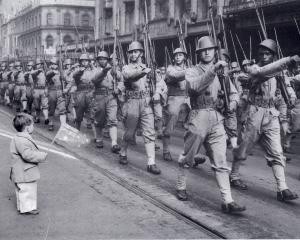
When Japanese forces conquered the Netherlands East Indies in early 1942, the Dutch colonial government lost not only its territory but much of the intelligence network on which military and civil authorities had depended.
Australia became the principal base from which the Dutch attempted to rebuild that capability.
The Netherlands Forces Intelligence Service—generally known by its English-language acronym NEFIS—developed in Australia into the principal Dutch organisation responsible for collecting, analysing and distributing intelligence concerning the Japanese-occupied Netherlands East Indies.
Its work extended far beyond conventional military intelligence. NEFIS collected information from refugees and evacuees, interrogated people arriving from occupied territory, analysed captured documents, prepared maps and reports, monitored political developments and developed clandestine operations to re-establish contact with the occupied archipelago.
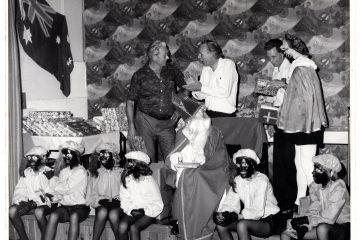
Dutch personnel worked alongside Indonesians from the Netherlands East Indies whose languages, regional knowledge and local connections were essential to many of these activities.
NEFIS therefore became one of the most important links between the Dutch government and military authorities in exile and the Allied intelligence system operating from Australia.
Rebuilding in Australia
The collapse of the Netherlands East Indies occurred with extraordinary speed.
Following the attack on Pearl Harbor in December 1941, Japanese forces advanced through Southeast Asia. The Allied defence of the Netherlands East Indies collapsed. The surrender was agreed at Kalijati on 8 March, and the general capitulation took effect on 9 March 1942.
Dutch government officials, military personnel, naval forces, airmen and civilians who escaped increasingly regrouped in Australia.
Among the urgent problems confronting them was intelligence.
The Allies needed detailed information about Japanese forces occupying an enormous archipelago stretching thousands of kilometres from Sumatra to Dutch New Guinea. They needed information about airfields, ports, shipping, roads, military installations and Japanese troop movements.
The Dutch faced an additional problem. They had lost contact with much of the territory they still regarded as part of the Kingdom of the Netherlands.
An intelligence capability therefore had to be reconstructed from exile.
The creation of NEFIS
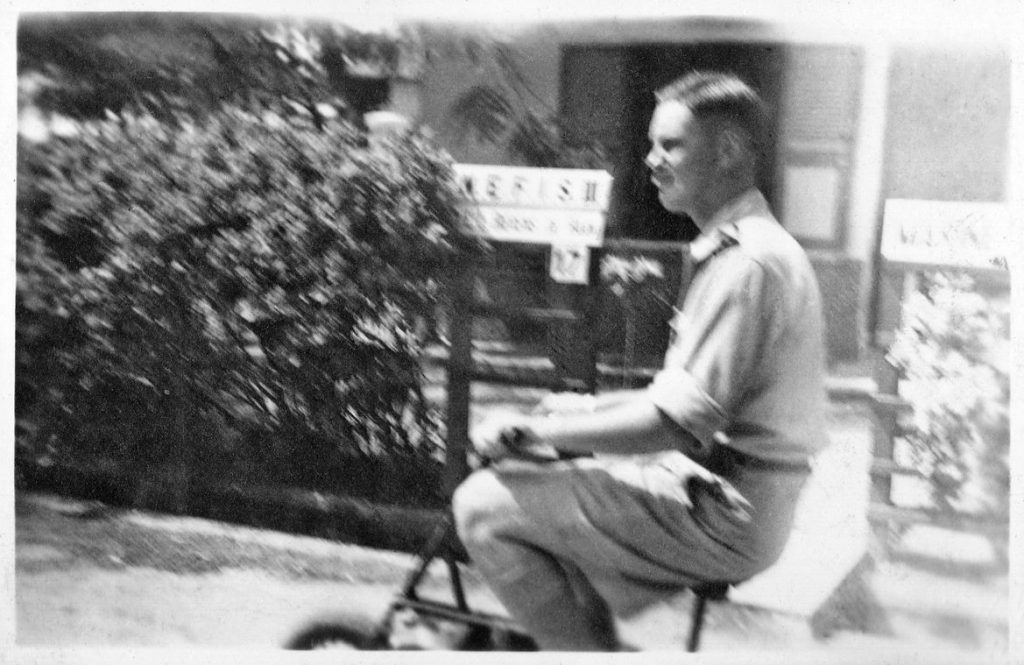
Dutch intelligence activity was reorganised in Melbourne during 1942. Its immediate predecessor was the Marine en Leger Inlichtingendienst (MLID), or Navy and Army Intelligence Service, which combined personnel and functions from the Royal Netherlands Navy and the Royal Netherlands East Indies Army (KNIL). The English-language name Netherlands Forces Intelligence Service was already used informally in Allied contacts, but the organisation was formally reorganised as NEFIS on 1 April 1943. Its general-intelligence and security functions became NEFIS I and NEFIS II, while the personnel engaged in active intelligence and special operations within the Allied structure became associated with NEFIS III.
It operated within a complicated Allied environment. Australian, American and British intelligence and special-operations organisations were simultaneously being established or reorganised following the Japanese advance.
NEFIS nevertheless remained a specifically Dutch organisation.
Its primary geographical responsibility was the Netherlands East Indies, and this gave it an expertise that the other Allies urgently required.
Pre-war government records, maps and administrative knowledge could be combined with information obtained from people who had escaped the occupied territories. Dutch officials knew the structure of the colonial administration and economy, while Indonesian personnel could provide languages, cultural knowledge and familiarity with local communities and geography.
This combination became one of NEFIS’s principal strengths.
More than secret agents
The dramatic clandestine missions into Japanese-occupied territory have understandably attracted considerable attention, but they represented only part of NEFIS’s work.
Much intelligence work was less spectacular.
Information arriving in Australia had to be collected, assessed, compared and distributed to Allied commands.
People arriving from the Netherlands East Indies could possess valuable information even when they did not initially realise its military importance. Details about Japanese units, aircraft, shipping, fuel supplies, food conditions, local officials, infrastructure or attitudes among the population could contribute to a much larger intelligence picture.
Documents and maps also required analysis.
NEFIS therefore functioned as an intelligence organisation in the broad sense: collecting information, evaluating it and turning it into material useful to Dutch and Allied decision-makers.
An organisation with several functions
As NEFIS developed, its work became divided into specialised sections dealing with different aspects of intelligence.
These included the collection and analysis of military and other information, security and counter-intelligence, and clandestine operations.
The operational component became particularly important because Japanese occupation had cut conventional communications with much of the Netherlands East Indies.
If information was to be obtained directly from occupied territory, people had to be sent back.
This became the responsibility associated particularly with NEFIS III.
Its operatives were prepared for clandestine reconnaissance, wireless communications and intelligence gathering behind Japanese lines.
Many were Indonesians from the NEI serving alongside Dutch personnel.
Their operations form a separate and particularly dangerous chapter in the history of NEFIS and are examined elsewhere in this research portal.
Working within the Allied intelligence system
NEFIS could not conduct this work independently.
Sending agents thousands of kilometres into Japanese-controlled territory required aircraft, submarines, ships, radios, training establishments, intelligence coordination and forward bases.
This made cooperation with Australian and other Allied organisations unavoidable.
The Allied Intelligence Bureau and Australian special-operations organisations became particularly important partners. Dutch submarines and aircraft also provided operational support.
At the same time, cooperation produced disputes over responsibility and control.
The Allies were primarily interested in intelligence that would assist military operations against Japan. Dutch authorities shared that objective but also wanted broader information about political, economic and social conditions within the Netherlands East Indies.
They were already considering what would happen when Japanese occupation ended.
Consequently, NEFIS was both part of the Allied intelligence effort and an organisation pursuing specifically Dutch interests.
Indonesian personnel
The description of NEFIS simply as a “Dutch intelligence service” can obscure an important part of its history.
Many of the people involved in operations were Indonesians serving within Netherlands East Indies military and government organisations.
They possessed skills that European personnel often lacked: knowledge of local languages, communities, customs and terrain and, in some cases, the ability to move through occupied territory less conspicuously.
Australian wartime records demonstrate the substantial participation of NEI personnel in the early intelligence organisations established in Australia.
This multinational character continued into later clandestine operations.
Dutch command structures and colonial relationships inevitably shaped these arrangements, but operationally the secret war depended heavily upon Indonesian personnel.
Recognising their contribution is essential to understanding the history accurately.
Training for occupied territory
Preparing people to return secretly to Japanese-occupied territory required specialist training.
One important centre was the Z Experimental Station at Fairview House near Cairns.
Originally established within the Australian special-operations system, ZES trained Australian, Dutch and Indonesian personnel in skills required for clandestine operations.
As organisational responsibility changed, the Cairns establishment became increasingly associated with NEFIS III.
Agents learned communications, weapons, demolitions, survival and other skills required for operations behind enemy lines.
Dutch concerns about the suitability of some early Allied training for conditions in the Netherlands East Indies eventually contributed to NEFIS taking greater responsibility for preparing its own personnel.
The history of ZES and its Dutch and Indonesian personnel is examined separately in this portal.
Communications
Clandestine operations depended upon communications.
Agents operating inside enemy territory needed radios, trained wireless operators, codes and receiving stations capable of maintaining contact across enormous distances.
Australia consequently developed an extensive network of wartime communications facilities.
Dutch wireless operations formed part of this system, with facilities in several Australian locations supporting communications between Dutch authorities, military units and intelligence operations.
Communications could determine whether a clandestine party survived. Without reliable radio contact, headquarters could not receive intelligence, provide instructions or arrange extraction.
The DACC Research Portal therefore treats the Dutch wartime wireless network as an important part of the NEFIS story in its own right.
From Melbourne to Brisbane
Melbourne was initially the principal centre of Dutch intelligence activity in Australia.
As the Allied war moved north, however, Brisbane became increasingly important.
General Douglas MacArthur’s General Headquarters, Southwest Pacific Area, had moved from Melbourne to Brisbane in the second half of July 1942, and numerous Allied military and intelligence organisations subsequently operated in or around the city.
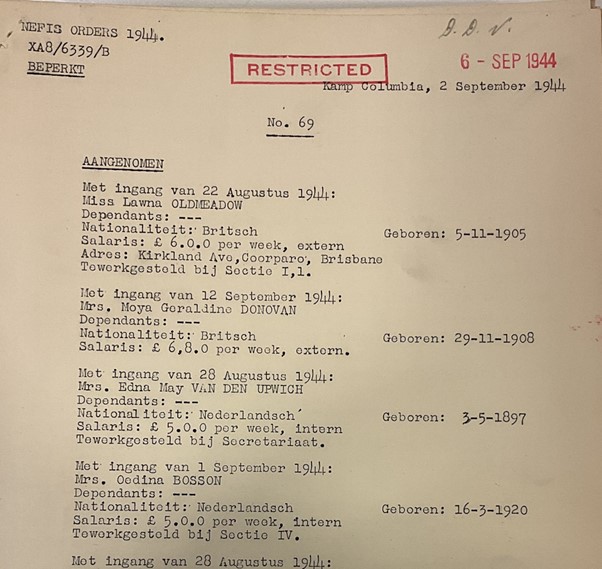
NEFIS eventually transferred its headquarters to Camp Columbia at Wacol in Brisbane.
Camp Columbia developed into an important Dutch and Netherlands East Indies government and military centre. From 1944 it accommodated elements of the Netherlands East Indies government-in-exile as well as Dutch military and administrative organisations.
The transfer placed NEFIS closer to the major Allied command structures directing the advance towards the Netherlands East Indies.
Intelligence and the return to the NEI
By 1944 and 1945 the strategic situation had changed fundamentally.
The Allies were advancing through New Guinea and towards the Philippines and eastern Netherlands East Indies. Japanese forces that had seemed almost unstoppable in early 1942 were increasingly isolated.
NEFIS intelligence therefore acquired another purpose.
Information was needed not only about Japanese military forces but also about conditions in territories to which Allied and Dutch authorities expected to return.
Political attitudes, local leadership, economic conditions and the growing Indonesian nationalist movement consequently became increasingly important.
This brought intelligence into closer contact with the Netherlands Indies Civil Administration (NICA), which had been established to restore civil government in territories recovered from Japan.
The distinction between military intelligence, civil affairs and Dutch plans for postwar administration consequently became increasingly difficult to maintain.
A difficult operational record
NEFIS clandestine operations were extremely dangerous and their record was mixed.
Some parties gathered valuable intelligence and returned safely. Others disappeared, were betrayed or were captured and executed.
Early operations demonstrated how difficult it was to send agents back into territories that had been under Japanese control for months or years.
Local circumstances had changed. Japanese security organisations were active. Communications were difficult, and people expected to assist Dutch agents could themselves face execution.
Indonesian political attitudes were also changing rapidly.
The heavy losses suffered by some early parties resulted in changes to training, operational planning and security.
These failures should not obscure NEFIS’s broader intelligence contribution, but neither should they be excluded from its history.
From intelligence war to political conflict
Japan’s surrender in August 1945 ended one struggle but immediately exposed another.
The Indonesian nationalist leaders Sukarno and Mohammad Hatta proclaimed Indonesian independence on 17 August.
Dutch expectations of restoring the pre-war colonial administration now confronted an Indonesian independence movement transformed by the experience of occupation and revolution.
The intelligence collected during the final years of the war therefore acquired political significance as Dutch authorities attempted to understand conditions in the archipelago they expected to govern again.
The wartime history of NEFIS consequently leads directly into the much more difficult postwar history of decolonisation and the Indonesian struggle for independence.
An intelligence service created in exile
NEFIS was a product of military defeat.
The Netherlands East Indies had been occupied, established intelligence networks had collapsed and the Dutch had been forced to reconstruct an intelligence organisation thousands of kilometres from the territory it was intended to understand.
Australia made that reconstruction possible.
From Melbourne, Brisbane, Cairns and other locations, Dutch and Indonesian personnel collected and analysed intelligence, maintained communications and prepared clandestine missions into Japanese-occupied territory.
They worked within a much larger Allied intelligence system but retained specifically Dutch responsibilities and objectives.
NEFIS therefore occupies an unusual place in Australian wartime history.
It was a Dutch intelligence service operating in exile, heavily dependent upon Australian and Allied support, employing Dutch and Indonesian personnel and preparing for a return to a Netherlands East Indies that, by the end of the war, had changed profoundly.
Related research in this portal
This article provides an overview of NEFIS as an organisation. Other articles in the DACC Research Portal examine the wider Allied intelligence network in Australia, the early NEI Section, NEFIS III special operations, Z Experimental Station at Cairns, wartime wireless communications, individual agents and missions, and the Netherlands Indies Civil Administration. Back to Research Portal – Dutch and Indonesian Intelligence and Special Operations from Australia during WWII.
Sources and further reading
NEFIS Archive – Nationaal Archief
This extensive archival inventory from the Nationaal Archief in The Hague provides a detailed guide to the surviving records of the Netherlands Forces Intelligence Service (NEFIS) and related Dutch military intelligence organisations. It covers the wartime period as well as the postwar intelligence service and includes records relating to intelligence collection, security and counter-intelligence, special operations, military intelligence and civil affairs. It is an important primary research resource for understanding the organisation and activities of NEFIS in Australia and the Netherlands East Indies.
NEI Section – Inter-Allied Services Department
This National Archives of Australia file contains wartime records of the Netherlands East Indies (NEI) Section of the Inter-Allied Services Department, one of the organisations involved in clandestine operations against Japanese-occupied territory from Australia. The formerly top-secret file provides contemporary documentation of missions involving Australian, Dutch and Indonesian personnel and is an important primary source for understanding the early development of Dutch–Australian intelligence and special-operations cooperation before the later NEFIS operational structure became established.
Australian War Memorial – Allies in adversity: Australia and the Dutch in the Pacific War – NEFIS. Particularly useful for the development of NEFIS in Australia, Dutch military cooperation and intelligence operations.
National Archives of Australia – records of the Allied Intelligence Bureau, Inter-Allied Services Department, Services Reconnaissance Department and NEFIS-related operations
Dr Jonathan (Jack) Ford – Allies in a Bind: Australia and the Netherlands East Indies in the Second World War. An important study of wartime Australian–Dutch relations, including intelligence cooperation and the tensions surrounding Allied and Dutch objectives.
J.J. Nortier, Acties in de Archipel: De intelligence-operaties van NEFIS-III in de Pacific-oorlog (1985). A specialist Dutch study of NEFIS III intelligence operations in the Pacific War; it is also listed among the principal publications in the Nationaal Archief NEFIS/CMI inventory.
L. de Jong, Het Koninkrijk der Nederlanden in de Tweede Wereldoorlog, Deel 11c: Nederlands-Indië III (1986). The major Dutch official historical treatment of the final wartime period in the Netherlands East Indies and another work identified in the Nationaal Archief finding aid.
Australian Signals Directorate—ASD’s origin story. Historical background on Central Bureau and FRUMEL, useful for distinguishing these signals-intelligence organisations from NEFIS and the special-operations organisations with which it cooperated.