Introduction
Following the Japanese conquest of the Netherlands East Indies in early 1942, Australia became the principal base from which Dutch military, intelligence and government organisations attempted to maintain contact with the occupied territories and prepare for an eventual Allied return.
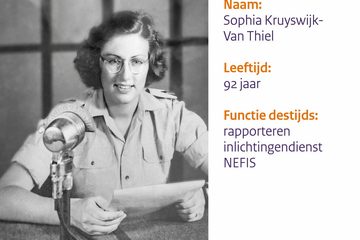
What developed was not simply a Dutch intelligence operation. Australian, Dutch and Indonesian personnel worked together within a complex network of organisations that included the Inter-Allied Services Department, the Allied Intelligence Bureau, the Netherlands Forces Intelligence Service (NEFIS), Australian special-operations organisations and, later, the Netherlands Indies Civil Administration (NICA). Other Netherlands Indies organisations operating from Australia, including the Netherlands Indies Government Information Service (NIGIS), supported the wider wartime effort through information, photography, film and publicity.
Dutch and Indonesian personnel gathered and analysed intelligence, operated clandestine wireless networks, trained for missions behind Japanese lines and were inserted into occupied territory by submarine, flying boat and other means. Australian and other Allied organisations provided training, communications, transport, intelligence support and operational coordination. Many of these missions were extraordinarily dangerous and several ended in capture and execution.
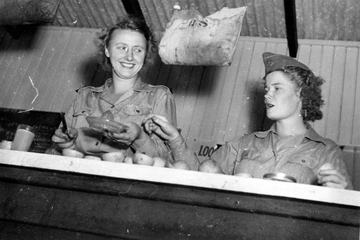
Queensland became particularly important within this network. NEFIS eventually established its headquarters at Camp Columbia in Brisbane, where NICA, NIGIS and other Netherlands Indies government and military organisations were also represented. The Z Experimental Station near Cairns became an important training and staging centre for Dutch and Indonesian operatives. Other facilities in Brisbane, Southport and elsewhere in Australia formed part of the wider intelligence, training and communications system.
The story changed as the war progressed. Early joint Dutch-Australian-Indonesian operations developed into a more formal NEFIS capability. By 1945, intelligence and special operations increasingly intersected with preparations for the return of Netherlands Indies civil administration through NICA. At the same time, Indonesian nationalism was transforming the political environment to which the Dutch expected to return.
This research portal brings together DACC articles, archival documents, operational studies and personal stories examining this little-known aspect of the wartime relationship between Australia, the Netherlands and Indonesia.
Rather than treating these histories as separate stories, the collection shows how intelligence organisations, civil administration, information services, training centres, communications networks, aircraft and submarines, individual agents and clandestine missions formed parts of a wider interconnected wartime system operating from Australia.
Articles and research in this collection
The articles below explore the organisations, locations, people and operations that formed this network. They are being progressively reviewed and cross-linked as new archival material and research become available.
NEFIS and the Allied intelligence network
How Dutch and Indonesian intelligence fitted into the Allied intelligence network in Australia
Netherlands Forces Intelligence Service (NEFIS): Dutch Intelligence in Exile in Australia
Dutch, Australian and Indonesian Agents: The NEI Section of Australia’s Secret War
NEFIS III: Dutch and Indonesian Special Operations from Australia during WWI
The Forgotten Dutch and Indonesian Story of Cairns’ Z Experimental Station
Dutch wartime wireless communications in Australia: Batchelor, Craigieburn and the NEFIS network
Queensland’s Forgotten Intelligence School: NEFIS Personnel at Southport
Dutch Secret Missions from Australia into the Japanese-Occupied Netherlands East Indies
NICA and the return of civil administration
NICA was not an intelligence service, but its work was closely connected with the intelligence and military organisations operating from Australia. Created in Australia in 1944 to restore civil administration in territories recovered from Japan, NICA worked alongside Allied forces, NEFIS and, in some areas, Australian special-operations organisations. Its headquarters at Camp Columbia also placed it within the same Dutch and Netherlands Indies wartime network.
Peter Sitsen: Architect of the Recovery Plan for the Netherlands East Indies
NIGIS: information, photography and propaganda
Although NIGIS was not an intelligence service, its information, photographic and publicity work documented and supported the wider Netherlands Indies wartime network operating from Australia.
NIGIS: the Dutch wartime voice from Brisbane
Personal stories: the people behind the intelligence network
Simon Spoor – Director of NEFIS at Camp Columbia
Jan Staal – From No. 18 Squadron to NEFIS at Camp Columbia
Julius Tahija – From Saumlaki to Operation FIRETREE
Coosje Ayal – Resistance fighter in Dutch New Guinea and her connection with Brisbane
Mauritz Kokkelink – Resistance in New Guinea and recognition at Camp Columbia.
From Camp Columbia to Operation Kraai: The Australian training of NEFIS officer Jan Bakker
Betrayed and beheaded: Rob Hees and Party LION
Hendrik Johan de Haas: NEFIS agent behind Japanese lines
Personal recollections Camp Columbia – Jean van Schilfgaarde
Reunited at Camp Columbia and married in Brisbane: the wartime journey of Jack and Truus Hompe
Paul Budde September 2026