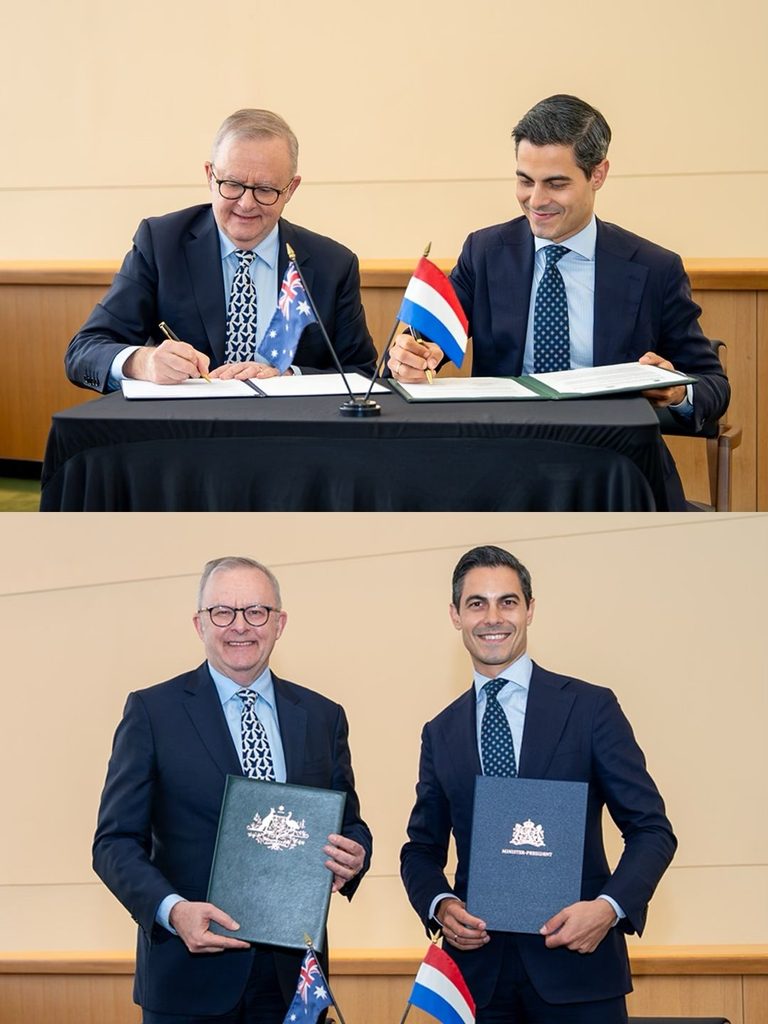
Australia and the Netherlands have formally elevated their bilateral relationship to a Strategic Partnership, with shared Dutch-Australian history and cultural heritage specifically recognised as part of the relationship between the two countries.
The agreement was adopted in New York on 23 September 2026 by Australian Prime Minister Anthony Albanese and Dutch Prime Minister Rob Jetten, on the margins of the United Nations General Assembly High-Level Week.
The Strategic Partnership covers security and defence, trade and investment, the Indo-Pacific, international law, climate and energy, MH17, and cultural and people-to-people relations. It describes Australia and the Netherlands as natural partners connected by extensive people-to-people links and “centuries of shared history.”
For the Dutch Australian Cultural Centre (DACC), one of the most significant elements is the specific recognition given to our shared cultural heritage.
Maritime, migrant, military and mercantile heritage
Under the heading People-to-People Exchanges & Culture, the two governments state:
“Australia and the Netherlands greatly value their cultural cooperation, rooted in a shared history encompassing maritime, migrant, military and mercantile heritage.”
These four areas — Maritime, Migrant, Military and Mercantile heritage, often referred to as the Four Ms — are also at the centre of the Netherlands’ cultural heritage policy in Australia.
They encompass more than four centuries of Dutch-Australian connections.
Maritime heritage reaches back to the voyages of Willem Janszoon, Dirk Hartog, Abel Tasman, Willem de Vlamingh and others, as well as the Dutch shipwrecks along the Australian coast. Australia and the Netherlands have cooperated formally on underwater cultural heritage for decades, and the new Strategic Partnership confirms that this cooperation will continue.
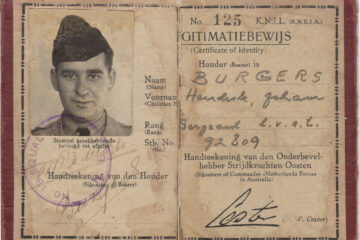
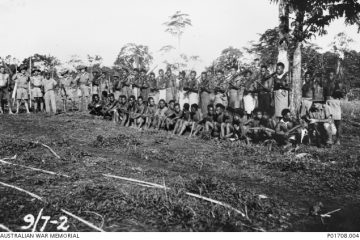
Military heritage includes the extensive Dutch-Australian cooperation during the Second World War, particularly following the fall of the Netherlands East Indies in 1942. Dutch military personnel, ships, aircraft and government organisations operated from Australia, while Australians and Dutch fought alongside one another in Europe and the Asia-Pacific.
This is an increasingly important field of research for DACC, including our work on the Netherlands East Indies Government-in-Exile, Camp Columbia in Brisbane, the KNIL and its women’s corps, NEFIS intelligence operations, Dutch and Australian air-force cooperation and the many individual stories connecting the two countries.
Migrant heritage became particularly important after the Second World War. Around 160,000 Dutch migrants came to Australia between 1947 and 1970. Their stories, organisations, photographs, documents and personal archives form an important part of Australia’s post-war migration history.
Preserving this heritage is a major focus of DACC. Our collection contains extensive records of Dutch migration and community life in Australia, while our website makes an expanding collection of these stories publicly accessible.
The Netherlands’ Cultural Policy for Australia for 2025–2028 specifically encourages research and digitisation of this shared heritage and improved cooperation between Dutch and Australian cultural institutions.
Mercantile heritage stretches from the commercial motives behind the earliest Dutch voyages to the extensive trade, investment and business relationship that exists today. The new Strategic Partnership builds further on that history through cooperation on trade, investment, innovation, clean energy and new technologies.
Preserving the history behind today’s relationship
The significance of the Strategic Partnership is therefore not confined to contemporary diplomacy.
It formally acknowledges that today’s relationship between Australia and the Netherlands has been built on centuries of interaction between their peoples. Maritime exploration, wartime cooperation, migration and commerce all contributed to the relationship that the two governments are now taking to a new strategic level.
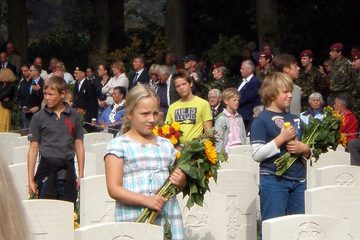
The Australian Department of Foreign Affairs and Trade similarly describes strong people-to-people links, cultural, educational and community engagement, and remembrance of Australians who served in the Netherlands during the Second World War as reflecting the historical depth of the bilateral relationship.
For DACC, the new Strategic Partnership provides important recognition of the relevance of preserving and making accessible this shared history.
Through collecting, researching, digitising and publishing Dutch-Australian heritage, DACC and its partner organisations are helping preserve the historical foundations of a relationship that Australia and the Netherlands have now formally committed themselves to strengthening for the future.
Sources:
Strategic Partnership between Australia and the Netherlands.
International Heritage Cooperation – Four Ms and Cultural Policy 2025–2028.