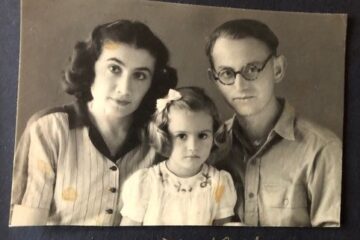
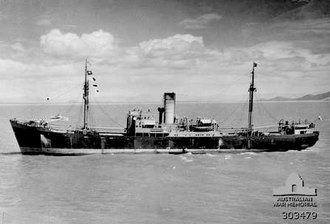
Dirk “Dick” van Teulingen was one of approximately 100 Dutch dredging workers who travelled to Australia in 1950 to work on maritime projects around Williamstown and Port Phillip Bay.
His life encompassed wartime captivity and forced labour in Germany, engineering service in the Royal Netherlands Navy, migration to Australia, marriage and the creation of a large Australian family.
Dick also preserved an important record of the Dutch dredging workers’ journey: the seating plans for the two KLM flights that carried them from the Netherlands to Australia. When he died in Victoria in July 2026 at the age of 101, he was reportedly the last surviving member of the original group.
From Rotterdam to Sliedrecht
Dick was born in Rotterdam on 8 July 1925. His mother later died in childbirth, after which his father married the family’s housekeeper. The family subsequently moved to Sliedrecht, although it has not yet been established precisely when or why the move occurred.
Sliedrecht had been a centre of the Dutch dredging industry for generations. Its shipyards, engineering workshops and dredging companies provided employment for many local families and sent skilled workers around the world.
Dick lived in Admiral de Ruyterstraat and worked as an apprentice fitter and turner in the local shipyards. He had an older brother and a younger sister, but further research is needed to reconstruct the family’s history.
Rounded up for forced labour
Dick was 14 when Germany invaded the Netherlands in May 1940. By 1944, the German occupation authorities were increasingly rounding up Dutch men for forced labour in Germany, a system known as the Arbeitseinsatz.
Dick recalled that he was detained around August 1944, shortly after his nineteenth birthday, and transported to Germany. He described his first place of detention as the prison camp at Dachau.
During his detention, a German guard struck him in the face and broke his teeth. Dick did not remain at Dachau throughout his captivity. He recalled being transferred to a small Bavarian town called Endorf and later to barracks in Munich. In Munich he was forced to work in railway workshops in the eastern part of the city and remained there until the end of the war.
Altogether, Dick was held in Germany for approximately nine or ten months.
Was Dick imprisoned in the Dachau concentration camp?
Dick consistently identified Dachau as his initial place of detention. Later in life, he and his wife Linda visited the Dachau memorial site, and he retained brochures from their visit.
However, it has not yet been possible to establish whether he was formally registered as a prisoner in the main Dachau concentration camp, detained temporarily at an associated facility or processed through another camp in the Dachau area.
The distinction is historically important. Nazi Germany operated numerous different forms of detention and forced-labour camps. Dachau itself became the centre of an extensive network of subcamps and external labour detachments. Separate civilian forced-labour camps also existed throughout Bavaria and Munich.
One such camp was attached to the German Railways repair works at Neuaubing in western Munich. This demonstrates the scale of forced labour within Munich’s railway industry, although there is presently no evidence that Neuaubing was the particular workshop at which Dick worked. His recollection that the railway works were in eastern Munich points to another location that has yet to be identified.
Dick’s account should therefore be preserved as valuable firsthand testimony while the search for corroborating camp, employment and transport records continues.
Returning to the Netherlands
Following Germany’s defeat, Dick began the difficult journey back to the Netherlands. He recalled obtaining rides on Allied military vehicles as former prisoners and forced labourers made their way through the devastation of post-war Europe.
The returning men were filthy and infested with lice after months in barracks and camps. Dick remembered being sprayed repeatedly with DDT during the journey home.
His apprenticeship as a fitter and turner had been interrupted by his arrest. After returning to the Netherlands in 1945, he completed his training.
Engineering service in the Royal Netherlands Navy
Only two months after completing his apprenticeship, Dick volunteered for the Royal Netherlands Navy. He served as an engineer, fulfilling a longstanding ambition to work in maritime engineering.
His naval service took him to Malta, Colombo and Singapore. This combination of shipyard training, mechanical expertise and naval engineering experience provided an ideal background for the international dredging work that would shape the next stage of his life.
Coming to Australia
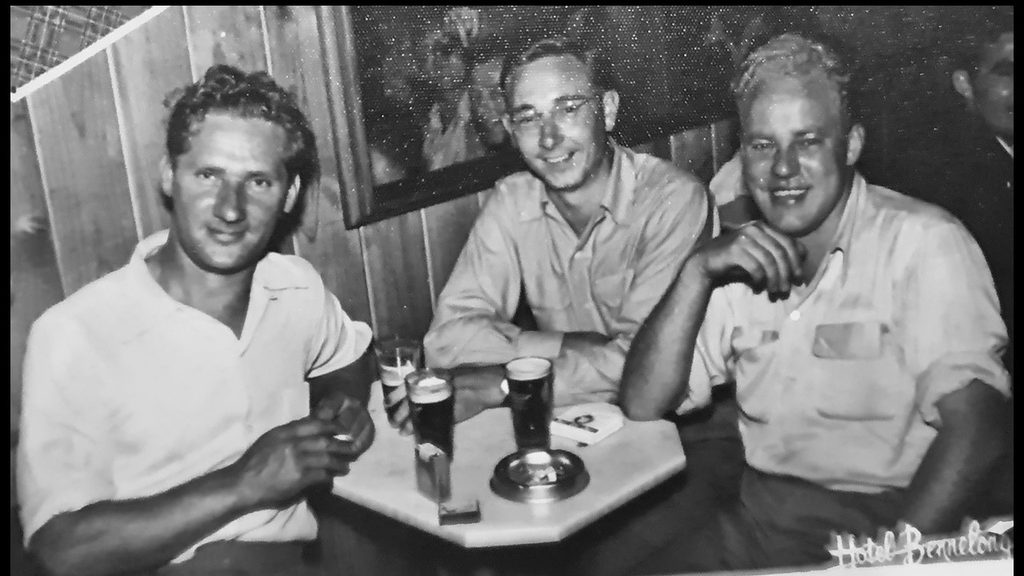
In 1950, Dick joined the Dutch workers recruited by Australian Dredging and General Works for a major project in Australia. Most of the workers came from Sliedrecht or had connections with its dredging industry.
They travelled to Australia on two KLM flights. The first left Schiphol on 22 June 1950 and the second on 22 July. Their journey by air was unusual at a time when most Dutch migrants travelled to Australia by sea.
The men were initially engaged under two-year contracts to undertake dredging and maritime construction work in and around Port Phillip Bay. Australian Dredging and General Works brought Dutch machinery, technical knowledge and skilled personnel to Australia at a time of rapid post-war industrial and infrastructure development.
Although some members of the group returned to the Netherlands when their contracts ended, Dick decided to remain in Australia.
Marriage and family
In Williamstown, Dick met Linda, a nurse at Williamstown Hospital. They married and established their life together in Victoria.
By 2025, Dick and Linda had celebrated their 72nd wedding anniversary. They had three children, seven grandchildren and six great-grandchildren.
Their daughter Martine described her father as a man of quiet pride and a strong work ethic. She remembered a childhood of camping, caravanning and family holidays, during which Dick always seemed willing to take time away from work to be with his family.
Dick eventually lived in Torquay. He enjoyed sport, spent many of his later days following it on television and became a keen supporter of the Geelong Cats.
Preserving the record of the 1950 journey
Dick retained copies of the seating plans for the two KLM flights that carried the dredging workers to Australia. The plans recorded the names of the passengers and their allocated seats.
As the decades passed, Dick marked off the names of his former colleagues when he learned of their deaths. When Glenda Korporaal interviewed him in his late nineties, he remained articulate and shared both his wartime experiences and his memories of the journey to Australia.
The seating plans may provide the foundation for reconstructing the history of the entire group. They could help researchers identify the workers, establish their places of origin and occupations, and determine which men returned to the Netherlands and which remained to establish Australian families.
The last of the original group
Dick van Teulingen died in a Victorian nursing home in July 2026, shortly after his 101st birthday. He was reportedly the last surviving member of the approximately 100 Dutch workers who had made the journey in 1950.
His death brought to a close the living history represented by those who travelled on the two KLM flights. However, their children, grandchildren and great-grandchildren remain part of the Dutch-Australian community.
Dick’s life illustrates how industrial recruitment became migration history. A young man who had survived occupation, detention and forced labour came to Australia for a temporary engineering contract. Employment, marriage and family transformed that temporary assignment into a permanent new life.
Continuing research
The Dutch Australian Cultural Centre is working with the Historische Vereniging Sliedrecht and Australian heritage organisations to identify the workers and recover their stories.
Personal information and family photographs will only be published following consultation with the contributors.
Sources and further reading
Glenda Korporaal – “Reflections of a migrant’s daughter”, Pearls and Irritations, 6 September 2026
Geelong Advertiser – “Torquay WWII veteran Dirk van Teulingen turns 100”, 7 July 2025
DACC – “From Sliedrecht to Williamstown: Dutch Dredging Workers in Post-war Australia”
Anne Frank House – Mandatory registration for forced labour
Dachau Concentration Camp Memorial Site – Dachau Concentration Camp 1933–1945
Arolsen Archives – On the trail of Dutch forced labourers
Munich Documentation Centre – Nazi-era forced labour
Munich Documentation Centre – The former forced-labour camp at Neuaubing