In 1950, two specially organised KLM flights brought a remarkable group of Dutch dredging workers and their families to Australia.
Most of the workers had been recruited for a major dredging and harbour-construction project in Melbourne. Many came from Sliedrecht, the South Holland town internationally known as a centre of the Dutch dredging industry.
The surviving seating plans for the flights of 22 June and 22 July 1950 record approximately 100 passenger places. They show that this was not simply the movement of 100 workers. The passengers included about 76 adult men, 18 women and at least six children, although the precise totals require further verification because several children appear to have shared a seat or been recorded together.
The first flight carried primarily male workers. The second included a considerably larger proportion of women and children. Together, the flights reveal an unusual form of organised post-war migration in which a Dutch company transported not only specialist employees but also members of their families.
Some passengers eventually returned to the Netherlands. Others remained, married and established families in Australia. What began as a temporary industrial assignment consequently became an important, and still incompletely documented, chapter in Dutch-Australian migration history.
A major Australian project using Dutch expertise
The workers were recruited in connection with Australian Dredging and General Works Pty Ltd, a recently established Australian company associated with the Dutch firms Adriaan Volker’s Maatschappij tot het Uitvoeren van Openbare Werken of Sliedrecht and Van Hattum & Blankevoort of Beverwijk.
Contemporary Dutch newspaper reports described the Australian project as being worth approximately 11 million guilders. Its expected duration was about two and a half years.
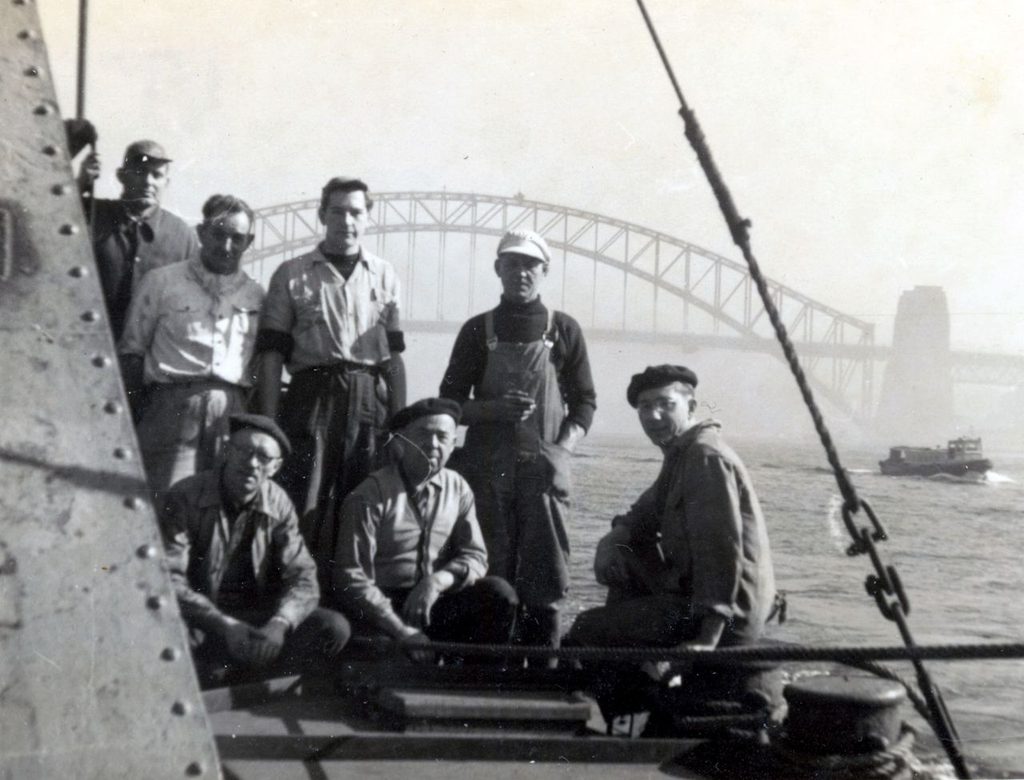
The operation required much more than the recruitment of labour. A fleet of Dutch dredging and support vessels was sent on the approximately 11,000-mile journey to Melbourne. Contemporary reports referred to a bucket dredger, seagoing hopper barges, bottom-dumping barges, tugboats, a possible suction dredger and other equipment.
The ocean tow was organised by L. Smit & Co’s Internationale Sleepdienst and was expected to take approximately 100 days.
The transfer therefore represented a substantial export of Dutch machinery, skills and maritime knowledge to post-war Australia.
A separate DACC business history will examine the formation, ownership and Australian activities of Australian Dredging and General Works:
See: Australian Dredging and General Works (1950–2011): Dutch engineering in post-war Australia
The following article examines the longer corporate connections between Adriaan Volker, Van Hattum & Blankevoort and the later Volker Stevin and VolkerWessels groups: From Sliedrecht to VolkerWessels: the Dutch companies behind Australian Dredging and General Works
“Packaged migration”
Dutch newspapers described the undertaking as a form of verpakte emigratie—literally “packaged migration”.
The term reflected the unusually comprehensive nature of the arrangement. The Dutch companies supplied the management, skilled workers, machinery, transport and, at least initially, accommodation. Workers did not arrive independently and then begin looking for employment. They travelled as part of an organised industrial project in which work and accommodation had already been arranged.
A report published in July 1950 explained that the company had purchased a large house and was constructing smaller homes in its grounds. The intention was to accommodate both unmarried workers and employees arriving with families.
A later account published in Trouw in November 1953 reported that approximately 900 people had applied to join the project. About 60 workers were initially selected. The company paid their travel costs and provided a hostel for unmarried men, complete with a Dutch cook, as well as houses for families.
The employment arrangements reportedly also included the possibility of a return journey for workers who did not decide to remain in Australia.
This combination of recruitment, employment, air travel and accommodation distinguished the project from the migration experience of most Dutch people who came to Australia during the early post-war years. It was, however, one of several initiatives in which Dutch companies and Australian development projects provided an organised pathway for skilled workers and their families. A comparable example was the Dutch housing project at Coopers Plains, where a Dutch company and its tradesmen and equipment were recruited to construct houses in Brisbane and also here many subsequently settled in Australia.
Creating a Dutch community in Williamstown
A report in the Williamstown Advertiser of 5 May 1950 announced that Williamstown would soon have its own small Dutch community.
The new arrivals were to work on a dock near the entrance to the Yarra River, on the Port Melbourne side of the river. Company representatives Marinus Stigter and Hans Ferwerda attended a meeting of Williamstown Council and received an official welcome from the city.
Stigter expressed the hope that the newcomers would eventually be welcomed as Australian citizens with the same cordiality that the company representatives had experienced as Dutch visitors.
Australian Dredging and General Works purchased a two-storey bluestone building in Lyons Street and planned an additional residence beside it. The company also proposed subdividing land known locally as Pollock’s Paddock into 17 residential allotments.
The land faced The Strand and Douglas Parade and lay between Dowman and Peel streets. Plans presented to Williamstown Council included a new private street, for which the council invited the company to suggest a Dutch name.
Further research is needed to establish how much of this proposed development was completed, who lived in the houses and whether the street was eventually given a Dutch name.
The plans nevertheless show that accommodation and community formation were being considered even before the main groups had arrived.
The first KLM flight: 22 June 1950
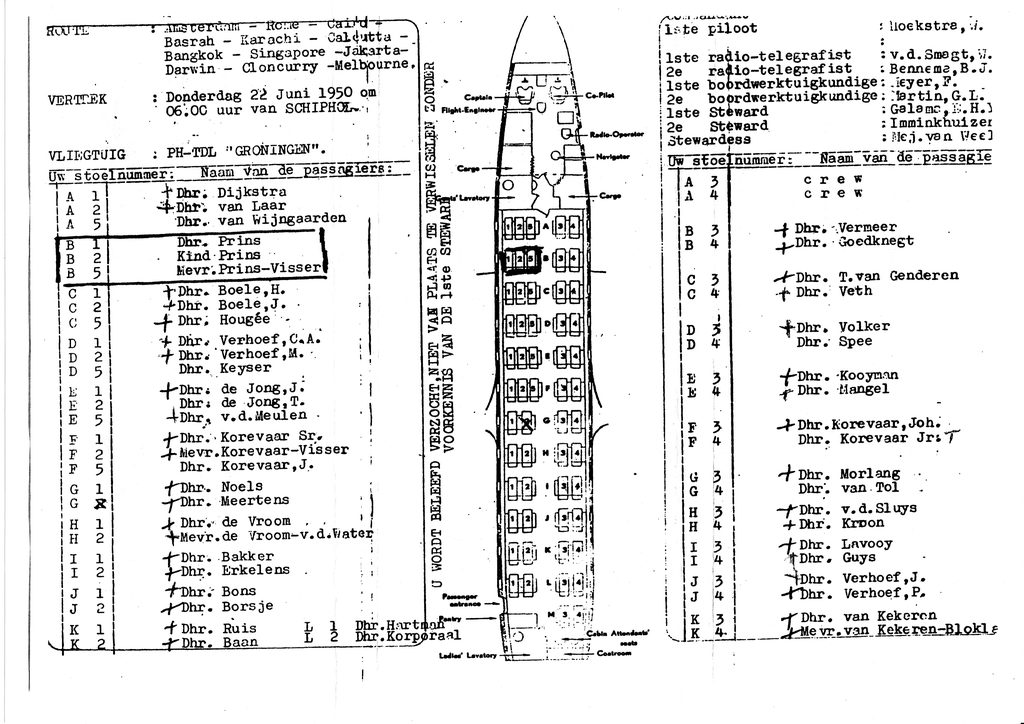
The first group departed Schiphol on 22 June 1950 aboard the KLM Douglas C-54B Skymaster Groningen, registration PH-TDL.
Its long route took the passengers from Amsterdam through Rome, Cairo, Basra, Karachi, Calcutta, Bangkok, Singapore, Jakarta, Darwin and Cloncurry before reaching Melbourne.
The seating plan records 50 passengers: 45 men, four women and one child. This corresponds with a report in Het Vrije Volk of 23 June 1950, which described the departure of 45 workers accompanied by four wives and a child.
The passenger list confirms that this first flight was overwhelmingly a workforce movement. However, the presence of several couples and a child shows that family migration was already part of the undertaking.
Among the passengers were Hendrik Prins, Mrs Prins-Visser and their young son, identified in a newspaper report as three-year-old Ruud. The seating plan also records members of the Korevaar, De Vroom, Van Kekeren, De Jong, Verhoef and Boele families.
Other passengers included Henk Korporaal, Kuindert Ruis, Gerrit van der Meulen, Govert Veth and several people whose histories are now being researched by the DACC and the Historische Vereniging Sliedrecht.
Seating arrangement for the KLM Skymaster Groningen, which departed Amsterdam for Melbourne on 22 June 1950. The plan records 45 men, four women and one child. Copy preserved by Dick van Teulingen and supplied by Glenda Korporaal.
The second KLM flight: 22 July 1950
A second group departed Amsterdam aboard the same aircraft on 22 July 1950.
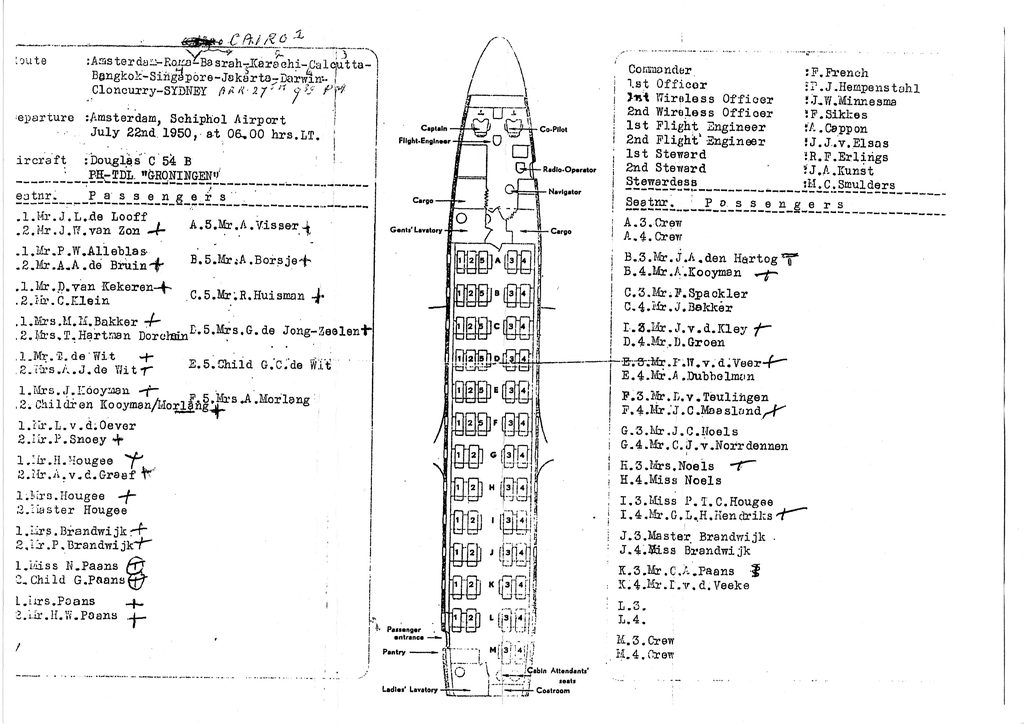
The surviving seating plan records another 50 allocated passenger places. Unlike the June flight, however, this group included a much larger number of women and children. Approximately 31 adult men, 14 women and several children can be identified, although the number of children may have been higher because one entry records “Children Kooyman/Morlang” without listing each child separately.
The route shown on the seating plan again passed through Europe, the Middle East and Asia. Its Australian destination was recorded as Sydney, with a handwritten arrival time of 9.35 pm on 27 July. How the passengers connected with the Williamstown project after reaching Sydney remains to be established.
Passengers included Dick van Teulingen, Jan Willem van Zon, Cornelis Jan van Noordennen, Arie de Bruin, Rook Huisman and members of the De Wit, Hougée, Brandwijk, Paans and Noels families.
The second seating plan also contains surnames appearing on the earlier flight, including Bakker, Borsje, Hartman, Kooyman and Morlang. These repetitions may indicate that some workers travelled ahead in June and were followed by relatives in July. However, the exact family relationships should not be assumed until they can be confirmed from family or archival records.
Seating arrangement for the second KLM flight, which departed Amsterdam aboard the Groningen on 22 July 1950. The larger number of women and children indicates that the project involved organised family migration as well as the recruitment of individual workers. Copy preserved by Dick van Teulingen and supplied by Glenda Korporaal.
What the seating plans tell us
The two seating plans provide a much clearer picture of the people who travelled to Australia. Together, they record approximately 100 passenger places, but not all the passengers were Dutch dredging workers. The two flights carried a mixed group comprising mainly male workers, together with wives, children and possibly other relatives.
The composition of the flights suggests that the migration took place in stages:
- The June flight transported the main body of skilled workers, together with a small number of families.
- The July flight brought additional workers but also a much larger family contingent.
- In some cases, a worker may have travelled first and been followed by his wife and children.
- Other families appear to have travelled together from the beginning.
- Some passengers may have joined the flight because seats were available without necessarily being employed on the dredging project. Their connection with the company therefore still needs to be verified.
The seating plans are not simply aviation souvenirs. Together with emigration cards, employment records, newspapers and family archives, they provide a framework for reconstructing an entire migration network.
Families requiring further research
The following family groups appear on one or both seating plans but do not yet have separate DACC profiles. The groupings are based on names and seating arrangements and should be treated as provisional until their relationships are confirmed.
| Family name | Evidence in the seating plans | Research needed |
|---|---|---|
| Prins | Hendrik Prins, Mrs Prins-Visser and their child travelled together in June | Their Australian residence, employment and whether they remained in Australia |
| Korevaar | Several members of the Korevaar family, including a senior and junior Korevaar and Mrs Korevaar-Visser, travelled in June | Their relationships and possible connection with later maritime businesses in Williamstown |
| De Vroom | A male passenger and Mrs De Vroom-van der Water travelled together in June | Their full names and subsequent history |
| Boele | H. Boele and J. Boele travelled in June | Whether they were brothers or otherwise related |
| Hougée | Hougée appears in June; Mrs Hougée and two younger Hougée passengers travelled in July | Whether this was a worker followed by his family |
| Kooyman and Morlang | Men with these names travelled in June; women and children bearing the same names travelled in July | Confirmation that the July passengers were the families of the June workers |
| Noels | A male Noels travelled in June; J.J. Noels, Mrs Noels and Miss Noels appear in July | Their relationships and connection with A. Noels, later identified as a tug or hopper captain |
| De Wit | F. de Wit, Mrs A.J. de Wit and a child travelled in July | Their place of origin and Australian history |
| Brandwijk | Mrs Brandwijk and several younger Brandwijk passengers travelled in July | The identity of the worker or relative already in Australia |
| Paans | Several adults and children named Paans travelled in July | Their family relationships and settlement history |
| Hartman | The surname appears on both flights | Whether the June and July passengers belonged to the same family |
| Bakker | The surname appears on both flights | Whether the passengers were related and whether a family migration occurred |
Descendants or other people with information about these families are encouraged to contact the DACC.
From temporary workers to Australian families
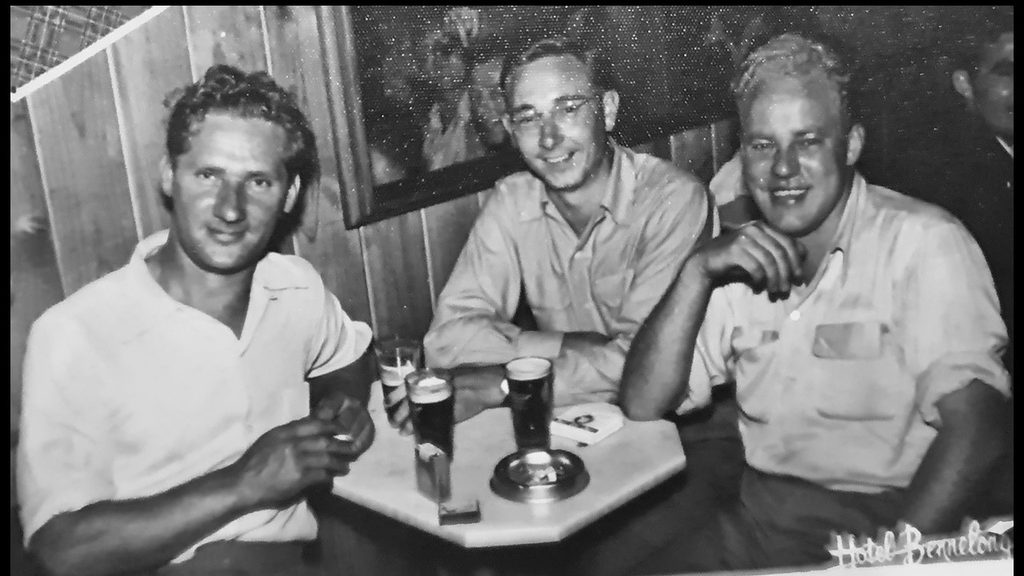
The experiences of Henk Korporaal and Dick van Teulingen illustrate how the industrial project developed into permanent migration.
Henk was born in 1926 and was a teenager during the German occupation of the Netherlands. During approximately the final ten months of the war, he lived in hiding. After liberation, he completed three years of compulsory military service.
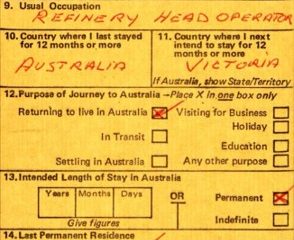
By 1949, Henk was looking for an opportunity to leave the Netherlands. He initially hoped to go to Indonesia, but when that did not eventuate, he accepted the opportunity to join the Australian dredging project.
Dick van Teulingen, who was born in 1925 and had also experienced wartime imprisonment and forced labour in Germany, made a similar decision.
Both travelled as young skilled workers. Both subsequently married nurses associated with Williamstown Hospital and established families in Australia.
In 1953, Henk and his family moved from Melbourne to Sydney when the dredging company transferred him there for another project. Dick remained in Victoria and eventually settled in the Geelong region.
Read the story of Dick van Teulingen
Their experiences show how migration decisions could change after arrival. The men may originally have intended to remain for only the duration of the project. Employment, marriage, friendships and their experience of Australian life subsequently influenced their decisions to stay.
Older married workers faced different circumstances. Some brought their families to Australia but eventually returned to Sliedrecht. Arie and Maria van Kekeren, for example, participated in dredging projects in South Africa and Australia before returning to the Netherlands.
Read the story of Arie van Kekeren and Maria Blokland
Movement beyond Williamstown
Although Williamstown was the initial centre of the project, the workers did not necessarily remain there.
By April 1951, Australian Dredging and General Works was undertaking work at Geelong. A 1953 report also referred to company activities in Sydney and Western Australia and stated that the workforce had grown to more than 160 employees.
Transfers between projects helped disperse the original group. Some families moved from Melbourne to Sydney, while others later established themselves in Geelong, elsewhere in Victoria or in Western Australia.
This mobility complicates efforts to trace the original passengers. The history cannot be reconstructed solely through Williamstown records. Local archives, newspapers and family networks in Geelong, Sydney and Western Australia may also contain important evidence.
The company’s later Australian operations will be examined in a separate business-history article:
Future link: Australian Dredging and General Works – projects and expansion around Australia
Personal stories recovered so far
Research by the DACC, the Historische Vereniging Sliedrecht, family members and other contributors is beginning to put individual names and experiences back into the history.
Personal accounts published so far include:
- Dick van Teulingen (1925–2026): War, dredging and a new life in Australia
- Jan Willem van Zon – from Sliedrecht to Australia
- Cornelis Jan van Noordennen – from Dutch dredging worker to Melbourne shopkeeper
- Joost and Teunis de Jong – their journey to Australia
- Cornelis Adrianus Verhoef and Marinus Verhoef – relatives travelling together to Australia
- Gerrit van der Meulen – from Rotterdam to Australia
- Kuindert (Kuin) Ruis – from Sliedrecht to Australia
- Govert Veth – from wartime imprisonment to a new life in Australia
- Arie de Bruin – a Dutch marine who began a new life in Australia
- Dirk van Kekeren – his journey to Australia
- Arie van Kekeren and Maria Blokland – a Sliedrecht couple in the international dredging industry
- Gerrit Goedknegt: From Wartime Merchant Seaman to Dredging Engineer in Australia
- From Dutch Dredging Migrants to Korevaar Marine Group: A Sliedrecht Family Business in Australia
- Hendrik and Johannis Boele: Two Brothers from Sliedrecht Who Travelled to Australia
- Hermanus Wouter “Manus” Paans and His Family: From Werkendam to Western Australia
- Teunis Cornelis “Toon” Paans: Born on a Ship, Migrated to Australia by Ship
- Jan Volker: A Technical Supervisor Seeking a Future in Australia
- Oep Mangel – From Velsen to Australia
- Tugboat Captain Arie Hougee and His Family: From the Rhine to Australia
- Adrianus “Adrian” Borsje: From Sliedrecht to Geelong (1913–2000)
- Anne Pieter Erkelens: From Sliedrecht to Australia and Back
- Dirk Baan: Tugboat Captain and Post-war Migrant to Australia
- Egbert Adriaan “Bert” van der Sluijs: From Sliedrecht via Curaçao to Australia and Back
- Adrianus “Janus” Noels: From Dordrecht Tugboat Captain to a New Life in Australia
- Jelte Lubertus Bakker and Lizelotte Staudinger: Building a Family in Australia
- Jacob Adrianus den Hartog: From the Dutch Merchant Navy to Williamstown
- Frederik “Fred” Spackler: War, Maritime Engineering and a Life Connected with Australia
- Dirk Groen: From IJmuiden to Williamstown
Arie de Bruin’s presence on the July flight has been confirmed, but whether he was directly employed on the dredging project remains to be established.
A migrant daughter’s reflection
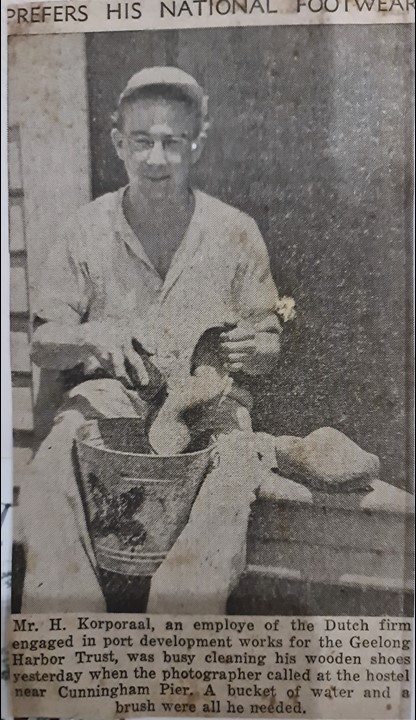
Journalist Glenda Korporaal, the daughter of Henk Korporaal, has written a personal reflection about her father, Dick van Teulingen and her experience of growing up as the daughter of a Dutch migrant.
She describes the different wartime experiences of the two men, their decisions to come to Australia and the awareness among their Australian-born children that their fathers spoke differently, ate different food and carried memories that distinguished them from many Australian parents.
Her article, “Reflections of a migrant’s daughter”, was published by Pearls and Irritations in September 2026.
It provides an important personal introduction to the people behind the industrial project. The KLM passenger lists record names, but family memories explain what migration meant to the people who made the journey and to the generations who followed them.
A wider Dutch-Australian migration story
The Sliedrecht–Williamstown story demonstrates that post-war migration did not always begin with an individual or family independently deciding to settle permanently in Australia.
In this instance, migration began with an industrial contract. Dutch companies needed skilled employees for an Australian project and organised the workers’ travel, employment and accommodation. Families followed, relationships were formed and temporary employment developed into permanent settlement.
The migration was also circular rather than uniformly one-way. Some workers settled in Australia, some returned to the Netherlands, and others moved between international dredging projects before deciding where to make their permanent homes.
The project therefore joined three histories:
- the international expansion of the Dutch dredging industry;
- Australia’s post-war harbour and industrial development; and
- the establishment of Dutch families and communities in Australia.
The present article concentrates on the migration and family history. The commercial and technological aspects are covered in separate DACC articles. For this wider history and related company, project and personal stories, see the Dutch dredging in Australia – Research Portal.
An ongoing research project
The surviving seating plans, company records, Dutch emigration cards, municipal documents, newspaper reports, photographs and family stories offer the possibility of reconstructing this migration in considerable detail.
The Historische Vereniging Sliedrecht has published an appeal for information from families connected with the people who travelled to Australia. Its researchers have already provided valuable biographical and genealogical information.
Further records may be held by the Nationaal Baggermuseum in Sliedrecht, the Williamstown Historical Society, the City of Hobsons Bay, heritage organisations in Geelong and descendants living throughout Australia and the Netherlands.
The DACC particularly welcomes:
- corrections to the transcription of names on the seating plans;
- identification of the relationships between passengers;
- information about workers’ occupations and their roles on the dredging project;
- family photographs, letters, employment documents and migration records;
- information about where the passengers lived after arriving;
- accounts of those who returned to the Netherlands; and
- contact with descendants of the passengers and other company employees.
Each newly recovered story helps transform a list of passengers into a human history of work, migration, family and community.
Sources and acknowledgements
- De Telegraaf, “Baggeraars naar Australië”, 3 February 1950.
- Het Vrije Volk, “Sleep vertrekt naar Melbourne voor ‘karweitje’ van 2½ jaar”, 3 February 1950.
- De Telegraaf, “Volker’s gaat baggeren in Melbourne”, 15 February 1950.
- Williamstown Advertiser, “Dutch Community in Williamstown”, 5 May 1950.
- Het Vrije Volk, “Baggeraars door de lucht naar een ver land”, 23 June 1950.
- “Wat is ‘verpakte’ immigratie?”, 10 July 1950.
- Nieuwe Apeldoornsche Courant, “Oud Nederlands bedrijf naar Australië”, 14 July 1950.
- Trouw, “Brok Hollands Glorie in Australië”, 17 November 1953.
- KLM seating arrangements for the flights of 22 June and 22 July 1950, preserved by Dick van Teulingen and supplied by Glenda Korporaal.
- Family information and research supplied through the Historische Vereniging Sliedrecht.
- Glenda Korporaal, “Reflections of a migrant’s daughter”, Pearls and Irritations, September 2026.
See also: Contemporary newspaper reports on the Sliedrecht–Williamstown dredging migration, 1950–1954
The DACC thanks Glenda Korporaal, Kees van der Sluijs, Fred Stuij, the Historische Vereniging Sliedrecht and the families who have shared information and photographs.
This remains an evolving history. The article will be updated as additional passengers are identified and further family stories are recovered.