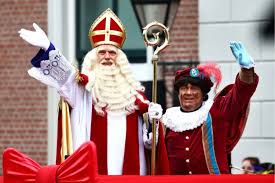
For Dutch families, the December festive season traditionally begins with Sinterklaas, or Saint Nicholas. Children are told that Sinterklaas arrives from Spain aboard a steamboat and travels through towns on a white horse. They place a shoe near the fireplace, sing traditional songs and hope to receive sweets or a small present.
The principal family celebration, pakjesavond, takes place on 5 December, on the eve of the feast day of Saint Nicholas on 6 December. Presents are often accompanied by humorous rhymes, while traditional treats include speculaas, pepernoten, marzipan and chocolate letters.
Christmas is also celebrated in the Netherlands, particularly as a Christian religious and family occasion, but Sinterklaas was traditionally the December celebration most closely associated with children and presents.
The Second World War disrupted these traditions. Dutch and Netherlands East Indies personnel in Australia were frequently separated from their families, while civilians who survived the Japanese occupation faced internment, malnutrition, displacement and uncertainty.
The surviving evidence is incomplete, particularly for the years 1942–44. Nevertheless, personal recollections and contemporary records offer glimpses of how Sinterklaas, Christmas and Australian hospitality helped preserve morale and cultural identity.
Sinterklaas and the beginning of the Pacific War

For Dutch families in the Netherlands East Indies, Sinterklaas in December 1941 occurred at a decisive moment.
After moving to Australia, Henriette Thomas, née Kuneman, recorded her memories of growing up in the Netherlands East Indies. She recalled sitting on her bed at school eating a Sinterklaas chocolate letter when news arrived over the wireless of the Japanese attack on Pearl Harbor.
What had begun as a familiar childhood celebration was suddenly overshadowed by war. The Netherlands declared war on Japan on 8 December 1941. Within weeks, Japanese forces were advancing through Southeast Asia and towards the Netherlands East Indies.
Henriette’s recollection captures how abruptly an ordinary childhood celebration became associated with the beginning of years of invasion, internment and family separation.
December far from home
Following the fall of the Netherlands East Indies in March 1942, Dutch and Netherlands East Indies military and civilian personnel became dispersed across Australia.
Airmen, soldiers, sailors, merchant seamen, government officials and intelligence personnel were stationed at locations including Canberra, Melbourne, Fremantle, Casino, Brisbane and airfields across northern Australia.
The records describe their official duties in considerable detail but say comparatively little about how they spent Sinterklaas or Christmas. No firm evidence has yet been found of a large formal Sinterklaas celebration at Camp Columbia or within the Netherlands East Indies squadrons during the war.
Smaller celebrations in barracks, messes, aboard ships or in private homes may have left no surviving official record. For personnel separated from their families—and often unaware whether relatives in occupied Europe or Asia were still alive—the December period must have brought particularly difficult emotions.
Australian hospitality
Personal recollections show that Australian families sometimes welcomed Dutch servicemen into their homes.
In A Goodna child’s view of WWII, Claire Wilson recalled that her family became acquainted with Dutch soldiers during the later years of the war. The men visited their Goodna (Queensland) home for meals, music and relaxation.
Claire’s Aunt Audrey sent hand-knitted clothing to the family of one Dutch soldier in the Netherlands. A letter later arrived thanking her for the parcel.
Although Claire did not specifically identify these visits as Christmas gatherings, her account demonstrates the personal relationships that developed between Dutch servicemen and Australian families. For men separated from home, an invitation to share a meal and music offered companionship and a temporary return to ordinary domestic life.
Christmas under Australian rationing
Dutch personnel in Australia experienced a Christmas season shaped by wartime austerity.
Australian coupon rationing applied to clothing from June 1942, tea from July 1942, sugar from August 1942, butter from June 1943 and meat from January 1944. Eggs and milk were also restricted at times. Petrol, rubber and many imported or manufactured goods were difficult to obtain.
Families were encouraged to grow vegetables, keep poultry, preserve food, repair clothing and avoid unnecessary consumption. Christmas meals and presents therefore depended upon what could be produced, saved or improvised.
Claire Wilson remembered that her family had a cow, chickens and a vegetable garden, so food rationing affected them less severely than many urban households. Meat remained restricted and chocolate was difficult to obtain. At the end of the war, she was delighted to find a small red rubber ball in her Christmas stocking because rubber goods had been unavailable.
Dutch servicemen invited into Australian homes would have shared meals prepared within these restrictions. The food may not have resembled a traditional Dutch December celebration, but the hospitality itself was important.
Different traditions within the Netherlands East Indies community
The wartime Netherlands East Indies community in Australia was culturally diverse. It included European and Indo-European Dutch people, Indonesians, Moluccans, Surinamese and personnel from the Dutch Caribbean.
Not everyone attached the same meaning to Sinterklaas or Christmas. Dutch families in the Netherlands East Indies had adapted European traditions to a tropical environment and combined them with local foods and cultural influences. Indonesian and other non-European personnel had their own religious and cultural observances.
For different people, Christmas could be a church service, a military meal, a private family occasion, an invitation into an Australian home or simply another operational day.
Sinterklaas returns in 1945
The best-documented Dutch December celebrations in Australia occurred after Japan’s surrender, when former internees and other civilians were evacuated from the Netherlands East Indies for recuperation.
Many arrived suffering from malnutrition, illness and the psychological effects of internment. The Netherlands Indies Welfare Organisation for Evacuees—NIWOE—arranged accommodation, medical care, schooling and welfare assistance.
On 5 December 1945, NIWOE organised a St Nicholas Day celebration at the Dutch Club in Elizabeth Street, Melbourne. Approximately 240 young Dutch evacuees attended.
In Western Australia, the Royal Netherlands Navy also organised a Sinterklaas celebration for Dutch children. It was held at the Dutch submarine-base barracks at Crawley Bay, in the grounds of the University of Western Australia.
For children recovering from internment and displacement, these occasions were much more than parties. Sinterklaas restored something familiar from life before the war. The celebration offered sweets, presents and companionship, but also a reassuring sense of continuity after years dominated by fear, hunger and confinement.
Further information about these children and their families can be found in:
- Evacuees and refugees from the Netherlands East Indies recuperating in Australia after WWII; and
- “These were wild times”: the evacuation of Dutch nationals from the former Netherlands East Indies to Western Australia, 1945–46.
From wartime survival to migrant tradition
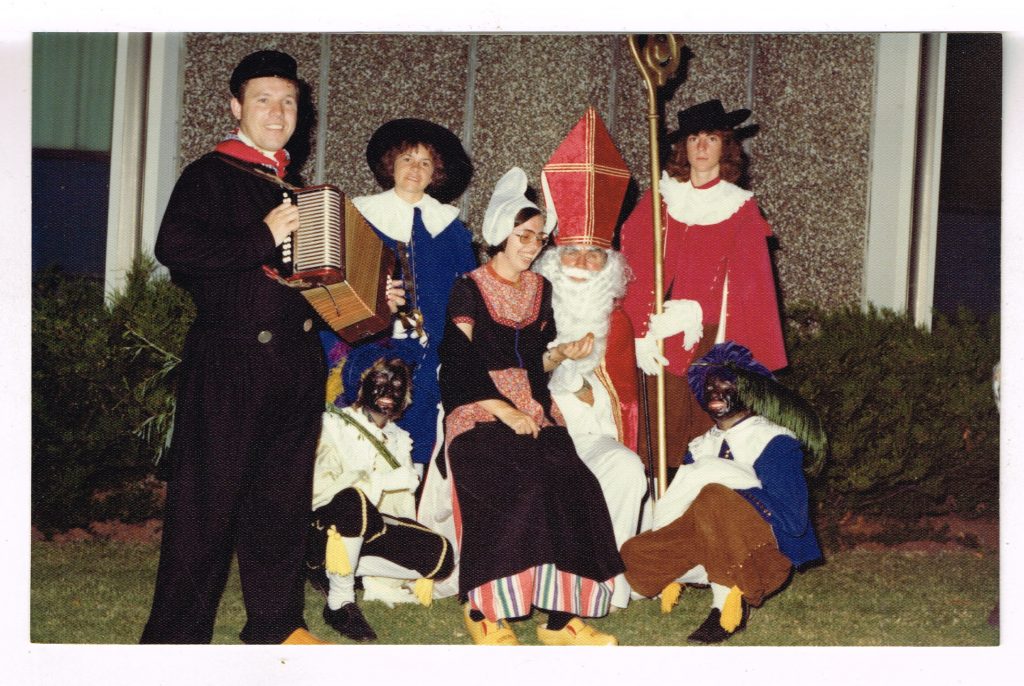
The 1945 celebrations anticipated the important role that Sinterklaas would later play within the Dutch-Australian community.
From the early 1950s, Dutch clubs, churches and family groups organised Sinterklaas celebrations throughout Australia. The tradition helped migrant children maintain a connection with the Netherlands while adapting to Australian Christmas customs, summer weather and English-speaking schools.
Many families eventually celebrated both occasions. Sinterklaas remained the recognisably Dutch celebration, while Christmas increasingly combined Dutch family and religious traditions with Australian customs.
The DACC preserves photographs and newspaper reports relating to Sinterklaas celebrations at Dutch clubs in Australia and Sinterklaas in Australian family homes.
More personal stories are sought
Much remains to be discovered about how Dutch and Netherlands East Indies personnel in Australia observed Sinterklaas and Christmas between 1942 and 1945.
Diaries, letters, menus, photographs, unit newsletters and family recollections may record festive meals, church services, parcels, decorations, invitations into Australian homes or celebrations aboard ships and at military bases.
The DACC welcomes additional information, photographs and personal recollections. Even a brief memory of a meal, present, church service or visitor could add an important human dimension to this history.
Related DACC and Camp Columbia articles
- Henriette Thomas: life in Java, internment, evacuation and Australia
- A Goodna child’s view of WWII
- Evacuees and refugees from the Netherlands East Indies recuperating in Australia after WWII
- “These were wild times”: Dutch evacuees in Western Australia, 1945–46
- Sinterklaas celebrations at Dutch clubs in Australia
- Sinterklaas in Australia